

New Uganda Rail Corridor Positions Tanzania as Gateway to Central Africa
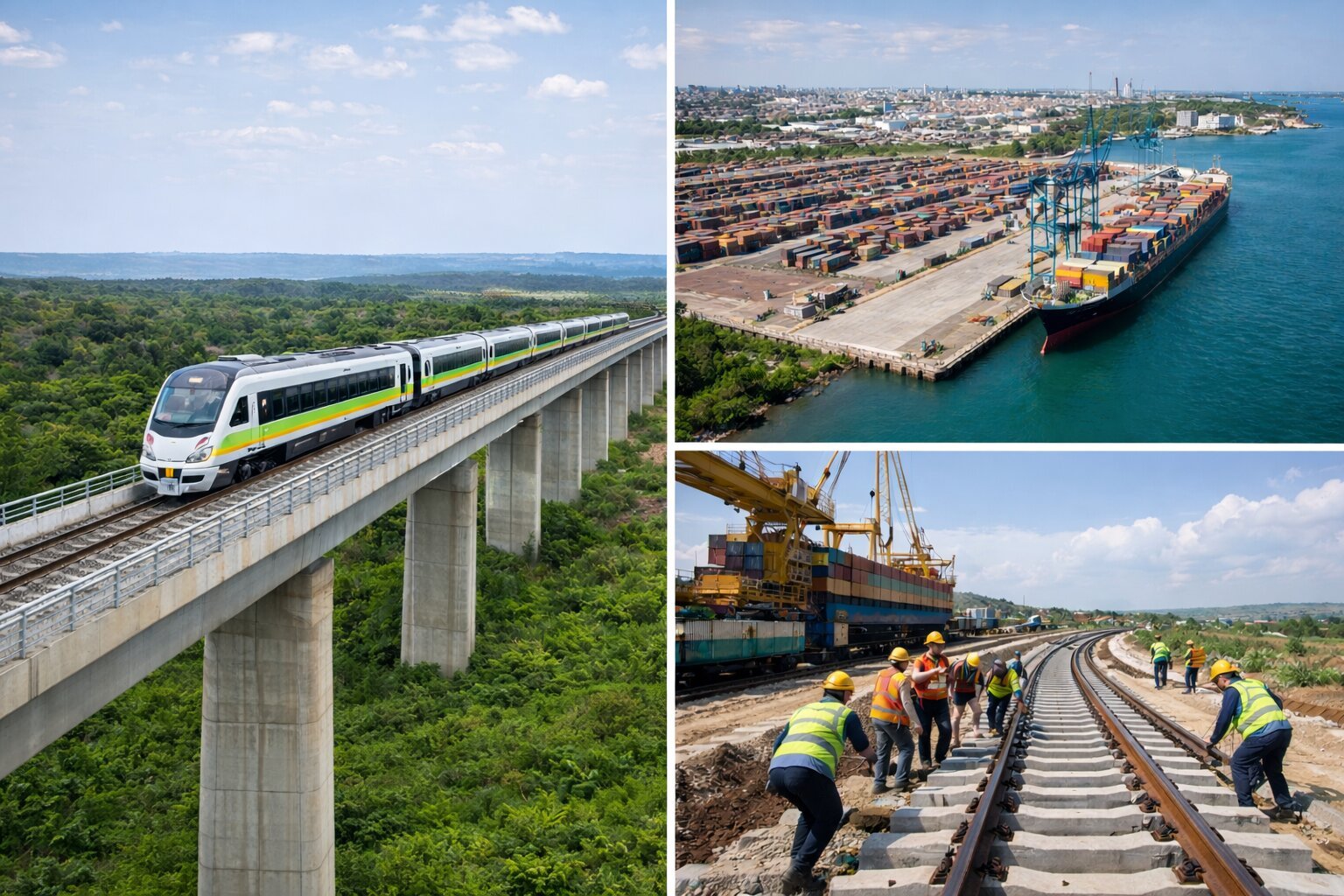
Uganda’s plan to link its future Standard Gauge Railway to Tanzania’s network could reroute billions of dollars in trade toward the Port of Dar es Salaam. The proposed corridor would reduce reliance on Kenya’s Northern route, intensify regional port competition, and position Tanzania as the primary maritime gateway for the Great Lakes and eastern Congo.
Uganda’s proposal to connect its future Standard Gauge Railway to Tanzania’s SGR network is less a transport upgrade than a strategic rebalancing of regional trade flows. If completed, the corridor would give Uganda a direct outlet to the Port of Dar es Salaam, reducing dependence on Kenya’s Northern Corridor and intensifying competition between East Africa’s two largest maritime gateways.
For Tanzania, the project strengthens a long-running policy objective: positioning Dar es Salaam as the primary seaborne exit for the Great Lakes region.
Diversification Away From a Single Corridor
Landlocked states face structural vulnerability when exports depend on one route. Uganda has historically relied on Mombasa via Kenya, exposing its trade to congestion, pricing power, and geopolitical risk along that corridor.
A southern route through Tanzania creates redundancy. In logistics terms, redundancy lowers systemic risk and increases negotiating leverage over transit costs, port charges, and service reliability.
For import-heavy economies, even marginal reductions in transport costs compound into macroeconomic gains through lower inflation and improved trade balances.
Dar es Salaam’s Bid to Become a Regional Hub
Tanzania has spent the past decade expanding port capacity, rehabilitating rail infrastructure, and building a new SGR designed for heavy freight and higher speeds. Linking Uganda to this system would convert domestic infrastructure into regional infrastructure.
The economic logic is straightforward:
- Transit trade generates stable foreign exchange without requiring domestic production
- Ports anchor logistics clusters, warehousing, and manufacturing
- Rail corridors stimulate inland urban growth along their routes
- Scale improves shipping line frequency and lowers per-unit costs
In effect, Tanzania would monetize geography.
Mineral Exports and the Central African Hinterland
Uganda’s western regions and neighboring eastern Democratic Republic of Congo contain significant deposits of gold, copper, cobalt, and iron ore. A reliable rail connection to the Indian Ocean could unlock exports that are currently constrained by road transport costs and bottlenecks.
This positions Tanzania at the downstream end of a resource corridor linking some of the world’s most mineral-rich territories to global markets.
As demand for transition metals rises, infrastructure that moves bulk commodities efficiently becomes strategically valuable. Transport capacity, not geology, often determines whether resources are commercially viable.
Corridor Competition: Southern vs Northern Axis
East Africa is entering a phase of corridor competition reminiscent of other regions where parallel routes vie for traffic. Kenya’s Northern Corridor centered on Mombasa has historically dominated. Tanzania’s emerging Southern Corridor anchored by Dar es Salaam now offers an alternative.
Uganda’s decision to pursue both directions reflects rational hedging rather than alignment with one partner.
For coastal states, transit trade is a zero-sum contest at the margin. Cargo diverted to one port is revenue lost to another.
Integration With Energy Infrastructure
The proposed rail link complements existing cross-border projects, most notably the East African Crude Oil Pipeline, which will transport Ugandan oil to Tanzania’s coast for export.
Taken together, pipeline plus railway creates a multi-commodity export system capable of handling crude oil, minerals, agricultural products, and manufactured goods. This diversification reduces reliance on any single sector and enhances corridor resilience.
It also amplifies Dar es Salaam’s strategic importance on the western Indian Ocean.
Financing Risks and Execution Challenges
Large cross-border infrastructure projects face persistent obstacles:
- High capital requirements
- Debt sustainability concerns
- Coordination between sovereign governments
- Land acquisition and environmental approvals
- Demand uncertainty during early years
The involvement of development finance institutions in feasibility studies signals interest but not guaranteed funding. Bankability will depend on projected cargo volumes, tariff structures, and political stability along the route.
Macroeconomic Implications for Tanzania
If realized, the corridor could generate long-term structural benefits:
- Increased port throughput and customs revenue
- Growth in logistics and transport services
- Job creation in rail operations and support industries
- Expanded influence within the East African Community
- Greater resilience to external trade shocks
For a country seeking industrialization, reliable freight infrastructure is a prerequisite rather than a complement.
Strategic Outlook
Infrastructure determines trade patterns for generations. Once exporters, shipping lines, and insurers optimize around a corridor, switching costs become high. Early movers capture durable advantages.
Uganda’s proposed link therefore represents more than a bilateral project. It is a test of whether Tanzania can convert heavy infrastructure investment into sustained regional dominance in logistics.
If successful, Dar es Salaam could evolve from a national port into the principal maritime gateway for Central and East Africa. If delayed or underutilized, the region’s cargo will continue to gravitate toward established routes.
In global trade, geography sets the stage. Infrastructure decides who benefits from it.