

Tanzania’s Strategic Push on Rail and Regional Connectivity: Investment and Economic Implications
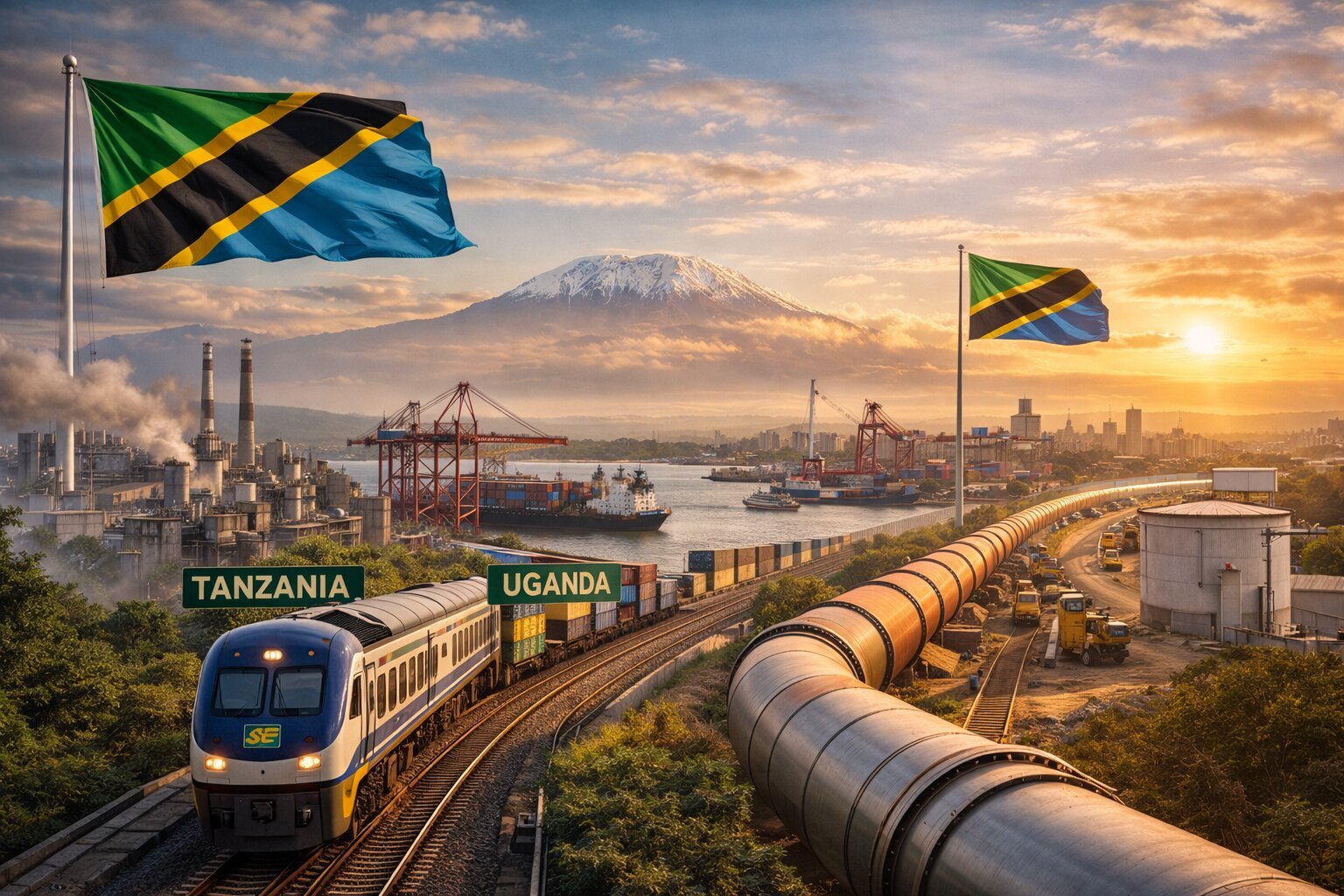
Tanzania’s proposed rail extension to Uganda signals a strategic shift toward corridor-based growth, positioning Dar es Salaam and Tanga as regional trade gateways while lowering logistics costs for landlocked East African economies.
Tanzania and Uganda have reaffirmed plans to deepen economic integration through major transport and logistics infrastructure projects that could reshape trade flows across East and Central Africa. During bilateral talks in Dar es Salaam on February 7, 2026, Tanzanian President Samia Suluhu Hassan and Ugandan President Yoweri Museveni agreed on a coordinated agenda to expand rail connectivity, enhance lake and port links, and accelerate energy export infrastructure. The package of commitments reflects a strategic shift toward infrastructure-led growth and regional transit positioning, with clear implications for investors, logistics firms, and public financiers.
At the centre of the discussions is the extension of Tanzania’s Standard Gauge Railway (SGR) network to Uganda. The proposed extension from Isaka dry port toward Lusahunga is intended to create a continuous rail link from Tanzanian ports to Uganda’s interior, giving Uganda, a landlocked economy direct access to Indian Ocean shipping routes. This project is aligned with Tanzania’s broader rail expansion strategy and is expected to reduce transport costs for export and import cargo, enhance economies of scale in freight movement, and attract private investment in logistics services and rail-dependent industries.
Complementing the SGR extension, Tanzania has reaffirmed plans to fast-track construction of the Tanga–Musoma line, a rail corridor that would integrate Lake Victoria transport with coastal export infrastructure. The line is positioned as a multimodal trade corridor linking rail and lake transport between Tanzania and Uganda, enabling freight transshipment via Mwanza and improving access to Tanzanian ports without overreliance on long road haulage. For investors, this signals opportunities in rolling stock, terminal infrastructure, and logistics platforms that could serve the broader East African market.
The discussions also took stock of progress on the East African Crude Oil Pipeline (EACOP), an approximately 1,443-kilometre crude export artery from Uganda’s Lake Albert oil fields to Tanga Port on the Indian Ocean. EACOP is one of the region’s largest cross-border energy infrastructure projects and is expected to begin commercial operations by mid-2026. The pipeline’s nearing completion underscores Tanzania’s growing role as a regional energy export corridor and positions Tanga as a strategic energy logistics node. Investment momentum around EACOP has broader spillovers for services, security, and regional financing markets.
Beyond rail and oil exports, the leaders agreed on initiatives to streamline trade facilitation by removing non-tariff barriers, improving maritime connections on Lake Victoria, and advancing joint energy infrastructure such as clean gas and petroleum product pipelines. These commitments indicate a policy environment increasingly oriented toward integration and competitiveness, which can enhance cross-border trade volumes and justify long-term private participation in infrastructure financing.
From an investment standpoint, Tanzania’s infrastructure agenda reflects two major trends. First, the country is actively positioning itself as a transit and logistics hub for its landlocked neighbours, leveraging rail, ports, and energy corridors to attract regional freight and value chains. Second, these projects offer potential entry points for institutional capital — from sovereign wealth funds and development finance institutions to private logistics operators and industrial investors — especially in segments where public-private partnerships can unlock value.
For private sector actors and strategic investors, the evolving Tanzania-Uganda corridor presents opportunities across transport infrastructure, integrated logistics services, energy export supply chains, and associated economic zones. The ability of both countries to sustain policy alignment, secure project financing, and deliver on construction timelines will be critical to realizing the full economic and investment potential of these initiatives.
