
Tanzania's Tax Gap Is Not a Technology Problem. It Is an Incentive Problem. Taiwan Solved It in 1951.
Ready
Tax evasion persists where both parties to a transaction benefit from keeping it undocumented. Taiwan broke that equilibrium in 1951 by converting official receipts into lottery tickets, giving customers a direct financial reason to demand them. Business tax revenue rose 75 percent in year one. Tanzania has EFD infrastructure, mobile money penetration, and the Universal Billing System already in place. A digital receipt lottery linked to existing fiscal receipts requires no new hardware, only a credible prize structure and a frictionless entry mechanism.
Tanzania's tax gap is not a technology problem
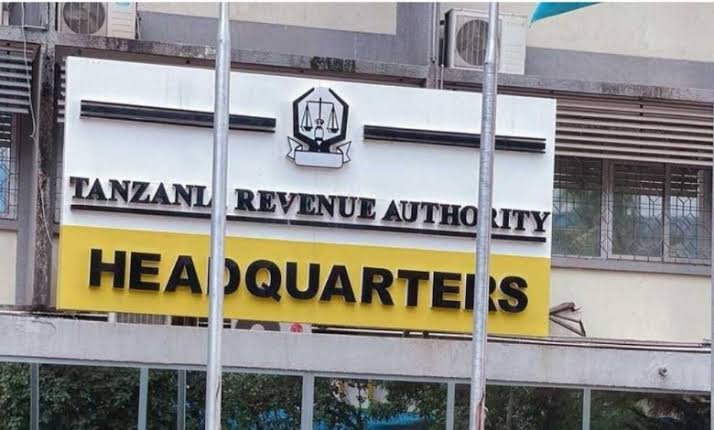
Tanzania's Tanzania Revenue Authority has built one of East Africa's more capable digital tax administrations. Electronic fiscal devices are deployed across a significant share of the formal business sector. Mobile money infrastructure reaches most of the adult population. The Universal Billing System, whose second phase reached 70 percent completion by April 2026, is designed to cross-reference transaction data and make underreporting detectable.
And yet, walk into most small restaurants, pharmacies, hardware shops, or market stalls in Dar es Salaam and the receipt, if it comes at all, arrives as an afterthought. Customers rarely ask for one. Merchants rarely volunteer one. Neither party has a particular reason to care.
That is the actual problem. Not the technology. The incentive.
The economics of an undocumented transaction
Tax evasion is an information problem at its core. Governments can only tax what they can observe, and in cash-based economies, two parties can easily transact without either disclosing anything to anyone. The merchant benefits from underreporting. The customer gains nothing from insisting on a receipt. Both parties have the information. Neither has a reason to share it.
Closing that gap through inspections alone is financially impossible. Even a well-resourced tax authority cannot audit every kiosk, every food stall, every small shop. The probability of detection on any individual small transaction is close to zero, which means deterrence-based enforcement, however well-designed, produces weak results at the margins of the formal economy.
The question is not how to monitor more transactions. It is how to make the parties to those transactions monitor each other.
What Taiwan did in 1951
On 1 January 1951, Taiwan introduced the Uniform Invoice Lottery. Businesses above a defined turnover threshold were required to issue standardised receipts carrying unique serial numbers. Every two months, the government drew winning numbers. Prizes ranged from modest amounts to what is today NT$10 million, roughly USD 310,000, according to Wikipedia's documentation of the scheme.
Business tax revenue rose from NT$29 million in 1950 to NT$51 million in 1951. A 75 percent increase in twelve months, without a proportionate increase in the inspection workforce.
The mechanism was straightforward. Before the lottery, merchant and customer were on the same side of the compliance question: neither needed a receipt. After it, they were on opposite sides. The merchant wanted to avoid issuing a receipt. The customer wanted one because it was a lottery entry. The government had effectively recruited millions of consumers as compliance agents at near-zero marginal cost per transaction.
Today, roughly 70 percent of Taiwan's population participates. Convenience stores redeem smaller prizes at the till. Electronic invoices have digitised the process while preserving the underlying incentive. The system has run continuously for 75 years because it works not through coercion but through alignment.
Why positive incentives outperform distant penalties
Behavioural economics has spent decades documenting what Taiwan discovered empirically: people respond more reliably to immediate, concrete rewards than to abstract future risks. The possibility of a TRA audit years from now does not change behaviour at the point of sale today. A lottery prize does, because it is immediate and personally relevant.
This is not a critique of enforcement. Enforcement remains necessary because deliberate fraud must carry consequences. But enforcement and incentive design are not the same instrument, and treating them as substitutes is why many compliance programmes underperform. Taiwan did not replace its tax authority. It added a mechanism that made enforcement less necessary at the margins where enforcement is most expensive.
Greece, Portugal, Italy, and Slovakia have all run receipt lottery variants, according to MUC Consulting's analysis of international evidence. Results vary by implementation quality, but the direction is consistent: when customers have a reason to request receipts, issuance rates rise and reported transaction volumes increase.
Tanzania's position is better than Taiwan's was
In 1951, Taiwan was issuing paper receipts with printed serial numbers and managing physical redemption through post offices. The administrative complexity was real.
Tanzania does not face that problem. EFDs already generate unique transaction identifiers. Mobile money is widespread. The Universal Billing System is building cross-referenced transaction data. A digital receipt lottery linked to existing EFD output requires no new hardware. The entry mechanism is already in place: a valid EFD receipt, confirmed by SMS, automatically qualifies the customer for the bimonthly draw.
The design requirements are three. The prize structure must be credible relative to local incomes. A TZS 100 million grand prize drawn every two months is worth talking about. A TZS 1 million prize is not. The entry mechanism must require zero effort beyond requesting the receipt. If claiming an entry involves multiple steps, most people will not bother. And the draw must be public, transparent, and paid promptly. Trust in the system is a functional requirement, not a soft goal.
None of this is technically complex. All of it requires institutional commitment to getting the design right.
The deeper argument
The receipt lottery is a specific solution, but the principle behind it applies broadly. Many public policy problems in Tanzania and across East Africa are not constrained by a shortage of rules. They are constrained by incentive structures that fail to align private behaviour with public objectives.
Tanzania's Vision 2050 targets tax revenue reaching 18 percent of GDP by 2030, up from approximately 13.2 percent in FY2025/26 per the National Development Plan. Closing a nearly five-percentage-point gap requires both broadening the tax base and improving voluntary compliance, particularly in the cash economy where enforcement is most expensive and least effective.
Technology contributes to both. But Taiwan demonstrated 75 years ago that the most durable compliance improvements come not from watching people more closely but from giving them a reason to participate.
The strongest tax systems are not the ones with the most auditors. They are the ones where citizens demand compliance before the government has to enforce it. Tanzania has built the infrastructure for exactly that system. It has not yet built the incentive.
FAQ
What is the Taiwan receipt lottery? The Uniform Invoice Lottery, introduced in 1951, requires Taiwanese businesses to issue standardised receipts with unique serial numbers. Bimonthly prize draws award up to NT$10 million. Around 70 percent of the population participates. Business tax revenue rose 75 percent in year one.
Why does it work when conventional enforcement doesn't? It changes the customer's incentive, not just the merchant's. Before the lottery, neither party had reason to document a cash transaction. After it, the customer wanted a receipt as a lottery entry. The government recruited millions of consumers as compliance agents at near-zero cost per transaction.
Could Tanzania implement this with existing infrastructure? Yes. EFDs already generate unique transaction identifiers. Mobile money is widespread. A digital receipt lottery requires no new hardware, only a credible prize structure and a frictionless SMS-based entry mechanism linked to existing EFD receipts.
What are the main design risks? Three: prizes too small to change behaviour, entry mechanisms too complex to use at scale, and draws that lack public credibility. All three are solvable design problems, not conceptual objections.
How does this connect to Tanzania's fiscal targets? The National Development Plan 2026/27 targets tax revenue at 18 percent of GDP by 2030, up from 13.2 percent in FY2025/26. A receipt lottery directly addresses voluntary compliance in the cash economy, where enforcement-only approaches consistently underperform.
 Uchumi360
Business Intelligence
Uchumi360
Business Intelligence
The views expressed in this article are those of the author and do not represent the editorial position of Uchumi360.
For the serious reader
You read to the end. That places you in a small group.
Uchumi360 is built for readers who demand precision over speed, structure over sentiment, and analysis that holds uncomfortable conclusions rather than softening them. If this work sharpens how you think about Africa's economy, help us keep building the infrastructure behind it.
Institutional Partners
Commission intelligence. Shape the conversation.
Uchumi360 works with development finance institutions, investment firms, sovereign bodies, and strategic organisations across the coverage region. Institutional partnership unlocks:
- Commissioned sector and country intelligence reports
- Branded research series under your institution's authority
- Exclusive data briefings for internal strategy teams
- Speaking and editorial presence at Uchumi360 events
- Co-published investment outlooks for your markets
Support Our Work
Independent analysis has a cost. Help us bear it.
Uchumi360 does not carry advertising. It does not take editorial direction from sponsors. Every article is produced without commercial compromise. Your contribution funds the reporting, research, and editorial infrastructure that keeps this analysis free from influence.
Secure checkout: One-time and monthly support are processed securely. Add payment credentials to enable checkout here.
Stay Connected
Keep up with every new insight.
Follow our latest analysis, policy coverage, and market intelligence as soon as it is published. If you need something specific, reach out directly and we will point you to the right research.
