
Burundi Has Launched a Real-Time National Payment System. BurundiPay Connects Banks, Microfinance, and Mobile Wallets in a Single Network for the First Time.
Ready
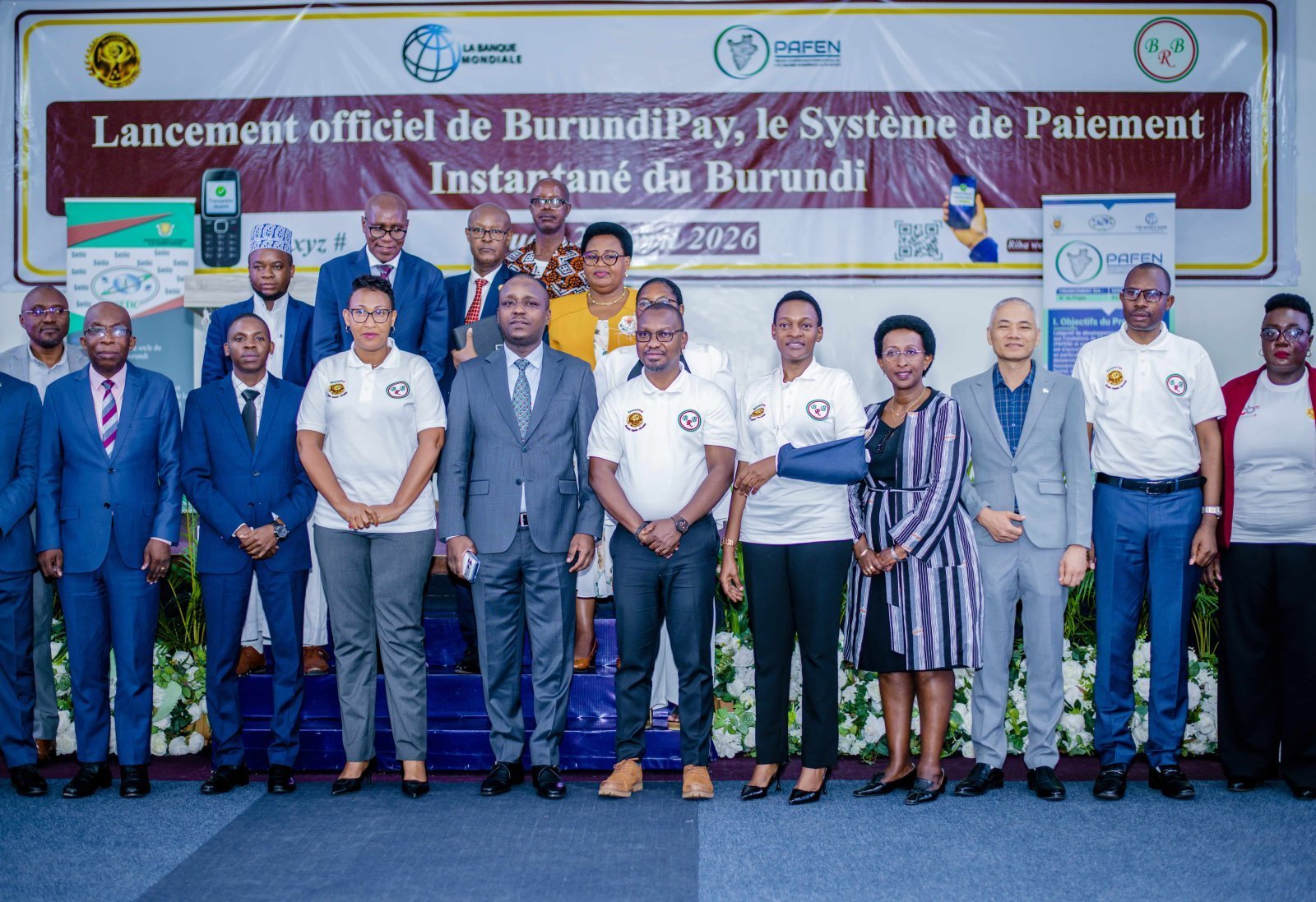
Banque de la République du Burundi launched BurundiPay on 23 April 2026, a national instant payment system built on ISO 20022 international standards and integrated with existing real-time gross settlement systems and automated clearing houses. The platform enables real-time 24/7 transfers between bank accounts and mobile wallets across commercial banks, microfinance institutions, and payment service providers previously operating in siloed systems, eliminating the requirement to withdraw cash before transferring between institutions. It operates on both smartphones and basic USSD-capable phones, addressing Burundi's approximately 30% internet penetration rate with an accessibility design that makes financial inclusion rather than digital adoption the primary metric of success. The World Bank backed the project through the Digital Economy Foundations Support Project, placing Burundi among 22 African countries with instant payment infrastructure. This article reports the launch, situates BurundiPay within Burundi's financial inclusion challenge and the East African regional payment infrastructure landscape, and identifies the adoption conditions whose realisation will determine whether the platform produces the financial integration, digital commerce growth, and transaction transparency that its technical architecture makes possible. Building the infrastructure is the easier part. BurundiPay's success will be measured not in launch announcements but in how many Burundians who have never held a bank account make their first digital transaction through a USSD code on a basic phone in a rural commune.
BUJUMBURA — Banque de la République du Burundi launched BurundiPay on 23 April 2026, a national instant payment system that connects the country's commercial banks, microfinance institutions, and mobile payment service providers within a single interoperable network for the first time.
The platform enables real-time money transfers and payments 24 hours a day, seven days a week, from both bank accounts and mobile wallets, eliminating the previous requirement to withdraw cash before transferring funds between institutions operating on different systems. Before BurundiPay, Burundi's financial ecosystem operated in siloes whose separation imposed cash dependence on transactions that other regional economies had already digitalised.
What BurundiPay does and how it works
BurundiPay introduces full interoperability across Burundi's financial ecosystem, connecting institutions that previously could not exchange value directly without the cash intermediation step whose elimination is the platform's most immediately practical benefit for ordinary users. The system is built on ISO 20022, the international messaging standard that has become the global benchmark for financial system communication and whose adoption ensures BurundiPay's compatibility with cross-border payment architectures as regional integration advances.
The platform integrates with Burundi's existing real-time gross settlement systems and automated clearing houses, building on established national financial infrastructure rather than replacing it. This integration approach reduces implementation risk and strengthens overall payment architecture reliability by connecting the new instant retail payment layer to the wholesale settlement infrastructure whose proven stability anchors the system's security.
The accessibility design is the most consequential technical decision in the platform's architecture for Burundi specifically. BurundiPay operates on both smartphones and basic mobile phones via USSD codes, addressing an internet penetration rate that official data places at approximately 30%. A system that required smartphone access or mobile data connectivity to function would immediately exclude the majority of Burundi's population from the platform whose financial inclusion mandate it was designed to serve. The USSD capability means that a rural household in Cibitoke or Rutana province with a basic feature phone and mobile network coverage can access the same payment system as a commercial bank customer in Bujumbura's central business district.
The financial inclusion context
Burundi's financial inclusion challenge is among the most significant in East Africa. According to Institut des Statistiques et des Études Économiques du Burundi data, formal banking access remains low, particularly outside Bujumbura, with a large proportion of the adult population conducting all transactions in cash and holding no formal financial account. The consequences of financial exclusion compound across the economy: households without payment accounts cannot receive digital salary transfers, cannot store value securely at distance, cannot access credit whose collateral is transaction history, and cannot participate in the digital commerce platforms whose growth the rest of East Africa's economies are experiencing.
BurundiPay's design addresses each of these exclusion mechanisms directly. Real-time payment capability enables employers to transfer wages digitally to workers who previously received cash payments whose security and record-keeping limitations constrained household financial management. Interoperability between microfinance institutions and commercial banks enables the graduated financial service access that allows households to move from informal savings to microfinance to commercial banking products as their transaction history builds. USSD access enables rural participation without the smartphone or data connectivity infrastructure whose absence has historically defined the boundary between financially included and excluded populations in low-penetration markets.
Where Burundi sits in the regional and continental picture
The World Bank's support through the Digital Economy Foundations Support Project places BurundiPay within a broader African instant payment infrastructure roll-out whose scale is among the most significant structural changes in the continent's financial architecture over the past decade. Burundi joins 22 African countries that have deployed instant payment infrastructure, a group that includes Tanzania's Tanzania Instant Payment System, Kenya's PesaLink and M-Pesa infrastructure, Rwanda's RSwitch interoperability platform, and Uganda's National Payments Switch, among others across the continent.
The East African regional payment integration picture is directly relevant to BurundiPay's medium-term significance. The East African Community's regional payment integration agenda, whose advancement the EAC Secretariat has prioritised as a component of the broader single market development, requires member state payment systems capable of cross-border interoperability as the technical foundation on which regional payment corridors can be built. BurundiPay's ISO 20022 compliance and its integration with national settlement infrastructure are the technical prerequisites whose presence makes Burundi's payment system a candidate for cross-border integration with Tanzania, Rwanda, Uganda, and Kenya's equivalent systems as regional payment corridor development advances.
Burundi's geographic position as a landlocked country whose trade flows connect to Tanzania through the Central Corridor and to Rwanda and the DRC through its northern and western borders makes regional payment integration commercially significant for the cross-border trade whose digitalisation reduces the cash-handling costs and security risks that informal border trade currently imposes on the small and medium enterprises whose activity those corridors support. According to Banque de la République du Burundi economic data, cross-border remittances represent a significant component of household income for many Burundian families, and a payment system capable of integrating with regional networks reduces the cost of those remittance flows relative to the informal and semi-formal channels whose fees extract a larger share of the transferred value.
What adoption will require
BurundiPay's launch is the infrastructure achievement. The adoption challenge is distinct and in many ways harder. Payment system interoperability platforms across Africa have a consistent pattern in their deployment history: the technical architecture arrives before the behavioural change whose realisation determines whether the platform produces the financial inclusion, transaction transparency, and digital commerce growth that its design enables.
Three adoption conditions will determine BurundiPay's real-world impact. Merchant acceptance is the first. A payment system that consumers can use but merchants do not accept produces no transaction volume, and merchant acceptance in Burundi's predominantly informal retail sector requires the point-of-sale infrastructure, merchant education, and commercial incentive structure whose development the banking system and mobile operators must drive beyond the central bank's launch mandate. Agent network density is the second. In markets with low smartphone penetration, cash-in and cash-out agent networks whose geographic distribution matches the rural population's location determine whether USSD payment capability translates into actual usage or remains a technical option whose inaccessibility in practice defeats the inclusion design in theory. Trust-building is the third. In economies with limited prior digital financial services experience, household trust in the security of digital transactions is built through the lived experience of successful transactions rather than through government communications, and the early adopter experience whose quality the platform's technical reliability determines will shape the adoption curve for the majority who observe before they participate.
The World Bank's PAFEN project support, which presumably extends beyond the platform's technical deployment to the adoption infrastructure and consumer education whose development determines actual financial inclusion outcomes, will be as consequential as the ISO 20022 compliance and USSD integration in determining whether BurundiPay produces the economic modernisation its launch represents.
What it means for Burundi's economic trajectory
Burundi is among East Africa's smallest and least economically developed economies, with GDP per capita among the lowest in the region according to World Bank development data and a economic base whose agricultural dependence, limited manufacturing depth, and infrastructure constraints have historically limited the growth trajectory that its demographic profile demands. Financial system modernisation is not a substitute for the industrial investment, infrastructure development, and governance improvement whose combination produces structural economic transformation. But it is a necessary enabling condition for the tax revenue transparency, commercial credit access, and digital commerce participation whose absence compounds the structural constraints that Burundi's economic development agenda must address.
BurundiPay's most direct economic impact channel is transaction transparency, whose improvement through payment digitalisation increases the tax base visibility that revenue authorities require to broaden fiscal collection beyond the import taxation and formal sector payroll that currently dominate Burundi's fiscal architecture. According to ISTEEBU economic data, Burundi's informal sector represents a large share of economic activity whose formalisation through digital payment trails would increase fiscal revenue without raising rates, creating the fiscal space that infrastructure investment and public service delivery require. The platform's integration with automated clearing houses and real-time gross settlement systems creates the transaction record infrastructure whose existence makes that formalisation path technically available for the first time.
Whether BurundiPay becomes the financial infrastructure that Burundi's economic modernisation requires or remains a well-designed platform whose adoption stalls at the early majority will be determined in the months and years following the 23 April launch, in the USSD transaction volumes of rural households in Gitega and Makamba, in the merchant acceptance rates of Bujumbura's informal markets, and in the agent network density that reaches the 70% of the population whose internet connectivity does not. The central bank has launched the system. The harder work starts now.
FAQ
What is BurundiPay and what does it do? BurundiPay is Burundi's national instant payment system, launched by Banque de la République du Burundi on 23 April 2026. It enables real-time 24/7 money transfers and payments between bank accounts and mobile wallets across commercial banks, microfinance institutions, and payment service providers connected within a single interoperable network. It eliminates the previous requirement to withdraw cash before transferring funds between institutions operating on different systems.
Why does BurundiPay support basic phones via USSD? Because Burundi's internet penetration sits at approximately 30% according to official data, meaning a smartphone-only or data-dependent platform would immediately exclude the majority of the population the system is designed to serve. USSD capability allows any mobile phone user with network coverage to access the payment system without internet connectivity, making financial inclusion rather than digital adoption the platform's operative design principle.
How does BurundiPay connect to regional payment systems? BurundiPay is built on ISO 20022, the international financial messaging standard that underpins cross-border payment interoperability frameworks globally and regionally. Its integration with Burundi's real-time gross settlement systems and automated clearing houses creates the technical foundation for cross-border payment corridor integration with Tanzania, Rwanda, Uganda, and Kenya's equivalent systems as the EAC's regional payment integration agenda advances. Cross-border interoperability is not yet confirmed but the technical prerequisites are present.
What will determine whether BurundiPay succeeds? Three adoption conditions will be most consequential: merchant acceptance in Burundi's predominantly informal retail sector, whose willingness to receive digital payments determines whether consumers can actually use the system for daily transactions; agent network density in rural areas, whose geographic distribution determines whether USSD capability translates into actual usage by the rural majority; and household trust in digital transaction security, whose building through successful early adopter experiences shapes the adoption curve for the majority who observe before participating.
Where does Burundi sit among African countries with instant payment infrastructure? BurundiPay places Burundi among 22 African countries that have deployed instant payment infrastructure according to World Bank data. In East Africa specifically, Tanzania, Kenya, Rwanda, and Uganda have all deployed equivalent interoperable payment systems, making BurundiPay part of a regional financial infrastructure modernisation whose cross-border integration potential is commercially significant for Burundi's trade and remittance flows with its regional neighbours.
 Uchumi360
Business Intelligence
Uchumi360
Business Intelligence
- Banque de la République du Burundi, BurundiPay launch announcement, 23 April 2026, Bujumbura
- All platform specifications, design parameters, and launch details sourced from official BRB announcement documentation
- World Bank, Digital Economy Foundations Support Project (PAFEN), Burundi
- Project documentation and financial support confirmation
- Available at worldbank.org
- World Bank, 22 African countries with instant payment infrastructure figure
- Specific report requires identification before publication
- Available at worldbank.org
- Institut des Statistiques et des Études Économiques du Burundi, financial inclusion and internet penetration data
- Approximately 30% internet penetration figure cited from official ISTEEBU data
- Available at isteebu.bi
- Banque de la République du Burundi, cross-border remittance and economic data
- Available at brb.bi
- East African Community Secretariat, regional payment integration framework
- Available at eac.int
- Bank of Tanzania, Tanzania Instant Payment System documentation
- Available at bot.go.tz
- Central Bank of Kenya, payment system infrastructure documentation
- Available at centralbank.go.ke
- National Bank of Rwanda, RSwitch interoperability platform documentation
- Available at bnr.rw
- Bank of Uganda, National Payments Switch documentation
- Available at bou.or.ug
- World Bank, Burundi GDP per capita and development data
- Available at data.worldbank.org
- ISO 20022, international financial messaging standard documentation
- Available at iso20022.org
- DRC Banque Centrale du Congo, cross-border payment corridor data for regional comparative context
- Available at bcc.cd
- Zambia Statistics Agency, regional financial inclusion comparative data
- Available at zamstats.gov.zm
Uchumi360 covers business, investment, and economic policy across East, Central, and Southern Africa.
For the serious reader
You read to the end. That places you in a small group.
Uchumi360 is built for readers who demand precision over speed, structure over sentiment, and analysis that holds uncomfortable conclusions rather than softening them. If this work sharpens how you think about Africa's economy, help us keep building the infrastructure behind it.
Institutional Partners
Commission intelligence. Shape the conversation.
Uchumi360 works with development finance institutions, investment firms, sovereign bodies, and strategic organisations across the coverage region. Institutional partnership unlocks:
- Commissioned sector and country intelligence reports
- Branded research series under your institution's authority
- Exclusive data briefings for internal strategy teams
- Speaking and editorial presence at Uchumi360 events
- Co-published investment outlooks for your markets
Support Our Work
Independent analysis has a cost. Help us bear it.
Uchumi360 does not carry advertising. It does not take editorial direction from sponsors. Every article is produced without commercial compromise. Your contribution funds the reporting, research, and editorial infrastructure that keeps this analysis free from influence.
Secure checkout: One-time and monthly support are processed securely. Add payment credentials to enable checkout here.
Stay Connected
Keep up with every new insight.
Follow our latest analysis, policy coverage, and market intelligence as soon as it is published. If you need something specific, reach out directly and we will point you to the right research.
