
World Bank Ties Kenya's 2026 Budget Support to Ten Governance Reforms. Here Is What Each One Requires.
Ready
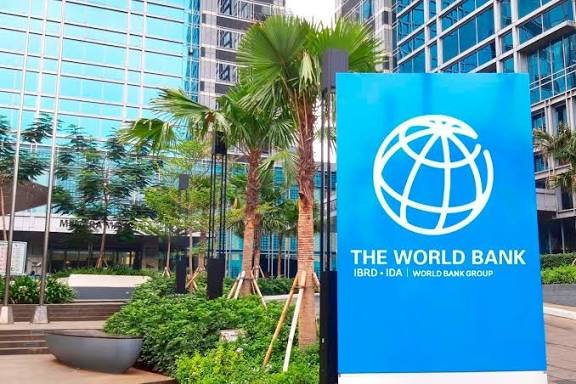
The World Bank is conditioning Kenya's next budget support tranche on ten specific governance and regulatory reforms, not infrastructure outputs. The shift reflects a broader reorientation in development finance: institutional quality, procurement integrity, and fiscal transparency are increasingly treated as prerequisites for concessional lending, not aspirational add-ons. For Tanzania, Uganda, and Rwanda, this is the template against which future budget support eligibility will be measured.
The World Bank's Third Kenya Fiscal Sustainability and Resilient Growth Development Policy Operation is not a project loan. It does not finance a road, a hospital, or a power plant. It transfers money directly to Kenya's national treasury, and it does so only after Kenya completes a defined list of institutional reforms.
That structure matters. It means the World Bank is not buying an asset. It is buying governance improvement, or at least verifiable movement toward it. For Kenya, the immediate question is whether the reforms get done. For Tanzania, Uganda, and Rwanda, the more important question is what this signals about the direction of development finance across the region.
What Kenya has to do
The conditions cover ten distinct reform areas, each targeting a specific institutional weakness.
Public officials must disclose financial interests. Kenya has enacted a conflict of interest framework, but the next phase requires implementation, verification, and enforcement. The economic logic is basic: undisclosed conflicts distort procurement and regulatory decisions, and the costs land on taxpayers.
Whistleblower protection legislation must pass. Without it, individuals who know about corruption face retaliation with no legal recourse. Protecting them lowers the government's enforcement costs and raises the expected cost of wrongdoing for officials.
Privately Initiated Proposals must face tighter rules. Unsolicited PPP bids, where a private firm approaches government outside competitive tender, carry obvious governance risks. Competing firms never get to bid. The World Bank wants Kenya to default to competitive procurement rather than negotiated deals, particularly after the cancelled JKIA expansion linked to Adani attracted significant scrutiny.
Beneficial ownership registers must be strengthened to FATF standards. Real individuals controlling companies must be identifiable, not hidden behind layered legal structures. Hidden ownership enables corruption, tax evasion, and money laundering. Transparency does not eliminate those risks but it raises their cost.
Budget reallocations during implementation must require parliamentary approval unless they fall within approved spending ceilings. This addresses a genuine governance gap: frequent mid-year reallocations weaken legislative oversight and make fiscal planning less credible to markets and lenders alike.
Payroll and human resource databases must be integrated across ministries, counties, state corporations, and constitutional offices. The primary target is ghost workers. The secondary benefit is better workforce planning and expenditure control.
The Railways Bill must be enacted to establish a clear regulatory framework for the sector. Rail regulation is not only a transport issue. Regulatory certainty is a precondition for private investment in logistics infrastructure, and Kenya's ambition to be an East African logistics hub depends on it.
Urban transport regulations must be published to guide planning and investment across metropolitan areas. Congestion is an economic cost, not just an inconvenience. Better planning reduces logistics costs, raises labour productivity, and lowers fuel consumption.
E-mobility regulations must be published. Kenya has an emerging market for electric motorcycles and buses. Without a regulatory framework covering charging infrastructure, safety standards, and market entry, private investment in the sector faces unnecessary uncertainty.
Green building standards must be adopted for new construction and major renovations. This is framed environmentally but the fiscal argument is straightforward: energy-inefficient public buildings impose higher operating costs on government budgets over their full lifetime.
Why this is not austerity
The obvious misreading of these conditions is that they represent external interference or fiscal contraction imposed by a foreign lender. That framing does not survive scrutiny.
None of the ten conditions require raising taxes, cutting specific programmes, or reducing headcount. They require Kenya to govern better: disclose conflicts, protect witnesses, run transparent procurement, integrate data systems, and regulate emerging sectors. These are things a competent government would want to do regardless of what any lender required.
The World Bank's own framing, published in its June 2026 press release, emphasises strengthening accountability and social protection. The conditions are designed to expand the fiscal space Kenya can use for development by reducing the share of public resources lost to inefficiency and corruption.
Whether every condition is implemented effectively is a different question, and a reasonable one. But the conditions themselves are not unreasonable.
What it means for the region
Kenya's DPO conditions are not unique to Kenya. They reflect a shift in how multilateral lenders are structuring budget support across developing economies.
The era when a government could receive concessional financing primarily on the basis of a policy letter and political commitments is narrowing. Lenders are increasingly requiring demonstrable reform before disbursement, not after. The World Bank's use of prior actions, reforms that must be completed before the loan is approved, rather than conditions that must be met by the time of the next review, is the structural expression of that shift.
For Tanzania, Uganda, and Rwanda, this is worth taking seriously. Future budget support eligibility will increasingly be evaluated against the same benchmarks Kenya is now meeting: procurement transparency, beneficial ownership disclosure, payroll integrity, fiscal predictability, and regulatory clarity. Institutional quality is becoming part of sovereign creditworthiness in the same way that debt-to-GDP ratios and reserve adequacy have always been.
That is not a threat. It is an opportunity for governments that are already moving in that direction to access cheaper financing on better terms. Tanzania's Commonwealth debt management award and its Moody's B1 stable rating suggest it is not starting from zero. The question is whether the institutional reform agenda is moving fast enough to keep pace with the direction of development finance.
The World Bank is no longer lending on promises. It is lending on reform. That is the message Kenya's DPO sends to every government in East Africa seeking concessional budget support in the decade ahead.
FAQ
What is a Development Policy Operation? A DPO is a World Bank lending instrument that provides direct budget support to a government's treasury rather than financing a specific project. Disbursement is conditional on completing defined policy and institutional reforms, known as prior actions, before the loan is approved.
Are these conditions unusual for Kenya? No. Kenya has received previous DPOs with similar structural conditions. What is notable about this tranche is the breadth and specificity of the governance requirements, particularly on beneficial ownership, whistleblower protection, and PPP procurement reform.
Why does this matter for Tanzania? Development finance is moving toward conditioning budget support on institutional reform rather than political commitment alone. Tanzania's future access to concessional financing will increasingly depend on demonstrable progress on the same governance benchmarks Kenya is now meeting. The direction of travel is regional, not country-specific.
What is a Privately Initiated Proposal and why does the World Bank want to restrict them? A PIP allows a private firm to submit an unsolicited infrastructure proposal to government outside a competitive tender process. The governance risk is that competing firms never get to bid, which can result in less favourable terms for taxpayers and creates opportunities for preferential treatment. The World Bank wants Kenya to default to open competition except in narrow defined circumstances.
Does meeting these conditions guarantee the loan? The prior actions must be completed before the loan is approved. Once approved, disbursement follows. Subsequent tranches typically require additional reforms and policy reviews. Meeting the conditions is necessary but the broader fiscal and macroeconomic framework also influences the World Bank's assessment.
 Uchumi360
Business Intelligence
Uchumi360
Business Intelligence
Uchumi360 covers business, investment, and economic policy across East, Central, and Southern Africa.
For the serious reader
You read to the end. That places you in a small group.
Uchumi360 is built for readers who demand precision over speed, structure over sentiment, and analysis that holds uncomfortable conclusions rather than softening them. If this work sharpens how you think about Africa's economy, help us keep building the infrastructure behind it.
Institutional Partners
Commission intelligence. Shape the conversation.
Uchumi360 works with development finance institutions, investment firms, sovereign bodies, and strategic organisations across the coverage region. Institutional partnership unlocks:
- Commissioned sector and country intelligence reports
- Branded research series under your institution's authority
- Exclusive data briefings for internal strategy teams
- Speaking and editorial presence at Uchumi360 events
- Co-published investment outlooks for your markets
Support Our Work
Independent analysis has a cost. Help us bear it.
Uchumi360 does not carry advertising. It does not take editorial direction from sponsors. Every article is produced without commercial compromise. Your contribution funds the reporting, research, and editorial infrastructure that keeps this analysis free from influence.
Secure checkout: One-time and monthly support are processed securely. Add payment credentials to enable checkout here.
Stay Connected
Keep up with every new insight.
Follow our latest analysis, policy coverage, and market intelligence as soon as it is published. If you need something specific, reach out directly and we will point you to the right research.
