
How Sports and Entertainment Are Emerging as Rwanda’s Next Strategic Growth Engine Within Africa’s Expanding Tourism, Events, and Creative Economy Competition
Ready
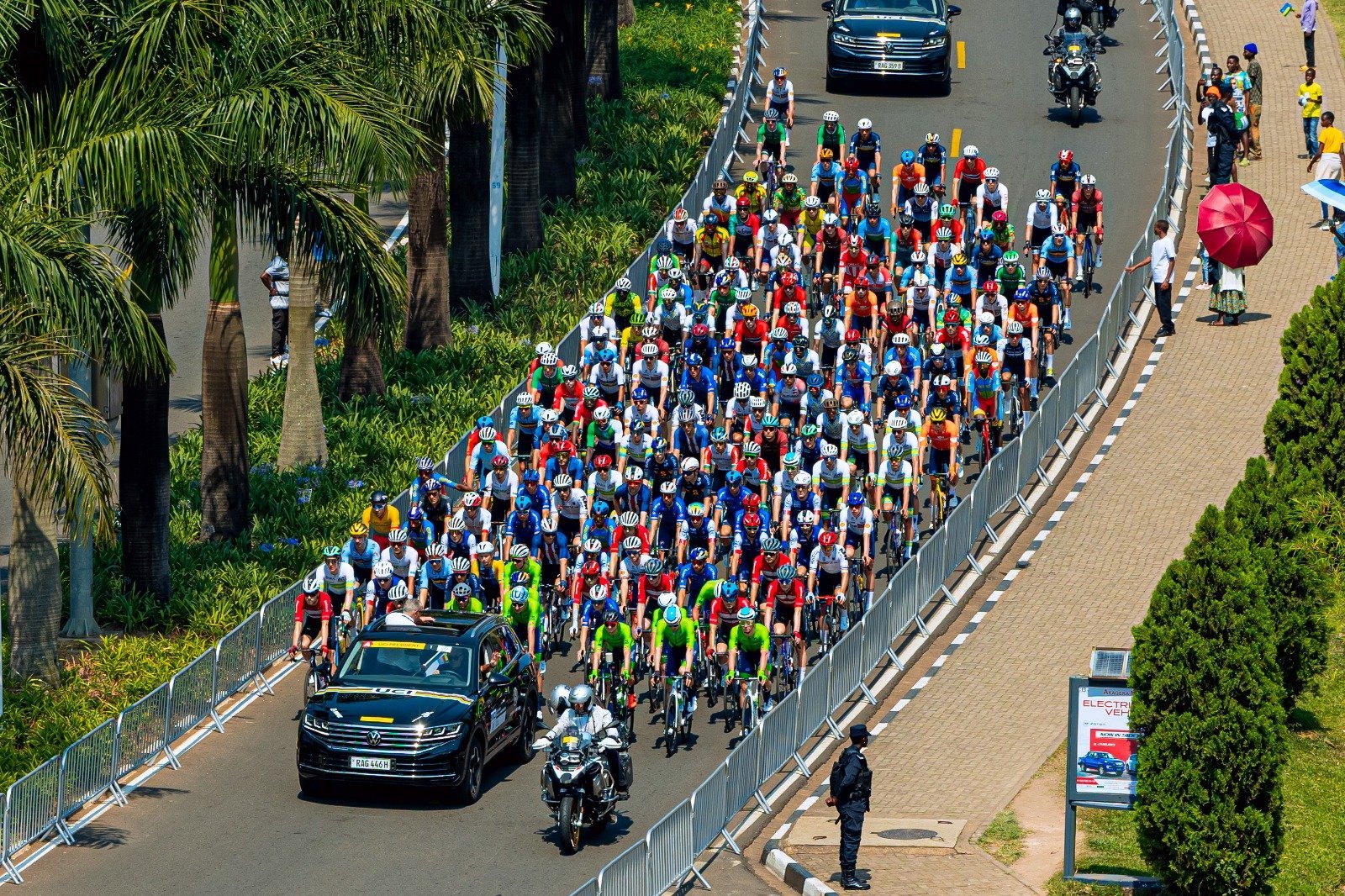
Rwanda's growing investment in sports and entertainment is not a branding exercise, it is a sovereign economic strategy. The convergence of sports infrastructure, hospitality expansion, airline connectivity, urban development, and digital media attention is being integrated into a state-led effort to diversify Rwanda's economy away from agriculture and aid dependency toward services-oriented growth anchored in tourism, events logistics, and regional business intermediation. The BK Arena, Kigali Convention Centre, RwandAir's expanding network, luxury hospitality assets, and the globally recognised "Visit Rwanda" football partnerships are not isolated investments, they are coordinated components of a long-term repositioning play. The comparison with the UAE, Qatar, Singapore, and Mauritius is instructive: each leveraged international events, aviation infrastructure, and global branding to extend economic influence far beyond the limits of domestic market size or natural resource wealth. Africa's sports and entertainment economy is now entering a period of accelerated monetisation, driven by demographic growth, digital streaming, rising middle-class consumption, and intensifying competition among African cities to capture conference, sports tourism, and entertainment business. Rwanda's bet is that governance discipline, logistics reliability, and strategic planning can transform sports and entertainment into an integrated economic platform, generating foreign exchange, youth employment, investment, and geopolitical relevance within a rapidly reorganising continent.
The core argument shaping Rwanda’s expanding investment in sports and entertainment is that the sector is increasingly being treated not as a symbolic public relations exercise but as a long-term economic diversification strategy aimed at positioning the country as a regional hub for tourism, international conferences, sports business, creative industries, aviation connectivity, and soft power projection. Through the construction of modern infrastructure including the Kigali Convention Centre and BK Arena, partnerships with major European football clubs, hosting of Basketball Africa League events, expansion of international aviation through RwandAir, and the deliberate cultivation of a regional entertainment ecosystem, Rwanda is attempting to create new streams of foreign exchange earnings, employment generation, investment attraction, and international economic relevance beyond traditional sectors such as agriculture and donor-linked financing.
The evidence supporting this strategy extends across multiple interconnected systems. Rwanda Development Board tourism figures show that conferences, events, and tourism have become increasingly important contributors to service-sector revenues. World Bank urbanisation assessments and African Development Bank infrastructure studies indicate that global events economies generate spillover effects across hospitality, transport, aviation, construction, logistics, digital services, and real estate. The framework through which Rwanda’s strategy should be understood therefore resembles models previously pursued by states such as the United Arab Emirates, Qatar, and Singapore, where international events and global visibility were integrated into broader national economic transformation agendas.
The strategic implication is that Rwanda is attempting to convert soft power into measurable economic infrastructure. Sports sponsorships and entertainment investments are being linked to tourism flows, conference business, airline traffic, foreign investor familiarity, and international business diplomacy. The comparison with regional competitors such as Kenya, South Africa, and Morocco reveals intensifying competition among African states seeking to dominate the continent’s growing events and tourism economy.
The risks remain substantial. Critics question the short-term fiscal prioritisation of sports and entertainment spending amid rising living costs, infrastructure financing pressures, and household affordability concerns. The institutional capacity required to justify long-term returns depends on whether Rwanda can successfully expand tourism receipts, increase international visitor spending, deepen local creative industry participation, and transform visibility into sustained capital inflows rather than episodic international attention.
The opportunity window nonetheless remains strategically significant because Africa’s youthful demographics, expanding digital entertainment markets, rising sports commercialisation, and global search for new tourism and conference destinations are collectively reshaping the economics of visibility, culture, and international influence.
The significance of Rwanda’s sports and entertainment strategy therefore lies less in spectacle itself and more in how the country is attempting to integrate visibility, infrastructure, logistics, aviation, and state coordination into a new model of African economic positioning.
What appears to be an investment in sports sponsorships, arenas, concerts, and global branding is increasingly becoming a broader state-led experiment in how a small, landlocked African economy can leverage entertainment infrastructure, tourism systems, aviation connectivity, and international visibility to reposition itself within the emerging geopolitical economy of events, culture, and global business circulation.
From Branding Exercise to Economic Architecture
The framework through which Rwanda’s sports and entertainment investments should be analysed has evolved considerably over the past decade because the country is no longer treating global visibility merely as a reputational asset but increasingly as an economic infrastructure category connected to tourism receipts, investment attraction, conference diplomacy, aviation expansion, and urban services growth. According to Rwanda Development Board tourism data, Meetings, Incentives, Conferences and Exhibitions (MICE) revenues have become increasingly important within the country’s services economy, reflecting deliberate state efforts to position Kigali as a stable, efficient, and internationally recognisable destination for global events.
The significance extends beyond image cultivation because sports and entertainment ecosystems generate economic spillovers across hospitality, transportation, logistics, construction, food services, broadcasting, digital commerce, and labour markets. The comparison with Singapore and the United Arab Emirates is structurally relevant because both economies used events infrastructure and international visibility to compensate for geographic and demographic limitations while integrating tourism, aviation, finance, and real estate into cohesive growth systems.
What appears to be a sponsorship strategy is increasingly becoming an attempt to construct a services-oriented economic platform.
The Political Economy of “Visit Rwanda”
The “Visit Rwanda” partnerships with elite European football clubs generated international debate partly because critics evaluated the initiative primarily through short-term sponsorship expenditure rather than through long-term tourism economics, soft power leverage, and global investment visibility. According to international sports marketing estimates and tourism branding studies, elite football partnerships generate global audience exposure measured in hundreds of millions of viewers across multiple continents, creating a scale of visibility that traditional tourism campaigns rarely achieve.
The strategic implication is that Rwanda is attempting to insert itself into global consumer consciousness using sports as a distribution platform for national economic positioning. The comparison with Qatar’s use of football diplomacy before the FIFA World Cup and the UAE’s investment in aviation-linked sports branding reveals a broader geopolitical pattern in which states increasingly deploy sports visibility to enhance tourism competitiveness, business familiarity, and international influence.
According to World Tourism Organization analysis, destination familiarity significantly influences tourism flows and investor perceptions, particularly for smaller states competing against larger regional economies. Rwanda’s calculation appears to be that visibility within elite global sports ecosystems can accelerate recognition faster than conventional diplomatic or advertising channels.
The difference between symbolic branding and economic return is determined by whether visibility translates into repeat tourism, conference bookings, investment inquiries, aviation demand, and hospitality expansion.
Infrastructure, Arenas, and the Economics of Event Hosting
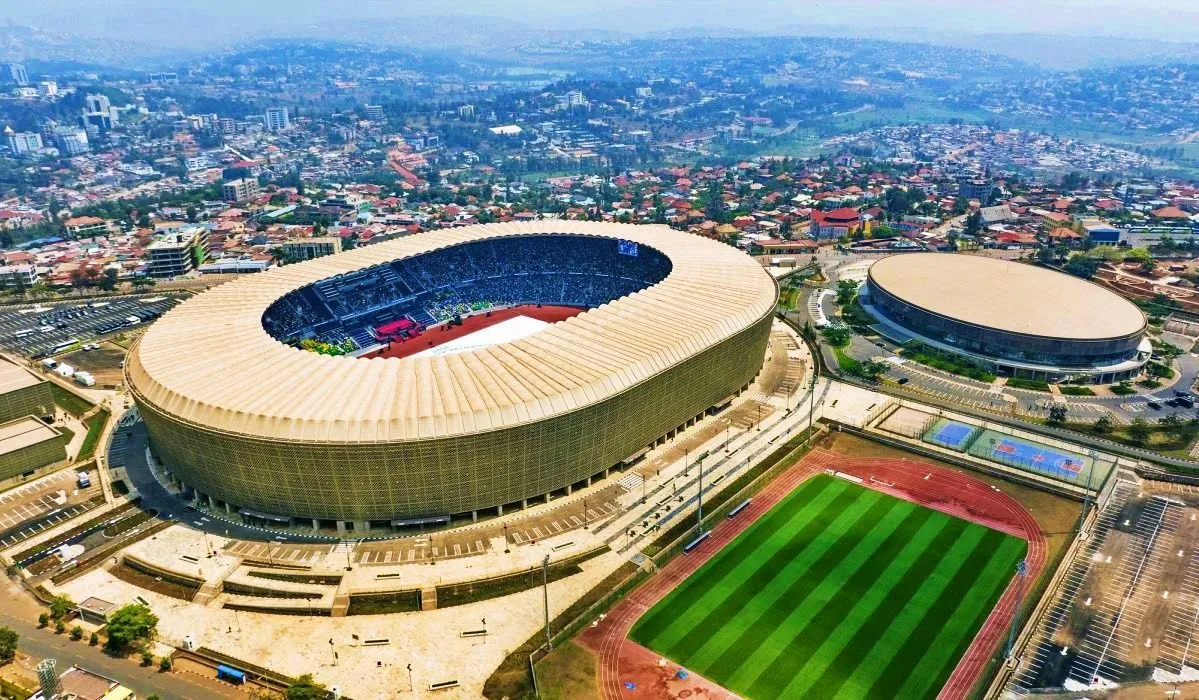
The construction of infrastructure such as the BK Arena and the Kigali Convention Centre reflects a broader understanding that modern event economies require integrated physical systems capable of hosting international sports competitions, concerts, summits, exhibitions, and corporate gatherings at globally competitive standards. African Development Bank infrastructure studies indicate that event-driven urban economies generate secondary investment across hotels, transportation systems, telecommunications, retail, and urban real estate.
The significance extends beyond architecture because event infrastructure functions as a logistics and services platform connecting tourism, digital broadcasting, security systems, hospitality management, and international aviation. Rwanda’s investment in modern venues therefore forms part of a wider urban economic strategy tied to Kigali’s ambition to compete with Nairobi, Johannesburg, Casablanca, and Addis Ababa as an events and conference destination.
The comparison with Mauritius and Botswana is instructive because both countries similarly attempted to leverage governance credibility and services quality to attract high-value international business activity despite relatively small domestic markets. Rwanda’s institutional advantage derives partly from governance coordination, security reliability, and state implementation discipline according to World Bank governance indicators.
The institutional capacity required for sustained returns nevertheless extends beyond venue construction into operational excellence, private-sector integration, digital ticketing ecosystems, entertainment financing, and long-term event acquisition capability.
Sports Tourism and the Regional Competition for Visitors
The current moment matters because Africa’s tourism and events economy is entering a more competitive phase shaped by rising middle-class consumption, international airline expansion, digital media exposure, and the growing commercialisation of African sports. According to World Travel and Tourism Council estimates, tourism contributes significantly to GDP and employment across several African economies including Kenya, Morocco, South Africa, and Tanzania.
Rwanda’s strategy increasingly seeks to position the country not merely as a wildlife tourism destination but as a multi-sector tourism economy combining conferences, sports events, entertainment festivals, luxury hospitality, and business diplomacy. The convergence of gorilla tourism, conference infrastructure, sports partnerships, and airline connectivity is intended to increase visitor spending duration and diversify tourism revenue streams.
The comparison with Kenya and Tanzania reveals differing tourism models. Kenya benefits from scale, coastline access, and larger private-sector ecosystems, while Tanzania leverages extensive wildlife and beach tourism assets. Rwanda’s comparative strategy instead depends heavily on efficiency, security, premium positioning, conference logistics, and integrated state coordination.
What appears to be a tourism diversification strategy is increasingly becoming a competition over regional economic centrality.
Youth Employment, Demographics, and the Creative Economy
The significance of sports and entertainment investment extends deeply into labour market economics because Africa’s demographic trajectory increasingly requires the creation of employment sectors capable of absorbing rapidly expanding urban youth populations. According to United Nations demographic projections, Africa will account for a substantial share of global youth population growth over the coming decades, intensifying pressure on governments to generate employment beyond traditional agriculture and public-sector expansion.
Rwanda’s creative economy strategy therefore intersects with broader concerns surrounding urban employment, digital entrepreneurship, music production, event management, sports administration, content creation, hospitality services, broadcasting, and tourism-related commerce. The comparison with Nigeria’s entertainment industry and South Korea’s state-supported cultural export model illustrates how creative industries can evolve into significant generators of foreign exchange, employment, and geopolitical influence.
The institutional capacity required nevertheless remains substantial. Talent development systems, intellectual property enforcement, private investment financing, digital distribution infrastructure, vocational training, and international market access collectively determine whether entertainment sectors generate sustainable economic value or remain dependent on sporadic events.
The strategic implication is that Rwanda’s sports and entertainment investments are increasingly connected to broader questions concerning youth productivity and the future structure of the urban economy.
Aviation, Logistics, and the Geography of Event Economies
The framework through which event economies function globally is inseparable from aviation connectivity and logistics integration. Rwanda’s expansion of RwandAir and continued investment in aviation partnerships reflects recognition that conferences, sports tourism, concerts, and international business gatherings require reliable transport systems capable of connecting regional and global markets.
According to International Air Transport Association projections, air connectivity significantly influences tourism growth, conference attractiveness, and business travel patterns. Rwanda’s geographic limitations as a landlocked state therefore increase the importance of aviation as strategic infrastructure. The comparison with Dubai, Doha, and Singapore demonstrates how smaller states leveraged aviation hubs to expand influence beyond domestic market size.
The convergence of sports events, tourism flows, airline traffic, and convention business increasingly forms an interconnected economic ecosystem. Hotels require flights, conferences require logistics reliability, sports tournaments require broadcasting systems, and entertainment industries require international mobility.
The strategic implication is that Rwanda’s investment in sports and entertainment cannot be separated from its broader ambition to become a regional services and connectivity hub.
Fiscal Debate, Public Criticism, and the Question of Timing
Criticism surrounding Rwanda’s investment in sports and entertainment infrastructure often centres on opportunity costs, particularly during periods of rising living expenses and affordability pressure. The debate reflects a broader political economy question confronting many developing states: whether long-term strategic investments should be prioritised even when short-term social pressures remain intense.
The comparison with Qatar before the FIFA World Cup and the UAE during earlier infrastructure expansion phases reveals similar tensions where governments invested heavily in international visibility and event infrastructure amid domestic debates about spending priorities. Rwanda’s challenge differs because its fiscal space is significantly narrower, increasing scrutiny around investment returns.
According to IMF fiscal assessments, the sustainability of such investments ultimately depends on whether tourism receipts, foreign direct investment inflows, aviation revenues, employment creation, and private-sector expansion generate sufficient multiplier effects over time. The institutional discipline required involves maintaining balance between strategic long-term positioning and near-term social affordability pressures.
What appears to be a debate about sports spending is increasingly becoming a larger discussion about how African states attempt to finance future economic transformation.
Soft Power, Geopolitics, and Rwanda’s International Positioning
The significance of Rwanda’s sports and entertainment strategy extends beyond economics because global visibility increasingly functions as geopolitical capital within a fragmented international system where investment flows, tourism decisions, diplomatic influence, and business networks are partly shaped by perception, familiarity, and international reputation.
The framework through which soft power operates in the twenty-first century increasingly combines media exposure, event hosting, cultural visibility, aviation connectivity, and institutional reliability into integrated systems of influence. Rwanda’s hosting of international summits, sports competitions, and business forums therefore reinforces a broader attempt to position the country as a stable gateway for regional engagement.
The comparison with Singapore and Qatar demonstrates how smaller states can amplify geopolitical visibility through strategic event diplomacy and infrastructure coordination. Rwanda’s advantage lies not in scale but in administrative efficiency, security predictability, and the ability to coordinate state institutions toward long-term strategic positioning.
The strategic implication is that sports and entertainment are increasingly being deployed not merely as commercial sectors but as instruments of statecraft within the global competition for relevance, tourism, investment, and influence.
The Emerging Economic Logic Behind Rwanda’s Strategy
The broader vision underpinning Rwanda’s investment in sports and entertainment reflects an attempt to reposition the country within a reorganising global economy where services, visibility, digital media, aviation, tourism, and creative industries are becoming increasingly central to national competitiveness. Rwanda’s economic model historically depended heavily on agriculture, external financing, and state-led development coordination.
The current moment matters because the country is attempting to build alternative growth engines capable of generating foreign exchange earnings, attracting private capital, creating youth employment, and expanding international economic integration. According to World Bank development assessments, diversified economies generally demonstrate greater resilience against commodity volatility and external financing shocks.
The difference between successful and unsuccessful event economies is determined by whether states can transform visibility into institutional ecosystems involving private-sector participation, skills development, logistics efficiency, aviation integration, digital commerce, and sustained visitor demand.
What appears to be a sports and entertainment strategy is increasingly becoming an experiment in how African states build post-aid economic relevance within the twenty-first century global economy.
The future competition among African economies will not be determined solely by natural resources or industrial capacity, but increasingly by which states can convert visibility, infrastructure, logistics, and cultural influence into durable systems of economic power.
FAQ
Why is Rwanda investing heavily in sports and entertainment?
Rwanda increasingly views sports and entertainment as components of a broader economic diversification strategy connected to tourism, aviation, conferences, hospitality, creative industries, and international investment positioning rather than as isolated branding exercises.
How can sports generate economic growth?
Sports ecosystems generate revenues across tourism, hospitality, broadcasting, transportation, retail, advertising, construction, and digital media. According to World Travel and Tourism Council estimates, sports tourism and event hosting can create substantial multiplier effects across urban economies.
Why are global football partnerships strategically important?
International football partnerships provide large-scale global visibility capable of increasing tourism awareness, investor familiarity, conference attractiveness, and international recognition. Rwanda’s strategy resembles approaches previously used by Qatar and the UAE to amplify global relevance.
What role does infrastructure play in this strategy?
Infrastructure such as the Kigali Convention Centre, BK Arena, hotels, aviation systems, and digital connectivity platforms enables Rwanda to host international events competitively. Event economies depend heavily on integrated logistics and operational reliability.
How does Rwanda compare with other African countries?
Kenya and South Africa possess larger tourism and entertainment ecosystems, while Morocco has stronger sports infrastructure depth. Rwanda’s comparative advantage depends more on governance coordination, security reliability, conference efficiency, and state-led strategic execution.
Why do critics question these investments?
Critics argue that significant spending on sports and entertainment may appear difficult to justify during periods of rising living costs and affordability pressure. The debate reflects wider questions concerning fiscal prioritisation and long-term return on investment.
Can sports and entertainment create employment?
Yes. Sports and entertainment industries support employment across hospitality, production, media, event management, digital services, transportation, tourism, marketing, and creative sectors, particularly for urban youth populations.
What is the broader geopolitical significance of this strategy?
The strategy reflects how states increasingly use visibility, events, aviation, tourism, and cultural influence as instruments of economic positioning and geopolitical relevance within an increasingly competitive global economy.
In the emerging global economy, visibility itself is increasingly becoming a form of infrastructure, and the states that understand this earliest may ultimately shape the next geography of investment, tourism, and influence.
 Uchumi360
Business Intelligence
Uchumi360
Business Intelligence
- Rwanda Development Board tourism and MICE revenue data, World Travel and Tourism Council tourism contribution estimates, IMF Rwanda fiscal and diversification assessments, World Bank governance, urbanisation, and services economy studies, African Development Bank infrastructure and transport integration analysis, International Air Transport Association aviation growth projections, United Nations demographic and youth population projections, International sports marketing and tourism branding studies and Rwanda Ministry of Sports and Ministry of Trade policy frameworks
Uchumi360 covers business, investment, and economic policy across East, Central, and Southern Africa.
For the serious reader
You read to the end. That places you in a small group.
Uchumi360 is built for readers who demand precision over speed, structure over sentiment, and analysis that holds uncomfortable conclusions rather than softening them. If this work sharpens how you think about Africa's economy, help us keep building the infrastructure behind it.
Institutional Partners
Commission intelligence. Shape the conversation.
Uchumi360 works with development finance institutions, investment firms, sovereign bodies, and strategic organisations across the coverage region. Institutional partnership unlocks:
- Commissioned sector and country intelligence reports
- Branded research series under your institution's authority
- Exclusive data briefings for internal strategy teams
- Speaking and editorial presence at Uchumi360 events
- Co-published investment outlooks for your markets
Support Our Work
Independent analysis has a cost. Help us bear it.
Uchumi360 does not carry advertising. It does not take editorial direction from sponsors. Every article is produced without commercial compromise. Your contribution funds the reporting, research, and editorial infrastructure that keeps this analysis free from influence.
Secure checkout: One-time and monthly support are processed securely.
Stay Connected
Keep up with every new insight.
Follow our latest analysis, policy coverage, and market intelligence as soon as it is published. If you need something specific, reach out directly and we will point you to the right research.
