

Africa Is Building Infrastructure at a Scale It Has Never Attempted Before. The Question That Will Define the Next Decade Is Not Whether It Can Build. It Is Whether What It Builds Will Work.
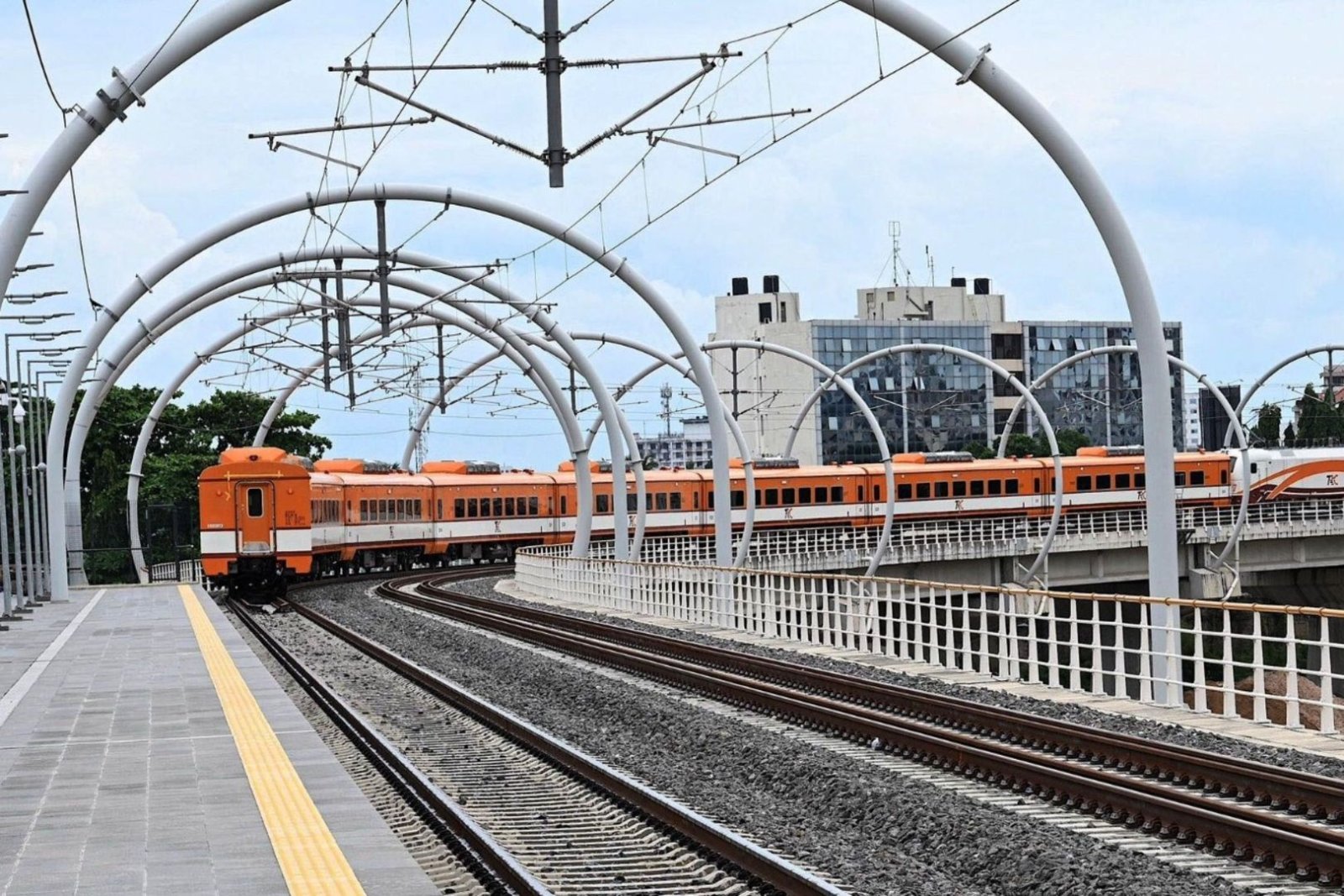
Tanzania is simultaneously implementing a six trillion shilling road programme, extending a Standard Gauge Railway toward the Zambian border, adding 2,115 megawatts of hydropower generation, expanding Dar es Salaam's Bus Rapid Transit network across six corridors, and processing USD 10.95 billion in annual investment approvals that will generate additional infrastructure demand across industrial zones, energy systems, and logistics facilities. Kenya is advancing the Northern Corridor, expanding Mombasa Port, and managing the debt obligations of its own SGR investment. The Lobito Corridor is being built with US and European backing to carry the Copperbelt's copper to the Atlantic. The scale of infrastructure investment across East, Central, and Southern Africa is genuinely unprecedented. The question that this scale demands, and that most infrastructure coverage does not ask with sufficient analytical rigour, is whether the economics of each investment justify the financing it requires and the debt it creates. Because infrastructure is not growth. It is a multiplier. And a multiplier applied to insufficient economic activity generates less than the debt it costs.
The Multiplier Principle and Why It Changes the Analysis
The most important analytical distinction in infrastructure economics, the one that separates the projects that generate transformative economic returns from those that generate impressive photographs and escalating debt service obligations, is the distinction between infrastructure as a productive asset and infrastructure as a symbol of development ambition.
A road that connects a farming community to a market reduces the transport cost of agricultural produce, increases the farmgate price that producers receive, expands the market radius that traders can economically serve, and generates the commercial activity whose tax revenues partially offset the road's construction and maintenance cost over its asset life. A road built through a sparsely populated area without agricultural or commercial activity at either end does not generate these returns regardless of its engineering quality or its construction cost. The road is the same physical asset in both scenarios. Its economic productivity is entirely determined by the economic activity it enables.
A railway that carries freight volumes at or above its design capacity generates revenue that covers its operating costs and contributes to debt service on its construction financing. A railway operating at a fraction of its design capacity generates the same fixed operating costs, the same maintenance requirements, and the same debt service obligations while generating revenue proportional only to the volumes it actually moves. The Kenya SGR's utilisation challenge, which has been a subject of economic analysis since its opening because freight volumes initially fell below the projections that justified the project's financing, illustrates the gap between infrastructure design capacity and operational productivity that determines whether a project's economics are sound or strained.
This multiplier principle means that infrastructure investment analysis cannot be reduced to the question of whether the investment is needed in the abstract. Almost all infrastructure in East Africa is needed in the abstract. The binding constraints on economic activity across the coverage region include energy unreliability, logistics inefficiency, urban transport dysfunction, and the physical connectivity gaps that isolate productive communities from markets. What the multiplier analysis requires is the more specific question of whether the particular infrastructure investment proposed will be utilised at sufficient scale and in sufficient connection with productive economic activity to generate returns that justify its financing cost and cover its maintenance obligations over its asset life.
The Debt Arithmetic That Determines Sustainability
Infrastructure is financed through debt in virtually every country at every income level, because the asset life of infrastructure, typically thirty to fifty years for major civil works, exceeds any reasonable period over which governments could accumulate savings sufficient to fund construction from current revenue. The question is not whether to borrow for infrastructure. It is whether the borrowing terms, the project economics, and the institutional capacity to manage both are aligned in ways that make the debt sustainable rather than distorting.
East Africa's current debt position reflects the cumulative financing decisions of the infrastructure expansion that the past decade has generated. Tanzania's debt to GDP ratio at 40.7 percent on a present value basis is among the more manageable in the coverage region, reflecting the country's historically conservative fiscal approach and the concessional terms of much of its infrastructure borrowing. Kenya's 67.8 percent debt to GDP ratio reflects more aggressive infrastructure borrowing, including the SGR's commercial loan component at rates that standard development finance was not covering. Zambia's 100 percent post-restructuring debt to GDP ratio reflects what happens when infrastructure borrowing at commercial rates is combined with commodity price volatility that reduces the fiscal revenue available to service the debt.
The debt sustainability analysis requires matching specific debt obligations to specific asset productivity projections. The Julius Nyerere Hydropower Station's 2,115 megawatt addition to Tanzania's grid will reduce diesel generation costs, improve industrial competitiveness, and enable economic activity that would not otherwise occur. The revenue implications of those productivity improvements can be modelled against the construction financing that the project required. The Tanzania SGR's economic productivity depends on the freight volumes it carries to Dar es Salaam Port, the reduction in logistics costs that rail achieves relative to road, and the time required for Tanzania's industrial and mineral production to grow to volumes that utilise the railway's capacity efficiently.
The problem with the debt arithmetic is not that these calculations are unavailable. It is that they are performed at project appraisal stage when freight volume projections, industrial growth assumptions, and commodity price forecasts are most optimistic, and then not revisited systematically when actual utilisation diverges from projections. The African Development Bank's infrastructure outlook and the World Bank's Africa Pulse reports both document the pattern of infrastructure underutilisation across the continent. Projects that were economically justified on projected utilisation assumptions become fiscal liabilities when actual utilisation falls short because the industrial development, trade growth, or population movement that was projected to generate demand has not materialised on the assumed timeline.
Tanzania's Infrastructure Moment: Reading the Specific Data
Tanzania's current infrastructure programme is the most concrete and most data-rich example available in the coverage region of both the opportunity and the challenge that the infrastructure-debt question poses.
The TANROADS six trillion shilling road programme covering 5,769 kilometres, documented in Uchumi360's analysis earlier this month, is the largest road investment in Tanzania's history. The economic productivity of this investment will be determined by the sectors it connects to markets, the logistics cost reductions it generates for agricultural and manufactured goods, and the extent to which the reduction in transport costs actually stimulates the commercial activity that makes the roads productive assets rather than maintained surfaces.
The most revealing data point in the TANROADS programme is not the headline investment figure. It is the 10 percent local contractor participation. As Uchumi360's analysis documented, this means approximately TZS 5.4 trillion of the programme's value flows to foreign contractors. The domestic economic multiplier of the investment is therefore significantly lower than the headline figure suggests. A six trillion shilling road programme that retains 10 percent of its value domestically generates a smaller fiscal return, through the taxes, wages, and supply chain spending that domestic economic activity produces, than a programme of equivalent scale with 50 or 70 percent local participation. The debt that finances the programme is the same in both scenarios. The domestic economic activity that could generate the tax revenue to service that debt is not.
The Dar es Salaam Metropolitan Development Project Phase II, with its USD 385 million World Bank package, has a design feature that Uchumi360 identified as the most analytically significant element of the entire investment: the USD 28.3 million institutional strengthening component including the GIS-based property tax system. This is the mechanism that determines whether DMDP II is a one-time infrastructure injection that requires subsequent external financing to maintain or the investment that builds Dar es Salaam's capacity to finance its own urban infrastructure from domestic revenue. The infrastructure is the asset. The property tax system is the revenue mechanism that determines whether the asset is sustainable. Most infrastructure analysis focuses on the former and ignores the latter.
The Standard Gauge Railway's extension from Dar es Salaam toward Isaka and eventually the Rwandan and Burundian border is the infrastructure investment most directly linked to the corridor competition analysis Uchumi360 published on TAZARA and Lobito. The SGR's economic productivity depends on the freight volumes it carries from the Central Corridor hinterland to Dar es Salaam Port. Those volumes depend on Zambia's copper production trajectory, the DRC's mineral export growth, Rwanda and Burundi's export development, and the competitive position of the Dar es Salaam route relative to the Lobito Atlantic alternative. If the SGR extension is completed before the industrial and mineral production of the hinterland generates the freight volumes it was designed to carry, the railway will operate below capacity in its early years with the fixed cost and debt service obligations that design capacity construction has already created.
The Energy Infrastructure Question: Supply Without Demand Integration
Tanzania's Julius Nyerere Hydropower Station adds 2,115 megawatts of generation capacity to the national grid. This is one of the most significant single additions to East Africa's electricity generation base in a generation. Its economic productivity depends on a set of conditions that generation capacity alone does not determine.
The transmission infrastructure that moves JNHPS output from the Rufiji River basin to the industrial, commercial, and residential users in Dar es Salaam, Dodoma, Mwanza, and the industrial zones along the Central Corridor is the first condition. Generation capacity that cannot be transmitted to where demand exists creates stranded capacity that generates no economic return on the investment that built it. Tanzania's transmission network is being expanded in parallel with JNHPS, but the coordination between generation commissioning and transmission capacity completion is the operational challenge that determines whether the full 2,115 megawatts are available to the economy from the moment of commissioning or whether transmission constraints mean that the effective capacity available to users is substantially lower.
The tariff structure that determines whether the electricity JNHPS generates is affordable for the industrial users whose productivity improvements are the primary economic justification for the investment is the second condition. Industrial competitiveness requires reliable electricity at prices that allow manufacturing operations to compete against imports and against production in alternative locations. If the tariff structure that TANESCO applies to industrial users reflects the full capital cost recovery of JNHPS at a level that makes Tanzanian manufacturing electricity costs uncompetitive with regional alternatives, the power station generates electricity that industrial users cannot economically consume, and the investment's productivity case fails through pricing rather than through physical supply constraints.
The Rwanda nuclear programme analysis Uchumi360 published identified the same pattern at a different stage of development. Rwanda's ambition to supply 70 percent of its electricity from nuclear sources by the early 2030s represents an infrastructure investment of extraordinary scale relative to Rwanda's market size. The economic productivity of that investment will depend on whether Rwanda's industrial and commercial electricity demand grows to utilise nuclear generation capacity efficiently, and whether the tariff structure that nuclear financing requires is compatible with the industrial competitiveness that Rwanda's manufacturing ambitions depend on.
The Corridor Model: Where Infrastructure Economics Work
The most promising evidence in the coverage region for infrastructure investment generating genuine economic productivity rather than stranded assets and debt is the corridor development model that Uchumi360 has analysed across the TAZARA rehabilitation, the Lobito Corridor, and the Central and Northern Corridor competition.
Corridor infrastructure works economically when it links specific productive activities to specific markets through logistics systems that are designed around demonstrated demand rather than projected demand. The Central Corridor's economic logic is grounded in the actual and growing mineral export volumes from Zambia and the DRC that need to reach Indian Ocean shipping routes, the actual agricultural export and import flows of Rwanda, Burundi, and Uganda that transit Tanzanian road and rail infrastructure, and the actual consumer and industrial goods imports that the landlocked hinterland economies require. These are real and measurable freight flows that justify the investment in corridor infrastructure because the demand exists independently of the infrastructure.
The Lobito Corridor's economic logic is similarly grounded in the Copperbelt's actual and growing copper and cobalt production, which will exceed the capacity of any single logistics route and which represents a freight flow large enough to justify the capital investment in new and rehabilitated rail and port infrastructure. The political backing of the US and European Union provides additional project finance comfort, but the fundamental economic case is in the mineral volumes that the Copperbelt will produce and that need reliable, cost-competitive routes to global markets.
The Panda Hill niobium project in Mbeya, documented in Uchumi360's detailed analysis, is the most specific example in the coverage region of infrastructure investment directly linked to confirmed industrial production. The ferroniobium smelter that Panda Hill is building is not being constructed speculatively ahead of demand. It is being constructed because there is confirmed global demand for ferroniobium from steelmakers who currently source it almost entirely from Brazil, because Tanzania has the niobium deposit that provides the raw material, and because the project economics justify the investment on commercially verified terms. This is infrastructure built into a demonstrated supply chain rather than infrastructure built in hope of a supply chain following.
The contrast with the stranded asset risk is instructive. Infrastructure that is built speculatively, ahead of the industrial development, population growth, or trade volume that would generate its economic productivity, creates the debt before it creates the returns. Infrastructure built into demonstrated demand, as Panda Hill's smelter is built into confirmed niobium supply and steelmaker offtake demand, generates returns that can service the debt from the project's earliest operating period.
Political Economy of Infrastructure Decisions
The analytical challenge in assessing infrastructure investment quality is complicated by a political economy dynamic that systematically biases decisions toward visible, large-scale projects regardless of their economic productivity.
Infrastructure projects are politically attractive in ways that their economic productivity does not always justify. A railway is visible, photographable, and attributable to specific political decisions in ways that improved tax administration or strengthened regulatory frameworks are not. An industrial park groundbreaking ceremony generates media coverage in ways that a curriculum reform programme does not. The political visibility of infrastructure investments creates incentives for government decision-makers to prioritise them over the less visible institutional investments that often generate larger economic returns per unit of fiscal commitment.
This political bias toward visible infrastructure is compounded by the structure of development finance availability. Multilateral development banks and bilateral donors often have larger lending programmes for infrastructure than for institutional development, because infrastructure loans are easier to process, monitor, and evaluate than the complex institutional development programmes that improve regulatory quality, build human capital, and strengthen the governance systems that determine whether infrastructure is operated productively. The result is that governments facing development finance availability for infrastructure and more limited availability for the institutional development that makes infrastructure productive will rationally deploy more capital into infrastructure, regardless of whether the portfolio balance between physical and institutional investment is optimal.
The DMDP II property tax system is the most direct example in Uchumi360's March 2026 coverage of the institutional investment that determines whether physical infrastructure is economically sustainable. The USD 28.3 million institutional component of a USD 385 million package is a ratio that reflects this structural bias: physical infrastructure receives 93 percent of the investment and the institutional mechanism that determines whether the physical infrastructure can be maintained receives 7 percent. Whether that ratio reflects the optimal allocation of the investment for long-term economic productivity is the question that infrastructure economic analysis needs to pose more systematically.
What Productive Infrastructure Investment Looks Like
The evidence across Uchumi360's coverage region analysis points to specific and identifiable characteristics of infrastructure investment that generates economic productivity rather than stranded assets and unsustainable debt.
Demand anchoring is the most important. Infrastructure built into confirmed and growing demand, whether from mineral production volumes, agricultural trade flows, urban population density, or industrial electricity consumption, is infrastructure whose utilisation assumptions are grounded in observable economic activity rather than optimistic projections. The TAZARA rehabilitation serves a demonstrated freight flow from the Copperbelt to Dar es Salaam Port. The BRT expansion serves a population density on Dar es Salaam's major arterials that is measurable and growing. The Julius Nyerere Hydropower Station serves industrial and residential electricity demand that is documented and expanding. Each of these demand anchors provides a basis for utilisation projections that is more reliable than the speculative demand projections that characterise infrastructure built ahead of the economic development it is supposed to enable.
System integration is the second characteristic. Infrastructure that is designed as a component of an integrated economic system, connecting energy generation to transmission to industrial demand, connecting rail to port to logistics services to hinterland production, connecting road to urban transit to land use planning to residential density, generates multiplier effects that isolated asset development does not. The most expensive infrastructure failure mode is not the project that never gets built. It is the project that gets built without the complementary investments that make it function as part of a system. A road without drainage generates floods that close the road. A port without efficient customs generates dwell times that negate the port capacity investment. A power station without transmission generates electricity that cannot reach industrial users.
Revenue mechanisms that cover lifecycle costs are the third characteristic. The most fiscally sustainable infrastructure investments are those that are designed from inception with the revenue mechanisms, tariffs, property taxes, transit fees, and user charges, that cover not just the operating costs but the maintenance and eventual rehabilitation costs that all infrastructure requires over its asset life. The DMDP II property tax system is designed to generate the municipal revenue that Dar es Salaam's infrastructure requires for maintenance over its lifetime. The ferroniobium smelter's offtake agreements with global steelmakers provide the revenue stream that services Panda Hill's construction financing. Designing revenue mechanisms alongside construction plans rather than treating them as a subsequent policy question is the institutional discipline that separates sustainable from unsustainable infrastructure investment.
The Bottom Line
East Africa is building infrastructure at a scale that represents the most significant physical investment in the region's modern history. The roads, railways, power stations, ports, and urban systems being constructed across the coverage region are genuinely needed and will generate real economic returns if they are used efficiently, maintained properly, and integrated into the productive economic activities they are designed to serve.
The risk is not that the infrastructure is being built. The risk is that the conditions for its productive use, the industrial development that generates freight for railways, the manufacturing investment that consumes industrial power, the urban planning that directs development toward transit corridors, the institutional revenue systems that fund maintenance over asset lifetimes, and the local content frameworks that ensure the construction and operation of infrastructure builds domestic economic capability rather than simply creating physical assets, are not being developed with the same urgency and the same capital investment as the physical infrastructure itself.
Infrastructure is a multiplier. Multiplied by a strong and growing economy with deep local content linkages, institutional maintenance capacity, and the industrial development that generates demand for the logistics, energy, and urban systems that infrastructure provides, it accelerates transformation. Multiplied by an economy that is growing but whose productive structure has not yet generated the freight volumes, industrial power demand, and formal economic activity that major infrastructure assumes, it creates the debt before it creates the returns.
The next decade will test East Africa's ability to make its infrastructure economically productive at the scale the investment requires. That test will be passed or failed not in the construction phase that is generating the impressive headlines but in the operational phase that follows, when the railway runs or does not, when the power reaches industry at competitive tariffs or does not, when the road generates the commercial activity that justifies its maintenance cost or does not.
Getting that operational phase right requires the institutional investment, the local content discipline, the demand-anchored project selection, and the revenue mechanism design that the physical infrastructure headlines consistently crowd out of the development policy conversation. It is the less visible work. It is also the work that determines whether Africa's infrastructure decade becomes its transformation decade or its debt decade.
_______________________________________________________________________________________
Sources: African Development Bank Infrastructure Outlook 2024. World Bank Africa Pulse Report 2025. IMF Sub-Saharan Africa Debt Sustainability Analysis 2025. OECD Africa Development Dynamics 2025. Tanzania Ministry of Works and Transport Reports 2025. Kenya National Treasury Infrastructure Reports 2025. TANROADS Programme Report December 2025. World Bank DMDP II Project Appraisal Document 2023. Tanzania Investment and Special Economic Zones Authority Tiseza Data 2025. Panda Hill Tanzania Limited Project Documentation. Tanzania Railway Corporation SGR Progress Reports. Julius Nyerere Hydropower Station Generation and Commissioning Data.
_______________________________________________________________________________________
Uchumi360 covers business, investment, and economic policy across East, Central, and Southern Africa.
