

East Africa Is No Longer Running Out of Power. It Is Running a Power System That Was Not Designed for the Economy It Is Trying to Build.
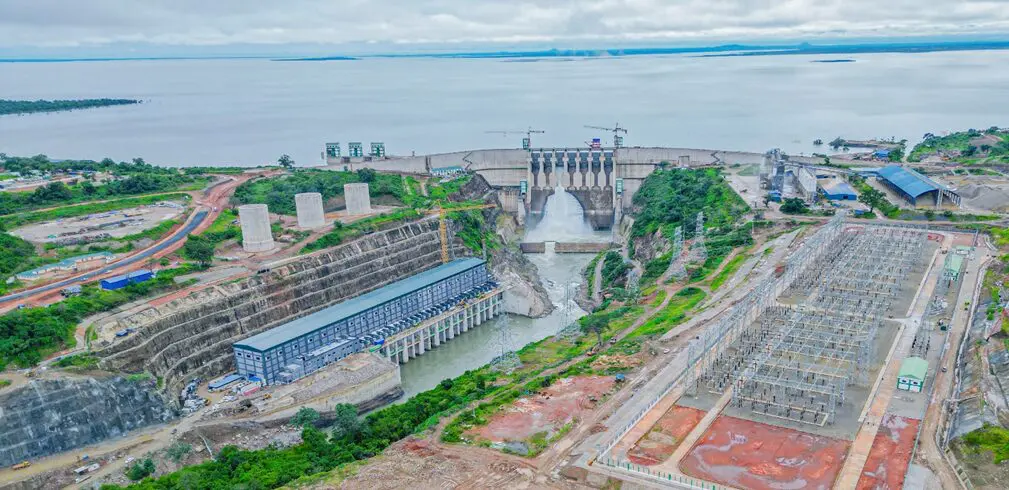
Tanzania added 2,115 megawatts of hydropower generation capacity through the Julius Nyerere Hydropower Station. Kenya's geothermal programme has given it one of the most stable baseload generation profiles in Sub-Saharan Africa. Ethiopia's Grand Ethiopian Renaissance Dam has transformed the country from power-scarce to a potential regional electricity exporter. Rwanda is planning nuclear capacity. Uganda is approaching first oil through EACOP while simultaneously expanding its renewable energy base. By the headline statistics of generation capacity, East Africa has made more progress on its energy deficit in the past decade than in the previous three decades combined. And yet the manufacturers, the industrial investors, the SEZ developers, and the mining operations across the coverage region consistently identify energy reliability, energy cost, and energy system design as primary constraints on their investment decisions and operational performance. The problem has changed. The analytical framework being applied to it has not.
The Phase Transition That Most Energy Analysis Has Not Caught Up With
East Africa's energy challenge has moved through two distinct phases whose analytical requirements are fundamentally different, and the transition between them is the diagnostic insight that most energy sector commentary misses.
The first phase, which dominated the region's energy policy conversation from independence through approximately the mid-2010s, was absolute scarcity. Generation capacity was insufficient to meet demand at any price. Load shedding was a structural feature of the electricity system rather than an occasional response to peak demand. Industrial investment was constrained by the simple unavailability of power rather than by its cost or reliability characteristics. The policy response appropriate to this phase was straightforward in principle if difficult in execution: build more generation capacity as quickly as financing and institutional capacity allowed.
The second phase, which the major generation investments of the past decade have created, is structural misalignment. Generation capacity is growing, in some cases faster than the institutional, regulatory, and industrial development required to deploy it productively. The constraint has moved from the power station to the system around the power station: the transmission lines that carry electricity from generation to consumption, the distribution networks that deliver it to industrial and commercial users, the tariff structures that determine whether it is affordable for the manufacturing activities that would make it economically productive, and the industrial policy framework that determines whether the demand for industrial-scale reliable electricity is being created at a pace that justifies the generation investment.
Tanzania's JNHPS addition of 2,115 megawatts is the most concrete example of this phase transition in the coverage region. The generation asset exists. The transmission infrastructure required to carry its output to the industrial zones in Dar es Salaam, Dodoma, and along the Central Corridor is being expanded in parallel. The tariff structure that TANESCO will apply to industrial users of JNHPS power will determine whether the investment generates the manufacturing competitiveness improvement that justified its construction. The industrial demand that would absorb the additional generation at high utilisation rates depends on the SEZ development, the manufacturing investment, and the logistics improvement that Tanzania's broader investment programme is simultaneously attempting to deliver. All of these elements are in motion. None of them are coordinated through a system design framework that ensures they develop in alignment rather than in isolation.
Transmission and Distribution: The Gap Between Generated and Delivered
The analytical distinction between installed generation capacity and usable electricity at the point of industrial consumption is the most important and most consistently underweighted dimension of East Africa's energy challenge in its current phase.
Power losses across sub-Saharan African electricity grids average between 15 and 25 percent of generation, significantly higher than the 5 to 8 percent that characterises well-maintained grids in more developed electricity systems. These losses reflect a combination of technical inefficiencies, including resistance losses in aging transmission lines and transformer inefficiencies, and non-technical losses, including commercial losses from billing failures and theft. Both categories represent electricity that is generated, counted in installed capacity statistics, and then dissipated before reaching paying consumers. A country that reports 5,000 megawatts of installed generation capacity but loses 20 percent in transmission and distribution is delivering the equivalent of 4,000 megawatts to its users, not 5,000.
For industrial users, the voltage stability and supply continuity dimensions of transmission and distribution quality matter as much as the average delivery volumes. A manufacturing facility that receives its contracted electricity allocation on average but experiences voltage fluctuations that damage sensitive equipment, or brief interruptions that force production line shutdowns and restarts with the associated material waste and quality control challenges, is not receiving the energy service that its operational planning requires. The technical quality of delivered electricity, not just its quantity, determines industrial productivity.
Kenya's geothermal programme has given KPLC a generation profile with unusually high baseload stability, because geothermal output is not variable with weather conditions in the way that hydro is vulnerable to rainfall variation and solar and wind are dependent on meteorological conditions. But Kenya's distribution network, particularly outside Nairobi and the major secondary cities, still exhibits the reliability characteristics that make consistent industrial operations difficult in areas where manufacturing investment might otherwise be attracted by lower land costs and available labour. The generation quality is good. The distribution quality is uneven.
Tanzania's grid reliability challenge is most acute in the context of industrial zones. The Kwala Industrial Park, the Bagamoyo SEZ, and the Dodoma industrial development are all designed to attract manufacturing investment that requires reliable, high-quality electricity supply. The JNHPS addition improves the generation position dramatically. Whether the transmission infrastructure connecting JNHPS output to these industrial zones is sufficient to deliver the power quality that manufacturers require is the operational question whose answer will determine the industrial zones' competitiveness. A well-designed industrial zone with unreliable power is less competitive than a less well-designed zone with reliable power, and the investment location decisions of manufacturers reflect this calculation in ways that headline generation statistics do not capture.
The Tariff Problem: Power That Is Available But Not Affordable
East Africa's industrial electricity tariffs are among the highest in the world relative to per capita income and relative to the tariff levels that determine manufacturing competitiveness in the economies against which East African industries compete for investment and market share.
Industrial electricity tariffs in Tanzania, Kenya, and Uganda consistently rank among the most expensive in Sub-Saharan Africa and significantly above the levels in competing manufacturing locations including Vietnam, Bangladesh, Ethiopia's industrial park zones during their peak investment attraction period, and the Chinese industrial zones that continue to supply manufactured goods to East African consumer markets. The tariff gap between East African industrial electricity costs and competitor locations is a direct manufacturing competitiveness constraint that affects the return calculations of investors assessing East African SEZ locations against alternative production sites.
The structural reasons for high industrial tariffs in East Africa are specific and not easily resolved through political will alone. Utilities in the coverage region carry legacy debt from previous generation investments financed at commercial or semi-commercial rates. They cross-subsidise residential tariffs, which are kept below cost-recovery levels for social and political reasons, through higher industrial tariffs that are intended to ensure overall system financial viability. They bear the cost of the transmission and distribution losses documented above, which reduce the revenue per unit of generated electricity while maintaining the capital and operating costs of generation. And they face the challenge that in some parts of the grid, the cost of service delivery to dispersed or low-density consumption areas is higher than the tariff revenues those areas generate.
The JNHPS investment creates a potential pathway to lower industrial tariffs, because hydropower once commissioned has lower operating costs than the thermal generation it displaces. If the operating cost reduction from replacing diesel and gas generation with JNHPS hydro is passed through to industrial tariffs rather than absorbed by utility debt service or cross-subsidy requirements, industrial electricity costs in Tanzania could decline meaningfully from current levels. Whether this pass-through occurs depends on regulatory decisions, utility financial management, and the political economy of electricity pricing that are entirely separate from the generation investment itself.
Rwanda's nuclear ambition, documented in Uchumi360's analysis of the March 2026 IAEA positive assessment, reflects in part a recognition that Rwanda cannot achieve the industrial electricity tariffs required for manufacturing competitiveness without a generation technology whose operating costs, once the capital investment is made, are significantly lower than the imported fuels and variable renewables that currently dominate Rwanda's generation mix. Nuclear's economic case in Rwanda is not primarily about energy security, though that matters. It is about industrial tariff levels that would make Kigali competitive as a manufacturing location against the regional alternatives that currently have lower industrial electricity costs.
Demand Structure: The Industrial Absorption Problem
The energy system design challenge cannot be resolved from the supply side alone, because supply-side improvements that are not matched by industrial demand growth at scale produce the underutilisation that makes energy investment financially unsustainable rather than transformatively productive.
East Africa's electricity demand composition is still dominated by residential consumption, small-scale commercial use, and the government and services sector. Industrial demand, meaning the large-scale manufacturing, processing, and mining electricity consumption that drives economic transformation through the employment, supply chain, and export earnings it generates, remains a relatively small share of total electricity demand across most of the coverage region except Kenya, where the manufacturing and commercial sector is more developed.
This demand composition creates a specific financial challenge for utilities. Residential and small commercial consumers typically have lower load factors, meaning they consume electricity more intermittently relative to their peak demand, than large industrial consumers whose production operations run continuously and whose load factors are much higher. Utilities that serve predominantly residential and small commercial loads face higher capital costs per unit of energy delivered because their grid infrastructure must be sized for peak demand even though average consumption is substantially lower. Industrial consumers improve system economics by consuming at higher and more consistent rates that increase asset utilisation across the grid infrastructure.
Without a significant increase in industrial demand, the financial case for expanding transmission and distribution infrastructure to the standard that industrial users require becomes harder to make, because the revenue from improved industrial service quality does not materialise if industrial investment has not yet occurred. This is the chicken-and-egg problem of industrial energy development: industrial investment requires reliable, affordable electricity, but the reliable, affordable electricity system requires industrial investment to be financially viable to build.
Tanzania's SEZ strategy, Kenya's industrial park development, and Rwanda's manufacturing zone ambitions are all attempts to create the industrial demand anchor that justifies the energy system quality investment. The coordination challenge is that the industrial zone development, the energy system improvement, and the manufacturing investment attraction are three parallel processes whose alignment in time determines whether the investment cycle is virtuous or whether each element waits for the others before proceeding.
The Off-Grid Achievement and Its Limits
East Africa's off-grid solar revolution is one of the most genuine development success stories of the past decade in the coverage region. Pay-as-you-go solar systems have reached rural households that grid extension would not economically serve for years or decades, improving quality of life, enabling small commercial activity, and demonstrating that African consumers are willing and able to pay for reliable energy services when the product is designed for their context.
The economic development contribution of off-grid solar is real and should not be understated. Rural households with reliable lighting can extend productive hours. Small businesses with electricity can operate refrigeration, power tools, and the digital devices that connect them to commercial networks. Agricultural processors with off-grid power can run equipment that improves product quality and reduces post-harvest losses.
What off-grid solar cannot do is provide the energy service that industrial manufacturing requires. A textile factory, a food processing facility, a mineral processing plant, or an aircraft assembly operation requires continuous, high-capacity, stable electricity at industrial voltage standards that no off-grid solar system can economically deliver at present. The energy transition that manufacturing requires is not from no electricity to off-grid solar. It is from unreliable grid electricity to reliable grid electricity at industrial quality standards and competitive tariffs.
The off-grid revolution and the industrial energy challenge are therefore not competing agendas. They are complementary solutions to different energy needs at different points in the economic development spectrum. The policy error is to allow off-grid success to reduce the urgency of industrial grid development by creating the impression that the energy problem is being solved when what is being solved is the household access problem rather than the industrial competitiveness problem.
Regional Power Pooling: The Efficiency Gain That Institutional Fragmentation Is Preventing
The Eastern Africa Power Pool framework provides the institutional architecture for a regional electricity trading system that would significantly improve the economics of electricity generation and consumption across the coverage region. The logic is compelling. Kenya has excess geothermal capacity at certain times of day and certain seasons. Ethiopia has GERD hydropower that exceeds its domestic consumption capacity as the dam fills and generation scales up. Tanzania has JNHPS output that could serve regional demand during periods when its own industrial consumption is below generation capacity. Uganda, Rwanda, and Burundi have demand that exceeds their domestic generation capacity and that could be served by regional imports more cheaply than by domestic generation expansion.
The EAPP's potential to match surplus generation in one country with deficit demand in another, reducing the average cost of electricity across the region by increasing asset utilisation, is the kind of efficiency gain that infrastructure investment generates when the institutional framework allows markets to function. The problem is that the institutional framework for regional electricity trading in East Africa is still developing, with regulatory barriers, transmission infrastructure gaps, and the political economy of national electricity systems creating frictions that prevent the regional market from operating at its efficiency potential.
Rwanda's planned nuclear capacity is partly a hedge against the risk that regional power pooling does not develop fast enough to serve Rwanda's industrial electricity demand at competitive prices. If EAPP develops the institutional and infrastructure framework to allow Rwanda to import surplus Ethiopian or Tanzanian power at competitive rates, the economic case for domestic nuclear generation weakens. If EAPP remains underdeveloped and Rwanda's industrial electricity demand cannot be served reliably and affordably from regional imports, the nuclear case strengthens. The nuclear investment decision is therefore partly a bet on regional institutional development that Rwanda is unwilling to make alone.
What System Design Actually Requires
The solution to East Africa's energy system design challenge is not a single intervention. It is the simultaneous development of four aligned elements that individually produce less than their combined effect.
Generation adequacy, which the coverage region is actively building through the JNHPS, Kenya's geothermal expansion, and the renewable energy programmes across multiple countries, is the foundation. Without adequate generation, nothing else matters. But the coverage region has largely turned the corner on absolute generation scarcity. The remaining generation investments should be sized and located based on industrial demand projections rather than on general population growth, because the productivity returns on industrial-grade generation are substantially higher than the returns on residential and small commercial generation at the margin.
Transmission and distribution quality, which requires investment in line upgrades, transformer replacement, smart grid technology, and the metering and billing infrastructure that reduces non-technical losses, is the gap between generated and delivered electricity that the coverage region's current development phase makes most urgent. The capital requirement is substantial but the economic return, in reduced industrial electricity costs, increased utility revenue per unit of generation, and improved manufacturing competitiveness, is well-documented in the infrastructure economics literature.
Tariff restructuring, which requires the regulatory discipline to pass through generation cost reductions to industrial users while managing the political economy of residential tariff adjustments, is the pricing mechanism that determines whether improved supply quality translates into manufacturing competitiveness or is absorbed by utility debt service and cross-subsidy requirements. This is the most politically challenging of the four elements and the one most frequently deferred in favour of the more visible infrastructure investments.
Industrial demand development, through SEZ investment, manufacturing attraction, and the minerals processing capacity that Uchumi360's critical minerals analysis has identified as Tanzania's most significant value chain opportunity, is the demand anchor that makes the first three investments financially viable and economically productive. Energy system investment without corresponding industrial demand development creates the stranded capacity problem that the infrastructure article this month identified as the central risk in East Africa's infrastructure investment cycle.
The Bottom Line
East Africa's energy problem has changed. The region is no longer primarily running out of power. It is running a power system whose design was calibrated for a different economic structure than the one its investment programme is attempting to build.
The Julius Nyerere Hydropower Station, Kenya's geothermal base, Rwanda's nuclear ambition, and the renewable energy programmes across the coverage region are the generation investments that address the absolute scarcity phase. They are necessary and their construction is justified. But they are not sufficient for the industrial competitiveness phase that East Africa's development agenda requires.
Sufficient requires the transmission and distribution quality that delivers industrial-grade electricity to manufacturing zones. It requires tariff structures that make East African industrial electricity costs competitive with the manufacturing locations that regional industries compete against. It requires regional power pool development that allows surplus generation in one country to serve industrial demand in another at the efficiency that integrated markets generate. And it requires the industrial demand development that makes the energy system investment financially viable rather than capacity built ahead of the economy that would use it productively.
Getting all four elements right simultaneously is the system design challenge that East Africa's energy sector is entering. It is harder than building power stations. It requires institutional coordination, regulatory discipline, and the industrial policy coherence that aligns energy investment with manufacturing development in ways that national energy ministries, national utilities, and national industrial development agencies do not automatically produce when operating within their individual mandates.
The region has moved past absolute energy scarcity. The next constraint is system design. And system design is an institutional challenge, not an engineering one.
_______________________________________________________________________________________
Sources: African Development Bank Energy Outlook 2024. World Bank Africa Energy Report 2025. International Energy Agency Africa Energy Outlook 2024. East African Power Pool Reports 2025. Tanzania Energy Sector Review 2025. Kenya Energy and Petroleum Regulatory Authority Data 2025. Julius Nyerere Hydropower Station Generation and Commissioning Data. Rwanda Atomic Energy Board Nuclear Programme Documentation. Tanzania Investment and Special Economic Zones Authority Tiseza Data 2025. World Bank DMDP II Project Documentation 2023. _______________________________________________________________________________________
Uchumi360 covers business, investment, and economic policy across East, Central, and Southern Africa.
