
Kigali Innovation City Broke Ground in September 2024. The More Important Question Is Whether It Can Break the Dependency on Tea and Coffee.
Ready
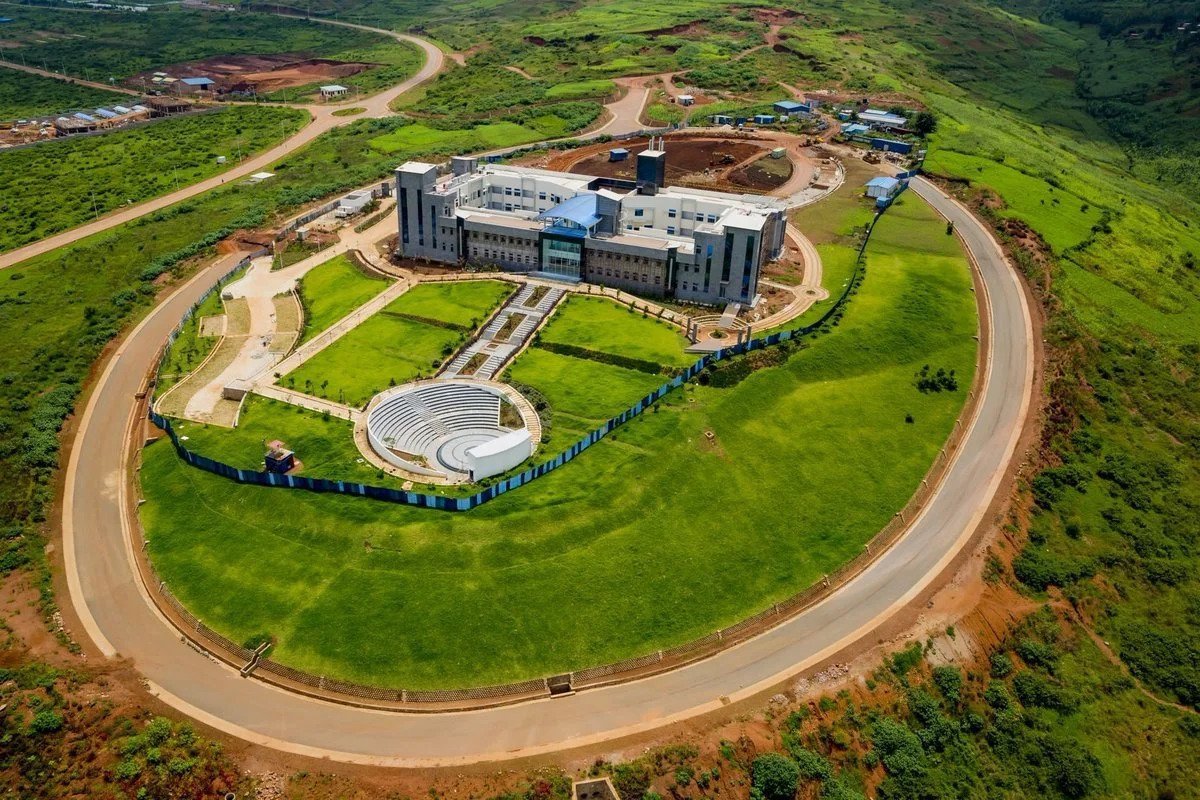
Rwanda's economic model has been one of the most deliberately designed in Africa. Following the 1994 genocide, the government built institutions, attracted foreign investment, and developed a governance framework whose quality is reflected in consistently low corruption indices, high ease-of-doing-business rankings, and the 500 percent interest rate premium reduction that Uchumi360's analysis documented as the most direct market signal of institutional quality improvement. The economy has grown at or above 7 percent annually for most of the past decade. But the structure of that growth still reflects the commodity dependence that Vision 2050 is explicitly designed to escape. Coffee, tea, and tourism remain Rwanda's primary foreign exchange earners. Manufacturing is shallow. Technology exports are nascent. Kigali Innovation City, a 61-hectare mixed-use development within Kigali's Special Economic Zone being developed by Africa50 and the Rwanda Development Board, is the most concrete physical expression of Rwanda's attempt to shift from a commodity-exporting economy to a knowledge-exporting one. Its economic significance is not in its buildings. It is in whether the talent retention and commercialisation ecosystem it is trying to create can generate the intellectual property, software exports, and fintech solutions that would constitute a structural economic transformation rather than a well-designed property development.
What KIC Is and What Has Actually Been Built
Kigali Innovation City is a mixed-use master-planned innovation city being developed in Kigali, Rwanda in accordance with Rwanda's National Strategy for Transformation and Vision 2050. The official groundbreaking was held in September 2024, marking the beginning of construction on the smart city development. The project is anticipated to create more than 50,000 jobs and produce more than 2,600 students each year.
Africa50 is co-sponsoring the project with the Rwanda Development Board at a total cost of approximately USD 300 million. The government of Rwanda has agreed to provide the shared infrastructure and the incentives that would enable the ecosystem to thrive. KIC is expected to generate USD 150 million in ICT exports annually.
The institutions already operating within KIC are its most analytically significant assets. KIC has attracted universities including Carnegie Mellon University Africa, the Africa Leadership University, the Africa Institute of Mathematical Sciences, and the University of Rwanda Centre for Biomedical Engineering and E-Health, as well as pharmaceutical company Cooper Pharma. Some of them have started operating within KIC, including Cooper Pharma, CMU, and ALU, while the University of Rwanda Centre of Excellence in Biomedical Engineering is under construction.
CMU-Africa sits on 6,000 square metres and can accommodate up to 300 graduate students. CMU-Africa is the first centre of excellence to be located in Kigali Innovation City, whose goal is to drive Rwanda's economic growth through digital transformation.
The anchor institution presence matters because it is the most specific and most credible indicator of whether KIC is developing the talent pipeline that differentiates a functioning innovation ecosystem from a real estate development with good branding. CMU-Africa produces master's and doctoral graduates in electrical and computer engineering and information technology whose skill level and research depth is comparable to graduates of CMU's main Pittsburgh campus. These graduates are the talent pool from which technology companies locate to Rwanda, from which startups are founded, and from which the intellectual property that constitutes a knowledge economy's primary export is generated.
The Talent Retention Argument and Its Limits
The economic rationale for KIC that Uchumi360's skills analysis most directly supports is the talent retention argument. Africa's brain drain, the emigration of its most highly educated individuals to the United States, Europe, and the Gulf, represents not only a human capital loss but a fiscal loss: the tax revenues that these individuals would have generated, the businesses they would have founded, and the knowledge they would have contributed to the domestic economy all leave with them.
Rwanda's specific brain drain challenge is compounded by its small market size. A data scientist who graduates from CMU-Africa with world-class technical skills has career opportunities in Nairobi, Lagos, London, San Francisco, and Singapore that Rwanda's domestic technology market cannot match in terms of compensation, career trajectory, or the professional peer community that makes world-class technical work possible. Retaining this talent in Rwanda requires creating the conditions that make Kigali a competitive location for the careers of its best graduates, not just a comfortable and well-governed place to live.
KIC's co-location of CMU-Africa with technology companies, financial investors, and the government institutions that are driving Rwanda's digital economy development is the most direct attempt to create these conditions. A graduate who can move from CMU-Africa's research environment into a career at a technology company operating within the same 61-hectare campus, with access to the startup ecosystem, the venture capital, and the institutional clients that KIC is designed to concentrate, has a career pathway in Kigali that a Rwandan technology cluster without this concentration cannot provide.
The limit of this argument is the current scale of the technology company presence at KIC relative to the talent pipeline that CMU-Africa and the other institutions are producing. KIC will include universities, office buildings, start-up business incubators, retail, hospitality, accommodation amenities, commercial and real estate, but the technology company tenants at the scale required to absorb 2,600 graduates annually and provide the career trajectories that would make Kigali competitive with global technology hubs are not yet present in the numbers that the ecosystem's aspirations require. Attracting those companies is the commercial development challenge that the September 2024 groundbreaking has only just made possible to begin addressing.
The Intellectual Property Economy: What Success Actually Requires
The brief's framing of KIC as a shift from exporting tea and coffee to exporting intellectual property, software, and fintech solutions is the right economic ambition. The path from a 61-hectare construction site to a functioning intellectual property economy is more specific and more demanding than the framing suggests.
Intellectual property exports require the combination of world-class research talent, commercial development capability, intellectual property legal frameworks that protect and monetise innovation, and the market access that allows Rwandan-developed software and fintech products to reach the global customers who would pay for them. KIC addresses the talent pipeline and the co-location of research and commercial activity. Rwanda's legal framework, which ranks among the most business-friendly in Africa on World Bank measures, provides a foundation for intellectual property protection. The market access challenge is the dimension that KIC's physical infrastructure cannot directly address and that Rwanda's small domestic market makes particularly acute.
A fintech company founded by CMU-Africa graduates in KIC that develops a mobile payments solution designed for East African markets is building a product for a regional market of several hundred million people accessible through the EAC's free trade framework and AfCFTA's progressive integration. That market scale is sufficient to support a commercially significant technology company. A company developing artificial intelligence solutions for global enterprise customers is building for a market that requires sales relationships, regulatory compliance, and brand recognition in the United States, Europe, and Asia that no Kigali-based startup can develop from KIC alone. The distinction between regionally oriented and globally oriented technology development matters for assessing KIC's realistic economic contribution.
The USD 150 million in annual ICT exports that Africa50 projects for KIC is an achievable target for a regionally oriented technology cluster serving East and Central African markets. It is a modest target for an ecosystem aspiring to compete with Singapore or Israel as a global technology hub. Rwanda's Vision 2050 should be assessed against the realistic rather than the aspirational benchmark, not because the aspiration is wrong but because the policy investments required to achieve the realistic benchmark are more specific and more actionable than the investments required to gesture toward the aspirational one.
The Physical Platform and Its Next Phase
The initial phase of the master plan development will primarily focus on the construction of horizontal infrastructure, including roads, drainage systems, street lighting, and walkways. The project also includes the development of the Digital Innovation Precinct that will cater to technology companies while another section of the precinct will provide residential facilities for employees working within the KIC companies.
This sequencing, horizontal infrastructure before vertical development before ecosystem activation, is the correct approach but generates the same timing challenge that every demand-speculative infrastructure investment faces. The horizontal infrastructure that is being built in 2024 and 2025 enables the vertical development that will be built in 2025 to 2027, which enables the ecosystem activation that would generate ICT exports in 2027 and beyond. The institutional and commercial flywheel that converts a well-built physical environment into a functioning innovation ecosystem has a minimum spin-up time that no amount of additional investment can compress beyond a certain point.
Rwanda's institutional track record suggests it will execute the physical development efficiently. The governance quality, the regulatory predictability, and the institutional discipline that Uchumi360 has documented across multiple analyses as Rwanda's primary development asset are the conversion factors that determine whether KIC's physical platform generates the talent and commercial ecosystem its designers intend. The CMU-Africa presence already operational within KIC is the most important leading indicator that the conversion is beginning to occur.
______________________________________________________________________________________
Sources: World Construction Network Kigali Innovation City Project Profile December 2025. CMU-Africa Kigali Innovation City Location Description. Wikipedia Kigali Innovation City Entry January 2026. Africa50 KIC Project Documentation. Rwanda Ministry of Finance KIC BADEA Financing Agreement October 2021. African Development Bank African Economic Outlook 2025. Rwanda National Strategy for Transformation NST2 Documentation. World Bank Rwanda Business Ready Report 2024. Uchumi360 Skills Gap Analysis April 2026. Uchumi360 Institutional Conversion Framework Article April 2026.
_______________________________________________________________________________________
Uchumi360 covers business, investment, and economic policy across East, Central, and Southern Africa.
 Uchumi360
Business Intelligence
Uchumi360
Business Intelligence
Uchumi360 covers business, investment, and economic policy across East, Central, and Southern Africa.
For the serious reader
You read to the end. That places you in a small group.
Uchumi360 is built for readers who demand precision over speed, structure over sentiment, and analysis that holds uncomfortable conclusions rather than softening them. If this work sharpens how you think about Africa's economy, help us keep building the infrastructure behind it.
Institutional Partners
Commission intelligence. Shape the conversation.
Uchumi360 works with development finance institutions, investment firms, sovereign bodies, and strategic organisations across the coverage region. Institutional partnership unlocks:
- Commissioned sector and country intelligence reports
- Branded research series under your institution's authority
- Exclusive data briefings for internal strategy teams
- Speaking and editorial presence at Uchumi360 events
- Co-published investment outlooks for your markets
Support Our Work
Independent analysis has a cost. Help us bear it.
Uchumi360 does not carry advertising. It does not take editorial direction from sponsors. Every article is produced without commercial compromise. Your contribution funds the reporting, research, and editorial infrastructure that keeps this analysis free from influence.
Secure checkout: One-time and monthly support are processed securely. Add payment credentials to enable checkout here.
Stay Connected
Keep up with every new insight.
Follow our latest analysis, policy coverage, and market intelligence as soon as it is published. If you need something specific, reach out directly and we will point you to the right research.
