
Kigali's Traffic Problem Is Not a Transport Problem. It Is a Productivity Tax. The Sonatubes and Gishushu Interventions Are the Correct Diagnosis.
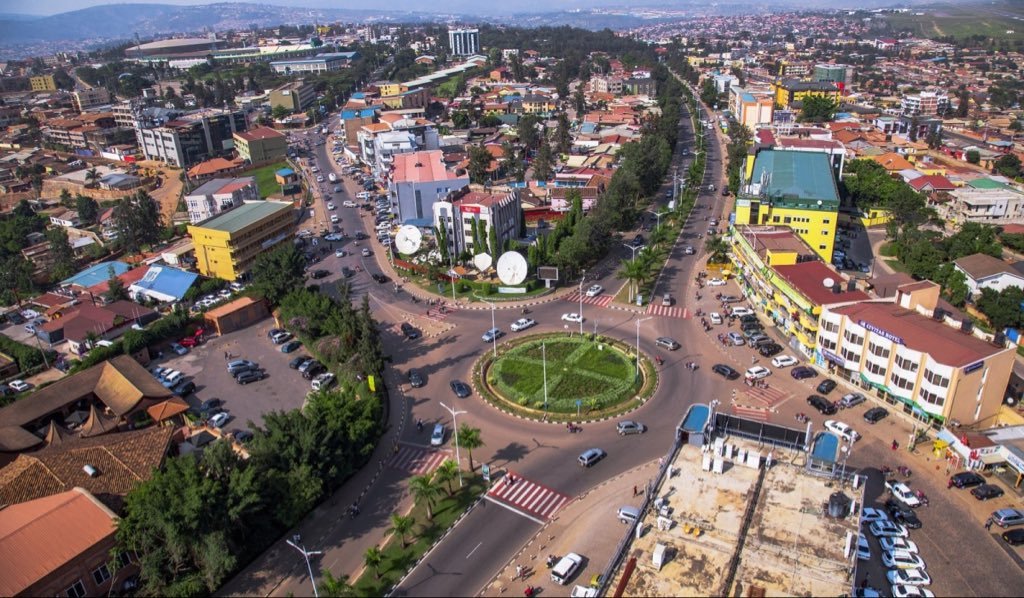
Kigali is the most efficiently governed city in East Africa by most institutional quality metrics. Its streets are clean, its planning frameworks are implemented rather than aspirational, and its infrastructure maintenance discipline is genuinely exceptional by regional standards. It is also a city whose economic geography is generating traffic congestion that imposes a measurable and growing productivity cost on the businesses, workers, and logistics operations that drive its economy. The Sonatubes interchange and the Gishushu flyover and underpass investments represent a specific and analytically important approach to this problem: not building more roads to induce more traffic but engineering strategic nodes where existing traffic volumes create bottlenecks whose elimination generates system-wide productivity gains disproportionate to the construction cost. Whether this targeted node intervention approach is sufficient for a city growing at the pace that Kigali's investment surge and population growth are generating is the policy question that the projects themselves do not answer.
The Congestion Tax on Urban Productivity
Uchumi360's BRT analysis for Dar es Salaam documented the mechanism through which urban traffic congestion imposes macroeconomic costs that are systematically underestimated by standard infrastructure appraisal frameworks. The same mechanism applies in Kigali, at a smaller absolute scale but against an economy whose per capita income and formal sector depth make the cost per hour of lost productivity larger than in Dar es Salaam.
A logistics company whose delivery vehicles spend forty minutes at the Sonatubes interchange during morning peak hours instead of fifteen is paying a congestion tax of twenty-five minutes of vehicle operating cost, driver cost, and delivery time delay on every vehicle crossing that intersection during peak hours. Multiplied across the fleet size, the operational days, and the economic value of the deliveries being delayed, the aggregate cost is measurable and compounds across every peak hour of every working day. The Kigali Metropolitan Master Plan's traffic studies have documented these costs at specific intersections whose volumes and delay characteristics make them the highest-priority targets for intervention.
The Sonatubes and Gishushu investments target the specific intersections where traffic volume, route importance, and geometric constraints combine to generate the largest productivity losses per hour of delay. This node-targeted approach is more cost-effective than general road network expansion because it addresses the binding constraints in the system rather than adding capacity uniformly to a network where most segments are not yet capacity-constrained. A flyover at Sonatubes that eliminates the traffic signal delay on the main commercial corridor between Kigali's central business district and its residential and industrial periphery generates productivity benefits across every vehicle and every business that uses that corridor, not just the vehicles that previously queued at the intersection.
The Property Value Signal
The brief's observation that infrastructure nodes of this type generate property value increases in surrounding areas is analytically correct and empirically documented in every urban context where major traffic improvements have been made. The mechanism is straightforward: reduced congestion at a key intersection reduces the time cost of accessing the commercial areas around it, which increases the effective accessibility of those areas and therefore their commercial attractiveness to businesses and residents who value accessibility in their location decisions.
Kigali's property market, which is more developed and more formally structured than most East African cities of comparable size, responds to accessibility improvements with measurable speed. The commercial real estate development that follows major infrastructure improvements in Kigali's established commercial corridors reflects the same agglomeration dynamic that Uchumi360's Kampala-Entebbe Expressway analysis documented for corridor infrastructure: reduced friction in accessing economic opportunities increases the density of economic activity that locates to take advantage of the improved accessibility.
The property value increase signal is therefore not just a financial return indicator for adjacent property owners. It is an economic productivity signal confirming that the infrastructure investment has generated genuine accessibility improvements that businesses and residents are willing to pay for in their location decisions. Kigali's planning framework, which directs higher-density commercial development toward improved infrastructure corridors rather than allowing dispersed development that would dissipate the accessibility benefit, amplifies this productivity signal by concentrating economic activity where the infrastructure investment has generated the most accessibility improvement.
The Sequencing Question for a Growing City
Kigali's population is growing and its economic activity is intensifying as the investment surge that Uchumi360 documented in the Rwanda NST2 analysis generates additional employment, commerce, and logistics activity. The Sonatubes and Gishushu interventions address the congestion that the current level of economic activity generates at these specific nodes. The question that the current investment programme does not fully answer is whether the pace of targeted node intervention is keeping pace with the pace of traffic generation that Kigali's economic development is producing.
A city that resolves its bottlenecks faster than economic growth creates new ones maintains the productivity benefit of its infrastructure investment over time. A city that resolves today's bottlenecks while tomorrow's are being created by growth-induced traffic increases is engaged in a permanent infrastructure catch-up that can only be won through the kind of systematic demand management, public transit investment, and land use planning integration that prevents the traffic generation that creates the bottlenecks in the first place.
Kigali's BRT system development, its cycling infrastructure, and its pedestrian-focused urban planning reflect an understanding that demand management is as important as capacity expansion in keeping congestion costs from compounding with economic growth. The Sonatubes and Gishushu investments are the capacity expansion component of this strategy. Their productivity returns are highest when they are accompanied by the demand management investments that prevent the additional road capacity from inducing the additional traffic that would restore congestion to pre-intervention levels.
Rwanda's institutional quality and planning discipline are the most credible indicators that this integrated approach will be pursued rather than abandoned when the demand management elements impose political friction. The same governance quality that has made Kigali's streets cleaner than any comparable African city and its infrastructure maintenance more consistent than any regional peer is the governance quality that would sustain the demand management discipline that prevents targeted node investment from being consumed by induced demand.
The Productivity Return on Node Investment
The economic case for the Sonatubes and Gishushu investments is strong precisely because they are targeted at the highest-impact bottlenecks rather than representing general road network expansion. The productivity return on eliminating a binding constraint in a network is substantially higher than the return on adding capacity to segments that are not yet binding constraints, because the binding constraint affects every journey through the network while non-binding segments affect only the journeys that would use additional capacity if it existed.
For Kigali's logistics operators, whose vehicles cross the Sonatubes intersection multiple times daily on distribution routes connecting the commercial district to residential areas, retail outlets, and the production facilities that supply them, the time saving per vehicle crossing compounds across the entire fleet and the entire operating year. For commuters whose morning journey to work is extended by congestion at Gishushu, the time recovered is productive time added to the working day that the congestion was previously consuming. For the businesses that employ those commuters, reduced commute stress and improved punctuality translate into marginal improvements in worker productivity and reliability that aggregate across the workforce and the working year.
These returns are not speculative. They are the documented productivity impacts of targeted bottleneck removal in urban economies that have been studied in comparable contexts across Africa, Asia, and Latin America. Kigali's institutional quality and its relatively compact urban form, which means that a small number of critical intersections serve a large proportion of the city's total vehicle movements, make the productivity return on targeted node investment particularly high relative to general network expansion.
_______________________________________________________________________________________
Sources: Kigali Metropolitan Master Plan Transport Studies. Rwanda Transport Development Agency Urban Infrastructure Programme Documentation. World Bank Kigali Urban Development Project Documentation. African Development Bank Rwanda Country Infrastructure Programme. Rwanda Development Board Investment Climate Data 2025. Uchumi360 BRT Macroeconomic Intervention Analysis April 2026. Uchumi360 Kampala-Entebbe Expressway Analysis April 2026. Uchumi360 Rwanda NST2 World Bank Package Analysis March 2026. African Development Bank African Economic Outlook 2025. _______________________________________________________________________________________
Uchumi360 covers business, investment, and economic policy across East, Central, and Southern Africa.
 Uchumi360
Business Intelligence
Uchumi360
Business Intelligence
Uchumi360 covers business, investment, and economic policy across East, Central, and Southern Africa.
