
Konza Technopolis Has Been Building for Fifteen Years. The Most Honest Assessment of Where It Stands Is in the Numbers Nobody Is Quoting.
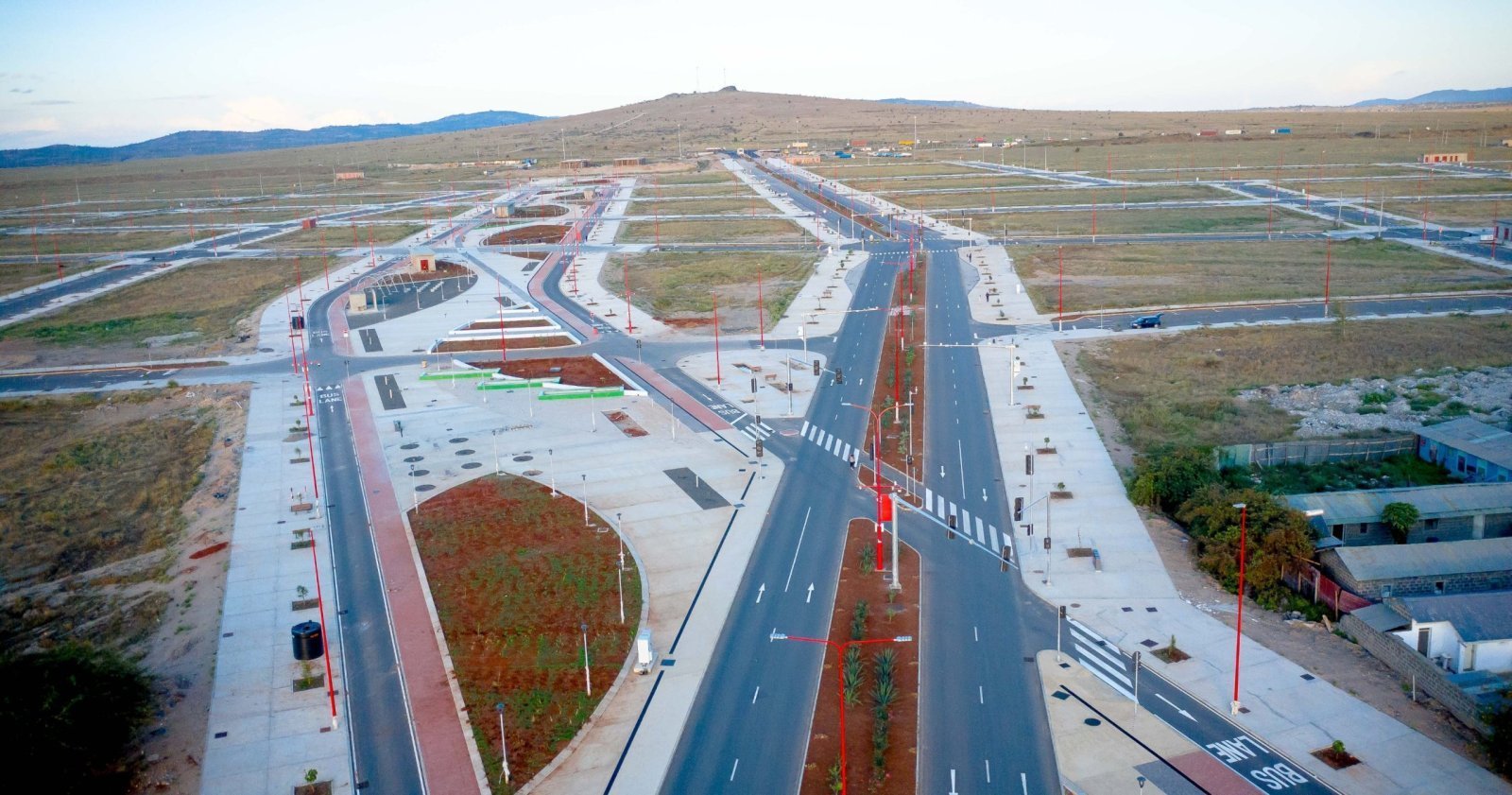
Kenya's Konza Technopolis has received more architectural renders, ministerial speeches, and Silicon Valley comparisons than any infrastructure project in East Africa's modern development history. In October 2025, President William Ruto officially launched Phase 1 of the smart city's facilities, marking the completion of horizontal infrastructure across more than 400 acres of the 5,000-acre site: roads, water systems, a private power grid delivering 99.99 percent uptime, and a Tier III National Data Centre that became fully operational earlier in 2025. These are real milestones. They deserve acknowledgement. But the Kenya Auditor General's findings, published in 2025, provide the analytical counterweight that the official launch narrative omits. Of 23,000 virtual desktop devices procured for the National Data Centre and smart city operations, only 1,000 of the 17,508 deployed are in active use. KSh 14.4 billion in assets sit as work in progress. Of 515 surveyed land parcels, only 33 were leased and nine developed by the end of 2024. Annual revenue stands at KSh 252.4 million against cumulative investment of KSh 83.5 billion. The gap between what Konza has built and what Konza is producing is the most important economic story in Kenya's digital infrastructure development, and it is the story that the Silicon Savannah narrative has consistently crowded out.
What Has Actually Been Built
The factual record of Konza's physical development is more substantial in 2026 than the project's critics typically acknowledge, and more modest than its promoters consistently claim.
Phase 1 horizontal infrastructure is complete, and Konza Technopolis now operates its own private power grid, distributing electricity through more than 47 kilometres of underground cables in a ring network configuration that provides the backup and redundancy required by global smart infrastructure standards. The city spans over 400 acres of completed infrastructure including 40 kilometres of smart landscaped roads, a 120 megawatt substation, and East Africa's first vacuum-based solid waste collection system.
The Konza National Data Centre became fully operational in 2025, providing high-capacity cloud and data storage services for the technopolis's role as a digital hub, with capacity to handle national-scale computing needs. Cloud services drove KSh 151.6 million of the project's total revenue, quadrupling year on year, which is the most encouraging recent performance indicator available and the one revenue stream that is demonstrating genuine commercial traction.
By the end of the 2022 to 2023 fiscal year, at least 75 percent of parcels at Konza had been committed by investors, including Riara University, the Africa Centre for Technology Studies, the National Construction Authority, and the National Housing Corporation. By January 2025, Konza had attracted commitments from over 140 investors totalling approximately USD 1.2 billion.
The Kenya Advanced Institute of Science and Technology, modelled after South Korea's KAIST and supported by KSh 8 billion from the South Korean government with the remainder from Kenya, is preparing for its academic launch in late 2026. A Digital Media City supported by a USD 284 million financing agreement with South Korea is positioning Konza as a regional hub for the creative economy and digital broadcasting.
These are genuine and significant infrastructure achievements. The question is whether they represent the foundation of a functioning economic system or the completion of a very expensive platform that has not yet attracted the tenants who would make it one.
What the Auditor General Found That the Launch Ceremony Did Not Mention
The Kenya Auditor General's findings, published in 2025, provide the most analytically precise assessment of the gap between Konza's infrastructure investment and its economic output.
Of 23,000 virtual desktop devices procured for the National Data Centre and smart city operations, only 1,000 of the 17,508 deployed are in active use, while 5,492 remain in storage. Konza's idle technology is part of KSh 14.4 billion in work-in-progress assets, raising concerns about value for money in a project designed to reinforce Kenya's digital economy.
Infrastructure worth KSh 2.8 billion for buildings, KSh 1.3 billion for access roads, and KSh 185 million for water works remains incomplete more than six years after construction began.
Despite cumulative private and public investment of KSh 83.5 billion and 515 surveyed land parcels, only 33 were leased and nine developed by the end of 2024, leaving the project heavily reliant on one source of revenue.
Annual revenue stands at KSh 252.4 million against this cumulative investment base. The return on investment calculation that this ratio implies is the number that no official Konza communication has addressed directly, and it is the number that any serious institutional investor evaluating Konza as a location or an investment opportunity needs to engage with before the promotional materials.
The Konza Technopolis Authority is also running at less than half its approved staffing level, which raises questions about the institutional capacity to manage the tenant attraction, regulatory processing, and investor servicing that converting committed parcels into developed and operational facilities requires.
These are not peripheral concerns about a project that is otherwise performing well. They are structural indicators that the gap between Konza's infrastructure investment and its economic output is larger than the Phase 1 launch narrative acknowledges, and that closing it requires a different analysis from the one that infrastructure completion milestones provide.
The Demand-Anchoring Problem That Fifteen Years Has Not Resolved
Uchumi360's infrastructure economics framework, developed across the TAZARA, Kampala-Entebbe Expressway, and infrastructure debt analyses published this month, identifies the gap between infrastructure completion and economic output as the determinant of whether infrastructure investment generates returns or generates debt. Konza is the most developed and most data-rich case study of this challenge in East Africa.
The infrastructure-without-tenants problem that Konza faces is precisely the demand-speculative infrastructure challenge that the Kampala-Entebbe Expressway analysis documented at the corridor level. Konza was built on the assumption that a world-class physical platform, offering reliable power, high-speed connectivity, and fiscal incentives, would attract the technology companies, research institutions, and manufacturing operations that would make it economically self-sustaining. Fifteen years into development, the skyline awaits office blocks and residential precincts, and actual transformation is still following these trends rather than driving them.
The location constraint that critics have consistently identified is a genuine structural challenge that fiscal incentives alone cannot resolve. Konza's remote location 60 kilometres southeast of Nairobi deters corporate relocation amid Kenya's inadequate transport links, and this transport connectivity gap between Nairobi's existing technology ecosystem and Konza's new infrastructure represents the most specific and most tractable constraint on tenant attraction that the project faces.
The Nairobi-Konza Corridor Transport Network master plan that is under development as part of Phase 2 planning addresses this constraint directly. A preliminary feasibility study for an intelligent transport system and integrated control centre, consultation for smart logistics implementation, and a master plan for the Konza-Nairobi Corridor Transport Network are all under development. Whether this transport integration is delivered before the window for anchoring Konza's development with major international tenants closes is the timing question that determines whether Konza becomes the regional technology hub its planners envisioned or remains a well-equipped infrastructure platform that Nairobi's established technology ecosystem never had sufficient incentive to relocate to.
The Kenya-AIST Bet: Human Capital as the Anchor Tenant
The most strategically significant investment in Konza's current development pipeline is not a technology company or a manufacturing facility. It is the Kenya Advanced Institute of Science and Technology, whose academic launch in late 2026 represents the human capital anchor that the technology ecosystem around it requires.
Uchumi360's skills analysis published this month documented the structural argument for why human capital institutions are the highest-value anchors for technology and innovation ecosystems. The skills gap across East Africa is not primarily a quantity problem. It is a quality and alignment problem. East Africa's universities produce graduates. They do not yet produce sufficient data scientists, AI engineers, and deep technology researchers at the quality and volume that a technology hub of Konza's ambitions requires to attract the international technology companies whose presence would validate the Silicon Savannah proposition.
The cabinet approved Kenya-AIST as a specialised post-degree awarding institution of strategic national importance on March 11, 2025. Tenants like Kenya-AIST are yet to fully activate their graduate research programs, thus delaying the academic-industry relations that constitute the innovation ecosystem's most important economic mechanism.
When Kenya-AIST reaches operational scale, producing master's and doctoral graduates in technology disciplines at the research frontier, it changes the economic logic of Konza for international technology companies. A company that locates at Konza gains access not just to a physical platform with fiscal incentives but to a pipeline of research talent, a set of collaborative research relationships, and the knowledge spillovers that proximity to a world-class graduate research institution generates. This is the model that has anchored technology clusters in Singapore, South Korea, and Israel, where the research university has been the gravitational centre around which commercial technology activity organised itself.
Whether Kenya-AIST can reach this anchor role depends on factors that its construction completion does not guarantee: the quality of its faculty recruitment, the commercial relevance of its research programmes, and the industry partnership frameworks that connect its research output to the technology companies that the surrounding ecosystem is trying to attract. These are institutional quality questions rather than infrastructure questions, and they are the conversion factors that the AEO 2025's institutional framework identifies as the determinants of whether capital investment generates development outcomes.
The Revenue Model That Needs to Change
Konza's annual revenue of KSh 252.4 million against cumulative investment of KSh 83.5 billion represents a return on invested capital that no private sector investor would accept, and that public sector investors can sustain only if the trajectory toward commercial viability is credible and near-term rather than perpetually projected into the medium term.
The revenue composition reveals the structural challenge precisely. Land lease income fell 17 percent and other revenue streams declined 61 percent, leaving cloud services as the only growing revenue line, quadrupling year on year but from a base that remains modest relative to the investment it is servicing.
The cloud services growth is the most analytically encouraging data point in Konza's recent performance, because it demonstrates that the National Data Centre is generating real commercial demand from government agencies and private sector companies that need secure, locally hosted data infrastructure. Kenya's data sovereignty imperative, the policy preference for hosting government data within Kenya's borders rather than on foreign cloud infrastructure, creates a structural demand for Konza's data centre capacity that does not depend on the tenant attraction success that other revenue streams require. Deepening this revenue stream, by expanding the National Data Centre's capacity utilisation, by developing more sophisticated cloud services offerings, and by marketing Konza's data infrastructure to regional governments and multinational companies with East African operations, is the near-term commercial strategy that the revenue data supports.
The land lease revenue trajectory is more concerning. In February 2025, the government issued an ultimatum urging investors who had committed to parcels to begin developing their plots, which is an implicit acknowledgement that committed investment and developed investment are materially different conditions and that the gap between them is larger than the headline committed investor figures suggest.
The Honest Verdict
Konza Technopolis in April 2026 is neither the Silicon Savannah its promoters claim nor the failed promise its harshest critics allege. It is something analytically more interesting and more instructive than either characterisation: a genuine infrastructure achievement that has not yet crossed the threshold from platform to ecosystem, and whose crossing of that threshold depends on a set of institutional, commercial, and connectivity decisions that are within Kenya's policy control but that have not yet been made with the urgency the investment scale requires.
The infrastructure is real. The National Data Centre is operational and generating growing revenue. The power grid is functioning to international reliability standards. Kenya-AIST's academic launch later this year represents the human capital investment that could change the tenant attraction logic for international technology companies. The USD 284 million Digital Media City investment signals that South Korea's strategic commitment to Konza's development extends beyond the KAIST partnership.
Against this, the Auditor General's findings are unambiguous. KSh 14.4 billion in idle assets. Nine developed parcels out of 515. Annual revenue of KSh 252.4 million against KSh 83.5 billion in cumulative investment. These are not the indicators of a project that has crossed from infrastructure investment to economic engine. They are the indicators of a project that has built the platform and is waiting for the tenants.
The policy decisions that determine which trajectory Konza follows from this point are specific. The Nairobi-Konza transport corridor that closes the connectivity gap between Nairobi's existing technology ecosystem and Konza's new infrastructure. The Kenya-AIST faculty and research programme quality that determines whether the institute becomes a genuine anchor tenant or remains a credentialled building. The idle technology asset utilisation strategy that converts KSh 14.4 billion of work-in-progress capital into revenue-generating infrastructure. And the anchor tenant strategy that identifies and attracts the one or two major international technology companies whose presence would validate the Silicon Savannah proposition for the 130 committed investors whose plot development decisions are still pending.
Konza is not finished. Whether it succeeds will be determined by decisions made in the next three years rather than the fifteen that have already passed.
_______________________________________________________________________________________
Sources: Kenya Auditor General Report on Konza Technopolis 2025. Konza Technopolis Development Authority Official Data and Strategic Plan 2023 to 2027. Kenya National Treasury Budget 2025 to 2026 ICT Allocation. Wikipedia Konza Technopolis Entry updated January 2026. Nairobi Wire Konza Private Power Grid Report March 2026. Kenyan Wall Street Auditor General Findings August 2025. Pay Hero Kenya Konza 2026 Update March 2026. Tech Trends Kenya Konza Progress Assessment May 2025. IMF Kenya Article IV Consultation 2024. World Bank Kenya Economic Update 2024. African Development Bank African Economic Outlook 2025.
_______________________________________________________________________________________
Uchumi360 covers business, investment, and economic policy across East, Central, and Southern Africa.
 Uchumi360
Business Intelligence
Uchumi360
Business Intelligence
Uchumi360 covers business, investment, and economic policy across East, Central, and Southern Africa.
