
Zambia Spent USD 2.11 Billion on Refined Fuel Imports in 2024. On April 10, 2026, It Broke Ground on a USD 1.1 Billion Refinery Designed to End That Dependency. The Project Is Not About Oil. It Is About Who Captures the Value of Processing It.
Ready
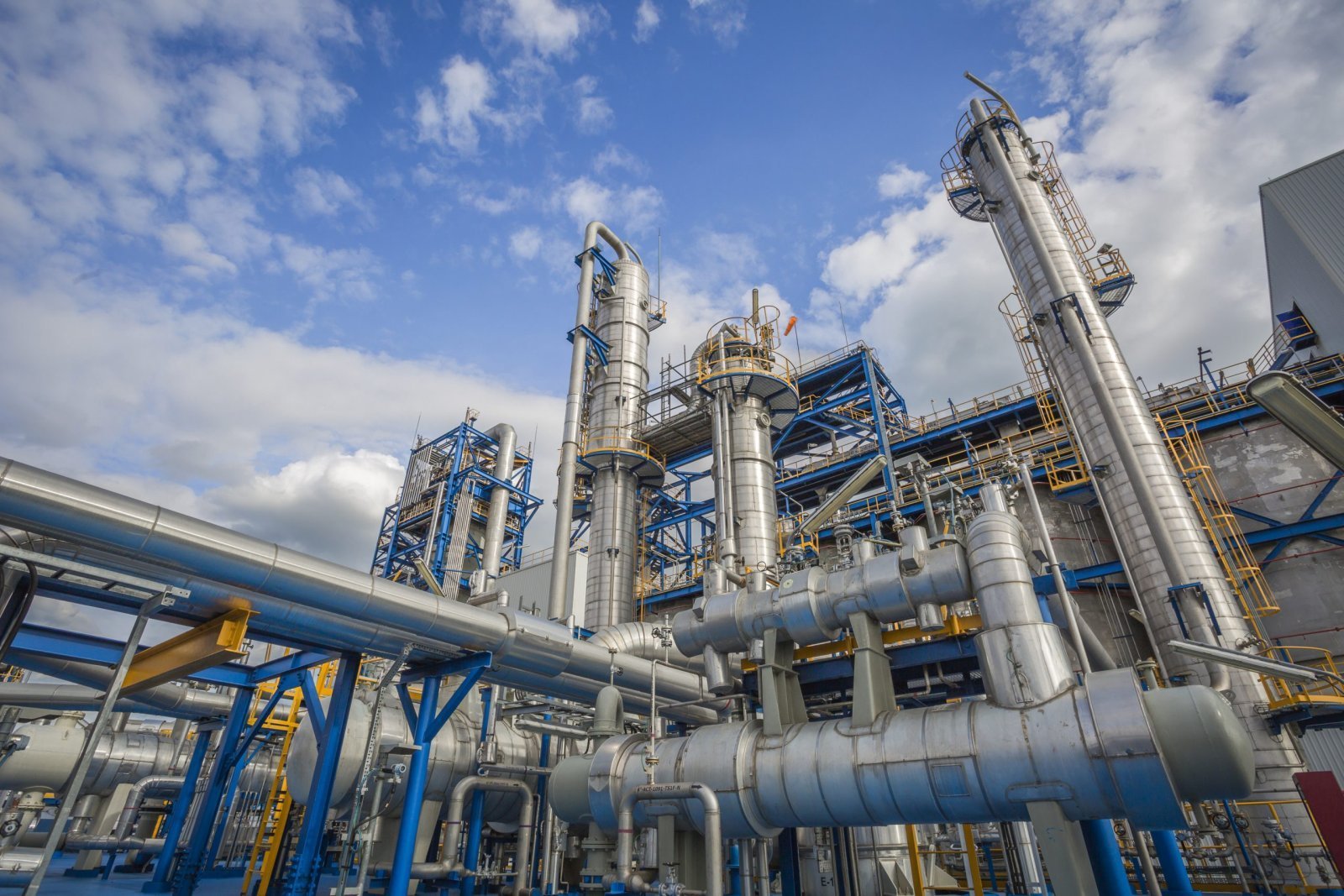
Zambia broke ground on April 10, 2026, on a USD 1.1 billion oil refinery in Ndola, the Copperbelt's main industrial city, through a joint venture between China's Fujian Xiang Xin Corporation and the Industrial Development Corporation of Zambia under the entity Zambia Petrochemical Energy Company, with construction scheduled for completion by end 2028 and a processing capacity of 3 million metric tonnes of crude oil per year, equivalent to approximately 60,000 barrels per day, which Zambia's Energy Minister Makozo Chikote confirmed is sufficient to meet the country's entire current domestic fuel demand. The financial logic behind that ambition is precise: Zambia spent USD 2.11 billion on refined petroleum product imports in 2024, sourced primarily from Singapore at USD 426 million, Tanzania at USD 387 million, and the United Arab Emirates at USD 335 million, making fuel imports the country's single largest source of foreign exchange outflow and the most direct and most measurable expression of the value chain position that the Ndola refinery is designed to change, by moving Zambia from being a country that pays for foreign refining capacity to being a country that owns and operates refining capacity of its own, processing crude imported from the Middle East through the port of Dar es Salaam rather than importing the finished product that those same barrels of crude become when refined elsewhere.
The Economic Logic of the Value Chain Step
The distinction between importing refined petroleum products and importing crude oil for domestic refining is not simply a technical one but an economic one whose implications compound across every year that the operational refinery is running, because the refining margin, the difference between the price of crude oil inputs and the price of the refined products that emerge from processing them, is a portion of the value of every barrel that currently leaves Zambia as foreign exchange payment to Singapore, Tanzania, and UAE suppliers and that will, once the Ndola facility is operational, instead circulate within the Zambian economy through wages, taxes, profits, and the downstream industrial activity that a functioning refinery generates around itself.
The integrated energy complex structure that Minister Chikote described at the groundbreaking ceremony, which encompasses not only the primary oil refinery but also LPG bottling, bitumen production, and lubricant blending facilities within the same complex, reflects the understanding that the economic case for a refinery of this scale is not made by fuel production alone but by the downstream value chain that fuel production anchors, because LPG bottling serves the household and industrial gas market, bitumen production serves the road construction sector that Zambia's infrastructure programme requires, and lubricant blending serves the mining and transport sectors whose operating costs the refinery is fundamentally designed to address. Each of these downstream activities captures additional value from the crude oil input beyond the primary refined fuel margin, extending the economic benefit of the processing investment beyond the refinery gate into the broader industrial economy.
In 2024, Zambia imported USD 2.11 billion worth of refined petroleum products, with key suppliers including Singapore at USD 426 million, Tanzania at USD 387 million, and the United Arab Emirates at USD 335 million, making fuel imports the country's largest source of foreign exchange outflow. The USD 2.11 billion annual import bill provides the most direct possible financial justification for a USD 1.1 billion capital investment, because if the refinery operates at capacity and at competitive refining margins, it can eliminate that import bill within a timeframe shorter than its own construction cost recovery period, generating fiscal and foreign exchange savings that compound across the facility's operational life in ways that make the investment case straightforward relative to the USD 2.11 billion annual cost of the alternative.
Why Ndola and Why the Copperbelt
The location of the refinery is not an administrative decision but a strategic one whose logic connects the facility directly to the primary source of Zambia's fuel demand in a way that reduces both the logistics cost of fuel distribution and the operational risk to the mining sector that fuel supply disruptions create. Zambia currently imports all of its refined petroleum products, and the Ndola site, situated close to the border with the Democratic Republic of Congo, is considered well-positioned for potential exports to neighbouring markets.
Copper mining is among the most fuel-intensive industrial activities in any economy, consuming diesel for haul trucks, generators, water pumps, and the full range of heavy equipment that open-pit and underground copper extraction requires, and Zambia's Copperbelt is the operational centre of one of the largest copper production systems in the world, encompassing not only Zambia's own mines but the direct connection to the DRC's Katanga mining belt that shares the same geological formation and the same logistics infrastructure, meaning that the refinery's potential export market begins immediately across the border rather than requiring the development of new trade relationships at greater geographic distance.
The refinery would source crude from the Middle East, imported through the Tanzanian port of Dar es Salaam. This crude oil logistics route is analytically significant for Uchumi360's coverage region because it establishes Dar es Salaam as the entry point for the crude feedstock that will supply the Ndola refinery, connecting Tanzania's port infrastructure directly to Zambia's industrial development strategy and reinforcing the Uchumi360 argument about Tanzania's positioning as a regional logistics hub in ways that extend beyond the SGR corridor's primary market of landlocked EAC economies to include SADC economies whose industrial investment decisions are being structured around Dar es Salaam's port capacity.
The Employment and Skills Transfer Dimension
During the construction phase, the project is expected to generate more than 2,200 jobs, and once operational it will support over 600 direct jobs and more than 2,000 indirect roles across logistics, supply, and related services. The 2,200 construction jobs and the 2,600 operational and indirect jobs represent employment outcomes that are significant in absolute terms but more significant in compositional terms, because refinery construction and operation require the engineering, welding, instrumentation, chemical process management, and quality control skills that are the most transferable and most productivity-enhancing technical competencies that a developing economy can build in its workforce through industrial project participation, and the skills transfer and training mandate that Energy Minister Chikote explicitly urged the developers to prioritise reflects the understanding that the employment value of the refinery extends beyond the jobs it creates to the human capital it builds in the workers who fill them.
The ZPEC chairperson Huang Tieming's acknowledgement at the groundbreaking that rising demand from Zambia's expanding industrial, transport, and agricultural sectors makes the project timely is the commercial partner's articulation of the demand-anchored industrialisation logic that makes the Ndola refinery analytically distinct from the speculative resource-based industrial investments that have a poor track record in developing economies: the refinery is not being built in anticipation of demand that might materialise but in response to demand that is already generating USD 2.11 billion in annual import payments, which is the most reliable possible signal that the market the facility will serve exists, is large, and is currently being served by foreign suppliers whose position the refinery is designed to displace.
The China Partnership and Its Commercial Architecture
Fujian Xiang Xin Corporation's role as the primary private sector partner in the ZPEC joint venture reflects the pattern that Uchumi360 has documented across East and Central African industrial investment, where Chinese industrial companies are bringing the engineering expertise, the construction capacity, and increasingly the operational management experience that large-scale refining and petrochemical projects require, in exchange for access to the resource base, the market position, and the long-term commercial relationships that strategic industrial infrastructure in a growing African economy provides.
The partnership structure, in which the Industrial Development Corporation of Zambia holds a stake alongside the Chinese private partner rather than simply granting a licence to a fully foreign-owned entity, creates the ownership architecture through which Zambia captures a share of the refining margin and the operational profits that the facility will generate rather than simply receiving tax revenue and royalties from a wholly foreign-owned operation, and the IDC's role as the state's industrial investment arm gives it the mandate to ensure that the skills transfer, the local procurement, and the Zambian workforce development that the partnership's social licence requires are embedded in the operational framework rather than remaining as aspirations in the groundbreaking ceremony speeches.
The Regional Supply Dimension and Tanzania's Position Within It
Zambia's stated intention to export refined petroleum products to neighbouring countries once domestic demand is met represents the regional energy market dimension of the Ndola investment that gives it strategic significance beyond Zambia's own fuel security, because the DRC's mining sector, which is among the largest and fastest-growing mining operations in the world, currently faces fuel supply constraints that limit operational efficiency in ways that a reliable regional supply of refined products from Ndola, transported across the short DRC border distance from the Copperbelt, could materially improve.
The Lobito corridor, which Uchumi360's March 2026 analysis documented as the competing logistics architecture to TAZARA for Central African critical mineral trade flows, runs from the Angolan port of Lobito through Zambia to the DRC's Katanga mining belt, and the Ndola refinery's position within the Copperbelt sits at the junction of both the TAZARA corridor, which connects Zambia to Dar es Salaam, and the Lobito corridor, which connects it to Lobito, meaning that the refinery's crude feedstock can arrive through the Tanzania route and its refined product exports can serve markets along both corridors simultaneously, making Ndola's geographic position a logistics asset for the refinery that extends its regional market reach in both directions from the Copperbelt hub.
For Tanzania specifically, the confirmation that the Ndola refinery will import its crude through Dar es Salaam is a port capacity and logistics revenue signal that adds a significant new cargo stream to the Dar es Salaam port's existing mineral transit business, because crude oil tanker traffic of sufficient scale to supply a 60,000 barrel per day refinery running at capacity represents a substantial and sustained addition to port throughput that reinforces the case for the Dar es Salaam port expansion and the pipeline infrastructure that would eventually be required to transport crude inland from the port to the Ndola refinery efficiently at the volumes a fully operational facility would consume.
The Broader Lesson the Ndola Decision Demonstrates
The Ndola refinery embodies a specific industrial development logic that Zambia is demonstrating at the project level and that Uchumi360's broader analytical framework has argued at the structural level: that the path to industrial development in resource-rich African economies runs not through waiting for domestic resource discovery before building processing capacity but through building processing capacity around the scale of existing demand, because demand that is already large enough to generate USD 2.11 billion in annual import payments is demand that is already demonstrating the market size that justifies capital investment in domestic processing, and the industrial question is not whether the demand exists but whether the capital, the engineering capacity, and the regulatory framework required to serve that demand domestically can be assembled before the import dependency continues to compound across additional years.
Zambia has answered that question in the affirmative through the Ndola groundbreaking, and the answer carries implications for Tanzania and the broader Uchumi360 coverage region that extend beyond the refinery itself into the question of where Africa's industrial development logic is moving as a generation of governments that inherited resource extraction economies make the specific investment decisions that determine whether they pass on processing economies or simply better-managed extraction economies to the generation that follows them.
 Uchumi360
Business Intelligence
Uchumi360
Business Intelligence
Open Zambia Zambia Breaks Ground Ndola Oil Refinery April 2026. Ecofin Agency Zambia Starts Building First Refinery April 2026. Business Tech Africa Zambia Ndola Oil Refinery April 2026. Lusaka Times Government Flags Off USD 1.1 Billion Refinery April 2026. Energy Brief News Zambia Refinery Project April 2026. Zambia Monitor Zambia Breaks Ground Ndola Refinery April 2026. Enerdata Zambia Oil Refinery Construction 60,000 bpd April 2026. African Review Zambia IDC Fujian Xiang Xin Refinery July 2025. Hydrocarbon Processing Zambia Refinery Plans July 2025. Uchumi360 TAZARA Lobito Corridor Competition Analysis March 2026. Uchumi360 Tanzania Regional Logistics Hub Analysis March 2026. Uchumi360 East Africa Energy Structure Analysis March 2026.
Uchumi360 covers business, investment, and economic policy across East, Central, and Southern Africa.
For the serious reader
You read to the end. That places you in a small group.
Uchumi360 is built for readers who demand precision over speed, structure over sentiment, and analysis that holds uncomfortable conclusions rather than softening them. If this work sharpens how you think about Africa's economy, help us keep building the infrastructure behind it.
Institutional Partners
Commission intelligence. Shape the conversation.
Uchumi360 works with development finance institutions, investment firms, sovereign bodies, and strategic organisations across the coverage region. Institutional partnership unlocks:
- Commissioned sector and country intelligence reports
- Branded research series under your institution's authority
- Exclusive data briefings for internal strategy teams
- Speaking and editorial presence at Uchumi360 events
- Co-published investment outlooks for your markets
Support Our Work
Independent analysis has a cost. Help us bear it.
Uchumi360 does not carry advertising. It does not take editorial direction from sponsors. Every article is produced without commercial compromise. Your contribution funds the reporting, research, and editorial infrastructure that keeps this analysis free from influence.
Secure checkout: One-time and monthly support are processed securely.
Stay Connected
Keep up with every new insight.
Follow our latest analysis, policy coverage, and market intelligence as soon as it is published. If you need something specific, reach out directly and we will point you to the right research.
