
The DRC Is About to Become Sub-Saharan Africa's Fifth-Largest Economy. A Mining Boom and a Strengthening Currency Are Driving It. The Structural Questions It Raises Are More Important Than the Ranking Itself.
Ready
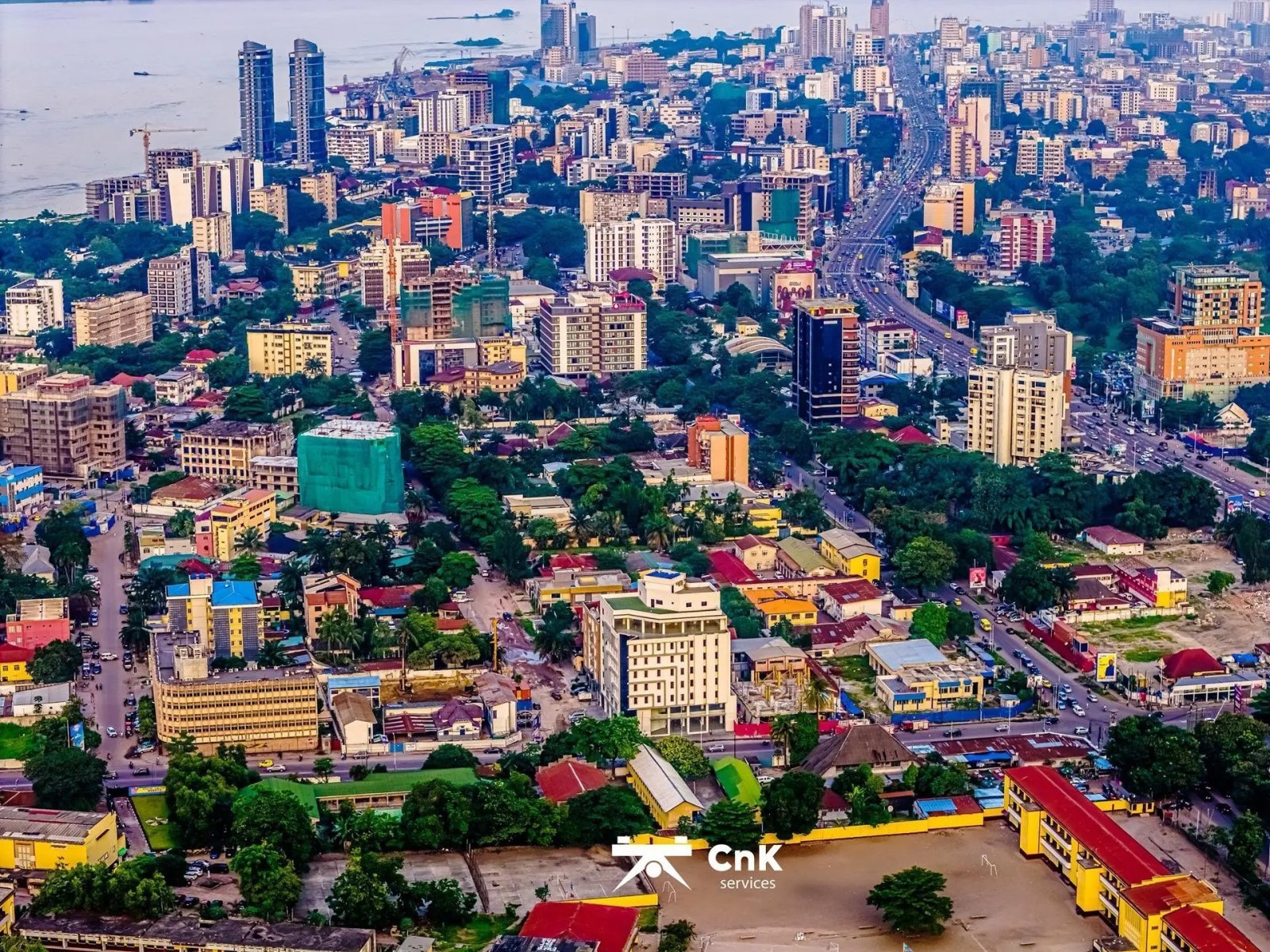
The Democratic Republic of Congo is poised to overtake Ethiopia and become Sub-Saharan Africa's fifth-largest economy in 2026, according to IMF projections. With GDP estimated at $123 billion against Ethiopia's $122 billion, the shift is being driven by a sustained mining boom and a strengthening currency. It is the most significant reshuffling of Africa's economic rankings in years, and it raises questions that go well beyond the numbers.
The Democratic Republic of Congo is set to overtake Ethiopia to become Sub-Saharan Africa's fifth-largest economy in 2026. The IMF estimates DRC's GDP at $123 billion for the year, marginally ahead of Ethiopia's $122 billion. South Africa retains the top position, followed by Nigeria, Angola, and Kenya. Congo now sits fifth. The ranking shift was reported by Bloomberg on April 17, 2026, drawing on the same IMF dataset that underpins the April 2026 Regional Economic Outlook for Sub-Saharan Africa.
The headline is striking. For most of the past two decades, DRC has occupied a paradoxical position in African economic analysis: one of the continent's most resource-rich countries and simultaneously one of its most structurally underdeveloped. That a country of DRC's profile is now entering the top five by absolute economic size reflects a genuine and consequential shift in economic momentum. It also raises a set of questions that the ranking figure alone cannot answer.
What Is Driving the Ascent
The IMF identifies two primary drivers: a mining boom and a strengthening currency. Both matter, and they interact in ways that amplify the GDP figure but also define its fragility.
DRC holds some of the world's largest deposits of cobalt, copper, coltan, and lithium, minerals that sit at the centre of the global energy transition. Cobalt demand has risen sharply as electric vehicle production scales globally, and DRC accounts for approximately 70 percent of global cobalt supply. Copper, which DRC produces in significant volumes from the Katanga mining belt, has remained at elevated price levels through 2025 and into 2026 as global infrastructure investment and clean energy deployment sustain demand. The IMF's April 2026 Regional Economic Outlook notes that non-fuel commodity prices, including metals, have remained higher than the 2025 average despite some softening since the onset of the Middle East conflict. DRC is a direct beneficiary of that pricing environment.
The currency dimension is equally significant. A strengthening Congolese franc raises the dollar value of domestic economic activity when measured at market exchange rates, which is the basis on which nominal GDP rankings are calculated. This means that part of DRC's rise in the Sub-Saharan Africa rankings reflects monetary dynamics rather than purely real economic expansion. The IMF's growth accounting for DRC shows real GDP growth of 5.7 percent in 2025 and a projected 5.9 percent in 2026, sustained and strong numbers that confirm genuine economic momentum. But the jump in absolute dollar GDP that enables the ranking overtake of Ethiopia involves both real growth and the translation effect of a stronger currency. Both are real in their economic consequences. The distinction matters for understanding how durable the ranking is.
The Sustained Growth Record Behind the Number
The ranking shift does not emerge from a single good year. DRC recorded real GDP growth of 9.3 percent in 2022, 8.5 percent in 2023, and 6.1 percent in 2024, according to the IMF's statistical appendix. The 2025 and 2026 projections of 5.7 percent and 5.9 percent represent a moderation from that peak pace but remain among the stronger growth trajectories in Sub-Saharan Africa. The IMF's April 2026 report specifically identifies DRC as one of the economies where growth exceeded earlier projections, contributing to the region's stronger-than-expected 2025 performance.
This sustained trajectory is what separates the current moment from previous periods when DRC's resource wealth generated intermittent growth without structural momentum. The consistency across multiple years reflects not only commodity price support but also improvements in mining sector investment, some progress on macroeconomic stabilisation, and the deepening of extraction activity in established mineral zones. The Kamoa-Kakula copper complex, one of the largest copper discoveries in the world, has been ramping up production significantly, and its output is a material contributor to the growth figures the IMF is projecting.
What the Ranking Does Not Resolve
An economy can be large and underdeveloped simultaneously. DRC illustrates this tension with unusual clarity. Despite its ascent to fifth place by GDP, it remains classified by the IMF as a low-income country, with per capita gross national income well below the threshold that would qualify it as a middle-income economy. An economy of $123 billion spread across a population of approximately 110 million people produces a per capita figure that places DRC among the poorest economies in the world by that measure.
The IMF's April 2026 outlook notes that DRC's fiscal position has faced persistent challenges, with an overall fiscal deficit of 2.8 percent of GDP in 2025 against a government debt level of 20.2 percent of GDP, relatively contained by regional standards but accompanied by limited domestic revenue mobilisation. External debt sits at 13.6 percent of GDP, also modest, but the country's dependence on mining revenues creates a structural vulnerability to commodity price cycles that the current favourable pricing environment does not eliminate. The IMF identifies DRC among the countries where the war in the Middle East has disrupted fuel supply, affecting electricity generation, transport, and mining operations. That is a direct economic risk to the very sectors driving the GDP ascent.
The broader structural picture the IMF draws for Sub-Saharan Africa as a whole applies with particular force to DRC. Growth driven by resource extraction without productivity improvements across the wider economy, without industrialisation, without a deepening of private sector activity beyond the mining enclave, produces GDP numbers that rank well on international comparison tables while leaving the structural conditions of development largely unchanged. DRC's rise to fifth place is a genuine economic event. Whether it represents the beginning of structural transformation or the continuation of resource-driven expansion that has historically proven cyclical is a question the ranking figure cannot answer.
The Regional Implications
DRC's growing economic weight has consequences for the East African Community, which it joined formally in 2022. As the EAC's largest economy by land area and population, and now a rising force by absolute GDP, DRC's integration trajectory matters for how the bloc functions. Trade volumes between DRC and its EAC neighbours remain limited relative to the size of both parties, partly because of infrastructure constraints and partly because of longstanding security challenges in eastern DRC that have disrupted economic activity in border regions. The IMF notes security challenges in the DRC specifically among the political and security risks affecting the region in 2026.
A DRC that is economically ascending but structurally constrained by infrastructure gaps, governance challenges, and security instability in its eastern provinces creates a complex dynamic for regional integration. The economic case for deepening EAC trade with DRC is compelling and grows stronger as DRC's economy expands. The practical barriers to realising that case remain substantial.
The Number That Matters Most
DRC becoming Sub-Saharan Africa's fifth-largest economy in 2026 is a milestone that reflects real and sustained economic momentum. The IMF's $123 billion GDP estimate, the sustained growth rates across four consecutive years, and the mining investment driving them are not statistical artefacts. They represent a genuine shift in DRC's economic weight within the continent.
What the ranking cannot carry is the weight of the structural questions it leaves unanswered. A large economy is not automatically a developed one. Resource wealth is not automatically broadly shared. Mining growth is not automatically self-sustaining when commodity cycles turn. The history of resource-rich African economies achieving high GDP rankings and then losing ground when external conditions shift is long enough to warrant caution about treating any single year's ranking as a structural verdict.
DRC is bigger than it was. Whether it is transforming is a different question, and the answer to that question will be written over the next decade, not the next ranking cycle.
 Uchumi360
Business Intelligence
Uchumi360
Business Intelligence
International Monetary Fund, Regional Economic Outlook: Sub-Saharan Africa, April 2026. IMF World Economic Outlook Database, April 2026. Bloomberg, Congo to Top Ethiopia to Become Sub-Saharan Africa's Fifth-Largest Economy, April 17, 2026.
Uchumi360 covers business, investment, and economic policy across East, Central, and Southern Africa.
For the serious reader
You read to the end. That places you in a small group.
Uchumi360 is built for readers who demand precision over speed, structure over sentiment, and analysis that holds uncomfortable conclusions rather than softening them. If this work sharpens how you think about Africa's economy, help us keep building the infrastructure behind it.
Institutional Partners
Commission intelligence. Shape the conversation.
Uchumi360 works with development finance institutions, investment firms, sovereign bodies, and strategic organisations across the coverage region. Institutional partnership unlocks:
- Commissioned sector and country intelligence reports
- Branded research series under your institution's authority
- Exclusive data briefings for internal strategy teams
- Speaking and editorial presence at Uchumi360 events
- Co-published investment outlooks for your markets
Support Our Work
Independent analysis has a cost. Help us bear it.
Uchumi360 does not carry advertising. It does not take editorial direction from sponsors. Every article is produced without commercial compromise. Your contribution funds the reporting, research, and editorial infrastructure that keeps this analysis free from influence.
Secure checkout: One-time and monthly support are processed securely.
Stay Connected
Keep up with every new insight.
Follow our latest analysis, policy coverage, and market intelligence as soon as it is published. If you need something specific, reach out directly and we will point you to the right research.
