

When USAID Pulled Back, Africa's Economy Kept Moving. That Is Not a Reassuring Story. It Is a Diagnostic One.
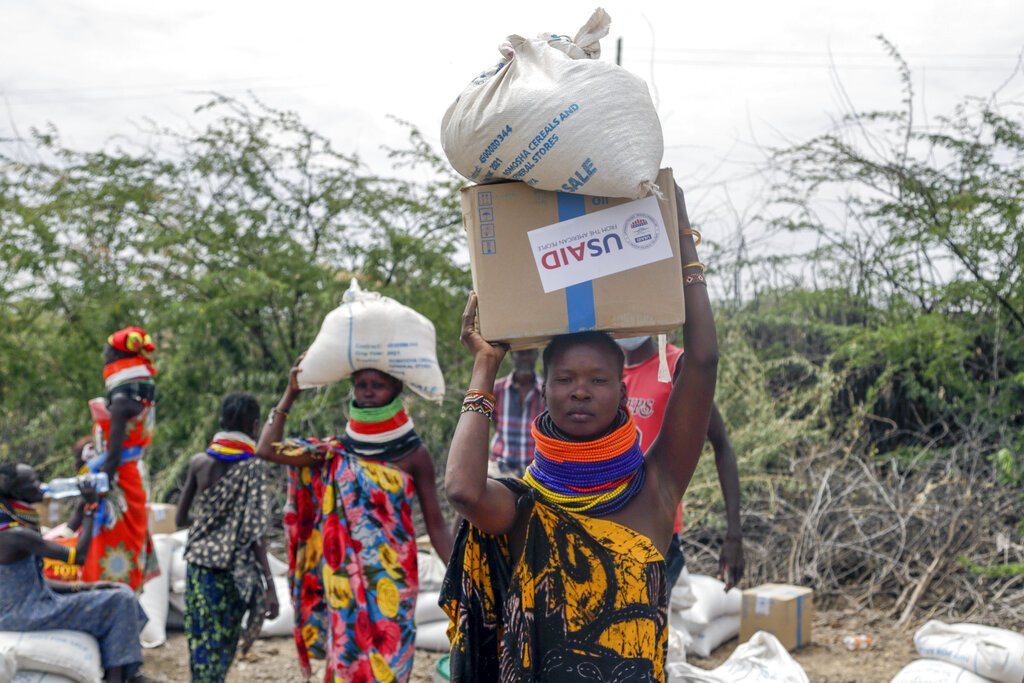
The reduction of aid flows across the Global South, including the significant contraction of programmes linked to USAID following policy shifts in Washington, was expected to trigger systemic macroeconomic stress across African economies. In specific sectors, particularly health infrastructure and humanitarian services, pressure has emerged and is real. But at the macroeconomic level, the outcome has been more revealing than the crisis narrative predicted. Growth has continued. Trade has expanded. Private capital has deepened. The conclusion is not ideological. It is empirical. Aid was never the core driver of Africa's economic engine. The question that matters now is whether Africa uses this moment of forced clarity to build the domestic systems that would make that structural independence durable rather than coincidental.
The Misdiagnosis That Has Shaped a Generation of Development Policy
The foundational analytical error in most development narratives about Africa is treating aid as an input into economic growth in the same category as investment, production, and trade. It is not. Aid is a fiscal supplement. It fills budget gaps and finances specific programme expenditure. It does not build the productive capacity, the trade relationships, the capital market depth, or the institutional quality from which sustained economic growth is generated.
This distinction has been obscured for decades by the scale and visibility of aid flows relative to the size of African government budgets. When official development assistance represents a significant share of government revenue in smaller or lower-income economies, it is easy to conclude that the economy itself is dependent on those flows. The conclusion misreads the relationship between government budgets and economic activity. Government budgets are the fiscal management layer above an economy, not the economy itself. A government that loses 20 percent of its budget revenue faces a serious fiscal management challenge. The productive activities of its farmers, traders, manufacturers, transport operators, telecoms companies, and financial services providers do not pause while the budget adjustment occurs.
Across Sub-Saharan Africa, even at peak inflows, aid rarely exceeded 8 to 10 percent of GDP in most economies. In Nigeria, Africa's largest economy, aid as a share of GDP has consistently been below 1 percent. In Kenya, whose development story has been substantially narrated through the lens of donor relationships and conditional lending, the economy is overwhelmingly driven by private consumption, digital financial services, regional trade, and remittance flows that have no structural connection to official development assistance. In Tanzania, the investment surge that TISEZA data documents at USD 10.95 billion in approved capital for 2025 is driven by commercial mining investment, energy development capital, manufacturing interest, and strategic minerals competition among major powers, none of which is linked to aid flows.
The USAID contraction has revealed this misdiagnosis with a precision that no academic argument could match. The crisis that was predicted has not materialised at the macroeconomic level. Growth projections across the coverage region remain in the 4 to 7 percent range for 2026. That is not because the aid reduction is harmless. It is because the aid was not doing what the dependency narrative assumed it was doing.
What Actually Drives Growth Across the Coverage Region
The empirical record of what has driven economic growth across East, Central, and Southern Africa between 2023 and 2026 is specific and worth examining in detail rather than gesturing toward in aggregate.
In Kenya, the digital economy has continued expanding through mechanisms that have no structural relationship to donor funding. Safaricom's M-Pesa ecosystem processes transactions equivalent to more than 50 percent of Kenya's GDP annually. The fintech ecosystem that has grown around M-Pesa, serving small businesses, enabling cross-border remittances, providing credit to borrowers whose collateral profile excludes them from conventional banking, and facilitating the e-commerce that East Africa's growing middle class is driving, was built by commercial capital responding to market demand. The venture capital flowing into East African fintech, which Uchumi360's AI economy analysis documented as among the fastest-growing technology investment ecosystems globally, is not donor capital. It is commercial capital chasing commercial returns in a market whose fundamentals justify the investment.
In Tanzania, GDP growth has remained in the 5 to 6 percent range, driven by construction, transport, mining, and telecommunications expansion. The Standard Gauge Railway, the Julius Nyerere Hydropower Station, the Panda Hill niobium agreement, the Airplanes Africa Morogoro assembly facility, and the investment surge that Tiseza's data documents are all commercial and strategic investments whose drivers are global commodity demand, geopolitical supply chain competition, and the commercial returns that Tanzania's investment environment generates. None of these investments would have occurred at greater or lesser scale had USAID maintained its previous programme levels. They are responding to a different set of incentives entirely.
In Zambia, copper production remains the backbone of export earnings, with the sector targeting production increases that will affect global copper market balances regardless of any aid flow. Global demand for copper, driven by electrification, electric vehicle manufacturing, and the infrastructure investment of the energy transition, determines Zambia's export revenue. Aid has no influence on any of these drivers. The DRC's cobalt production, which accounts for more than 70 percent of global supply and anchors the country within critical mineral value chains that the world's largest technology and automotive companies depend on, operates in a commercial and geopolitical context in which aid flows are genuinely irrelevant to the primary economic dynamics.
Rwanda's economic model is perhaps the most instructive in the coverage region. Tax-to-GDP ratios have steadily increased through digitised tax systems and enforcement capacity that the Rwanda Revenue Authority has built over the past decade. Domestic revenue now funds a larger share of the national budget than at any previous point in Rwanda's post-genocide development trajectory. The World Bank's March 2026 approval of a USD 450 million blended finance package for Rwanda's NST2 programme, which Uchumi360 documented in detail, is not aid in the conventional sense. It is a sophisticated financial instrument that uses IDA guarantee mechanisms to mobilise private commercial capital at near-concessional terms. The distinction between that model and traditional grant aid is precisely the institutional quality and fiscal credibility that Rwanda has built, which allows it to leverage guarantee structures that countries with weaker institutional frameworks cannot access.
The Fiscal Adjustment: What Governments Did When Aid Contracted
The most important empirical story in the aid contraction narrative is not what happened to economies. It is what happened to governments. And what happened to governments is that they adjusted, sometimes painfully and sometimes effectively, in ways that reveal more about the actual drivers of fiscal sustainability than the pre-contraction picture did.
When aid declined, governments did not stop operating. They identified additional domestic revenue, rationalised expenditure, and in several cases accelerated the domestic revenue mobilisation reforms that the presence of predictable aid flows had reduced the urgency of. This pattern is not universal. In fragile and conflict-affected states, particularly those where humanitarian aid was performing genuine stabilisation functions, the aid contraction has created real stress that is not offset by market dynamics. But in the coverage region's more economically active economies, the fiscal adjustment is producing structural changes that will strengthen long-term sustainability.
Tanzania's tax collection has grown consistently, with revenue exceeding targets in recent fiscal years. This reflects administrative expansion, economic activity, and the formalisation of economic activities that were previously outside the tax base. The investment surge that is bringing formal manufacturing and processing investment into Tanzania's economy also brings tax-paying businesses whose contribution to the revenue base compounds over time.
Rwanda's domestic revenue trajectory has been the most deliberate and the most successful in the coverage region. The Rwanda Revenue Authority's investment in digital tax administration, taxpayer education, and enforcement capacity has produced consistent above-target revenue performance that has progressively reduced the country's dependence on external budget support. This is precisely the structural transition from external dependency to internal revenue extraction that sustainable development requires, and it was not caused by aid contraction. It was caused by deliberate institutional investment in fiscal capacity.
Ghana's experience is the most cautionary in the regional context. Fiscal pressure from reduced external financing, combined with the debt restructuring that the country's 2022 crisis necessitated, forced aggressive domestic reforms including VAT restructuring and expenditure rationalisation. These reforms were painful and imposed real costs on Ghanaian households and businesses. But they also produced a fiscal framework that is more structurally sound than the aid-supplemented framework it replaced, because it is financed primarily by domestic revenue rather than by external flows whose continuation depends on political relationships and donor priorities that Ghanaian institutions do not control.
Trade as the Structural Replacement for Aid Dependency
The most significant structural shift that the aid contraction has accelerated is the deepening of trade relationships as the primary mechanism of economic interdependence across African countries and between Africa and global markets.
Aid creates interdependence between African governments and external donors. The terms of that interdependence are set by donors and reflect their priorities, their political considerations, and their assessments of what African economies need. Trade creates interdependence between African producers and global buyers, between African consumers and global suppliers, and increasingly between African countries and each other. The terms of trade interdependence are set by market dynamics, by comparative advantage, by supply chain positioning, and by the negotiating capacity that governments and businesses bring to commercial relationships.
Uchumi360's analysis of China's trade architecture, published earlier this month, documented how Africa has been structurally reoriented into Chinese-centred trade networks over the past two decades through commercial dynamics rather than political alignment. The same analysis identified the geopolitical competition between major powers for access to African resources and markets as creating a leverage environment that African governments can use to negotiate better terms for their participation in global supply chains. Neither of these dynamics has any meaningful relationship to aid flows. They are driven by the commercial value of African resources, the strategic importance of African geography, and the competitive dynamics among major powers that are determining the terms of global trade architecture.
The African Continental Free Trade Area, which Uchumi360 has tracked across multiple analyses, is becoming operationally relevant not as a grand vision of continental integration but as a practical necessity for economies whose development strategies require regional market scale that no individual African economy can provide. Land-linked economies like Uganda and Rwanda are increasingly dependent on regional corridors through Tanzania and Kenya for their export and import logistics. Southern Africa is integrating around energy and mining logistics that connect Zambia, Botswana, Angola, and Mozambique through infrastructure and commodity flows that predate AfCFTA and that AfCFTA's harmonisation agenda is slowly making more efficient. These are market-driven integration dynamics. Aid flows are not their cause and their contraction is not their threat.
The Private Sector Substitution That Most Analysis Misses
One of the least documented outcomes of aid contraction across Africa is the private sector substitution that has occurred where donor-funded programmes receded. This substitution is not complete, not uniform, and not without gaps. But it is real and it is structurally significant in ways that the aid dependency narrative systematically underestimates.
In financial services, East Africa became one of the fastest-growing fintech regions globally during the same period that aid flows were declining. Venture capital investment in East African payments, lending, credit scoring, and digital banking continued growing as commercial investors recognised the market opportunity that the region's large unbanked population and high mobile penetration creates. Neurotech Africa, which Uchumi360 profiled in the Uchumi Faces series, is processing over USD 1 million through its conversational commerce infrastructure, serving banks, telcos, retailers, and government agencies with commercially funded technology that addresses the same financial inclusion challenges that donor-funded financial sector development programmes have pursued for decades. The difference is that Neurotech's solution is market-validated, commercially sustainable, and scaling through commercial logic rather than donor support cycles.
In energy, off-grid solar companies expanded rapidly across rural markets across the coverage region without reliance on aid structures. The business model of pay-as-you-go solar, financed by commercial capital and distributed through market networks, has reached rural households that donor-funded rural electrification programmes had not successfully served after decades of effort. This is not to argue that the private sector solution is superior in every dimension to the donor programme. It is to observe that markets responded to an unmet demand that aid programmes had failed to address, and did so through commercial mechanisms that do not depend on donor budget cycles or political relationships between governments.
In logistics, the growth of warehousing, transport networks, and last-mile delivery infrastructure across East African commercial corridors has been driven by commercial investment responding to the growth of the regional consumer economy. This infrastructure supports the trade flows, the agricultural supply chains, and the manufacturing logistics that drive economic growth. It was not built by aid programmes. It was built by commercial investors responding to commercial demand.
The Sectors Where Aid Contraction Is Causing Real Harm
Intellectual honesty requires acknowledging directly that the argument above is not a complete picture. Aid contraction is causing real harm in specific sectors and specific contexts, and those harms deserve direct acknowledgement rather than dismissal.
In health, the contraction of USAID-funded programmes across HIV treatment, maternal health, and child nutrition has created genuine gaps in service delivery that domestic government budgets have not filled and that private markets are not structured to fill. The populations most affected are the most vulnerable, and the health outcomes that deteriorate under aid contraction compound into economic costs over time through reduced labour productivity, increased healthcare expenditure, and the demographic consequences of higher child and maternal mortality. These are not abstract concerns. They are measurable and they matter.
In humanitarian response, the contraction of donor funding for refugee support, famine response, and disaster relief has reduced the capacity of international humanitarian organisations to respond at scale to acute crises. In contexts where the DRC's eastern provinces, the Sahel, and the Horn of Africa continue to generate displacement and humanitarian need at scale, reduced response capacity translates directly into preventable suffering.
In fragile and conflict-affected states, where governance institutions are too weak to mobilise significant domestic revenue and where market activity is too constrained by insecurity to generate private sector substitution, aid contraction removes resources that were genuinely performing stabilisation functions rather than development functions. The distinction between stabilisation and development aid is analytically important and practically consequential, and aid contraction that conflates the two imposes the largest costs on the states least able to absorb them.
Uchumi360's analytical framework is primarily focused on the development economics of the coverage region's more economically active states. The argument that macroeconomic growth drivers are structurally disconnected from aid flows applies most clearly to Tanzania, Kenya, Rwanda, Uganda, Zambia, and the DRC's formal mining economy. It applies less clearly or not at all to the humanitarian contexts within the DRC's eastern provinces, to South Sudan, to Somalia, or to the communities within otherwise growing economies whose access to health and education services depends directly on donor-funded programmes.
The Structural Distortion That Contraction Is Correcting
Aid does not just fail to drive growth. It can actively distort the institutional and policy environment in ways that impede the development of the domestic capacity that sustained growth requires.
When governments rely substantially on external funding for their budget operations, policy priorities tend to align with donor frameworks rather than domestic economic strategy. The conditions attached to concessional financing and budget support create incentives for governments to pursue reforms that donors prioritise rather than the reforms that domestic economic conditions require. This is not always a bad outcome. Many donor-prioritised reforms are genuinely beneficial. But the misalignment between external priority-setting and domestic economic strategy is a real constraint on the quality of economic policy in aid-dependent contexts.
Budget planning that depends on unpredictable external flows creates fiscal management challenges that domestic revenue financing does not. When aid disbursements are delayed, reduced, or conditioned on policy compliance that governments are politically constrained to deliver, the fiscal uncertainty ripples through public sector operations, infrastructure delivery timelines, and the policy credibility that private investors assess when making location decisions. Tanzania's investment surge is partly a story about the improvement of the country's fiscal management and policy credibility over the past several years. That improvement has been driven by domestic revenue growth, institutional development, and political commitment to a consistent policy framework, not by aid relationships.
The local industry competition dimension is the most economically distorting and the least discussed. When donor-funded programmes provide subsidised or free services that compete with commercially viable local alternatives, they suppress the market development that would otherwise build domestic capacity. This distortion is most visible in health, education, and agricultural services, where donor-funded delivery has in some cases prevented the development of local professional service industries that would be sustainable after donor exit.
What Transformation Actually Requires
The argument that Africa's macroeconomic growth is not aid-dependent leads directly to the harder question: what does structural transformation require, and how does the evidence of the past several years affect our assessment of what African governments and institutions need to build?
Industrial policy is the most consistently underweighted requirement in the development economics literature on Africa. The economies that have made the most durable transitions from agricultural and resource dependence to diversified industrial capacity, South Korea, Taiwan, China, Malaysia, have done so through sustained, coherent industrial policy that directed capital, shaped incentives, and built the productive capacity that market forces alone would not have developed at the required pace. Tanzania's SEZ strategy, Rwanda's high-value niche specialisation, and Ethiopia's industrial park model are all attempts to build the industrial policy capacity that transformation requires. Their success depends on institutional quality, policy consistency, and the financing depth to sustain incentive structures over the long horizon that industrial development requires.
Domestic capital formation is the second requirement. The deepening of African capital markets, the mobilisation of pension fund and insurance assets for domestic infrastructure investment, and the development of the venture and growth capital markets that domestic entrepreneurs need to build the companies that drive structural transformation are all long-horizon institutional development challenges that cannot be outsourced to donor relationships. Rwanda's blended finance model, which Uchumi360 documented in the World Bank NST2 approval article, represents one of the most sophisticated attempts in the coverage region to use multilateral guarantee instruments to mobilise domestic and private capital at scale. It works because Rwanda has built the institutional quality that makes guarantee instruments credible. Building that institutional quality is the foundational requirement that precedes all others.
Export competitiveness is the third requirement, and it connects directly to the trade argument above. An economy that can produce goods and services that global markets want to buy, at prices and qualities that are competitive, generates the foreign exchange and the economic complexity that sustains development. Building export competitiveness requires the combination of industrial policy, human capital, infrastructure, and institutional quality that takes decades to assemble. Africa's critical minerals moment provides a window in which the geopolitical competition for supply chain access gives African exporters pricing power and market access that they would not otherwise command. Using that window to build processing capacity, technology transfer, and supply chain integration rather than simply accelerating raw material export is the policy challenge that determines whether the critical minerals era produces export competitiveness or simply export volume.
None of these requirements are delivered by aid. They are built by institutional development, by domestic capital formation, by policy discipline, and by the political will to sustain long-horizon strategies against the short-term pressures that democratic and autocratic governance systems alike generate. The aid contraction, whatever its causes and whatever its costs in the humanitarian sectors where it is causing real harm, has the paradoxical effect of clarifying what development actually requires by removing a fiscal supplement whose presence had obscured the insufficiency of the underlying institutional and economic capacity it was supplementing.
The Policy Implication
The empirical evidence of the past several years, read honestly across the coverage region, points to a specific and actionable policy conclusion that is neither the aid dependency narrative nor the anti-aid ideological position.
Africa's macroeconomic growth is structurally driven by production, trade, investment, and private sector activity that has limited dependence on official development assistance. This is true at the level of the coverage region's larger and more economically active economies. It is not universally true and it is not true in the humanitarian contexts where aid performs stabilisation functions that markets cannot perform.
The development challenge for the coverage region's governments is not to replace aid with something else. It is to build the institutional capacity, the fiscal depth, the industrial policy coherence, and the domestic capital markets that make the structural independence that macroeconomic growth data already shows visible at the level of household welfare, public service quality, and economic complexity.
Tanzania has USD 10.95 billion in approved investment. The question Uchumi360's sovereign rating analysis posed is whether that investment converts into structural transformation rather than simply into activity statistics. Rwanda has built the institutional quality that unlocks blended finance instruments at terms that aid dependency would never have generated. The question is whether that institutional quality deepens across the governance and economic domains that transformation requires. Kenya has an M-Pesa ecosystem processing transactions equivalent to half its GDP. The question is whether the institutional framework around that ecosystem builds the financial market depth that converts fintech success into broad-based access to productive capital.
These are development questions. They are not aid questions. And the empirical record of 2023 to 2026 across the coverage region suggests that Africa's ability to answer them will be determined by the quality of its institutions, its policies, and its domestic capital formation, not by the level of external assistance it receives.
That is not a comfortable conclusion for a development finance architecture that has spent decades treating aid as the primary instrument of African development. But it is the conclusion that the evidence supports, and engaging with it honestly is the starting point for building the policy frameworks that Africa's next phase of development actually requires.
_______________________________________________________________________________________
Sources: World Bank Africa Development Indicators 2024 to 2025. African Development Bank Economic Outlook 2024. IMF Regional Economic Outlook Sub-Saharan Africa 2025. UNCTAD Trade and Development Report 2024. Tanzania National Bureau of Statistics 2025. Kenya Economic Survey 2025. Rwanda Revenue Authority Reports 2024 to 2025. Zambia Mining Sector Reports 2025. Tanzania Investment and Special Economic Zones Authority Tiseza Data 2025. World Bank Rwanda NST2 Development Policy Financing Documentation March 2026. Safaricom M-Pesa Transaction Volume Data 2025.
_______________________________________________________________________________________
Uchumi360 covers business, investment, and economic policy across East, Central, and Southern Africa.
