

10 Successful Companies Shaping Tanzania’s Economy in 2025 — And Who’s Coming Next
Tanzania’s economy in 2025 is being shaped by banks, telecoms, industrial giants, logistics players, and rising tech firms. This analysis looks at ten companies that currently anchor credit, payments, construction, trade, and agribusiness — and the emerging players quietly preparing to challenge them.
Tanzania in 2025 is not defined by one sector or one corporate giant. The economy is being pulled forward by banks that finance growth, telecoms that move data and money, industrial firms that build physical infrastructure, and younger tech-driven players that are rewriting distribution and payments.
Important clarification before diving in.
We are not pretending to have audited 2025 financial results in hand. This list is anchored on three sober criteria:
- Proven performance up to 2024
- Real economic influence at national or regional level
- Clear strategic momentum entering 2025
In short, these companies are not just profitable. They shape the systems other businesses rely on. And yes, new players are rising fast. We’ll address them after the list, because no economy sits still.
1. NMB Bank Plc
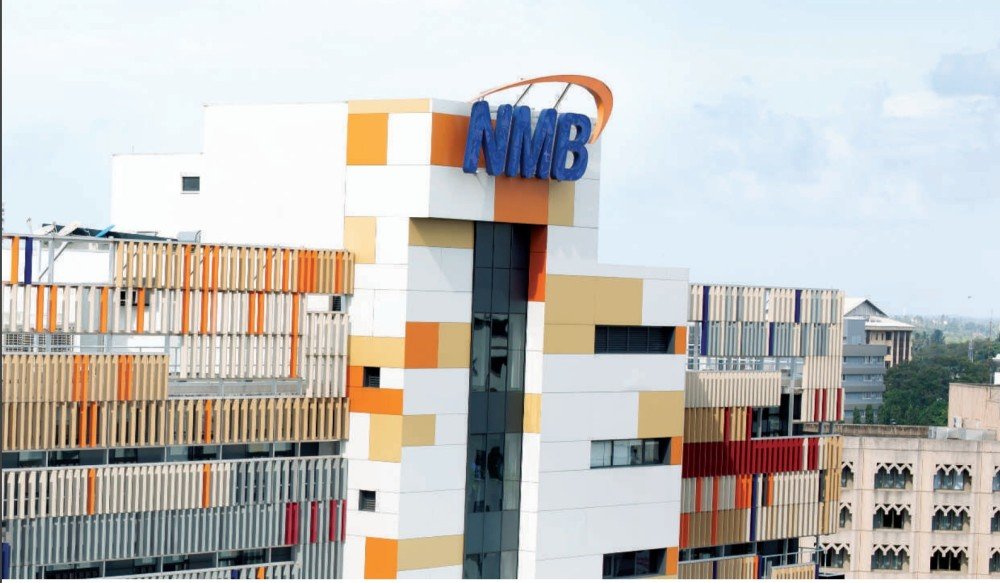
NMB remains the profitability benchmark and one of Tanzania’s most important economic stabilizers. Its role in SME lending, agriculture finance, and digital services makes it a core transmission belt for policy and growth. When government wants credit to reach the real economy, NMB is one of the primary channels.
2. Bakhresa Group (Azam)
Azam is one of Tanzania’s most influential privately owned business empires. Its footprint spans flour milling, food processing, beverages, marine transport, packaging, hospitality, media, and sports. Despite limited public financial disclosure, its distribution power and brand penetration place it among the most important economic actors in the country. Azam shapes daily consumption patterns — from staples to entertainment — and remains a quiet but decisive force in regional trade.
3. CRDB Bank Plc
CRDB is the largest bank by assets and a heavyweight in trade finance, regional expansion, and infrastructure lending. Its integration with payment systems and fintech partnerships gives it influence beyond traditional banking. Think of CRDB as financial plumbing: invisible to most people, vital to almost everything.
4. Vodacom Tanzania
Vodacom is not just selling airtime. It provides connectivity, mobile broadband, enterprise data services, and digital financial rails. Businesses, households, and even government services rely on its networks. In an economy shifting away from cash, Vodacom is one of the enablers.
5. Tanzania Breweries Limited (TBL)
TBL is a barometer of consumer health. When disposable income grows, its numbers reflect it. When taxes, inflation, or household stress rise, you see that too. Strong distribution networks and brand strength keep TBL among the most influential consumer companies.
6. Tanzania Cigarette Company (TCC)
Controversial sector, remarkable financial discipline. TCC consistently delivers strong profit margins and efficient operations. From a capital markets perspective, it is one of the most reliable dividend machines in Tanzania, even while health policy debates continue around it.
7. Tanzania Portland Cement (Twiga Cement)
Cement is the skeleton of development. Roads, housing, industrial parks, ports, logistics facilities, all depend on it. Twiga’s acquisitions and production strategy indicate long-term confidence in Tanzania’s construction and infrastructure pipeline.
8. MeTL Group
MeTL is everywhere: agriculture, textiles, FMCG manufacturing, trading, logistics, distribution. It employs tens of thousands and moves products across borders. It is one of the clearest examples of Tanzanian capital building Tanzanian capacity, not just repackaging imports.
9.Precision Air
Precision Air is more than a commercial airline. It functions as part of Tanzania’s internal economic circulatory system, linking secondary cities, tourism hubs, business corridors, and remote regions to Dar es Salaam and Arusha. When Precision Air flies reliably, trade, tourism, conferences, perishables, and professional services move faster. When it struggles, those sectors feel it immediately.
Over the past few years, the airline has rebuilt operations after financial turbulence, focusing on route optimization, fleet discipline, and partnerships that stabilize passenger volumes. Its network connects key growth nodes such as Mwanza, Kilimanjaro, Bukoba, Mtwara, and Zanzibar. That connectivity reduces travel time dramatically compared to road travel, lowers transaction costs for businesses, and supports Tanzania’s tourism economy, which is now one of the largest sources of foreign exchange.
Precision Air’s economic importance lies less in headline profits and more in system value: it underpins mobility, supports employment across airports and service providers, and integrates regions into national markets. As domestic aviation expands alongside tourism and regional trade, Precision Air stands to remain a strategic player in Tanzania’s transport ecosystem.
10. East Africa Fruits
This is what modern agribusiness looks like: logistics, cold storage, farmer aggregation, data, and supply-chain discipline. East Africa Fruits reduces post-harvest waste, stabilizes farmer earnings, and feeds urban markets more efficiently.
11. NALA
A Tanzanian-born fintech that has gone global. By building cross-border payment rails, NALA connects the diaspora, banks, and mobile money ecosystems. It shows that Tanzanian tech can compete on financial infrastructure, not only local apps.
These ten companies matter because they anchor credit, goods movement, distribution, consumption, and payments. They are system-builders.
12. Ramani
A fast-growing tech and supply-chain company digitizing distributors and retailers. Ramani helps FMCG distributors manage inventory, credit, and data. That reduces leakages, improves transparency, and opens formal financing for businesses that previously operated informally. If supply-chain rails modernize, Ramani becomes part of the infrastructure that brands depend on.
But success isn’t frozen: who is rising behind them?
Calling this list “final” would be dishonest. New players are accelerating, quietly and quickly.
Energy and renewables
Solar developers, hybrid power providers, and mini-grid operators are solving reliability problems businesses face every day. Electricity security will create future “giants.”
Logistics and warehousing
Cold chains, bonded warehouses, tech-enabled transport brokers — whoever reduces friction in moving goods across Tanzania will gain advantage fast.
Agro-processing
Edible oils, dairy processors, packaged food brands. Value addition is beating raw export strategies, slowly but surely.
Digital finance infrastructure
Payment gateways, merchant tools, credit scoring platforms. Those who integrate with banks instead of fighting them may become regional infrastructure players.
Industrial inputs
Steel, paints, tiles, glass, and construction components. Urbanization keeps demand steady and scalable.
Some of these names may appear on the “top 10” list in two to five years.
And that’s the point.
The companies listed today dominate because they control key structures. The companies rising now are testing the edges of those structures and occasionally breaking into them.
Economies evolve. Power shifts. Winners change.
The job is not predicting with false certainty. It is tracking where real leverage sits, and who is quietly building the next version of it.
That’s the Uchumi360 lens.