
Is Burundi Investable? Risks, Potential and the Strategy to De-risk the Future
Ready
Burundi is investable, but not yet in the conventional “easy market” sense. It is investable as an early-positioning frontier economy inside the East African Community: small, underbuilt, difficult, strategically located, reform-seeking and still heavily mispriced by most investors.
Burundi is investable, but not yet in the conventional “easy market” sense. It is investable as an early-positioning frontier economy inside the East African Community: small, underbuilt, difficult, strategically located, reform-seeking and still heavily mispriced by most investors. The correct question is not whether Burundi is risk-free. It is whether the risks are identifiable, priceable and reducible. On that test, Burundi deserves more serious attention than it currently receives.
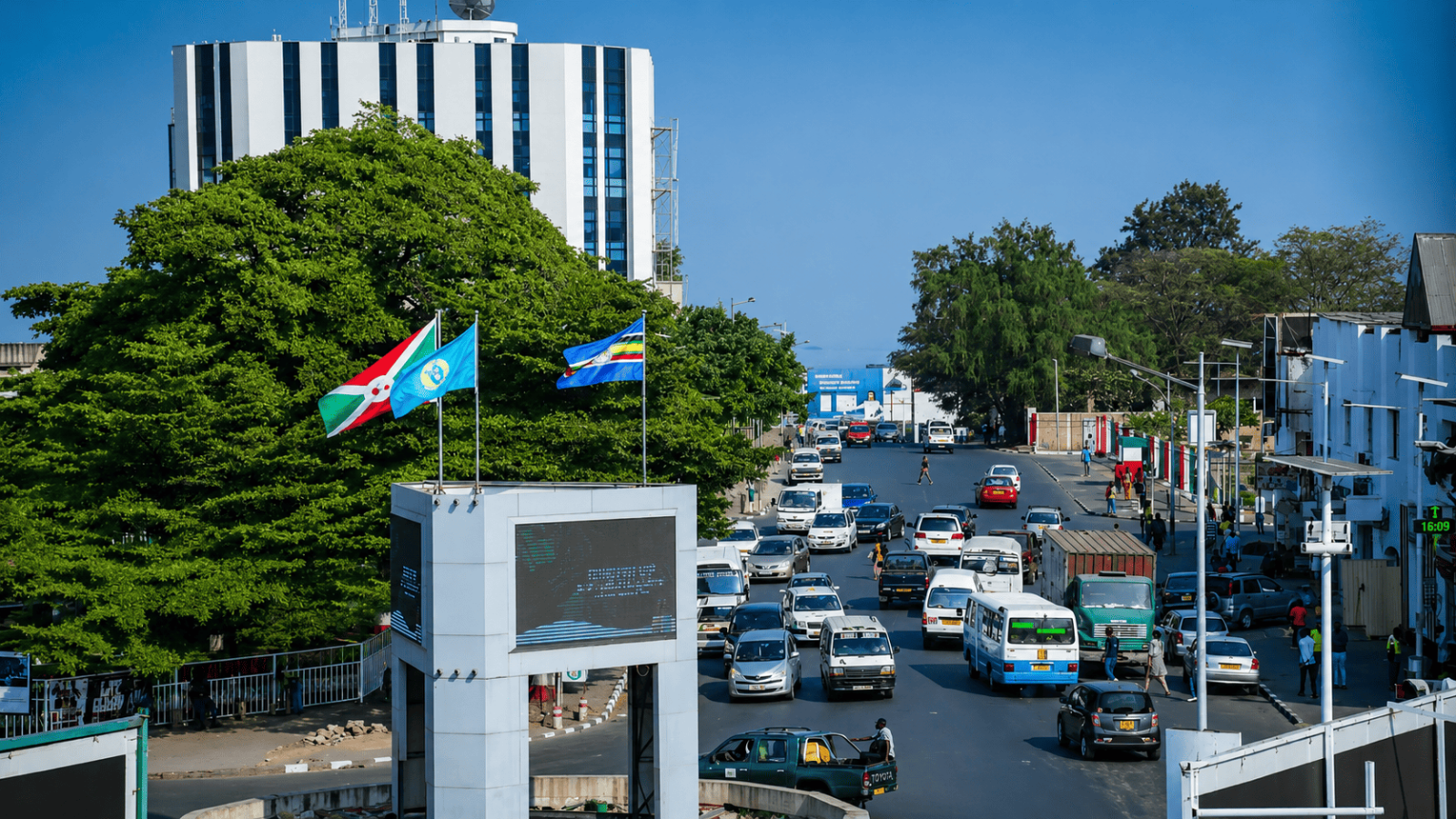
The optimistic investment case is straightforward. Burundi sits inside an expanding East African Community of eight partner states: Burundi, Democratic Republic of Congo, Kenya, Rwanda, Somalia, South Sudan, Uganda and Tanzania. That gives Burundi a regional logic larger than its domestic market alone. Its future investability depends on whether it can connect its agriculture, energy, logistics, minerals, services and human capital to the wider Great Lakes, Central Africa and East African trade system.
Burundi’s own development ambition is also clear. The government’s long-term framework, Vision Burundi: Emerging Country by 2040 and Developed Country by 2060, aims to improve the quality of life of Burundians by 2040 and reach developed-nation status by 2060. The revised National Development Plan 2018–2027 sets the objective of structurally transforming the economy for strong, sustainable, resilient and inclusive growth, creating decent jobs and improving social wellbeing.
That vision is not yet the same as execution. Burundi remains one of the more difficult investment environments in East Africa. But frontier value is often created where national ambition, regional integration and underbuilt markets meet before the wider capital market has priced them properly.
The current macro picture: fragile, but improving
The International Monetary Fund’s 2026 Article IV mission gives the most current macro signal. It said Burundi’s economic conditions improved in 2025, supported by stabilisation efforts, better fiscal discipline and a large positive terms-of-trade shock. Real gross domestic product growth was estimated at 4.2% in 2025, driven by strong exports. Higher international prices for gold and coffee, plus higher volumes, lifted export revenue and foreign-exchange inflows; gold export volumes reportedly rose from about 400 kilograms in 2024 to 1.2 tonnes in 2025.
That is a meaningful improvement from the earlier picture. In April 2025, the International Monetary Fund reported that growth had reached 3.5% in 2024, from 3.3% in 2023, but warned that macroeconomic instability, high inflation, parallel exchange-rate pressure, limited foreign-exchange reserves and fuel shortages continued to weigh on activity.
The World Bank’s country profile still shows the structural challenge. Burundi’s economy is dominated by services, which account for about 51% of gross domestic product, followed by agriculture at 31.6% and industry at 17.4%. That composition tells investors two things: the productive base is still shallow, but the room for industrialisation, agro-processing and basic services is large.
The African Development Bank’s Burundi outlook is cautiously positive but realistic. It projects growth at 3.7% in 2025and 3.9% in 2026, while describing the outlook as fragile and linked to exports, investment and reform progress.
The World Bank’s 2025 macro-poverty outlook gives the cautionary side. It reported that inflation averaged 34.0% in 2025, although it eased from a peak of 45.5% in April to 15.2% in December, with price pressures linked to supply constraints, fuel shortages and a wide parallel exchange-rate premium. That is the clearest warning to investors: Burundi’s growth story is real, but macro-stability is not yet fully secured.
Why Burundi is investable
Burundi is investable because its weaknesses point directly to investable gaps. The country needs energy, food processing, storage, logistics, urban services, construction materials, digital systems, financial access, health infrastructure, affordable housing and skills. These are not abstract sectors. They are the missing operating systems of a modern economy.
The first opportunity is agriculture and agro-processing. Agriculture remains central to Burundi’s economy, but the country’s development challenge is to move from primary production to value addition. The European Union’s Burundi partnership prioritises agri-food systems, climate and environment, including sustainable practices, value chains, food security and livelihoods.
This is where investors should look closely. Coffee, tea, horticulture, grains, livestock, fisheries, cassava, fruits, vegetables and edible oils can become more valuable if linked to storage, processing, packaging, certification and regional distribution. Burundi should not only export raw agricultural value. It should build brands, processing capacity and regional food supply chains.
The second opportunity is energy. Burundi faces one of the lowest electricity-access rates in the world, with only around 12% of the population connected to the national grid, according to an Organisation for Economic Co-operation and Development blended-finance case study. That is a severe constraint, but also a major investment frontier for grid expansion, mini-grids, solar, hydro, productive-use energy, industrial power and public-private partnership models.
The World Bank-supported clean-energy access agenda also points to hydropower potential. A World Bank-supported project cited by the Africa Energy Portal aims to supply 235 gigawatt-hours per year of clean renewable energy to Burundi’s grid, representing almost half of the country’s current power generation.
The third opportunity is regional logistics. Burundi is landlocked, which is a constraint, but it also gives the country a regional corridor logic. Its economic future is linked to Tanzanian, Kenyan, Rwandan, Congolese and wider East African trade infrastructure. As the East African Community deepens one-stop border posts, payment interoperability and corridor systems, Burundi can become more connected to regional markets rather than trapped by its geography.
The fourth opportunity is import substitution in essential goods. Burundi’s small domestic market limits some industries, but basic consumer goods, construction materials, processed foods, pharmaceuticals, packaging, repair services and household products can be viable when viewed regionally. The World Trade Organization’s Burundi profile shows a 14.0% simple average most-favoured-nation applied tariff in 2024, with a 13.9% trade-weighted average in 2023, which means trade policy and import structures matter for local production economics.
The fifth opportunity is minerals, but this must be approached carefully. Burundi has mineral potential, including nickel, rare earths and other resources, but the investment case should not repeat Africa’s old extractive pattern. Mining should be tied to power, roads, local procurement, environmental standards, community benefit and regional processing where feasible. The Africa-first logic should be: resources must build infrastructure and domestic capability, not merely leave as raw exports.
The current risks
The first major risk is macroeconomic instability. Inflation, currency pressure, foreign-exchange scarcity and fuel shortages can affect pricing, import planning, working capital, profit repatriation and project timelines. The International Monetary Fund has repeatedly identified inflation, parallel exchange-rate pressure, limited foreign-exchange reserves and fuel shortages as constraints on economic activity.
The second risk is energy reliability. Low electricity access and power shortages raise costs for manufacturers, agro-processors, hotels, hospitals, cold chains and digital businesses. Any investor in Burundi should treat power as a core part of the business model, not as a background utility.
The third risk is political and institutional concentration. The World Bank notes that the ruling party has dominated Burundi’s political scene since 2005 and secured 100 out of 103 seats in the National Assembly after the 2025 legislative election, with presidential elections scheduled for 2027. Investors must therefore assess policy continuity, institutional predictability, governance quality and election-cycle risk carefully.
The fourth risk is business-climate weakness. The United States State Department’s 2025 Investment Climate Statement notes that Burundi does not have a bilateral investment treaty with the United States and highlights market conditions, regulatory issues and investment-climate constraints. It is a useful signal that Washington sees opportunity, but also looks at Burundi through a risk-management lens.
The fifth risk is regional security exposure. Burundi sits near the Great Lakes security system, where instability in eastern Democratic Republic of Congo can affect refugees, trade corridors, fiscal pressure and investor confidence. Recent regional tensions involving eastern Congo, Rwanda and Burundi have been watched closely by the United States and others because of the risk of wider escalation.
The sixth risk is small market size. Burundi’s domestic purchasing power is limited. Investors should not enter Burundi only for the national market unless the product is basic, essential and high-frequency. The strongest projects should either solve domestic bottlenecks or use Burundi as part of a regional strategy.
How Beijing sees Bujumbura
Beijing sees Burundi through infrastructure, political trust, development diplomacy and long-cycle relationship-building. China’s Ministry of Foreign Affairs says China and Burundi established a Joint Trade Committee in 1981, later expanded into a Joint Economic, Technical and Trade Cooperation Committee. It reports that bilateral trade reached RMB 804.11 million in 2024.
That is not a large figure by China-Africa standards, but the political signal is more important than the current volume. China often builds influence through long-term state-to-state cooperation, infrastructure support, concessional financing, training, public facilities and symbolic diplomatic consistency. Burundi is not Beijing’s largest African commercial prize, but it fits China’s broader approach: build goodwill, position early, support state-led development, and expand economic presence as the market stabilises.
For Burundi, the opportunity is to use Chinese engagement strategically without becoming dependent. Infrastructure cooperation can be valuable if it builds power, roads, logistics, health facilities, industrial capacity and skills. The risk is weak project selection, debt pressure or projects that do not build local productive capacity. The correct Burundian posture should be partnership with discipline: welcome infrastructure support, but tie it to jobs, technology transfer, local procurement and long-term maintenance capacity.
How Brussels sees Bujumbura
Brussels sees Burundi through a development, governance, climate, food security and regional-stability lens. The European External Action Service says the European Union is committed to a sustainable partnership with Burundi based on rural development, climate action, environmental protection, universal access to energy and healthcare, peace, democracy and good governance.
The European Commission’s international partnerships profile for Burundi focuses on agri-food systems, climate and environment, value chains, food security and livelihoods. That tells investors where European capital and grants are likely to align: sustainable agriculture, rural productivity, climate resilience, energy, health and governance-linked reforms.
A 2026 statement from Burundi’s Ministry of Foreign Affairs said European Union investments in Burundi amount to EUR 384 million in grants and loans, aimed at creating jobs, strengthening climate resilience and opening new economic prospects while upholding social and environmental standards.
Brussels therefore sees Bujumbura as a reform-and-resilience partner rather than a pure commercial market. For investors, this matters. Projects that align with European standards — climate resilience, value chains, renewable energy, food security, health, governance and social safeguards — may have better access to blended finance, grants, technical assistance and credibility.
How Washington sees Bujumbura
Washington sees Burundi through stability, governance, market rules, humanitarian concerns, regional security and selective commercial opportunity. The United States Trade Representative says United States goods and services trade with Burundi totalled USD 77.1 million in 2024, up 44.3% from 2023. That is a small trade relationship, but the growth rate shows there is room to deepen commercial exchange from a low base.
The United States State Department says the United States supports long-term stability, prosperity and good governance in Burundi through broad and inclusive reconciliation. Its investment-climate reporting also signals that investors should pay close attention to regulation, dispute resolution, property rights, governance and market-entry conditions.
Washington’s perception is therefore cautious but not closed. The United States is unlikely to view Burundi as a major near-term commercial platform like Kenya, South Africa, Nigeria or Morocco. But it can see Burundi as part of a Great Lakes stability and development equation. For Burundi, the path to attracting more American commercial interest is not rhetoric; it is predictable regulation, transparent procurement, bankable energy projects, stronger governance and credible dispute-resolution systems.
Is Burundi a China, Europe or United States play?
Burundi should not define itself through any single external power. That would be strategically small. Beijing brings infrastructure diplomacy and state-to-state execution. Brussels brings grants, climate finance, standards and value-chain support. Washington brings governance pressure, selective trade opportunity, development finance potential and security attention. The smarter Burundian strategy is to triangulate all three while keeping the national interest at the centre.
A modern investor should view Burundi not as a dependency market, but as a positioning market. The country’s best future is not to become a satellite of Beijing, Brussels or Washington. It is to become a credible node in East African and Great Lakes production, logistics, energy, agriculture and services.
The sectors with the strongest investable logic
The strongest first-tier sector is energy. Without electricity, every other investment case weakens. Burundi needs grid expansion, mini-grids, hydro, solar, productive-use energy, clean cooking, industrial power and public-private energy models. Energy is not only a sector; it is the platform for all other sectors.
The second is agro-processing. Burundi’s agricultural base can support coffee upgrading, tea, horticulture, dairy, edible oils, cassava products, grains, animal feed, fishery-linked processing and packaged foods. The opportunity is to move from primary agriculture to processed, certified and regionally tradable products.
The third is logistics and trade facilitation. Warehousing, cold chain, transport, border services, cargo handling, wholesale markets, digital trade documentation and regional distribution can all become more valuable as the East African Community and African Continental Free Trade Area deepen.
The fourth is construction materials and urban services. A country trying to improve infrastructure, housing, energy and public services will need cement products, roofing, pipes, basic fittings, water systems, sanitation, waste management and affordable building inputs.
The fifth is healthcare and pharmaceuticals. Burundi’s health needs are significant, and the wider East African region imports large volumes of medicines and medical supplies. Local opportunities may begin with distribution, diagnostics, medical consumables, cold-chain health logistics and selected essential medicines rather than immediately jumping to complex pharmaceutical manufacturing.
The sixth is mining-linked infrastructure and services. Mining should be approached through a disciplined model: geological data, transparent licensing, power, roads, environmental controls, local procurement and regional processing. Investors should avoid speculative mining plays without clear governance and infrastructure plans.
The seventh is digital public and private infrastructure. Burundi needs digital payments, small-business software, agricultural market information, government service digitisation, education technology and health data systems. Digital investment should be practical, not hype-driven.
How to de-risk Burundi
The first de-risking strategy is to invest through regional logic. A project should not depend only on Burundi’s domestic demand if it can serve Rwanda, Tanzania, Democratic Republic of Congo, Uganda or the wider East African Community. Investors should design for regional markets from the beginning.
The second is to partner locally, but with discipline. Local partners are essential for regulatory navigation, community trust, land access, labour, distribution and government relations. But due diligence must be strict: ownership records, political exposure, tax history, litigation, reputation and operating capacity.
The third is to structure foreign-exchange risk. Investors should match local-currency revenue with local costs where possible, negotiate indexed contracts in infrastructure projects, use development-finance instruments, maintain conservative import assumptions and avoid business models that depend on easy access to foreign exchange.
The fourth is to build power redundancy. Manufacturing, cold chain, healthcare, hotels, data systems and agro-processing should include backup energy, solar hybrid systems or dedicated power arrangements in the project design.
The fifth is to use blended finance. Burundi’s risk profile makes it suitable for blended capital: grants, concessional debt, guarantees, political-risk insurance, first-loss capital and development-finance partnerships. Projects in energy, agriculture, climate resilience, health and infrastructure are especially compatible with this approach.
The sixth is to insist on transparent government engagement. Investors should document approvals, licences, tax terms, land access, procurement terms and dispute-resolution mechanisms clearly. Informality may seem faster at the beginning, but it becomes expensive later.
The seventh is to use phased investment. Burundi is not a market for reckless large upfront exposure. Start with pilot projects, prove demand, secure supply chains, test regulatory processes, then scale.
The eighth is to align with national plans. Projects that fit Vision 2040–2060 and the revised National Development Plan are more likely to gain policy support. Alignment should be real: jobs, exports, energy access, food security, value addition and skills development.
The ninth is to build social licence. Burundi is a dense, land-sensitive country. Projects in land, agriculture, mining, energy and infrastructure must treat communities, compensation, environment and local jobs seriously from the beginning.
The tenth is to prepare for political and regional risk. Investors should monitor the 2027 electoral cycle, Great Lakes security dynamics, Burundi-Rwanda relations, eastern Democratic Republic of Congo tensions, fuel supply conditions and macroeconomic reforms.
The advisory verdict
Burundi is investable, but only for patient, disciplined and regionally minded capital. It is not yet a frictionless market for passive investors. It is a market for builders: energy developers, agro-processors, logistics operators, healthcare investors, construction-material producers, digital infrastructure firms and development-finance-backed industrial players.
The risks are real: inflation, foreign-exchange pressure, energy shortages, political concentration, small market size, regional security exposure and business-climate weakness. But the potential is also real: an underbuilt economy, a young population, agricultural depth, energy gaps that can become investment opportunities, regional access through the East African Community, and renewed engagement from Beijing, Brussels and Washington.
The most optimistic reading is also the most practical. Burundi does not need to become another Kenya or Rwanda to be investable. It needs to become a better version of itself: powered, connected, productive, regionally integrated and institutionally more predictable.
Beijing sees a long-term development partner. Brussels sees a climate, food security, governance and resilience partner. Washington sees a stability-and-reform market with limited but expandable commercial ties. A Pan-African investor should see something else: a frontier node in the Great Lakes economy whose value will rise if energy, agriculture, logistics and regional trade are treated as one strategy.
Burundi’s investment future will not be won by selling potential. Too many African countries have done that for decades. It will be won by reducing friction, building power, processing agricultural value, connecting corridors, protecting investors without weakening sovereignty, and turning regional membership into commercial scale.
Burundi is investable if the investor understands the assignment. Do not enter for quick extraction. Enter to build systems.
 Uchumi360
Business Intelligence
Uchumi360
Business Intelligence
Uchumi360 covers business, investment, and economic policy across East, Central, and Southern Africa.
For the serious reader
You read to the end. That places you in a small group.
Uchumi360 is built for readers who demand precision over speed, structure over sentiment, and analysis that holds uncomfortable conclusions rather than softening them. If this work sharpens how you think about Africa's economy, help us keep building the infrastructure behind it.
Institutional Partners
Commission intelligence. Shape the conversation.
Uchumi360 works with development finance institutions, investment firms, sovereign bodies, and strategic organisations across the coverage region. Institutional partnership unlocks:
- Commissioned sector and country intelligence reports
- Branded research series under your institution's authority
- Exclusive data briefings for internal strategy teams
- Speaking and editorial presence at Uchumi360 events
- Co-published investment outlooks for your markets
Support Our Work
Independent analysis has a cost. Help us bear it.
Uchumi360 does not carry advertising. It does not take editorial direction from sponsors. Every article is produced without commercial compromise. Your contribution funds the reporting, research, and editorial infrastructure that keeps this analysis free from influence.
Secure checkout: One-time and monthly support are processed securely. Add payment credentials to enable checkout here.
Stay Connected
Keep up with every new insight.
Follow our latest analysis, policy coverage, and market intelligence as soon as it is published. If you need something specific, reach out directly and we will point you to the right research.
