
From “Dirty Dar” to a Clean City Model: How Dar es Salaam Can Become One of Africa’s Cleanest Cities
Ready
President Samia's frustration with Dar es Salaam's condition should become a turning point. The opportunity will be wasted if the response is reduced to orders, blame and temporary cleanups. The urgency is now measurable rather than rhetorical. Dar es Salaam is no longer just Tanzania's largest city; it is the country's main urban balance sheet. World Bank reporting describes the wider city as one of the fastest-growing urban areas in the world, with more than 7 million people, growth of about 5 percent since 2020 and a trajectory that could carry it beyond 10 million people by 2030. The official regional data also point in the same direction. Dar es Salaam Region had 5.38 million people in the 2022 census, and the National Bureau of Statistics projects the count to rise from 5.60 million in 2023 to about 5.9 million in 2025, 6.5 million by 2030 and roughly 8.3 million by 2050. The economic numbers make the case sharper. Dar es Salaam's regional gross domestic product reached TZS 35.15 trillion in 2024, equivalent to 17.1 percent of Mainland Tanzania's GDP. Output rose 9.5 percent from TZS 32.10 trillion in 2023 and roughly 62 percent from about TZS 21.64 trillion in 2018. In the same urban system, more than 5,000 tonnes of solid waste are generated daily. The problem has already moved beyond municipal housekeeping. It now sits in the territory of metropolitan infrastructure, public-health protection and economic competitiveness.
President Samia Suluhu Hassan's recent criticism of Dar es Salaam's cleanliness should not be treated as a passing political rebuke. It should be read as a governance signal. Once a head of state describes the condition of the country's commercial capital as a disgrace, the issue is no longer limited to litter, blocked drains, plastic bottles, sand piles, weak enforcement or poor municipal behaviour. It becomes a test of how Tanzania manages its most important urban economy.
The remarks, made in Zanzibar on September 2, 2026, singled out Dar es Salaam as dirty and suggested that the problem extended beyond main roads and tourist-facing areas. The President also questioned why waste collection contracts are sometimes awarded to actors without adequate equipment and capacity, and why serious waste-to-fertiliser or waste-to-electricity proposals often stall over narrow disputes instead of being evaluated through their wider economic and public-health value.
That concern matters because Dar es Salaam carries national visibility. It is Tanzania's largest urban economy, main port gateway, biggest consumer market, financial centre, diplomatic entry point, logistics hub and one of the most visible faces of the country. A dirty, disorganised and poorly managed Dar imposes costs well beyond aesthetics: public health risk, weaker tourism perception, reduced investor confidence, lower flood resilience, declining property appeal, transport inefficiency and reduced everyday dignity for residents.
Urban cleanliness is often misunderstood. Many cities respond to pressure with a weekend cleanup, a mayoral directive, a fine, a photo opportunity, a truck sent to clear a market or a short-lived inspection exercise. Such measures produce visibility, but rarely build a system. Dar es Salaam does not need another cleanup campaign. It needs a clean-city operating model.
Dar's growth makes cleanliness an economic issue
Dar es Salaam's cleanliness problem is urgent because the city is growing faster than its management systems. The 2022 census placed Dar es Salaam Region at 5.38 million people, more than 1.01 million above its 2012 level. The latest regional projections take that pressure forward: 5.60 million in 2023, about 5.9 million in 2025, 6.5 million by 2030 and around 8.3 million by 2050. Waste generation, water demand, drainage pressure, commuter movement and road use are therefore expanding every year, household by household and ward by ward.
The wider metropolitan reality is larger than the administrative count. World Bank reporting places the broader city population above 7 million and describes Dar es Salaam as one of the fastest-growing cities globally, with average growth of about 5 percent since 2020 and a path toward more than 10 million people by 2030. This distinction is important. The official projection provides the administrative baseline; the metropolitan estimate captures the lived city of workers, commuters, informal settlements, peri-urban expansion and economic activity spilling beyond formal boundaries.
A clean-city strategy that plans only for the formal regional number will underbuild the system. Dar must plan for the city it is becoming, not only the city recorded in the last census. That requires a waste, drainage, land-use, enforcement and public-space system designed for metropolitan scale.
The economic concentration is equally striking. Dar es Salaam generated TZS 35.15 trillion in regional GDP in 2024, or 17.1 percent of Mainland Tanzania's output. Its current-price GDP rose from TZS 32.10 trillion in 2023 and from about TZS 21.64 trillion in 2018. That is a roughly 62 percent expansion in six years. Cleanliness, in this context, is not a soft urban issue. It is part of the operating cost of Tanzania's largest economic engine.
President Samia's criticism should therefore be read against this growth pressure. The question is not simply why Dar is dirty. The more important question is why Tanzania's fastest-growing urban economy has not yet built the waste, drainage, public-space, enforcement and citizen-management systems required for a city of its present size and projected scale.
Dirt is the symptom; the system is the disease
Cities such as Dar es Salaam concentrate households, education, public services, business, culture and economic networks. They also concentrate social, economic, environmental and spatial problems. Managing them requires forward-looking systems that protect quality of life, environmental stability and economic productivity.
Dirt is not the root problem. It is the visible symptom of weak waste logistics, informal settlement pressure, poor drainage management, underpriced waste services, fragmented local-government mandates, limited public participation, weak enforcement, poor land-use discipline and underinvestment in public space.
The mistake is to treat cleanliness as a moral issue alone. Citizen behaviour matters: residents should not dump waste into drains, throw bottles from vehicles, abandon construction debris or treat public spaces as nobody's responsibility. Yet behaviour follows systems. A city cannot credibly ask residents to behave cleanly if collection is unreliable, bins are missing, drainage channels remain open, street vendors lack waste points, construction sites are poorly regulated and enforcement appears mainly after high-level visits.
Urban growth compounds the weakness. Migration into cities can support economic development, but it also contributes to overcrowding, informal settlement growth and pressure on infrastructure. High density without adequate services increases the burden on water, sanitation, roads and public health. Dar reflects that pattern: settlements have often grown before infrastructure, markets before waste-transfer systems, and commercial areas before the authorities have built the capacity to collect, price and process the waste they produce.
A serious reform agenda should ask operational questions every morning: where is waste generated, who collects it, who pays, who enforces, where does it go, what is recycled, what enters drains, which neighbourhoods are underserved, which contractors are failing, which agencies overlap, and what data is being used to manage the city?
Dar needs one metropolitan command structure
Dar es Salaam's cleanliness challenge cannot be solved ward by ward, municipality by municipality or campaign by campaign. The city functions as one urban economy. Waste crosses municipal boundaries. Floodwater ignores administrative lines. Commuters, vendors, trucks, drains, markets and informal settlements operate across a metropolitan system.
A repeatable cleanliness model must treat Dar as a coherent whole. That means resolving policy conflicts, avoiding short-term management, and building long-term scenarios for waste, drainage, land use, markets, transport, public space and informal settlements. Degraded urban areas should be treated not only as problems, but also as locations of human, commercial and physical development potential.
The practical reform is a single metropolitan clean-city command system covering all municipalities in the city region. This does not require abolishing local authorities. It requires one performance framework, one data dashboard, one service standard, one waste-data system, one drainage protocol, one enforcement calendar and one public reporting channel.
Dar needs either a Clean City Authority or a legally empowered metropolitan coordination unit under a clear national-local arrangement. Its mandate should be operational rather than ceremonial. Each day, it should know which streets were swept, which transfer stations are full, which contractors failed, which drains are blocked, which markets generated excess waste, which illegal dumping points reappeared, which wards missed collection and which public complaints remain unresolved.
Without that structure, responsibility will remain fragmented. Everyone will be nominally responsible, and therefore nobody will be fully accountable.
Waste must become a priced utility, not a favour
A clean city costs money. Trucks need fuel. Workers need protective equipment. Transfer stations need land. Dumpsites need engineering. Recycling requires sorting. Drainage maintenance needs crews. Data systems need staff. Enforcement requires inspectors. Public education requires continuity.
The World Bank's What a Waste 3.0 estimates that global municipal waste reached 2.56 billion tonnes in 2022 and could rise to 3.86 billion tonnes by 2050 under a business-as-usual scenario. The burden is most acute in low-income countries and rapidly growing regions such as Sub-Saharan Africa, where collection rates remain low and open dumping is widespread.
Dar should draw a direct lesson from this. Waste does not disappear because a city issues orders. It disappears when the economics of collection, sorting, transfer, recycling and disposal are properly designed.
The city should move toward a utility-style waste model. Every household, shop, office, restaurant, market, hotel, factory, school and construction site should be registered in a digital waste-billing and service system. Fees should reflect the amount and type of waste generated, while protecting low-income households. Commercial generators should pay more because they generate more. Markets, restaurants, supermarkets, bus terminals, hospitals and construction sites should carry specific waste-handling obligations.
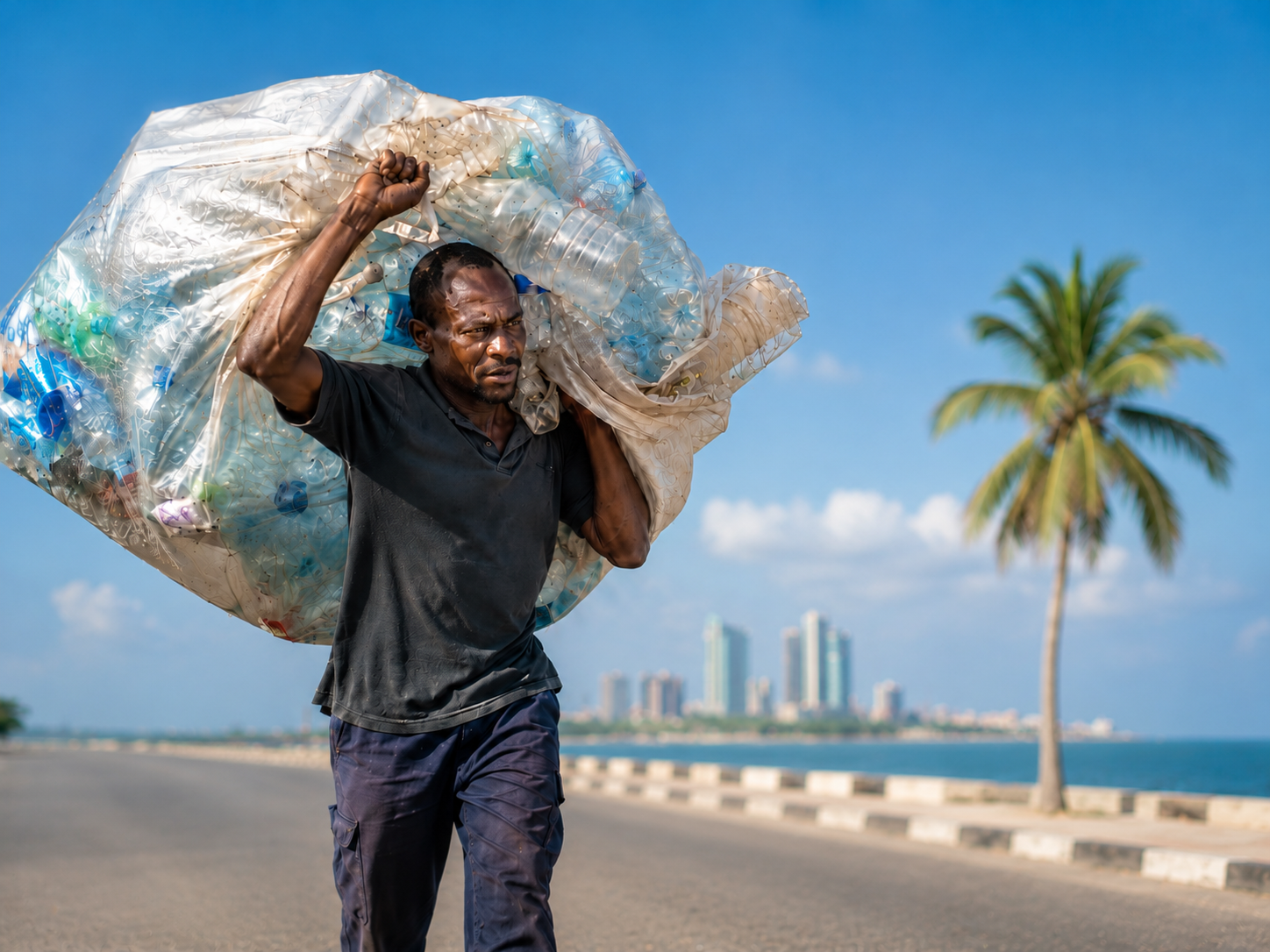
The informal waste economy should be brought into the system rather than pushed outside it. Waste pickers, recyclers, scrap dealers and small collectors already perform part of the city's environmental work. Registration, safety protection and links to formal recycling and composting chains would turn that informal contribution into an asset. A clean Dar will be built by a mixed system of public authorities, private contractors, community enterprises and circular-economy businesses.
Collection is not enough; Dar needs separation and processing
Many African cities focus on collection and ignore what happens next. Trucks collect mixed waste, carry it to overburdened dumpsites, and the city calls that progress. It is not enough.
Dar es Salaam needs a waste hierarchy: reduce, separate, reuse, recycle, compost, recover and dispose safely. Organic waste from markets and households should not be managed in the same stream as plastic, paper, glass, metal, medical waste, electronic waste or construction debris.
Reports indicate that Dar generates more than 5,000 tonnes of solid waste daily, with a significant portion still uncollected. The Citizen has also cited Dar es Salaam's master plan as showing about 5,300 tonnes of mixed solid waste daily, with informal actors recycling or reusing part of it while a large share remains unaccounted for.
That is an environmental problem, but also a commercial opening. Kariakoo, Buguruni, Ilala, Kinondoni, Temeke, Mbagala, Ubungo, Sinza, Mbezi, Tegeta and other high-density areas should not only be seen as waste pressure points. They are supply zones for a circular economy.
Mandatory waste separation should be introduced in phases, beginning with markets because of their large organic volumes. Hotels, restaurants and supermarkets should follow, then large residential estates, office parks, schools and hospitals. Organic waste can feed composting and biogas. Plastics, metals and paper can support recycling businesses. Construction debris can move into controlled recovery and reuse streams.
Handled this way, cleanliness becomes industrial policy. A clean city is not merely one that removes waste; it is one that extracts value before final disposal.
Drainage must become a daily service
Dar's dirt problem is inseparable from drainage. Blocked drains turn waste into flood risk. Plastic bottles, food waste, silt and construction debris convert ordinary rainfall into urban damage: flooded roads and homes, delayed commuters, damaged infrastructure, waterborne disease and higher maintenance costs.
Water and soil pollution, air pollution, noise, poor sanitation and environmental degradation are common urban problems, especially in large cities where regulation and environmental protection are still developing. Dar faces the added pressure of being a low-lying coastal city exposed to increasingly severe rainfall, heat and flood events.
Drainage should therefore become a scheduled municipal service, not an emergency activity before rains. Every drain should be mapped. Every blocked section should be logged. Every flood-prone point should have a maintenance calendar. Contractors working near drainage infrastructure should carry liability for blockage and damage. Markets, bus stands and vending corridors should have waste points designed specifically to keep solid waste out of drains.
Public space is economic infrastructure
Cleanliness is easier where public space is designed, used and valued. It is harder where open areas are abandoned, poorly lit, informally occupied, badly drained or treated as leftover land.
Dar should reimagine its public spaces as economic and social infrastructure: markets, road reserves, open spaces, beaches, bus stops, cemeteries, playgrounds, drainage corridors, roadside verges and informal gathering points. Each should have a responsible manager, a cleaning standard and a maintenance budget.
An Adopt a Street, Adopt a Drain and Adopt a Park framework can bring companies, schools, religious institutions, hotels, banks and residents' associations into the system without replacing municipal responsibility. Public spaces should be lit, landscaped, walkable and programmed. A place that is used is easier to defend; a place that is abandoned quickly becomes a dumping point.
Enforcement must be predictable, not theatrical
Dar cannot become one of Africa's cleanest cities through persuasion alone. Enforcement is necessary. It must, however, be predictable, fair and continuous.
Urban rules often fail because enforcement is selective. One trader is fined while another is ignored. One construction site is stopped while another dumps rubble at night. One restaurant is inspected while another operates without proper waste storage. Selective enforcement creates resentment and weakens compliance.
Dar needs a clean-city by-law framework with clear offences, fines and response procedures. Illegal dumping, drain blocking, unlicensed waste collection, waste burning, poor construction-site handling, littering from vehicles, improper market disposal and failure to pay waste fees should carry real penalties.
Enforcement must also be tied to service delivery. The city cannot punish households for improper disposal when collection is irregular. It cannot penalise small traders without providing market bins. It cannot criminalise behaviour before building the system that makes compliance possible. The sequence should be service, education, warning, enforcement and publication of results.
Monthly ward-level scorecards would make accountability visible. Collection coverage, illegal dumping points cleared, fines issued, drains cleaned, complaints resolved, recycling volumes and contractor performance should all be published. No ward councillor, municipal director or contractor should be comfortable appearing at the bottom of that list repeatedly.
Informal settlements must be included, not blamed
A clean-city strategy will fail if it treats informal settlements as the problem rather than part of the solution. Large parts of Dar live in areas with narrow roads, weak drainage, limited waste access and high density. These communities cannot be cleaned using the same model as planned neighbourhoods.
Urban inequality, unequal access to services and socio-spatial segregation are globally recognised urban problems. In Dar, the pattern is practical rather than abstract. Waste contractors often struggle to reach dense settlements. Residents pay informal collectors because formal services do not work. Drains block because better disposal options are absent. Flooding persists because housing expanded before infrastructure.
The answer is not demolition dressed up as cleanliness. It is settlement upgrading: footpaths, community bins, micro-transfer points, small collection vehicles, drainage rehabilitation, public toilets, street lighting and local waste committees. A clean Dar must be inclusive. If cleanliness is enforced only in city centres, tourist routes and affluent neighbourhoods, the city will remain structurally dirty.
Markets, vending and transport must be designed into the system
Markets should be among the first reform zones. They generate large volumes of organic waste, plastic packaging, wastewater and daily foot traffic. They are also politically visible and economically important. Dar should begin with a market-cleanliness compact covering Kariakoo, Buguruni, Ilala, Tandale, Temeke, Mabibo, Mbagala and other major markets.
Each market should have separated waste points, organic waste collection, cleaning shifts, drainage inspection, trader committees, licensed waste handlers and daily reporting. Organic waste should be routed to composting and biogas operators. Traders should pay structured waste fees through market systems. Market managers should be judged partly by cleanliness performance.
Mobility is part of the same problem. Bus stops, daladala stands, bodaboda areas, bajaji terminals and street-vending corridors generate waste because they concentrate people. Many lack bins, toilets, water points and cleaning schedules.
Dar's bus rapid transit corridors, ferry areas, terminals and feeder routes should become clean-mobility zones. Every high-traffic stop should have bins, toilets where appropriate, regular sweeping, vendor waste rules and real-time inspection. Transport operators should carry cleanliness obligations as part of route licensing.
Street vendors should not be managed only through periodic removal. They should be organised into serviced vending zones with waste points, water access, drainage protection and cleaning fees. A vendor with a legal operating point and a waste obligation is easier to regulate than a vendor pushed into informality.
Green Dar is clean Dar
Dar cannot become one of Africa's cleanest cities if it remains hard, hot, dusty and under-greened. Cleanliness is not only the absence of waste. It is the presence of order, shade, air quality, drainage, walkability and ecological balance.
The city should adopt an urban-greening plan with measurable targets. Main roads should have tree corridors. Drainage reserves should be protected and planted. Schools and public institutions should become greening anchors. New developments should meet landscape and stormwater standards. Beachfront areas should be protected from degradation. Mangroves and wetlands should be treated as urban infrastructure because they absorb water, protect biodiversity and reduce climate risk.
A cleaner Dar must also be a cooler Dar. That is a public-health issue, a productivity issue and a climate-resilience issue.
Private capital needs bankable systems
Dar's cleanliness challenge is too large for government alone, but private-sector involvement must be structured properly. Collection contracts should not reward presence; they should reward performance. Payments should be linked to collection frequency, missed pickups, customer complaints, GPS-tracked routes, recycling volumes, drain-protection compliance and disposal records.
There is room for larger investment in transfer stations, composting plants, recycling parks, engineered landfills, material recovery facilities, e-waste centres, construction-waste yards, public toilets, green spaces and digital monitoring systems. These projects can attract private or blended finance if the city creates reliable revenue streams and regulatory certainty.
Dar's clean-city programme should be budgeted as an investment, not municipal charity. Clean cities attract business. Dirty cities impose hidden taxes through disease, flooding, congestion, lost time, weaker property appeal and reputational damage.
Citizens must be treated as co-managers
A clean city cannot be imposed only from above. Residents must participate in shaping, monitoring and protecting the city.
When participation is ignored in urban planning and management, a gap opens between the desired city and the city that residents actually experience. Dar needs public involvement, access to information and active citizenship as part of its operating model, not as an afterthought.
The city should create a clear citizen reporting system for missed collection, illegal dumping, blocked drains, broken bins, overflowing markets and dirty public toilets. Reports should be visible, resolutions tracked and ward leaders judged by response performance.
Schools, religious institutions, businesses, transport operators, media houses and civil society should all be part of the system. The city will not become clean because citizens are told to love cleanliness. It will become clean when citizens see the system working and can hold someone accountable when it fails.
A 10-point operating plan for Dar
The operating plan requires discipline more than slogans. First, establish a metropolitan clean-city command structure with legal authority across Dar es Salaam's municipalities. Second, map waste generators, contractors, transfer points, dumpsites, recycling actors, drainage hotspots, public toilets, markets and informal dumping zones. Third, introduce a transparent digital management system accessible to households, businesses, institutions and markets.
Fourth, phase in waste separation, beginning with markets, hotels, restaurants, supermarkets, schools, hospitals and large residential estates. Fifth, build or upgrade transfer stations, material recovery facilities, composting sites, recycling parks and engineered disposal facilities. Sixth, make drainage cleaning a scheduled daily service supported by public reporting, mapping and contractor accountability.
Seventh, reform market, vending and transport-terminal cleanliness through serviced waste points, trader committees and enforceable operating standards. Eighth, publish ward-level clean-city scorecards every month. Ninth, enforce by-laws consistently after service access has been provided. Tenth, invest in green infrastructure: trees, parks, protected drainage reserves, wetlands, waterfront management and shaded public corridors.
This is not a beautification plan. It is an urban productivity plan.
The real target is not cleanliness; it is city performance
President Samia's frustration with Dar es Salaam's condition should become a turning point. The opportunity will be wasted if the response is reduced to orders, blame and temporary cleanups.
Dar can become one of Africa's cleanest cities, and eventually a reference point for fast-growing coastal cities globally, but only if it stops treating cleanliness as an event. The city needs systems, budgets, data, enforcement, public participation and investment. It needs to see waste as a service, drainage as climate infrastructure, public space as economic infrastructure, and citizens as co-managers.
Many cities around the world have struggled with similar problems for decades because authorities fail to move from diagnosis to long-term corrective action. The common denominator of credible urban reform is sustainable, integrated and locally adapted planning.
A clean city is not built by sweeping harder. It is built by governing better.
If Tanzania wants Dar es Salaam to become one of the cleanest cities in Africa and eventually a global model for rapidly growing coastal cities, the work must begin with an institutional shift: stop cleaning the mess after it appears, and start managing the city so the mess is not produced in the first place.
 Uchumi360
Business Intelligence
Uchumi360
Business Intelligence
Uchumi360 covers business, investment, and economic policy across East, Central, and Southern Africa.
For the serious reader
You read to the end. That places you in a small group.
Uchumi360 is built for readers who demand precision over speed, structure over sentiment, and analysis that holds uncomfortable conclusions rather than softening them. If this work sharpens how you think about Africa's economy, help us keep building the infrastructure behind it.
Institutional Partners
Commission intelligence. Shape the conversation.
Uchumi360 works with development finance institutions, investment firms, sovereign bodies, and strategic organisations across the coverage region. Institutional partnership unlocks:
- Commissioned sector and country intelligence reports
- Branded research series under your institution's authority
- Exclusive data briefings for internal strategy teams
- Speaking and editorial presence at Uchumi360 events
- Co-published investment outlooks for your markets
Support Our Work
Independent analysis has a cost. Help us bear it.
Uchumi360 does not carry advertising. It does not take editorial direction from sponsors. Every article is produced without commercial compromise. Your contribution funds the reporting, research, and editorial infrastructure that keeps this analysis free from influence.
Secure checkout: One-time and monthly support are processed securely. Add payment credentials to enable checkout here.
Stay Connected
Keep up with every new insight.
Follow our latest analysis, policy coverage, and market intelligence as soon as it is published. If you need something specific, reach out directly and we will point you to the right research.
