
Is Tanzania Africa's Best Investment Destination in 2026?
Ready
Tanzania registered a record 915 investment projects worth $10.95 billion in 2025, per TISEZA, up 17.7% in value from 901 projects worth $9.3 billion in 2024, and up from just 252 projects worth $3.7 billion in 2021, a near-tripling of both project count and capital value in four years. The IMF puts 2025 GDP growth at 5.9%, the AfDB at 6.0%, both driven by mining, agriculture, tourism, construction and financial services rather than a single commodity. Mining alone generated $5.4 billion in exports in 2025 and now contributes 11.9% of GDP, while a $2.33 billion Standard Chartered-arranged financing package is advancing the Standard Gauge Railway's regional corridor role, and July 2026 foreign exchange reforms opened Tanzanian government securities to non-resident investors for the first time. Real constraints remain: the World Bank puts 48% of Tanzanians below the $3-a-day poverty line despite the growth, and both the World Bank and AfDB flag weak formal job creation, infrastructure gaps and institutional weaknesses as unresolved. This piece argues Tanzania's case rests less on any single advantage than on several converging at once, and that execution, not opportunity, is now the binding constraint.
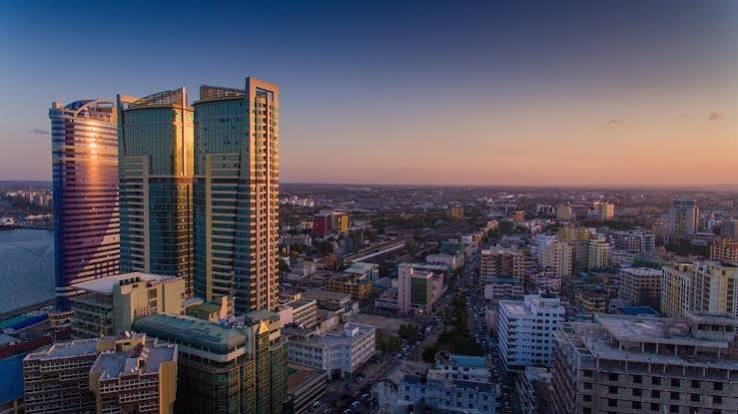
DAR ES SALAAM — Tanzania is not trying to win on any single metric. It doesn't have Nigeria's consumer market, South Africa's capital markets, or Egypt's economic scale. What the numbers increasingly suggest is a country accumulating strength across enough categories at once; growth, geography, minerals, agriculture, tourism, infrastructure and market access reform that the combination is becoming harder to ignore, even if no individual piece of it is unique on the continent.
The Investment Pipeline Has Nearly Tripled in Four Years
The clearest single data point is TISEZA's own registration record. Tanzania registered 915 investment projects worth $10.95 billion in 2025, presented to Parliament by Minister of State Prof Kitila Mkumbo as the highest annual total since the investment promotion framework was established in 1996. That capped a run of consecutive record years.
| Year | Projects Registered | Value (USD) |
| 2021 | 252 | $3.7 billion |
| 2022 | 293 | $4.5 billion |
| 2023 | 526 | $5.7 billion |
| 2024 | 901 | $9.3 billion |
| 2025 | 915 | $10.95 billion |
Source: TISEZA, "Investment Trend in Tanzania (2021-2025)," January 2026; confirmed via Prof Kitila Mkumbo's June 2026 State of the Economy presentation to Parliament.
The pace of growth is itself informative. Project count nearly tripled between 2021 and 2024, then barely moved between 2024 and 2025, 901 to 915, while capital value kept climbing sharply, up $1.65 billion in that same year. TISEZA's own analysis reads that as a shift toward fewer, larger, more capital-intensive projects rather than a slowdown, evidence, if the interpretation holds, that the investment case is maturing rather than plateauing. The projects span manufacturing, construction, transport, tourism and agriculture, are expected to generate more than 161,000 jobs on full implementation, and Tanzanian investors, alone or in joint ventures, accounted for 51% of all registered projects, a detail that complicates any narrative in which this is purely a story about foreign capital discovering Tanzania. China led foreign investment in 2025, followed by the UAE and the UK. Tanzania's own ranking among Africa's most attractive investment climates improved from 12th to 9th over the same period, with the government targeting $15 billion in new registrations for 2026 and a cumulative $50 billion by 2030.
Some of that acceleration traces directly to the TISEZA One Stop Facilitation Centre this publication has covered separately, a consolidation of 14 government agencies that officials say now issues investment permits within 24 hours, down from a process that previously took weeks.
Growth That Doesn't Depend on One Sector
The IMF puts Tanzania's 2025 real GDP growth at 5.9%, with medium-term growth expected around 6.2%, driven by mining, agriculture and tourism together rather than any single sector. The African Development Bank's figure is close, 6.0% in 2025 up from 5.5% in 2024, with 5.4% projected for 2026 and 6.1% for 2027. The World Bank's February 2026 Economic Update independently found GDP expanded roughly 5.8% in the first half of 2025, attributing the growth to mining, construction, financial services and exports, alongside low inflation and improving foreign exchange conditions.
That diversification matters more than the headline growth rate itself. An investor evaluating Tanzania isn't betting on one commodity cycle; the same economy that's expanding mineral exports is simultaneously expanding construction, financial services, tourism and agricultural output, meaning a downturn in any single sector doesn't necessarily derail the broader growth story the way it would in a more concentrated economy.
Geography Turns a Domestic Market Into a Regional One
Tanzania's Indian Ocean coastline paired with borders shared with eight countries, several of them landlocked, is arguably its least replicable advantage. The Standard Gauge Railway is being built explicitly as regional infrastructure rather than a domestic line: in April 2026, Standard Chartered arranged $2.33 billion in financing for two SGR sections, part of a wider 1,219-kilometre corridor designed to connect Dar es Salaam with Mwanza while improving links to Rwanda, Burundi, Uganda and the DRC. A factory built in Tanzania under that framework isn't necessarily built only for Tanzanian consumers; it's positioned to serve the wider Great Lakes region, a materially different proposition than manufacturing capacity confined to a single domestic market.
Minerals, With an Emphasis on Moving Beyond Extraction
Tanzania's mining sector generated approximately $5.4 billion in mineral exports in 2025, with gold alone accounting for roughly $4.75 billion, and mining's overall GDP contribution reached 11.9%. The more consequential shift is where government policy is pointed next: hundreds of licences for critical and strategic minerals, graphite, nickel, cobalt, copper, rare earth elements and niobium, were issued in 2025 and early 2026, and the government signed a development agreement in March 2026 for the Panda Hill niobium project, positioning Tanzania among the world's prospective leading niobium producers. The investment opportunity is visibly migrating from extraction toward processing, which is where the larger and more durable economic value actually sits.
Agriculture and Tourism Are Underweighted in How Tanzania Gets Discussed
Agriculture accounts for roughly a quarter of Tanzania's economic value added and employs more than half the population, per World Bank data, a fact usually framed as a development challenge rather than an investment opportunity. It's arguably both: a large agricultural workforce, substantial land resources, rising urbanisation and growing regional food demand together create openings across irrigation, fertiliser, mechanisation, cold chain logistics, food processing and agricultural finance, not just farming itself.
Tourism tells a similar story from a different angle. UNCTAD data puts Tanzania's 2024 services exports at approximately $6.94 billion, with travel accounting for more than half. That spending doesn't stop at hotel receipts; it generates demand for aviation, transport, restaurants, construction, real estate and increasingly specialised tourism experiences beyond the traditional northern circuit, meaning the investment opportunity extends well past building another lodge near the Serengeti.
Capital Markets Are Opening at the Same Time
Tanzania widened access to its own government securities market in July 2026, amending Foreign Exchange Regulations to broaden the legal definition of securities to include government bonds and other government loan instruments, and enabling non-resident investors to buy Treasury bills and government bonds through approved Central Depository Participants. That's a structurally different kind of opening than physical project investment: it lets international capital gain exposure to Tanzania through its financial markets directly, rather than exclusively through factories, mines or hotels, a genuine deepening of how foreign investors can participate in the economy.
An Organised Pipeline, Not Just an Ambition
One of the more persistent complaints about African investment opportunities generally isn't a shortage of ideas, it's a shortage of bankable, investment-ready projects. Tanzania has moved to address that directly: in June 2026, the UNDP published Tanzania's Investment Growth Facility Public Sector Investment Deal Book, consolidating 68 priority projects worth approximately $6.57 billion across tourism, fisheries, ports, logistics, energy, water, roads, industrial development and renewable energy. Africa50 has separately said it's prepared to invest in Tanzania's strategic infrastructure, ports, gas distribution and electricity transmission, specifically within the Vision 2050 implementation framework, a meaningful signal from an institution whose mandate is African infrastructure specifically.
Vision 2050 itself matters here less as political messaging and more as a horizon-setting device: it has been formally approved as Tanzania's development framework for the next 25 years and is being incorporated into national planning and budgeting, giving long-cycle investors, in mining, energy, logistics or manufacturing, a policy horizon to underwrite decisions against that a five-year election cycle alone wouldn't provide.
The Constraints Are Real, and Worth Stating Plainly
None of this adds up to a frictionless investment case. The World Bank estimates 48% of Tanzanians remained below the $3-a-day international poverty line in 2025, evidence that growth has outpaced poverty reduction, alongside weak formal job creation, infrastructure gaps and human capital constraints the Bank flags as ongoing. The AfDB separately points to financing needs and institutional weaknesses, including gaps in contract transparency, environmental enforcement and public financial management. Older US State Department investment climate assessments flagged bureaucracy, land administration issues and logistics coordination as recurring friction points, even while crediting reforms under Tanzania's 2022 Investment Act, including stronger facilitation through the investment centre, electronic investment services, and access to international arbitration for qualifying disputes involving the government.
The Actual Risk Isn't a Lack of Opportunities
Tanzania's binding constraint increasingly looks less like insufficient investment opportunity and more like institutional capacity to absorb it. The pipeline exists in genuine abundance across mining, agriculture, tourism, logistics and manufacturing. Whether Tanzania's regulatory predictability, skills base, infrastructure delivery and financial market depth can scale fast enough to convert registered projects into operating businesses is the open question the World Bank's own language gestures toward when it describes strong fundamentals alongside continuing structural constraints on inclusive growth.
That reframes the investment thesis usefully. Tanzania doesn't need to lead Africa in any single category to be a compelling destination. It needs the combination, growth without single-sector dependence, geography that turns a domestic market regional, minerals moving toward processing, agriculture and tourism still substantially underbuilt, and capital markets now opening to non-resident participation, to keep compounding faster than the execution gap widens. The data through 2025 suggests that combination is real. Whether Tanzania's institutions can keep pace with the pipeline they've now built is the story the next few years will actually decide.
FAQ
How much investment did Tanzania actually register in 2025? 915 projects worth $10.95 billion, according to TISEZA, the highest annual total since Tanzania's investment promotion framework was established in 1996, up from 901 projects worth $9.3 billion in 2024.
Is this growth coming mostly from foreign investors? Not exclusively. Tanzanian investors, either alone or through joint ventures, accounted for 51% of all registered projects in 2025, though China, the UAE and the UK led foreign investment specifically.
What is driving Tanzania's GDP growth? A mix of mining, agriculture, tourism, construction and financial services rather than any single sector, with the IMF estimating 5.9% growth in 2025 and the African Development Bank estimating 6.0%.
What are the biggest risks to Tanzania's investment case? The World Bank estimates 48% of Tanzanians remained below the $3-a-day poverty line in 2025 despite the growth, and both the World Bank and African Development Bank flag weak formal job creation, infrastructure gaps and institutional weaknesses, including contract transparency and public financial management, as unresolved constraints.
How does the Standard Gauge Railway change Tanzania's investment appeal? It's being built as regional infrastructure rather than a purely domestic line, with a $2.33 billion financing package arranged in April 2026 supporting a corridor designed to connect Dar es Salaam to Mwanza while improving links to Rwanda, Burundi, Uganda and the DRC, letting investors serve a wider regional market rather than Tanzania alone.
Can foreign investors now access Tanzania's financial markets directly? Yes, as of July 2026. Amended Foreign Exchange Regulations broadened the definition of securities to include government bonds and other government loan instruments, and non-resident investors can now buy Tanzanian Treasury bills and government bonds through approved Central Depository Participants.
 Uchumi360
Business Intelligence
Uchumi360
Business Intelligence
Uchumi360 covers business, investment, and economic policy across East, Central, and Southern Africa.
For the serious reader
You read to the end. That places you in a small group.
Uchumi360 is built for readers who demand precision over speed, structure over sentiment, and analysis that holds uncomfortable conclusions rather than softening them. If this work sharpens how you think about Africa's economy, help us keep building the infrastructure behind it.
Institutional Partners
Commission intelligence. Shape the conversation.
Uchumi360 works with development finance institutions, investment firms, sovereign bodies, and strategic organisations across the coverage region. Institutional partnership unlocks:
- Commissioned sector and country intelligence reports
- Branded research series under your institution's authority
- Exclusive data briefings for internal strategy teams
- Speaking and editorial presence at Uchumi360 events
- Co-published investment outlooks for your markets
Support Our Work
Independent analysis has a cost. Help us bear it.
Uchumi360 does not carry advertising. It does not take editorial direction from sponsors. Every article is produced without commercial compromise. Your contribution funds the reporting, research, and editorial infrastructure that keeps this analysis free from influence.
Secure checkout: One-time and monthly support are processed securely. Add payment credentials to enable checkout here.
Stay Connected
Keep up with every new insight.
Follow our latest analysis, policy coverage, and market intelligence as soon as it is published. If you need something specific, reach out directly and we will point you to the right research.
