
Amsons Group Agrees to Buy Oryx Energies Tanzania in $230 Million Deal
Ready
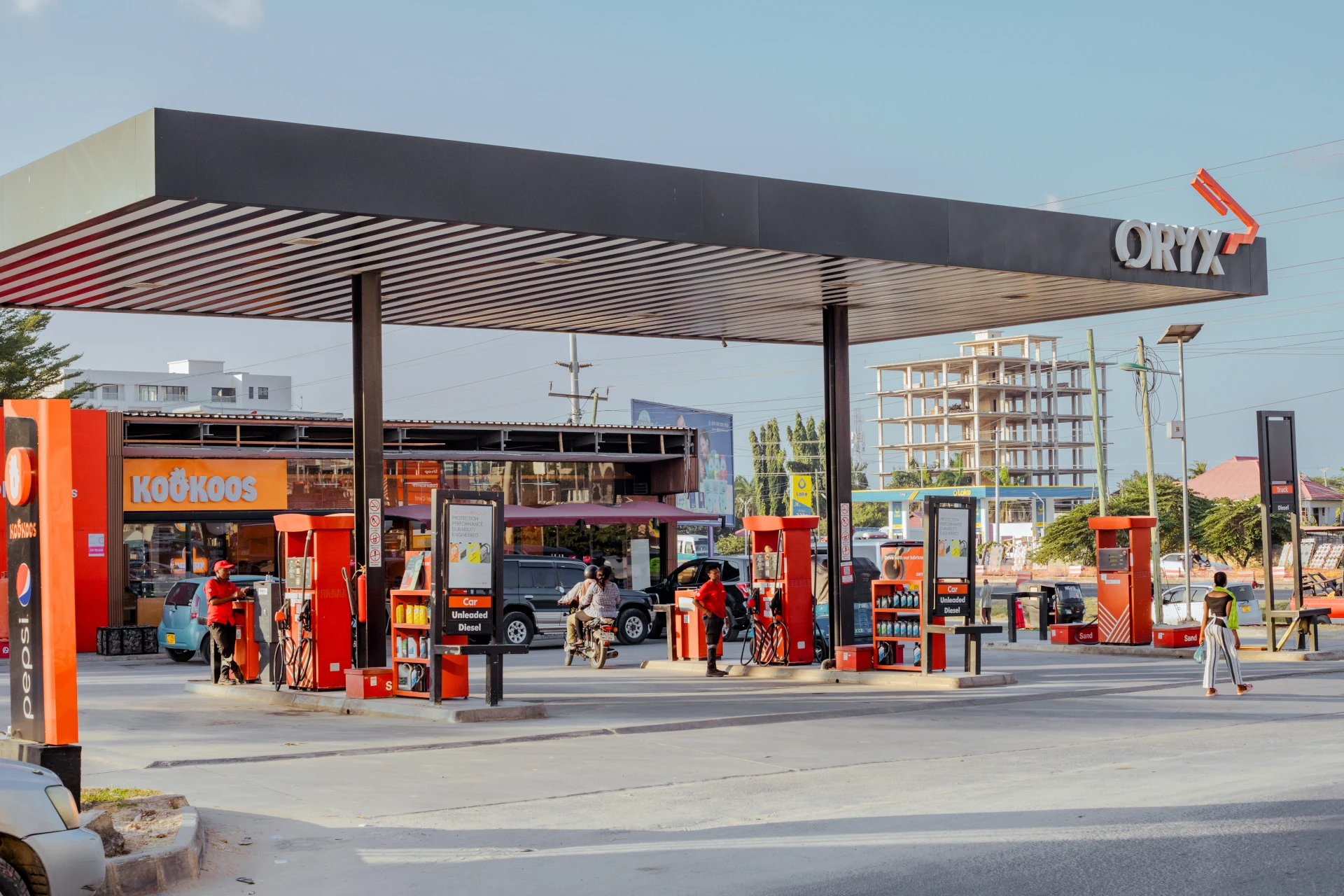
Amsons Group has agreed to acquire Oryx Energies’ Tanzania downstream oil business in a deal reported at more than US$230 million, adding fuel stations, storage infrastructure, LPG operations and strategic energy assets to one of Tanzania’s fastest expanding private groups.
Tanzania’s Amsons Group has agreed to acquire Oryx Energies’ downstream oil business in Tanzania in a transaction reported at more than US$230 million, marking one of the largest recent acquisitions by a Tanzanian-owned industrial group and significantly expanding Amsons’ position in petroleum storage, fuel distribution, retail and regional energy logistics. Oryx Energies formally announced the agreement on October 16, saying the transaction forms part of a strategic review of its African downstream portfolio and will transfer key service stations, storage terminals and distribution infrastructure into local ownership. Completion remains subject to regulatory approvals and customary conditions, meaning the transaction has been agreed but has not yet legally closed.
The acquisition is economically significant because Oryx is not a marginal fuel retailer. The company has operated in Tanzania since 1999 and built an integrated downstream platform covering fuel imports, storage, retail distribution, liquefied petroleum gas, lubricants and industrial supply. Its Tanzanian operation currently includes 54 service stations, 56,000 cubic metres of storage capacity at its Kurasini depot and oil terminal, more than 4.16 million LPG cylinders in circulation and a lubricant blending plant in Dar es Salaam. Oryx also identifies Tanzania International Petroleum Reserves Limited, or TIPER, as one of the strategic assets supporting its local operations.
TIPER makes the transaction particularly important. The facility in Kigamboni is jointly owned by the Tanzanian government and Oryx Energies and has developed from the country’s former refinery into Tanzania’s largest petroleum storage facility, with storage capacity of about 313,000 cubic metres. TIPER handles domestic fuel supply, exports to neighbouring countries and seaborne reexports, while truck loading capacity exceeds 5,000 cubic metres per day. If Oryx’s equity interest in TIPER transfers as part of the transaction, Amsons would gain exposure not only to retail fuel distribution but to one of the most strategically important petroleum storage assets in the country.
The Deal Changes Amsons From a Large Local Player Into a Much Bigger Energy Platform
Amsons is already a major participant in Tanzania’s petroleum market through Camel Oil. EWURA data for December 2025 placed Camel Oil’s share of the oil marketing company market at 12.7 percent, second only to Puma Energy’s 13.1 percent, while Oryx Energies held 2.5 percent. On a simple arithmetic basis, combining those two market shares would produce around 15.2 percent, although the actual post acquisition market position will depend on how EWURA defines the relevant market, how assets are integrated and whether the regulator requires any remedies before completion.
The LPG implications are potentially even larger. Oryx Gas held 36.78 percent of Tanzania’s LPG market in December 2025, making it the largest operator in that segment by a substantial margin. Its nearest competitor, Taifa or Mihan Gas, held 22.23 percent, followed by Puma Gas at 11.45 percent. This means Amsons is not simply buying a conventional petrol station network. It is potentially acquiring the country’s largest LPG platform at a time when Tanzania is trying to accelerate the transition from charcoal and firewood towards cleaner cooking fuels.
That gives the transaction a different strategic profile from a typical downstream acquisition. Fuel retail is a high-volume business, but the deeper economic value lies in infrastructure. Terminals, storage tanks, LPG plants, filling infrastructure, lubricant production and distribution networks create barriers to entry because they require capital, land, regulatory approvals and logistics capabilities that cannot be reproduced quickly.
Amsons is therefore acquiring both market share and physical infrastructure.
The Reported $230 Million Price Is Large, but the Strategic Assets Matter More
The transaction has been widely reported at more than US$230 million, below the roughly US$250 million figure associated with negotiations earlier in 2026. Oryx itself did not disclose the purchase price in its official announcement, so the final consideration should still be treated as reported rather than formally confirmed by the seller.
Even at US$230 million, the deal would rank among the larger private acquisitions undertaken by a Tanzanian business in recent years. But the price alone understates why the transaction matters. Petroleum storage capacity determines how much fuel a company can import, hold and distribute. Retail stations determine how directly the company reaches consumers. LPG cylinders and filling facilities determine market penetration in cooking gas. TIPER provides access to infrastructure that sits inside the regional petroleum supply chain.
According to reporting on the transaction, Amsons expects its total fuel storage capacity to rise from about 300,000 tonnes to roughly 800,000 tonnes following the acquisition, while its retail network would expand to approximately 300 stations across several countries. Those figures indicate that the deal is intended to create a regional platform rather than simply increase Amsons’ Tanzanian fuel sales.
Amsons Managing Director Edha Nahdi framed the transaction in similar terms, saying Oryx’s distribution and storage assets would strengthen domestic fuel security while helping position Tanzania as a regional logistics hub for East and Central Africa. Oryx Chief Executive Moussa Diao said the company viewed Amsons as capable of building on the Tanzanian business while Oryx redirects capital towards other African energy infrastructure and trading activities.
Tanzania’s Geography Makes Fuel Storage a Regional Business
The regional logic behind the acquisition is important. Tanzania’s petroleum sector does not serve only its domestic market. Dar es Salaam functions as an import gateway for fuel moving towards inland Tanzanian markets as well as neighbouring economies including Zambia, Malawi, Burundi, Rwanda and the eastern Democratic Republic of Congo. Storage assets close to the port therefore have economic value beyond domestic retail.
A company able to import large volumes, store them efficiently and dispatch fuel by road or other transport corridors can participate in regional trade flows even where it does not own large retail networks in every destination market. This is one reason petroleum terminals can be more strategically important than the number of visible petrol stations suggests.
TIPER illustrates that role clearly. The facility serves Tanzania’s domestic market but also supports exports to neighbouring countries and seaborne reexports. Amsons’ existing presence in logistics, container depots and petroleum distribution would make the acquisition vertically complementary rather than purely financial.
That integration could allow Amsons to control more stages of the downstream chain, from importation and storage to transport and retail distribution. Such integration can reduce logistics costs and improve supply coordination, but it also increases the importance of regulatory scrutiny because control over strategic infrastructure can influence competition across the wider market.
The Competition Question Will Matter
The transaction still requires regulatory approval, and competition authorities will have to assess more than the combined market share of Camel Oil and Oryx retail stations.
The more important question is whether the acquisition gives Amsons excessive control over infrastructure required by competitors to operate efficiently. Petroleum markets depend on import terminals, bonded storage, loading facilities, LPG storage and distribution capacity. Ownership concentration at those points can have effects that are not captured by retail fuel market share alone.
This is particularly relevant because Amsons already has a substantial petroleum business. Adding Oryx’s retail network, storage infrastructure and LPG platform creates a much larger vertically integrated operator.
The LPG segment deserves particular scrutiny because Oryx Gas was already the market leader with a 36.78 percent share at the end of 2025. If Amsons has existing LPG interests that overlap with those operations, the combined position could become significantly more concentrated than the conventional liquid fuels market.
Regulators will therefore need to determine whether the transaction strengthens domestic ownership and investment without reducing competitive pressure in fuel distribution and cooking gas.
Those objectives are not necessarily contradictory. A Tanzanian company can become much larger while competition remains healthy if rival operators retain access to infrastructure, imports and customers. But local ownership by itself is not a substitute for market competition.
The Acquisition Extends Amsons’ Recent Expansion Beyond Tanzania
The Oryx transaction is the latest in a series of aggressive acquisitions and investments that have changed the scale of Amsons Group. The company acquired control of Bamburi Cement in Kenya in 2024 in a transaction worth roughly US$180 million and subsequently increased its exposure to East African Portland Cement through another Holcim linked transaction. It has also announced major power investments in Zambia and continues to operate across petroleum, cement, flour milling, logistics, container depots and real estate.
The pattern suggests a deliberate shift from being a diversified Tanzanian company towards becoming a regional industrial group. That matters for Tanzania because the country has historically hosted many large foreign owned businesses but comparatively few locally controlled companies capable of making acquisitions exceeding US$100 million outside their home market. Amsons’ expansion, alongside the growth of other large Tanzanian groups, indicates that domestic capital is beginning to participate more aggressively in regional consolidation.
The Oryx deal is different from the Bamburi acquisition because it strengthens a sector where Amsons already has operating experience and infrastructure. The company is therefore not entering petroleum through acquisition. It is using acquisition to move further up the scale curve in a business it already understands. This reduces some integration risk but increases concentration risk.
Oryx Is Leaving Tanzania After More Than Two Decades
Oryx’s decision to sell also deserves attention. The company has operated in Tanzania since 1999 and describes the country as an important part of its historical growth. Its Tanzanian platform spans fuels, LPG, lubricants, storage and distribution and is among its more developed integrated downstream operations.
The sale therefore does not appear to be a withdrawal caused simply by a weak local business. Oryx says the transaction is part of a broader strategic review of its African downstream portfolio and that it intends to concentrate more capital and management effort on energy infrastructure and trading across the continent. That distinction is important. An international company selling a mature Tanzanian operation to a local buyer can reflect portfolio reallocation rather than a negative judgement on Tanzania’s investment environment.
In fact, the willingness of Amsons to commit more than US$200 million suggests the opposite from the buyer’s perspective. A Tanzanian company is assigning substantial value to the same assets because it sees opportunities to combine them with its own infrastructure, logistics and regional expansion strategy. The transaction can therefore be read as a shift in ownership and strategic priority rather than simple capital flight.
Domestic Ownership of Strategic Assets Is Increasing
The deal also fits into a broader discussion about local ownership in African economies. Governments often focus local content policies on employment, procurement or minority shareholding while the largest infrastructure remains foreign controlled.
This acquisition is different because a locally headquartered company is attempting to acquire the operating platform itself. If completed, control over a major retail fuel network, storage infrastructure, LPG business and possibly Oryx’s TIPER interest would move from a Geneva headquartered company to a Tanzanian group. That creates an opportunity for more profits, management expertise and strategic decision making to remain connected to the domestic economy.
But ownership nationality should not be confused with economic benefit automatically. The value to Tanzania will depend on whether Amsons invests further in the acquired infrastructure, maintains safety and operational standards, expands LPG access, strengthens competition, creates skilled employment and uses the platform to grow regional exports and logistics services. A change in shareholder nationality matters much less if the underlying assets stagnate.
The Uchumi360 Insight
The Oryx acquisition is larger than a fuel retail transaction. It is a consolidation of infrastructure.
Amsons is buying stations that sell fuel, but it is also buying the storage, LPG, lubricant and distribution systems that determine how fuel reaches those stations in the first place. That distinction explains why the transaction could alter the structure of Tanzania’s downstream energy market more significantly than the headline number of acquired service stations suggests.
The deal also shows how the balance of corporate power in East Africa is changing. Tanzanian companies are increasingly becoming buyers of major regional assets rather than only subsidiaries, distributors or minority partners of international groups. Amsons’ acquisition of Bamburi Cement demonstrated that shift in construction materials. The Oryx transaction extends it into energy infrastructure.
The regulatory test will be whether Tanzania can capture the benefits of larger domestically controlled companies without allowing strategic markets to become excessively concentrated.
A strong domestic corporate sector requires companies large enough to invest regionally. A strong economy also requires enough competition to ensure that scale does not translate into market power at the expense of consumers and smaller businesses.
If approved, the Oryx deal will make Amsons one of Tanzania’s most consequential private energy companies. The longer term question is whether it also helps make Tanzania a more important petroleum storage and distribution hub for East and Central Africa.
FAQ
Has Amsons Group completed the acquisition of Oryx Energies Tanzania?Not yet. The companies have signed an agreement, but Oryx says completion remains subject to regulatory approvals and customary closing conditions.
How much is the deal worth? The transaction has been reported at more than US$230 million. Oryx did not disclose the purchase price in its official announcement.
What assets is Amsons buying? Oryx says the transaction includes its Tanzanian downstream oil business, including key service stations, storage terminals and distribution infrastructure. Oryx’s Tanzania platform also includes LPG, lubricants and strategic infrastructure.
How large is Oryx Energies’ Tanzania business? Oryx reports 54 service stations, 56,000 cubic metres of storage capacity, more than 4.16 million LPG cylinders and a lubricant blending plant in Dar es Salaam.
What is TIPER? Tanzania International Petroleum Reserves Limited is the country’s largest petroleum storage facility, with approximately 313,000 cubic metres of storage capacity. It is jointly owned by the Tanzanian government and Oryx Energies.
Why is the acquisition important for Tanzania? It would transfer major petroleum distribution and storage assets into Tanzanian ownership while significantly increasing Amsons’ scale in fuel, LPG and regional energy logistics.
 Uchumi360
Business Intelligence
Uchumi360
Business Intelligence
Uchumi360 covers business, investment, and economic policy across East, Central, and Southern Africa.
For the serious reader
You read to the end. That places you in a small group.
Uchumi360 is built for readers who demand precision over speed, structure over sentiment, and analysis that holds uncomfortable conclusions rather than softening them. If this work sharpens how you think about Africa's economy, help us keep building the infrastructure behind it.
Institutional Partners
Commission intelligence. Shape the conversation.
Uchumi360 works with development finance institutions, investment firms, sovereign bodies, and strategic organisations across the coverage region. Institutional partnership unlocks:
- Commissioned sector and country intelligence reports
- Branded research series under your institution's authority
- Exclusive data briefings for internal strategy teams
- Speaking and editorial presence at Uchumi360 events
- Co-published investment outlooks for your markets
Support Our Work
Independent analysis has a cost. Help us bear it.
Uchumi360 does not carry advertising. It does not take editorial direction from sponsors. Every article is produced without commercial compromise. Your contribution funds the reporting, research, and editorial infrastructure that keeps this analysis free from influence.
Secure checkout: One-time and monthly support are processed securely. Add payment credentials to enable checkout here.
Stay Connected
Keep up with every new insight.
Follow our latest analysis, policy coverage, and market intelligence as soon as it is published. If you need something specific, reach out directly and we will point you to the right research.
