
Tanzania's Mkuju River Uranium Project Sat Dormant for Over a Decade. The World Has Changed Around It. Now the Question Is Whether Tanzania Can Build an Entire Industry From the Ground Up.
Ready
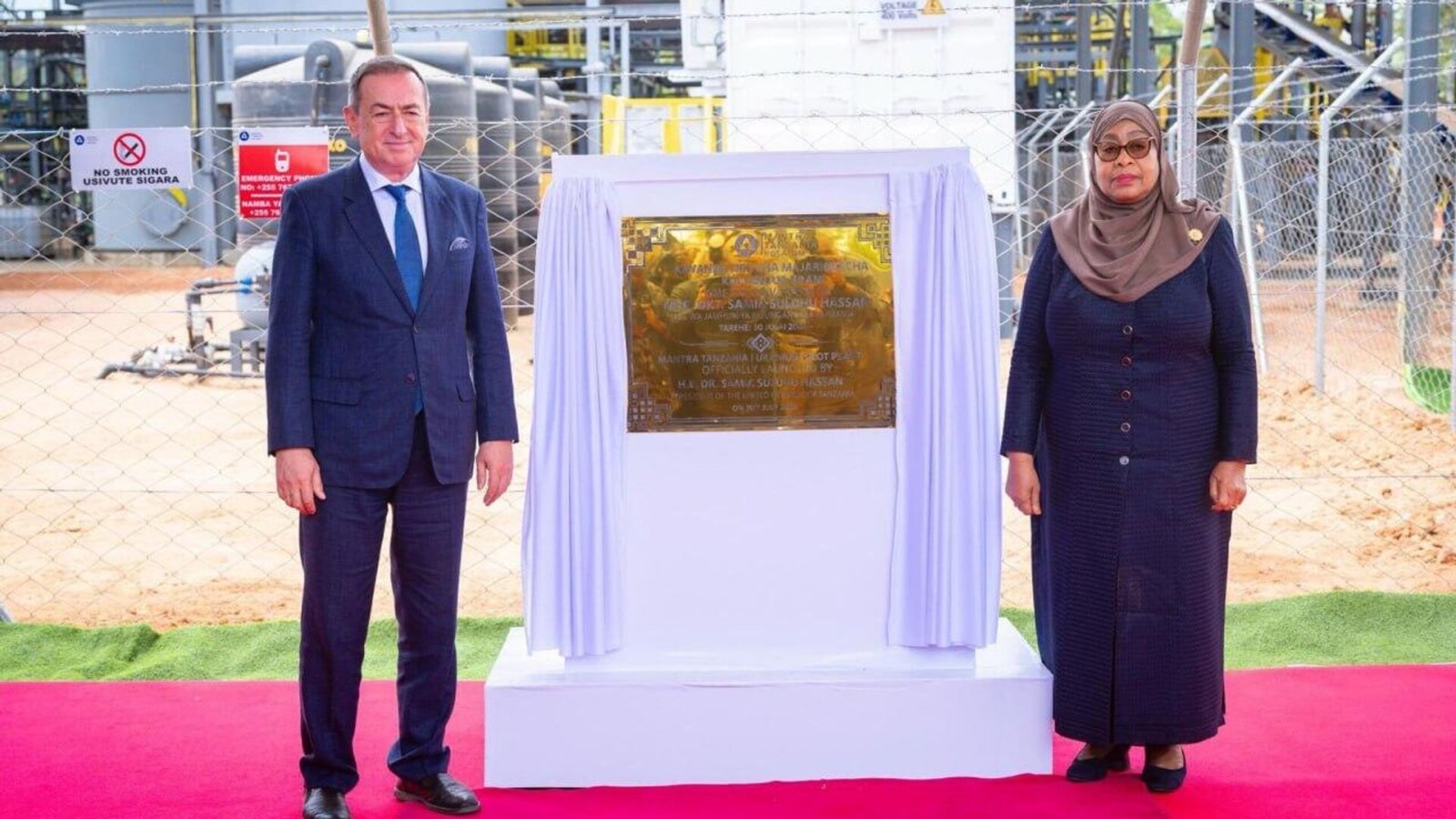
Tanzania's Mkuju River uranium project, valued at approximately USD 1 billion and located in Namtumbo District, Ruvuma Region, is moving closer to commercial production after nearly thirteen years in limbo following the post-Fukushima uranium price collapse. Developed by Mantra Tanzania, a subsidiary of Russia's Uranium One Group under Rosatom, the project holds approximately 139 million tonnes of uranium-bearing ore and is expected to produce around 3,000 tonnes annually at full operation, sustaining production for over two decades. Economic projections include more than 4,000 direct jobs, over 100,000 indirect opportunities across construction, logistics, and supply chains, and a long-term GDP contribution exceeding 1%. The project is seeking long-term financing from Russian and Tanzanian financial institutions, with lender caution driven by the current special mining licence's April 2028 expiry creating the regulatory certainty gap that large-scale mining finance requires resolved before capital commitment. The Tanzanian government has repeatedly reaffirmed Mkuju River as a strategic national project. The global nuclear revival driven by reactor lifespan extensions, new plant construction across major economies, and technology company nuclear interest for AI and data centre power is the market shift that has converted Mkuju River from a stranded asset into a strategically positioned uranium deposit. Environmental considerations related to proximity to the Selous ecosystem require the rigorous monitoring and enforcement whose maintenance Mantra Tanzania says its compliance with international environmental and radiation safety standards is providing. The article situates Mkuju River within Tanzania's critical minerals strategy, the global nuclear fuel supply chain's increasing strategic importance, and the broader question of whether Tanzania can build an industrial position in the nuclear economy rather than simply producing uranium ore for export. The world changed around Mkuju River while it sat dormant. The nuclear revival has converted a stranded asset into a strategic positioning opportunity. Tanzania now has the geological endowment, the market tailwind, and the government commitment. The financing framework is the remaining constraint whose resolution opens the industrial future that the uranium deposit is positioned to anchor.
A decade ago, Tanzania's Mkuju River uranium project looked like another stranded mining asset whose geological endowment was commercially irrelevant in a market that had collapsed and showed no immediate signs of recovery.
Today it looks considerably different.
The deposit in Namtumbo District, Ruvuma Region, valued at approximately USD 1 billion, is moving closer to commercial production after spending nearly thirteen years in limbo following the global uranium market's post-Fukushima collapse. What changed was not Tanzania's geology, which was always known and always compelling. What changed was the world's energy politics, and the convergence of three global trends whose simultaneous momentum has repositioned every strategically located uranium deposit from stranded asset to sought-after resource in a timeframe whose speed the commodity market's conventional cycle analysis did not predict.
What changed and why Mkuju River is relevant again
The Fukushima disaster in 2011 triggered a prolonged collapse in global uranium demand that lasted the better part of a decade. Countries that had been expanding nuclear generation capacity paused, reviewed, or reversed their programmes. Uranium prices fell sharply and remained depressed. Investment in uranium projects evaporated. Mkuju River, which had been advancing through development stages with commercial production appearing achievable, became one of the dozens of uranium projects across the world that were delayed, suspended, or abandoned as the economic case for the capital investment they required disappeared with the uranium price.
The market today looks categorically different. Countries that planned to phase out nuclear power are extending reactor lifespans whose continued operation requires the uranium supply that the long-term production commitments the utilities whose reactors are running require. Others are building new plants whose construction timelines have made them already committed to uranium demand streams whose supply sourcing the building programme's economics require securing before the uranium price that increased demand will produce has reflected the demand increase. China, India, Russia, the United Arab Emirates, and several European countries are expanding nuclear generation capacity simultaneously, creating the demand growth whose aggregate is sufficient to change the uranium supply balance from the oversupply that depressed prices throughout the 2010s to the supply deficit whose emergence is the market signal that Mkuju River's investors, financiers, and the Tanzanian government are all reading in the same direction.
The technology sector dimension adds a demand source whose novelty makes it analytically uncertain but whose scale makes it commercially material. Technology companies including Microsoft, Google, and Amazon are exploring nuclear power as a reliable energy source for the data centre and artificial intelligence infrastructure whose electricity consumption is growing at a pace that renewable energy intermittency and grid capacity constraints are not accommodating at the scale the technology sector's growth trajectory requires. Nuclear's baseload reliability, whose continuous generation characteristic the intermittent renewable energy sources cannot replicate, is the specific attribute that the data centre application values above almost all others, and whose attraction is driving the technology sector's nuclear interest at the precise moment when the uranium market's supply balance is tightening from the demand side that traditional utility nuclear represents.
The deposit and its economic projections
The Mkuju River deposit contains approximately 139 million tonnes of uranium-bearing ore whose grade and geological configuration Mantra Tanzania, the project developer and a subsidiary of Russia's Uranium One Group under Rosatom, has characterised through the exploration and pilot phase work that preceded the prolonged suspension.
At full operation, the project is expected to produce around 3,000 tonnes of uranium annually, a production volume that positions Tanzania as a meaningful contributor to global uranium supply rather than a marginal participant whose production scale does not attract the long-term offtake agreements and strategic partnership relationships that significant supply positions command. The project's operational lifespan exceeds two decades at the expected production rate, providing the long-term supply commitment that utilities and governments making 20 to 30 year nuclear energy planning decisions require before they structure the supply relationships that support their programmes.
The economic projections whose scale makes Mkuju River strategically significant for Tanzania's development arithmetic include more than 4,000 direct jobs, a figure that in a rural region whose economic development Tanzania's Vision 2050 industrial strategy requires to extend beyond the urban centres where the manufacturing and services investment is concentrated represents a meaningful direct employment impact. Over 100,000 indirect opportunities linked to construction, logistics, transportation, services, and local supply chains extend the economic multiplier into the surrounding Ruvuma Region and beyond, creating the income circulation and SME development that large-scale mining operations generate in their logistical and services catchment areas when the local content frameworks whose requirement Tanzania's mining governance has been strengthening are applied consistently.
The long-term GDP contribution exceeding 1% from a single mining investment reflects the scale of the economic contribution that a decade of sustained production at Mkuju River's projected output levels would generate through the combined direct revenue, employment income, supply chain activity, and fiscal contribution whose aggregate the 1% figure captures across the full operational period.
The financing challenge and what it requires
The project's most significant constraint is not geological, regulatory, or even environmental. It is financial, and its specific character reflects the classic investment dilemma that large-scale extractive projects in emerging market jurisdictions face when the regulatory certainty whose continuity lenders require extends beyond the licence terms whose renewal is uncertain at the time the financing is sought.
Mantra Tanzania is seeking long-term financing from both Russian and Tanzanian financial institutions, and the company has been direct about the challenge: some lenders remain cautious because the current special mining licence expires in April 2028. Mining projects require large upfront capital expenditures whose repayment periods extend well beyond the 2028 licence expiry, and financial institutions whose portfolio management requires the regulatory certainty that the 2028 expiry date places in question are applying the caution that their risk frameworks mandate rather than the optimism that the project's geological and market fundamentals would otherwise support.
The government has attempted to address this uncertainty directly. Officials have repeatedly characterised Mkuju River as a strategic national project and publicly reaffirmed support for its implementation. That backing carries commercial weight because uranium is not an ordinary mineral. It sits within a highly regulated global industry where political risk, environmental standards, and long-term policy commitments influence lender and investor assessment in ways that gold or copper projects at comparable scale would not encounter. A uranium project without clear government commitment at the political level is a substantially less financeable asset than the same project with explicit and repeated government endorsement of its strategic importance, and Tanzania's official positioning has been providing that endorsement with the consistency that long-term financing decisions require as their political risk assessment foundation.
The licence renewal question is the specific regulatory action whose resolution by the Tanzanian government before April 2028 would remove the primary lender concern whose presence is delaying the financing commitment that construction requires before commercial production can follow. A renewed licence whose terms reflect the government's strategic commitment and provide the regulatory certainty that financial institutions require to make the long-term lending decisions that Mkuju River's financing needs would convert the cautious lender posture that the current situation is producing into the commercial engagement that the project's fundamentals justify.
Tanzania's position in the global nuclear fuel supply chain
The most strategically significant dimension of Mkuju River's development is not the employment, the GDP contribution, or even the export revenue that uranium production at 3,000 tonnes annually would generate. It is the supply chain position that Tanzania would occupy in the global nuclear economy whose growth trajectory the energy transition, the technology sector's nuclear interest, and the major economy capacity expansion are combining to produce.
The global nuclear fuel chain remains relatively small compared with oil or copper markets. Entry barriers are high. Regulatory oversight is intense. Strategic relationships between uranium producing countries and the utilities, governments, and enrichment facilities that constitute the downstream nuclear supply chain matter in ways that commodity market price signals alone do not capture. Countries that successfully establish themselves within the nuclear fuel supply chain gain access to a market whose strategic importance is increasing as governments pursue the energy security and decarbonisation objectives whose simultaneous achievement nuclear energy, uniquely among available baseload generation technologies, enables without the fuel cost volatility whose exposure fossil fuel alternatives impose.
Tanzania's Mkuju River, if brought to commercial production at the scale and timeline that the project's development trajectory suggests is achievable with the financing and regulatory certainty whose provision the government and the financial sector need to deliver simultaneously, would position the country within this supply chain as a uranium producer whose political stability, institutional quality trajectory, and EAC-SADC-AfCFTA membership give it the strategic partner characteristics that uranium importing countries and the technology and utility operators who need long-term supply security find commercially attractive.
Uchumi360's analysis of Tanzania's critical minerals strategy has documented the graphite, nickel, helium, and rare earth assets whose development the country is pursuing as part of the energy transition supply chain positioning that Vision 2050 requires. Uranium adds a dimension to that critical minerals portfolio whose strategic character is different from the battery and clean energy supply chain that graphite and nickel serve: it serves the baseload nuclear generation supply chain whose importance is not dependent on any single technology pathway but on the fundamental energy security imperative that governments are increasingly treating as a priority that market pricing alone does not adequately protect.
The Selous proximity and environmental management
Environmental considerations are an honest component of Mkuju River's development story whose acknowledgement is necessary for the honest assessment that investors, policymakers, and the communities in whose geographic proximity the project operates require before they can evaluate the project's full proposition.
The project's proximity to the Selous ecosystem, one of Africa's most significant wildlife conservation areas and a UNESCO World Heritage site, has been the specific environmental concern whose persistence has characterised the conservation community's engagement with Mkuju River throughout the project's development history. Conservation groups have argued that uranium extraction carries radiological and chemical contamination risks that require the rigorous monitoring and enforcement whose maintenance in a remote location over a multi-decade operational period requires institutional capacity and political commitment whose sustained application is not guaranteed by compliance documentation alone.
Mantra Tanzania maintains that the project complies with international environmental and radiation safety standards and that lessons from the pilot phase have strengthened the environmental management systems whose application will govern commercial operations. The company's position is that the environmental risks are manageable through the monitoring, mitigation, and reporting frameworks that international uranium industry standards prescribe, and that the precedents from comparable projects in ecologically sensitive jurisdictions demonstrate that compliance with those standards can be achieved and maintained over operational lifespans comparable to Mkuju River's projected duration.
The tension between economic opportunity and environmental responsibility that uranium projects everywhere navigate is a real tension whose resolution requires the institutional capacity, the enforcement consistency, and the community engagement whose quality determines whether the social licence whose maintenance mining operations require is sustained across the operational period rather than being lost to the environmental incident or governance failure whose occurrence in comparable projects elsewhere has demonstrated is the risk that rigorous management is necessary but not always sufficient to prevent.
The longer-term energy dimension
Beyond the immediate uranium mining and export proposition, Mkuju River's development opens a longer-term question whose exploration is preliminary but whose implications for Tanzania's energy strategy are potentially consequential.
Discussions have begun around the possibility of future nuclear-related electricity generation in Tanzania, reflecting the recognition that a country with domestic uranium resources is positioned differently from one without them when evaluating the full range of electricity generation options whose consideration an industrialising economy's growing power demand requires. The Julius Nyerere Hydropower Project's 2,115 megawatt contribution to Tanzania's generation capacity, confirmed in Uchumi360's energy coverage, addresses the renewable baseload whose availability hydropower provides when rainfall is adequate. The recognition that industrial electricity demand at the scale that TISEZA's manufacturing investment acceleration is creating may eventually test the boundaries of the hydropower, gas, and renewable generation portfolio whose expansion is underway makes the uranium resource's potential domestic energy application relevant to the long-term planning conversation even at the preliminary stage that current discussions occupy.
Nuclear electricity generation remains a distant prospect for Tanzania given the regulatory, technical, and financial requirements whose satisfaction precedes it, but the existence of the uranium resource whose exploitation for export purposes the Mkuju River development represents is the geological foundation that makes the domestic energy application option available in principle rather than impossible in practice for the long-term energy planning whose horizons extend to 2050 and beyond.
What Tanzania must do now
Mkuju River is positioned better than at any point since its development commenced. The uranium market has turned. The global nuclear revival is established and accelerating. The project's geological fundamentals were never in question. The government's strategic commitment is publicly stated. The economic projections are compelling.
The work that remains is specific and executable rather than conceptual and distant. The special mining licence whose renewal before April 2028 would remove the primary financial institution concern is the single most commercially impactful regulatory action available to the Tanzanian government for Mkuju River's development timeline. The financing framework whose assembly from Russian and Tanzanian financial institutions requires the licence certainty and the government guarantee frameworks that the financial institutions are seeking is the capital formation task whose completion converts the commercial production timeline from aspirational to contracted. The environmental management framework whose rigour and transparency satisfies both the international standards whose compliance Mantra Tanzania is committed to and the conservation community's monitoring concerns is the social licence whose maintenance throughout the operational period determines whether Mkuju River becomes the strategic industrial success that its fundamentals support or the cautionary case that its risks, if inadequately managed, would produce.
The question is no longer whether the uranium exists. It never was. The question is whether Tanzania can build an entire industry around it, position itself within the global nuclear fuel supply chain whose strategic importance the energy transition is elevating, and convert the geological endowment that Ruvuma's Namtumbo District holds into the long-term industrial anchor that Vision 2050 requires from every strategic resource whose development Tanzania is advancing simultaneously.
The world changed around Mkuju River. Tanzania now needs to change around Mkuju River too.
FAQ
What is the Mkuju River uranium project and where is it? The Mkuju River uranium project is located in Namtumbo District, Ruvuma Region, in southern Tanzania. Valued at approximately USD 1 billion, it is developed by Mantra Tanzania, a subsidiary of Russia's Uranium One Group under Rosatom. The deposit contains approximately 139 million tonnes of uranium-bearing ore and is expected to produce around 3,000 tonnes annually at full operation, sustaining production for more than two decades. The project has been in development for over a decade, spending nearly thirteen years in limbo following the post-Fukushima uranium price collapse before the global nuclear revival made it commercially viable again.
Why is the project reviving now after thirteen years of dormancy? The global uranium market has fundamentally changed. Countries that planned to phase out nuclear power are extending reactor lifespans. China, India, Russia, the UAE, and European countries are building new nuclear plants. Technology companies are exploring nuclear power for data centres and AI infrastructure. The combined effect is a renewed uranium demand whose supply balance tightening is converting dormant assets like Mkuju River into strategically positioned resources whose development the improved market economics makes commercially rational in ways the 2010s depressed market did not support.
What are the economic projections for Mkuju River? The project is expected to create more than 4,000 direct jobs and over 100,000 indirect opportunities across construction, logistics, transportation, services, and local supply chains. It is projected to contribute more than 1% of Tanzania's GDP over the long term. At 3,000 tonnes of annual uranium production over a 20-plus year operational life, the combined fiscal revenue, employment income, supply chain activity, and export earnings constitute one of the most significant individual mining investment contributions available to Tanzania's economy among its current development pipeline.
What is the financing challenge and how can it be resolved? The project is seeking long-term financing from Russian and Tanzanian financial institutions, but some lenders remain cautious because the current special mining licence expires in April 2028. Mining projects require large upfront capital and long repayment periods, and financial institutions require regulatory certainty that extends beyond the licence term before committing long-term capital. The most commercially impactful resolution is licence renewal before April 2028, which would remove the primary lender concern and convert cautious institutional posture into active commercial engagement with Mkuju River's financing structure.
What are the environmental concerns about the project? The project's proximity to the Selous ecosystem, a UNESCO World Heritage site and one of Africa's most significant wildlife conservation areas, is the primary environmental concern. Conservation groups have argued that uranium extraction carries radiological and chemical contamination risks requiring rigorous long-term monitoring. Mantra Tanzania maintains the project complies with international environmental and radiation safety standards and that pilot phase experience has strengthened environmental management systems. The tension between economic opportunity and environmental responsibility requires the institutional capacity, enforcement consistency, and community engagement whose sustained quality determines whether the project's social licence is maintained throughout its operational period.
 Uchumi360
Business Intelligence
Uchumi360
Business Intelligence
- Mantra Tanzania Limited, Mkuju River uranium project development documentation
- USD 1 billion valuation, 139 million tonnes uranium-bearing ore, 3,000 tonnes annual production, 20-plus year operational life, 4,000 direct jobs, 100,000 indirect opportunities, 1% GDP contribution
- Available through Mantra Tanzania official communications
- Uranium One Group, Rosatom subsidiary, Mkuju River project ownership and development context
- Available through Uranium One official communications
- Tanzania Ministry of Minerals, Mkuju River special mining licence and strategic project designation
- Available at madini.go.tz
- International Atomic Energy Agency, global uranium market and nuclear fuel supply chain data
- Available at iaea.org
- World Nuclear Association, uranium market revival, reactor lifespan extensions, new plant construction data
- Available at world-nuclear.org
- USGS, uranium mineral commodity data
- Available at usgs.gov
- UNESCO World Heritage Committee, Selous Game Reserve documentation
- Available at whc.unesco.org
- Tanzania Electric Supply Company, Julius Nyerere Hydropower Project generation data
- Available at tanesco.co.tz
- Tanzania Investment and Special Economic Zones Authority, manufacturing investment context
- Available at tiseza.go.tz
- Gilead Teri, Director General TISEZA, Divya Briefing podcast, May 2026
- Manufacturing investment acceleration context
- Rwanda Development Board, critical minerals regional context
- Available at rdb.rw
- African Development Bank, Africa critical minerals and energy research
- Available at afdb.org
- National Bureau of Statistics Tanzania, GDP and mining sector data
- Available at nbs.go.tz
- EAC Secretariat, Tanzania membership and regional economic context
- Available at eac.int
- SADC Secretariat, Tanzania membership context
- Available at sadc.int
- World Bank, uranium project financing and extractive industry research
- Available at worldbank.org
- Zambia Statistics Agency, uranium and critical minerals regional comparative data
- Available at zamstats.gov.zm
- Namibia Investment Promotion and Development Board, uranium comparative data
- Available at nipdb.com
Uchumi360 covers business, investment, and economic policy across East, Central, and Southern Africa.
For the serious reader
You read to the end. That places you in a small group.
Uchumi360 is built for readers who demand precision over speed, structure over sentiment, and analysis that holds uncomfortable conclusions rather than softening them. If this work sharpens how you think about Africa's economy, help us keep building the infrastructure behind it.
Institutional Partners
Commission intelligence. Shape the conversation.
Uchumi360 works with development finance institutions, investment firms, sovereign bodies, and strategic organisations across the coverage region. Institutional partnership unlocks:
- Commissioned sector and country intelligence reports
- Branded research series under your institution's authority
- Exclusive data briefings for internal strategy teams
- Speaking and editorial presence at Uchumi360 events
- Co-published investment outlooks for your markets
Support Our Work
Independent analysis has a cost. Help us bear it.
Uchumi360 does not carry advertising. It does not take editorial direction from sponsors. Every article is produced without commercial compromise. Your contribution funds the reporting, research, and editorial infrastructure that keeps this analysis free from influence.
Secure checkout: One-time and monthly support are processed securely. Add payment credentials to enable checkout here.
Stay Connected
Keep up with every new insight.
Follow our latest analysis, policy coverage, and market intelligence as soon as it is published. If you need something specific, reach out directly and we will point you to the right research.
