
Tanzania, Russia Deepen Nuclear Cooperation as Dar es Salaam Forum Links Women, Skills and Uranium Development
Ready
Dar es Salaam has hosted the first Russia Africa Women’s Forum on nuclear energy as Tanzania revives the Mkuju River uranium project, expands nuclear medicine and begins discussing possible small nuclear power plants with Rosatom. The forum brings workforce development into a wider nuclear relationship that is increasingly moving from diplomacy toward mining, technology and infrastructure.
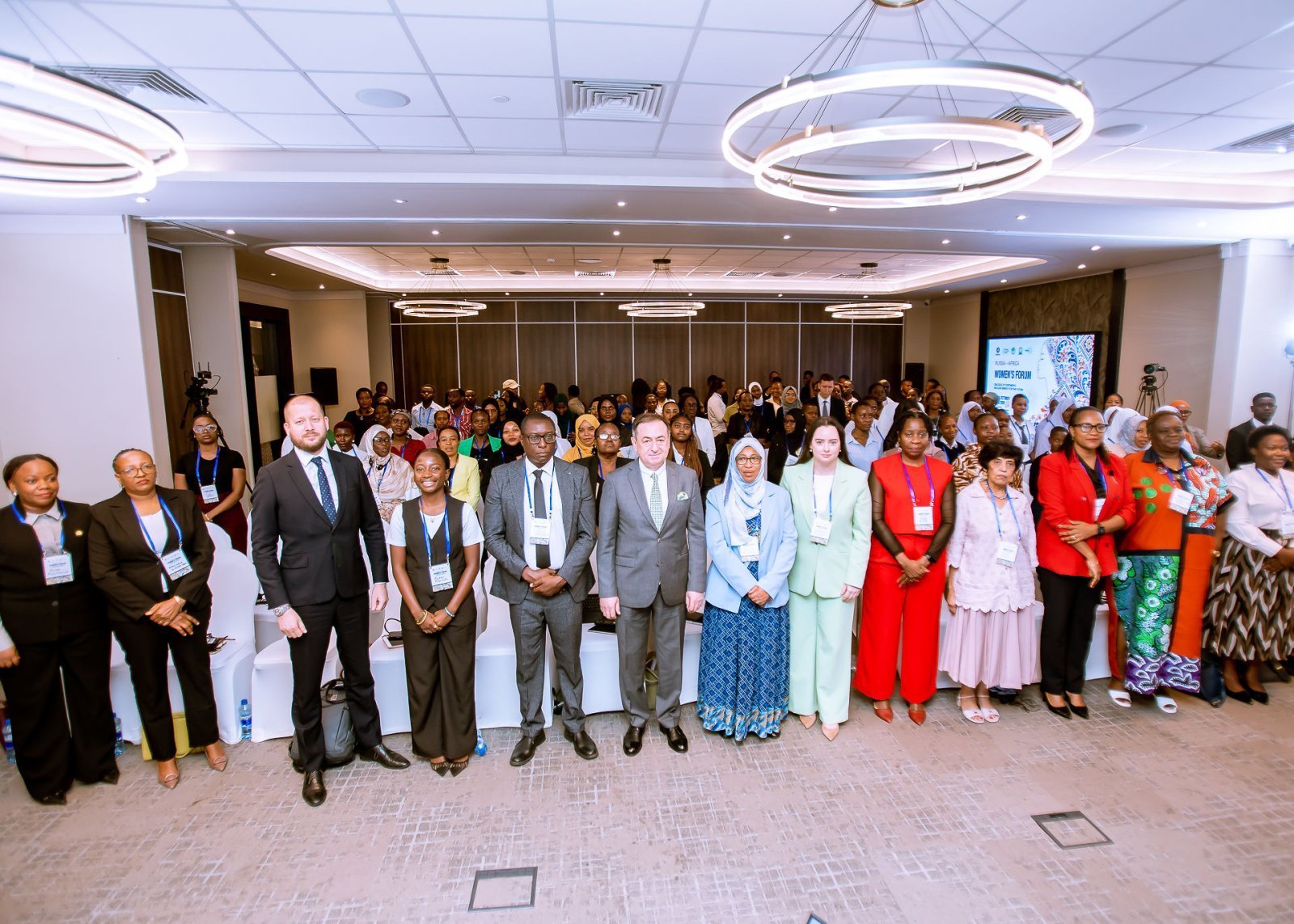
Tanzania and Russia have expanded cooperation around nuclear technology, professional training and women’s participation in the sector after Dar es Salaam hosted the first Russia Africa Women’s Forum on nuclear energy, bringing together specialists from eight countries as Tanzania considers a larger role for nuclear technology in electricity generation, medicine, mining and scientific research.
The October 22 forum, titled Dialogue of Continents: Nuclear Energy for the Future, brought together experts from Tanzania, Uganda, the Democratic Republic of Congo, Ethiopia, South Africa, Egypt, Zambia and Russia, with more than 25 organisations represented across government, industry, healthcare, education and professional associations.
The meeting was organised by Women in Nuclear Tanzania and the Rosatom Women’s Community with support from the Tanzania Atomic Energy Commission, Women in Nuclear Africa, Rosatom State Corporation and other partners.
Participants signed international memoranda of cooperation between women’s professional nuclear communities in Africa and Russia and agreed on programmes covering mentoring, professional exchanges, nuclear education, technical training and women’s leadership. A separate cooperation roadmap for 2026 to 2028 was signed with Women in Nuclear Africa, which represents professional communities in more than 22 African countries.
“Our goal is to turn the exchange of expertise into practical projects that open up new professional opportunities for women and enable nuclear technologies to improve people’s quality of life,” Rosatom Deputy Director General for Human Resources Tatiana Terentyeva told participants.
The forum gives Tanzania a more prominent position in a growing Russia-Africa nuclear relationship at a time when the country is also assessing the possible use of nuclear energy, expanding nuclear medicine and preparing for renewed activity at the Mkuju River uranium project.
Eight Countries Join Nuclear Cooperation Talks in Dar es Salaam
The meeting included representatives from Rosatom State Corporation, the Tanzania Atomic Energy Commission, Uganda’s Atomic Energy Council and Zambia’s Radiation Protection Authority, alongside medical institutions including Ocean Road Cancer Institute, Kilimanjaro Christian Medical Centre and Muhimbili National Hospital.
Universities from Tanzania and Russia also participated, while the professional network included Rosatom Women’s Community, Women in Nuclear Africa and national Women in Nuclear chapters.
Across four sessions, participants discussed the role of women in nuclear energy, nuclear medicine and mining, workforce development and ways of encouraging girls to pursue science, technology, engineering and mathematics.
Schoolgirls from Chang’ombe Secondary School were among the youngest participants, reflecting an effort by organisers to connect current nuclear cooperation with the longer term development of specialised technical skills.
Aleksandra Ryabykh, Head of the Rosatom Women’s Community and a member of the Council of the Eurasian Women’s Forum, said Rosatom’s engagement with Africa now extends across 20 countries.
“For us, cooperation with Africa is a major, systematic effort. Today, our projects and initiatives reach 20 countries across the continent,” she said.
Ryabykh said preparations for the Dar es Salaam meeting alone had included six international online meetings involving professional communities in Zambia, South Africa, Ethiopia, the DRC, Rwanda and Uganda.
“Our next step is to develop joint mentoring programmes, exchange expertise and create new opportunities for women to build their careers in the nuclear industry and other high-tech fields,” she said.
Tanzania Links Nuclear Cooperation to Its Energy and Skills Agenda
Tanzania Atomic Energy Commission Director General and Women in Nuclear Tanzania President Najat Kassim Mohamed said the country’s nuclear ambitions will require a much larger pool of engineers, scientists and specialists.
“For us, it is especially important to encourage girls and young women to study science, engineering and nuclear technologies,” Mohamed said.
“International cooperation opens up new opportunities to share knowledge, train specialists and develop national expertise.”
She said the Dar es Salaam discussions had connected different generations, from university leaders and industry professionals to school students considering future careers in science.
“I am confident that the agreements reached today will lay the foundation for new joint projects between women from Russia and Africa,” she said.
Women in Nuclear Tanzania currently has about 160 members drawn from different professional backgrounds, according to the organisation.
The expansion of the network comes as Tanzania works toward universal electricity access by 2030 and considers the longer term potential of nuclear energy alongside applications that already exist in healthcare, research and radiation technologies.
Unlike some African countries whose nuclear ambitions are centred primarily on future electricity generation, Tanzania also holds uranium resources and already has institutions applying nuclear technology in medicine.
That gives the country a wider set of potential economic interests in the sector, ranging from mineral extraction and healthcare to technical education and potentially power generation.
Mkuju River Brings Uranium Into the Cooperation Agenda
Mohamed also highlighted the Mkuju River uranium project in southern Tanzania as a priority for the economic and technological development of the country’s southeastern region. The project is being developed by Mantra Tanzania, which is part of Rosatom’s Uranium One Group.
The Mkuju River gives the Tanzania-Russia nuclear relationship an industrial dimension beyond training and professional cooperation because uranium development could place Tanzania within the upstream section of the international nuclear fuel supply chain.
The project has experienced a long development period, but Tanzania has recently been pushing for renewed progress as uranium prices and global interest in nuclear power recover.
Its development would also increase the need for specialised Tanzanian expertise in geology, radiation protection, environmental monitoring, engineering, mining and nuclear regulation, giving additional relevance to the workforce commitments made at the Dar es Salaam meeting.
Nuclear Medicine Offers a More Immediate Area of Cooperation
The representation of Ocean Road Cancer Institute, Muhimbili National Hospital and Kilimanjaro Christian Medical Centre also showed that the Tanzania Russia nuclear relationship is not being confined to power generation or uranium mining.
Nuclear technologies are already used in Tanzania for cancer diagnosis and treatment, while radiation techniques have applications in medicine, research, agriculture, industry and mineral analysis.
For Tanzania, these uses could provide earlier and more immediate returns from international nuclear cooperation than a commercial nuclear power programme, which would require substantially more planning, financing, regulation and infrastructure.
Rosatom’s Terentyeva said the intention was for professional exchanges to translate into applications that affect people directly rather than remaining institutional relationships.
“Our goal is to turn the exchange of expertise into practical projects,” she said, linking professional development with the wider use of nuclear technologies to improve quality of life.
Russia Is Building Nuclear Relationships Across Africa
The Dar es Salaam forum also fits into Russia’s broader nuclear diplomacy across Africa. Rosatom already has nuclear cooperation relationships with a number of African governments, ranging from training and research agreements to major infrastructure projects. Egypt is the most advanced example, where Rosatom is constructing the El Dabaa nuclear power plant, while several other African countries are examining nuclear power or establishing the institutional groundwork required for future programmes.
The presence in Dar es Salaam of professional organisations from Egypt, South Africa, Uganda, Zambia, Ethiopia and the DRC reflects the different stages at which African countries are approaching the sector.
South Africa already operates commercial nuclear generation, Egypt is building new reactors, while countries including Uganda and Ethiopia have been examining nuclear power as part of their longer-term energy strategies.
The professional cooperation being built between these markets could therefore become increasingly important as demand rises for nuclear engineers, physicists, radiation safety specialists, medical professionals and regulators.
The Agreements Now Face an Implementation Test
The forum was also attended by Russian Ambassador to Tanzania Andrey Avetisyan, Rosatom Central and Southern Africa Director of Special Projects and BRICS Nuclear Energy Platform Coordinator Elsie Pule, Tanzania Ministry of Education, Science and Technology Assistant Director for Science and Technology Haroun Makandi, and Galina Karelova, Chair of the Council of the Eurasian Women’s Forum under Russia’s Federation Council.
The agreements reached in Dar es Salaam now move into implementation, particularly the 2026 to 2028 roadmap with Women in Nuclear Africa and the proposed mentoring, education and professional exchange programmes.
Their economic significance will ultimately depend on whether the networks result in more African women entering technical nuclear occupations, greater collaboration among universities and medical institutions, and stronger domestic expertise in countries that are considering nuclear technologies.
For Tanzania, the timing gives those commitments additional relevance. Nuclear medicine is expanding, uranium development is returning to the investment agenda and the government is exploring the role nuclear energy could eventually play in the country’s power system. The Dar es Salaam meeting therefore brought together two parts of Tanzania’s emerging nuclear agenda that will have to develop together: the technology itself and the people required to operate it.
 Uchumi360
Business Intelligence
Uchumi360 covers business, investment, and economic policy across East, Central, and Southern Africa.
For the serious reader
You read to the end. That places you in a small group.
Uchumi360 is built for readers who demand precision over speed, structure over sentiment, and analysis that holds uncomfortable conclusions rather than softening them. If this work sharpens how you think about Africa's economy, help us keep building the infrastructure behind it.
Institutional Partners
Commission intelligence. Shape the conversation.
Uchumi360 works with development finance institutions, investment firms, sovereign bodies, and strategic organisations across the coverage region. Institutional partnership unlocks:
- Commissioned sector and country intelligence reports
- Branded research series under your institution's authority
- Exclusive data briefings for internal strategy teams
- Speaking and editorial presence at Uchumi360 events
- Co-published investment outlooks for your markets
Support Our Work
Independent analysis has a cost. Help us bear it.
Uchumi360 does not carry advertising. It does not take editorial direction from sponsors. Every article is produced without commercial compromise. Your contribution funds the reporting, research, and editorial infrastructure that keeps this analysis free from influence.
Secure checkout: One-time and monthly support are processed securely. Add payment credentials to enable checkout here.
Stay Connected
Keep up with every new insight.
Follow our latest analysis, policy coverage, and market intelligence as soon as it is published. If you need something specific, reach out directly and we will point you to the right research.
