
A Tanzanian Teenager Is Sailing to the North Pole. Back Home, the Project That Brought Her There Is Taking Shape Too.
Ready
Tanzanian student Xyleen Mapunda beat nearly 5,000 applicants from 22 countries to win a place aboard Rosatom's 2026 Icebreaker of Knowledge expedition, now sailing from Murmansk to the North Pole aboard the nuclear icebreaker 50 Let Pobedy, Tanzania's first time in the seven-season programme. The trip lands alongside Rosatom's larger stake in the country: subsidiary Mantra Tanzania's $1.2 billion Mkuju River uranium project, which has trained two local technical cohorts at its pilot plant in Tanzania. The Arctic trip is the visible, low-cost part of that relationship; whether the mine breaks ground on schedule is the part that actually matters economically.
MURMANSK / DODOMA — Two stories are unfolding at once for Tanzania and Rosatom this year, one aboard a nuclear icebreaker in the Arctic, the other in the red soil of Ruvuma Region. Both point toward the same deepening relationship.
Tanzania's First Trip to the Top of the World
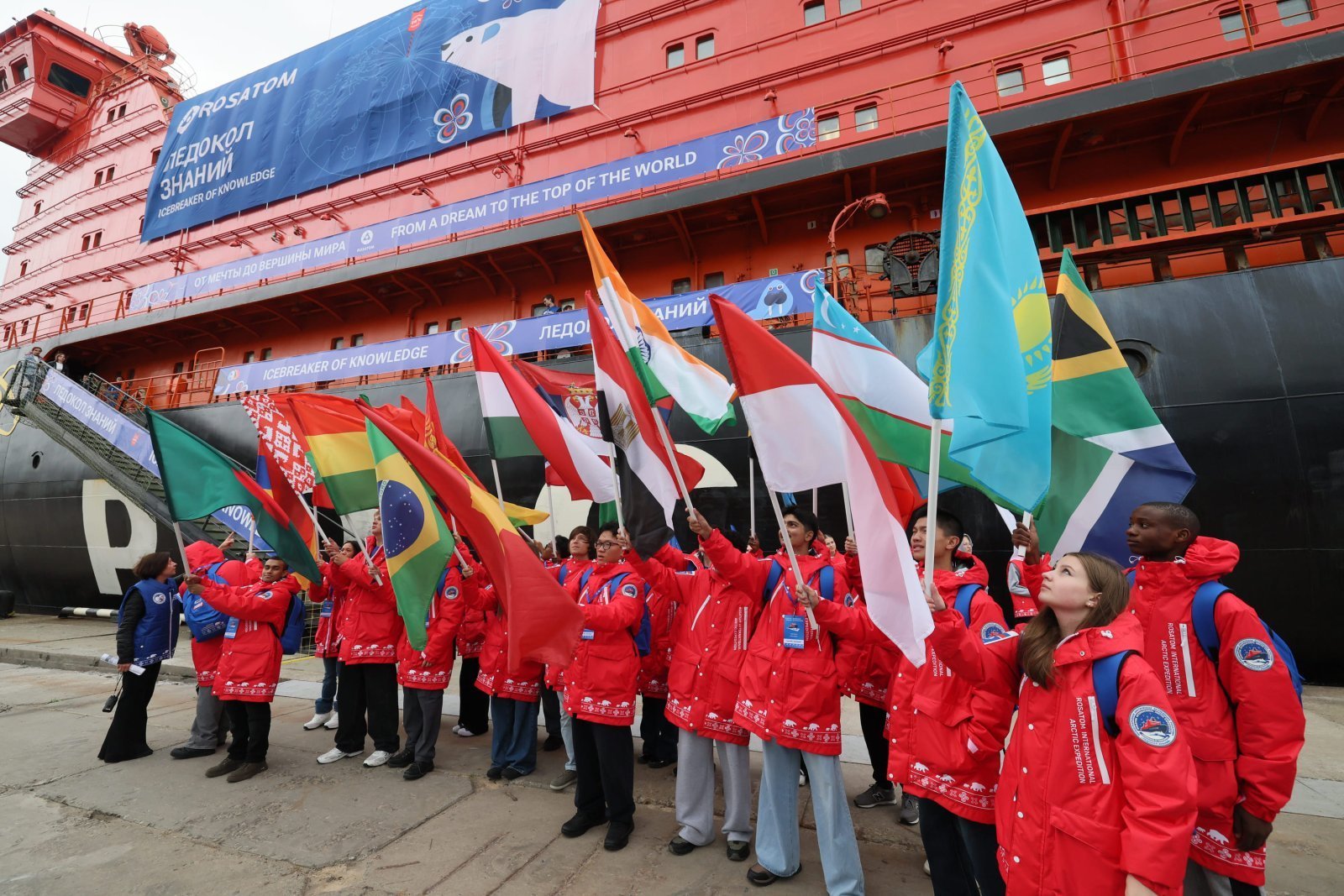
Xyleen Mapunda didn't expect to be here. "This still feels almost unreal to me," she said before boarding. "It is like something out of a movie: a nuclear icebreaker, the Arctic, snow and ice, and suddenly I am part of it all. Today I am representing Tanzania, and that makes this moment even more powerful."
Mapunda is one of the finalists selected for Rosatom's 2026 Icebreaker of Knowledge programme, an international science and education initiative for students aged 14 to 16 that this year drew nearly 5,000 applicants from 22 countries, including Tanzania, South Africa, Namibia, Rwanda and Egypt alongside entrants from as far afield as Brazil, Vietnam and Kazakhstan. The selection process ran in three stages: a science quiz testing knowledge of natural sciences and nuclear technology, a series of webinars with nuclear industry experts, and a final round in which the top ten finalists per country presented creative projects on the theme "How Nuclear Technologies Are Changing the World Today," judged by an international panel spanning the nuclear industry, education and Arctic affairs.
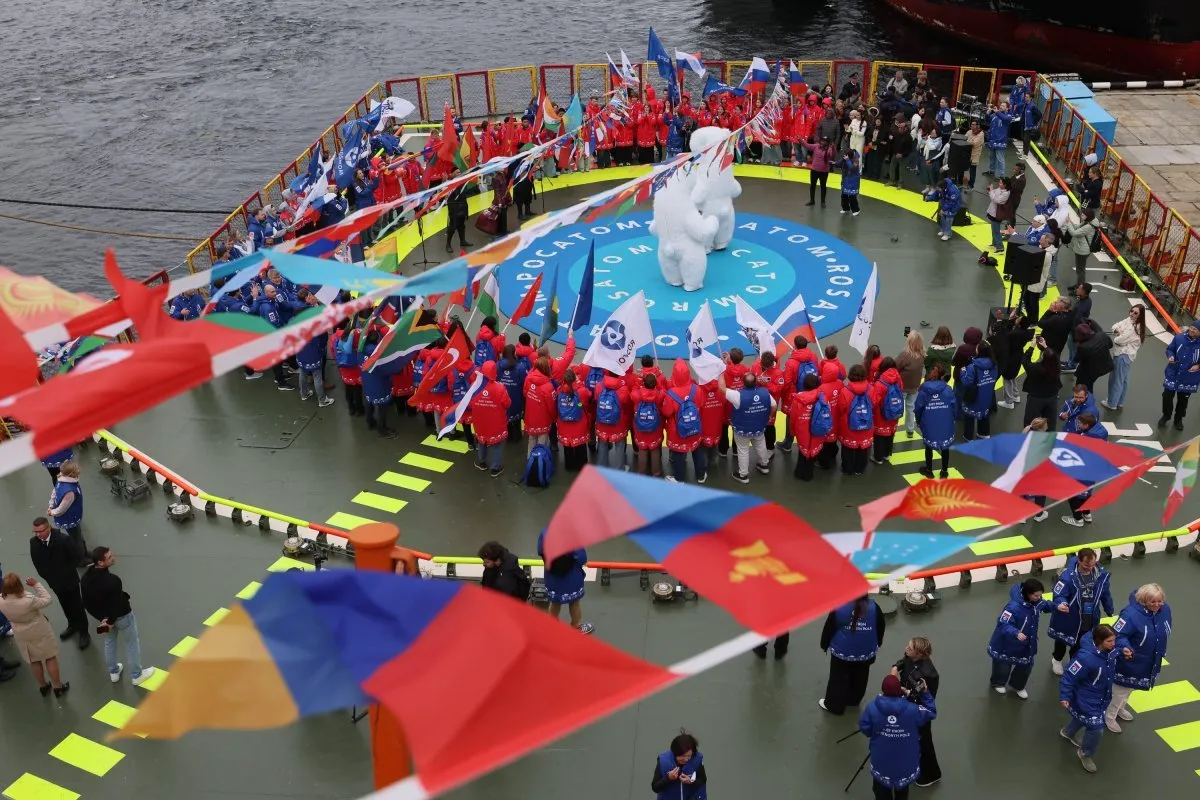
The departure ceremony was held in Murmansk, where Captain Ruslan Sasov gave the order to set sail aboard the nuclear-powered icebreaker 50 Let Pobedy, bound for the North Pole via Franz Josef Land and back over ten days. Onboard, students will attend lectures and workshops, run science experiments, get career guidance from working nuclear engineers and physicians, and take part in symbolic Arctic traditions, from mailing postcards at the world's northernmost post office to marking the point where all meridians converge. Guest contributors include Russian science fiction author Sergey Lukyanenko, who will lead a collaborative creative-writing workshop with the students during the voyage. It is the seventh season of the programme, which has now taken more than 400 students from around the world to the North Pole, and this is Tanzania's first time sending a student along.
"The Arctic is a place of power, where the most ambitious ideas are born and brought to life," Rosatom Director General Alexey Likhachev said at the launch. "We want to harness the energy of the best young minds to advance science and protect the planet."
The Bigger Project Behind the Trip
Mapunda's expedition is a standalone opportunity for one student, but it also sits alongside a much larger Rosatom undertaking in Tanzania: the Mkuju River uranium project, developed by Rosatom subsidiary Mantra Tanzania Ltd in Namtumbo District, Ruvuma Region.
The project is centred on the Nyota deposit, whose roughly 58,500-tonne uranium resource base ranks among the largest in Africa, and carries an estimated value of $1.2 billion. President Samia Suluhu Hassan personally inaugurated a pilot processing plant at the site on 30 July 2025, calling it "a landmark achievement for our country." That plant has since done real work beyond its own test runs: it has become a training ground for the local technical workforce the full project will eventually need, with Mantra Tanzania completing its first cohort of Namtumbo-trained specialists in April 2025 and a second cohort in April 2026, residents now formally employed by the company in roles that, for many, represent their first stable industrial employment. Through 2026, the company has also advanced road construction and a rotational workforce camp at the site.
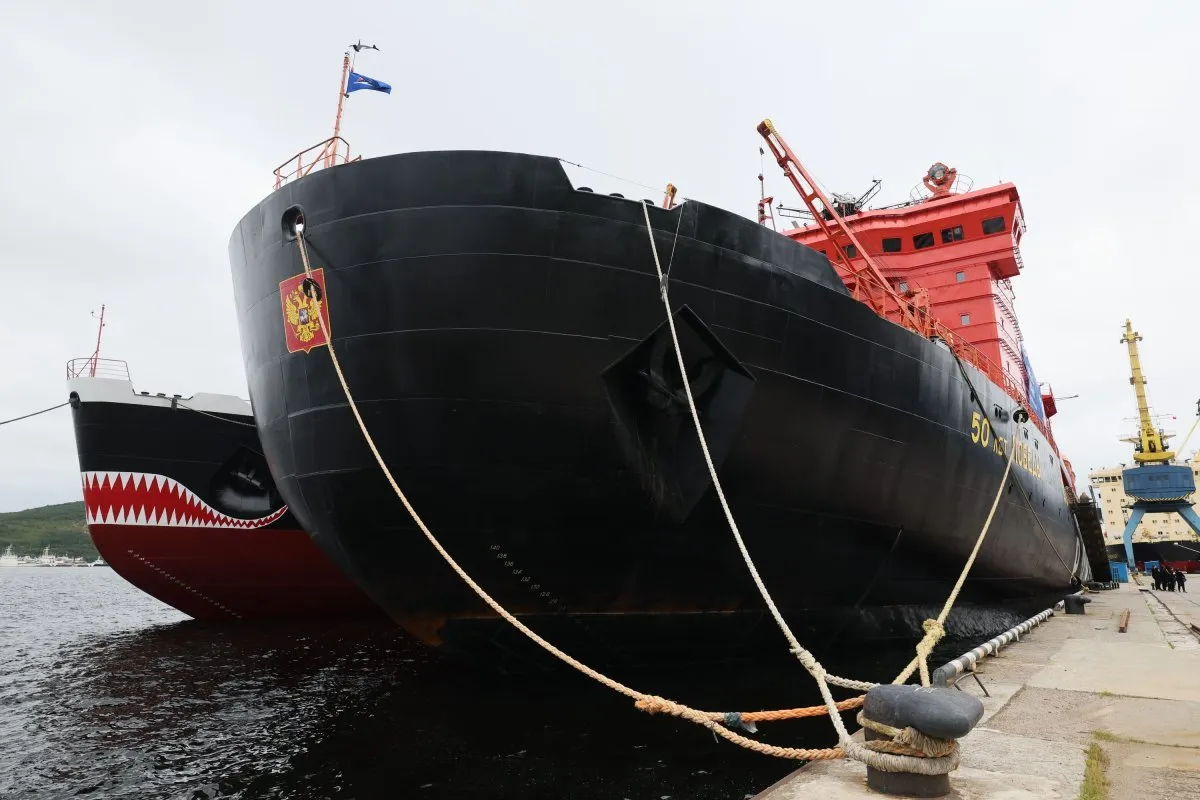 Russia's nuclear-powered icebreaker
Mantra Tanzania says construction of the main processing complex, designed for a full capacity of 3,000 tonnes of uranium annually, is targeted to begin in 2027, with commissioning planned for 2029. Once operational, the company projects the project will generate more than 4,000 direct jobs and indirectly benefit an estimated 21,000 households in and around Namtumbo, a meaningful employment base for a rural district with limited existing large-scale industry. As with any project still a year from breaking ground on its main facility, that 2027 target and the jobs figures attached to it describe the company's current plan rather than a guaranteed outcome, and depend on financing and licensing arrangements that are still being worked out.
A Relationship Being Built on More Than One Track
The two stories connect at the top. President Hassan travelled to Moscow in June 2026 for four hours of talks with President Vladimir Putin and addressed the St Petersburg International Economic Forum, a visit Tanzania's Minerals Minister Anthony Mavunde said gave Mkuju River "fresh impetus." Rosatom, for its part, has signalled it sees Tanzania's relationship with the company extending beyond uranium mining: Likhachev has pointed to Tanzania's coastline and river systems as suited to floating nuclear power solutions, with a domestic nuclear power plant a possibility the two sides could consider in the 2030s if the groundwork holds.
Programmes like the Icebreaker of Knowledge expedition sit inside that same broader relationship, introducing Tanzanian students to nuclear science and to Rosatom's own engineers and facilities years before any of them might work on a project like Mkuju River itself. For Mapunda, the immediate reward is simpler: ten days at the top of the world, a Tanzanian flag planted at 90 degrees north, and a story she'll be telling for a long time after the ship returns to Murmansk.
FAQ
Who is Xyleen Mapunda? A Tanzanian secondary school student selected as one of the finalists for Rosatom's 2026 Icebreaker of Knowledge programme, marking Tanzania's first participation in the seven-year-old Arctic science expedition.
How competitive was the selection process? Nearly 5,000 students from 22 countries applied, narrowed through a science quiz, expert webinars, and a final round of creative presentations judged by an international panel.
What is the Mkuju River uranium project? A $1.2 billion uranium mining and processing development in Namtumbo District, Ruvuma Region, operated by Rosatom subsidiary Mantra Tanzania and centred on the Nyota deposit, one of Africa's largest known uranium resources.
How far along is construction? A pilot processing plant has been operating since July 2025 and is training local technical staff; road and workforce infrastructure progressed through 2026. Mantra Tanzania says construction of the main processing complex is targeted to begin in 2027, with commissioning planned for 2029, though that timeline depends on financing and licensing arrangements still being finalised.
How many jobs is the project expected to create? Mantra Tanzania projects more than 4,000 direct jobs once the project is fully operational, with an estimated 21,000 households benefiting indirectly in the surrounding area.
Is there a connection between the Icebreaker programme and the uranium project? Not directly; they are separate initiatives, but both sit within Rosatom's broader, growing engagement with Tanzania, which company officials have said could extend from uranium mining toward floating nuclear power solutions and, potentially, a domestic nuclear power plant in the 2030s.
 Uchumi360
Business Intelligence
Uchumi360
Business Intelligence
Uchumi360 covers business, investment, and economic policy across East, Central, and Southern Africa.
For the serious reader
You read to the end. That places you in a small group.
Uchumi360 is built for readers who demand precision over speed, structure over sentiment, and analysis that holds uncomfortable conclusions rather than softening them. If this work sharpens how you think about Africa's economy, help us keep building the infrastructure behind it.
Institutional Partners
Commission intelligence. Shape the conversation.
Uchumi360 works with development finance institutions, investment firms, sovereign bodies, and strategic organisations across the coverage region. Institutional partnership unlocks:
- Commissioned sector and country intelligence reports
- Branded research series under your institution's authority
- Exclusive data briefings for internal strategy teams
- Speaking and editorial presence at Uchumi360 events
- Co-published investment outlooks for your markets
Support Our Work
Independent analysis has a cost. Help us bear it.
Uchumi360 does not carry advertising. It does not take editorial direction from sponsors. Every article is produced without commercial compromise. Your contribution funds the reporting, research, and editorial infrastructure that keeps this analysis free from influence.
Secure checkout: One-time and monthly support are processed securely. Add payment credentials to enable checkout here.
Stay Connected
Keep up with every new insight.
Follow our latest analysis, policy coverage, and market intelligence as soon as it is published. If you need something specific, reach out directly and we will point you to the right research.
