
India’s BL Agro Plans $739 Million Tanzania Investment as Country Moves to Cut Edible Oil Imports
Ready
India’s BL Agro plans to invest about US$739 million in Tanzania over ten years, beginning with a large sunflower oil complex before expanding into dairy genetics, agriculture and manufacturing. The proposal comes as Tanzania tries to close an edible oil deficit exceeding 400,000 tonnes and cut an annual import bill of more than US$200 million.
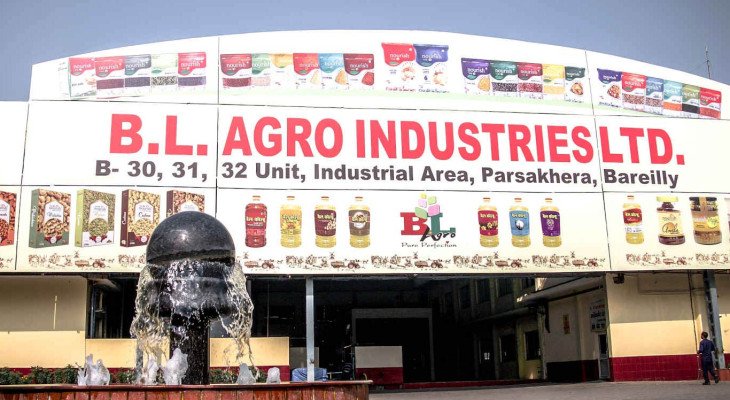
Indian food manufacturer BL Agro Industries plans to invest ₹70 billion, approximately US$739 million at current exchange rates, in Tanzania over the next decade, beginning with a large vegetable oil complex and later expanding into dairy genetics, livestock, agricultural production, farm equipment and food manufacturing. The proposed investment would give the Bareilly based company its first major production base outside India and comes as Tanzania is attempting to close one of the largest structural gaps in its agricultural economy: a domestic edible oil market that consumes more than twice what local producers currently supply.
BL Agro announced the Tanzania expansion on October 22 after a company delegation held discussions with Tanzanian officials and other stakeholders. Managing Director Ashish Khandelwal said the programme would combine Tanzanian agricultural resources with Indian processing and production technology, while Tanzania’s High Commissioner to India, Anisa Mbega, welcomed the proposal as an opportunity to increase local processing, employment, technology transfer and farmer incomes. The investment is expected to be phased over ten years rather than deployed immediately, making the US$739 million figure a planned capital programme rather than money already invested in the Tanzanian economy.
More detailed disclosures made by Khandelwal to Indian business media show that the first stage is already more defined than the initial announcement suggests. BL Agro plans a vegetable oil complex costing approximately ₹12 billion to ₹15 billion, equivalent to roughly US$127 million to US$158 million, with crushing, solvent extraction and refining capacity of around 1,100 tonnes per day. The company says it has registered its Tanzanian entity, has been allocated land and is working through remaining approvals. BL Agro intends to begin with sunflower oil because of the availability of sunflower seed in Tanzania, sell initially into the domestic market under its Nourish consumer brand and consider neighbouring East African markets as production expands.
The significance of that first investment becomes clearer when measured against Tanzania’s existing edible oil shortage. The government’s National Edible Oil Strategy, unveiled in July 2026, estimates annual demand at about 732,000 tonnes while local production fluctuates between roughly 100,000 and 300,000 tonnes depending on crop availability. Agriculture Minister Daniel Chongolo subsequently put current domestic production at around 305,905 tonnes against demand of 732,974 tonnes, leaving a deficit of approximately 427,068 tonnes. Tanzania spends more than US$200 million, about TSh500.6 billion, each year importing edible oil to close the gap.
BL Agro is therefore entering a market where the government is already trying to substitute imported food products with domestic agricultural processing, rather than attempting to create demand for a new commodity. The company’s proposed 1,100 tonne daily processing capacity is especially notable because Khandelwal says it broadly matches Tanzania’s estimated daily edible oil requirement. That does not mean the plant could immediately eliminate imports, because processing capacity and actual oil output are different measures and the refinery would depend on a reliable supply of oilseeds. It does show, however, that BL Agro is contemplating an industrial operation at a scale capable of materially changing Tanzania’s edible oil market if local farmers can supply sufficient raw material.
Tanzania Has the Sunflower Seed, but Productivity Remains the Constraint
Tanzania already has one of Africa’s most important sunflower industries. A 2025 Tanzania Agricultural Development Bank assessment estimated national sunflower seed production at approximately 1.17 million tonnes and said the value chain supports more than 2.5 million livelihoods. The same assessment identified the central weakness: national yields average around 1.1 tonnes per hectare compared with attainable levels of roughly 2.5 tonnes per hectare, while processors continue to face shortages of quality seed, working capital and modern processing technology. Tanzania consequently produces a large volume of sunflower seed while still importing substantial quantities of finished edible oil.
That gap between agricultural production and industrial processing is one reason the BL Agro proposal is economically more interesting than a conventional foreign food manufacturing investment. The company says it is considering contract farming and agricultural supply arrangements that would link farmers directly to processing facilities, while the wider ten year programme includes investment in agricultural production and research. If implemented at scale, such arrangements could give farmers a predictable commercial buyer while allowing the processor to influence seed varieties, agronomic practices, quality standards and production volumes.
The arrangement would also expose one of the difficult questions facing Tanzania’s edible oil strategy. Adding refining and crushing capacity will only reduce imports sustainably if domestic oilseed production rises alongside it. A large processing plant competing for the same existing sunflower supply could raise seed prices and leave smaller processors operating below capacity without materially increasing national oil output. The industrial case therefore depends on farm productivity, improved seed, irrigation where commercially viable, financing and collection systems developing at the same time as new factories.
TADB’s estimate that average sunflower yields remain around 1.1 tonnes per hectare against potential of roughly 2.5 tonnes shows how much of the opportunity lies outside the factory gate. Raising productivity even substantially towards that potential would allow Tanzania to increase the amount of oil entering domestic processing without expanding cultivated land at the same rate. BL Agro’s proposed integration of farming, procurement and processing suggests the company understands that its Tanzanian investment will ultimately be constrained by agricultural supply rather than refinery engineering alone.
The $739 Million Plan Goes Well Beyond Sunflower Oil
The vegetable oil complex accounts for only part of the proposed investment. Khandelwal told ETRetail that approximately ₹20 billion, around US$210 million at current exchange rates, could be invested over ten years in cattle breeding and genetics, while a further ₹15 billion is being considered for agricultural infrastructure including local tractor manufacturing. BL Agro is also examining dairy processing, animal husbandry, research and other food manufacturing activities.
The dairy component addresses another Tanzanian agricultural sector where the size of the resource base and actual productivity remain far apart. Tanzania had about 40.6 million cattle in 2025, according to Ministry of Livestock figures, while national milk production reached approximately 4.22 billion litres in 2025/26. Yet the National Bureau of Statistics’ 2024/25 agricultural survey shows a sharp productivity difference between indigenous and improved dairy cattle. Indigenous cows produced an average of about 1.6 litres per head per day during the dry season and 2.3 litres during the wet season, compared with approximately 12.9 and 13.2 litres respectively for improved cows.
Those official figures give more context to BL Agro’s interest in cattle genetics than the simple comparison made in the company’s public statements. Khandelwal has said the company wants to introduce its cattle breeding experience from India, including Gir genetics, to improve Tanzanian productivity. The commercial opportunity is clear because a country with more than 40 million cattle can increase milk supply significantly without increasing the herd at the same rate if productivity per animal rises. The challenge is that genetics alone will not produce those gains. Feed quality, veterinary services, water, farmer management, artificial insemination systems and reliable markets for milk are equally important, which means the dairy investment would need to operate as a wider production system rather than simply importing breeding stock.
Tanzania’s own statistics also show why processing matters. The livestock ministry reported more than 4.2 billion litres of milk production by April 2026, yet only about 101 million litres were processed through formal channels. Even allowing for methodological differences between national production and recorded processing, the gap indicates that a large share of milk continues to move through informal markets or is consumed close to production areas. Investment in collection, chilling, transport and processing could therefore create value from milk that already exists while productivity improvements expand future supply.
The Size of the Investment Still Requires Careful Interpretation
The ₹70 billion announcement is substantial, but several elements of the programme remain at proposal stage. The investment is spread over ten years, BL Agro has not published a year by year capital expenditure schedule and the locations of the major facilities have not all been publicly identified. Indian media reports also differ on the timetable for the first oil complex, with some reporting commissioning within three years and others citing an April 2027 target. Until BL Agro or Tanzanian authorities publish the approved project schedule, the more defensible description is that the vegetable oil facility is the first planned project and remains subject to outstanding approvals.
The company has also discussed access to very large areas of agricultural land. ETRetail reported Khandelwal saying discussions covered approximately 700,000 hectares, but neither BL Agro nor Tanzanian authorities have publicly released documentation establishing that such an area has been formally transferred to the company. That distinction is especially important at this scale. Seven hundred thousand hectares would amount to 7,000 square kilometres and would make land access one of the most consequential elements of the entire investment. Until land titles, leases or official allocation documents are disclosed, the figure is best treated as an area under discussion rather than a completed land transaction.
This also means the economic value of the US$739 million cannot yet be judged solely from the headline investment commitment. A ten year programme can change substantially as individual projects go through feasibility studies, financing, land allocation, environmental approvals and commercial testing. The first oil complex provides the most credible basis for assessing execution because the company has disclosed an approximate capital cost, processing capacity, intended feedstock and progress on registration and land.
BL Agro says the initial investments will be financed from internal resources, while it may seek support from Tanzanian partners as the programme expands. The company has also discussed a possible future initial public offering in India, though management says no listing is planned before fiscal 2029. BL Agro reported group business of around ₹150 billion last year and is targeting ₹300 billion by fiscal 2029, meaning the Tanzania programme forms a major part of a broader attempt to double the scale of the family controlled group.
Tanzania Is Becoming an Important Destination for Indian Capital
BL Agro’s decision also fits into a much larger commercial relationship between Tanzania and India. The Indian High Commission in Dar es Salaam says bilateral trade reached US$9.02 billion in 2025/26, making India Tanzania’s second largest trading partner. It cites Tanzania Investment and Special Economic Zones Authority figures showing cumulative registered Indian investment of US$4.74 billion in calendar year 2025 and lists Indian companies already operating across telecommunications, steel, power transmission, agriculture, transport equipment, banking and manufacturing.
A fully implemented US$739 million BL Agro programme would therefore be significant even within an already substantial Indian investment base. Its importance would also differ from investments concentrated in telecommunications, infrastructure or extractive industries because much of the proposed capital would be tied directly to Tanzanian farms and food consumption. A refinery requiring sunflower seed, a dairy operation purchasing milk and a genetics programme working with cattle producers create domestic supply relationships that can spread investment effects across a much larger number of smaller economic actors.
Tanzania is also attractive as a regional production location because its ports and membership of both the East African Community and Southern African Development Community provide access to neighbouring markets. BL Agro says its initial edible oil production will target Tanzania rather than India, with regional exports considered later. That sequencing is commercially logical because the domestic market already has a large supply deficit; the company does not need to depend on export demand to justify the first phase.
The East African opportunity becomes more relevant after domestic production stabilises. Tanzania shares borders with eight countries and serves landlocked regional economies through the ports of Dar es Salaam and, increasingly, other coastal infrastructure. Packaged food, edible oil and dairy operations located in Tanzania can therefore potentially address a market considerably larger than Tanzania’s population, although competitiveness will depend on transport costs, tariffs, regional standards and whether production costs allow Tanzanian goods to compete with imports from Asia and other African producers.
The Investment Lands Directly Inside Tanzania’s New Edible Oil Policy
The timing is unusually aligned with government policy. Tanzania launched its ten year National Edible Oil Strategy in July with the stated objective of achieving self sufficiency and becoming a net exporter by 2035. Agriculture Minister Chongolo said the government would increasingly connect import rights with domestic production, including a plan under which edible oil import permits would ultimately be available only to investors involved in oilseed farming.
That creates both an opportunity and an obligation for companies such as BL Agro. An investor with refining capacity but inadequate domestic feedstock may still need imported crude oil, while the direction of government policy is explicitly towards linking processing with domestic agricultural production. BL Agro’s proposed contract farming, crop production and supply chain investments therefore correspond closely with the structure Tanzania is trying to create: large processors anchored by local oilseed production rather than refineries primarily dependent on imported crude oil.
The government’s policy objective is not simply import substitution measured by the volume of oil refined inside Tanzania. If crude palm or sunflower oil is imported and merely refined domestically, some processing value remains in the country but the foreign exchange dependence largely persists. The stronger economic outcome is to produce oilseeds locally, crush them locally, refine the resulting oil domestically and build associated industries around animal feed, packaging, storage and distribution.
A BL Agro complex that operates across those stages would therefore be considerably more important to Tanzania than the headline refinery capacity alone. Its performance could also provide a test of whether the government’s edible oil strategy can attract investors with enough capital to connect agricultural production and industrial processing at scale.
Tanzania’s Opportunity Is in Processing
BL Agro’s proposed US$739 million investment will ultimately be judged less by the size of the announcement than by how much capital is actually deployed into farms, processing plants, dairy infrastructure and manufacturing over the next decade. Tanzania already has the domestic demand for edible oil, a large sunflower base and one of Africa’s biggest cattle populations. The unresolved question is whether new investment can raise agricultural productivity and processing capacity quickly enough to convert those assets into lower imports, larger farmer incomes and a more competitive food manufacturing industry.
The first vegetable oil complex will provide the earliest indication. If BL Agro reaches the proposed 1,100 tonnes per day processing capacity while building dependable domestic oilseed supply, the investment could materially reduce Tanzania’s edible oil deficit and strengthen the country’s emerging agro processing base. If the company expands successfully into dairy genetics, equipment and agricultural production, the wider programme could become one of the larger Indian manufacturing investments in Tanzania. For now, however, the distinction between the announced ₹70 billion programme and capital actually committed remains important. The figures that matter next are factory construction, investment disbursement, farmer contracts, production volumes and the amount of imports eventually replaced.
FAQ
How much does BL Agro plan to invest in Tanzania? BL Agro has announced a planned ₹70 billion investment, approximately US$739 million, to be deployed in phases over ten years across edible oils, dairy, livestock, agriculture, research and manufacturing.
What will BL Agro build first in Tanzania? The company plans to begin with a vegetable oil complex focused on sunflower oil. More detailed company disclosures put the planned investment at approximately ₹12 billion to ₹15 billion with processing capacity of about 1,100 tonnes per day.
Has BL Agro already invested US$739 million in Tanzania? No. The US$739 million figure represents BL Agro’s planned investment over approximately ten years rather than capital already spent. The company says its Tanzanian business has been registered and land has been allocated for the first projects, but approvals and implementation remain underway.
How much edible oil does Tanzania import? Tanzania requires approximately 732,000 tonnes of edible oil annually and currently faces a deficit of more than 400,000 tonnes. The government estimates that edible oil imports cost the country more than US$200 million each year.
Why is BL Agro focusing on sunflower oil? Tanzania is already a major sunflower producer, with Tanzania Agricultural Development Bank estimating seed production at approximately 1.17 million tonnes. Low farm productivity and insufficient processing capacity, however, have prevented domestic production from meeting national edible oil demand.
What is BL Agro planning in Tanzania’s dairy sector? The company is considering investment in cattle breeding, genetics, dairy infrastructure and processing. Tanzanian statistics show a large productivity gap between indigenous cattle and improved dairy cows, creating substantial room for higher milk output if genetics, feed and farm management improve.
How important is India to Tanzania’s economy? India was Tanzania’s second largest trading partner in 2025/26, with bilateral trade of US$9.02 billion. Indian High Commission data citing TISEZA places registered Indian investment in Tanzania at US$4.74 billion in 2025.
 Uchumi360
Business Intelligence
Uchumi360 covers business, investment, and economic policy across East, Central, and Southern Africa.
For the serious reader
You read to the end. That places you in a small group.
Uchumi360 is built for readers who demand precision over speed, structure over sentiment, and analysis that holds uncomfortable conclusions rather than softening them. If this work sharpens how you think about Africa's economy, help us keep building the infrastructure behind it.
Institutional Partners
Commission intelligence. Shape the conversation.
Uchumi360 works with development finance institutions, investment firms, sovereign bodies, and strategic organisations across the coverage region. Institutional partnership unlocks:
- Commissioned sector and country intelligence reports
- Branded research series under your institution's authority
- Exclusive data briefings for internal strategy teams
- Speaking and editorial presence at Uchumi360 events
- Co-published investment outlooks for your markets
Support Our Work
Independent analysis has a cost. Help us bear it.
Uchumi360 does not carry advertising. It does not take editorial direction from sponsors. Every article is produced without commercial compromise. Your contribution funds the reporting, research, and editorial infrastructure that keeps this analysis free from influence.
Secure checkout: One-time and monthly support are processed securely. Add payment credentials to enable checkout here.
Stay Connected
Keep up with every new insight.
Follow our latest analysis, policy coverage, and market intelligence as soon as it is published. If you need something specific, reach out directly and we will point you to the right research.
