
Kenya Has Started Building the Naivasha-Kisumu-Malaba SGR Extension. With Tanzania's Central Corridor Already Carrying Passengers and Uganda's Network Planned, East Africa's Railway Race Is Now a Three-Country Contest.
Ready
Kenya Railways confirmed construction of the Ksh 700 billion Naivasha-Kisumu-Malaba SGR extension commenced in Narok County on July 1, 2026. The contract was awarded to CCCC and CRBC. Narok County covers approximately 100km of the corridor. Land acquisition for the Kibos Terminus in Kisumu is advancing with NLC ground verification underway. The extension follows President Ruto's groundbreaking at Suswa, Narok County, on March 18, 2026. Kenya's existing SGR runs from Mombasa to Naivasha at 472km. The extension to Kisumu and Malaba will add significant distance and connect the rail network to Uganda's border for the first time. Tanzania's SGR Central Corridor, running 722km from Dar es Salaam to Dodoma with phases three through seven under active construction, carried 2,515,203 passengers and 102,452 tonnes of freight in nine months of FY2025/26. Uganda's SGR network remains at planning stage with the EACOP oil pipeline at 82.6 percent completion providing the more immediate infrastructure milestone. Rwanda's Bugesera airport Phase 1 targeting seven million passengers opens 2027. The two SGR networks, Kenya's Northern Corridor and Tanzania's Central Corridor, are competing for the same prize: transit cargo from landlocked Rwanda, Burundi, Uganda, DRC, Zambia, and Malawi whose routing choice determines port revenue, rail freight income, and logistics sector employment for whichever corridor wins the volumes. East Africa is building two parallel railways toward the same landlocked markets. The competition between them will be decided not by which country started first but by which one finishes fastest, operates most reliably, and prices most competitively.
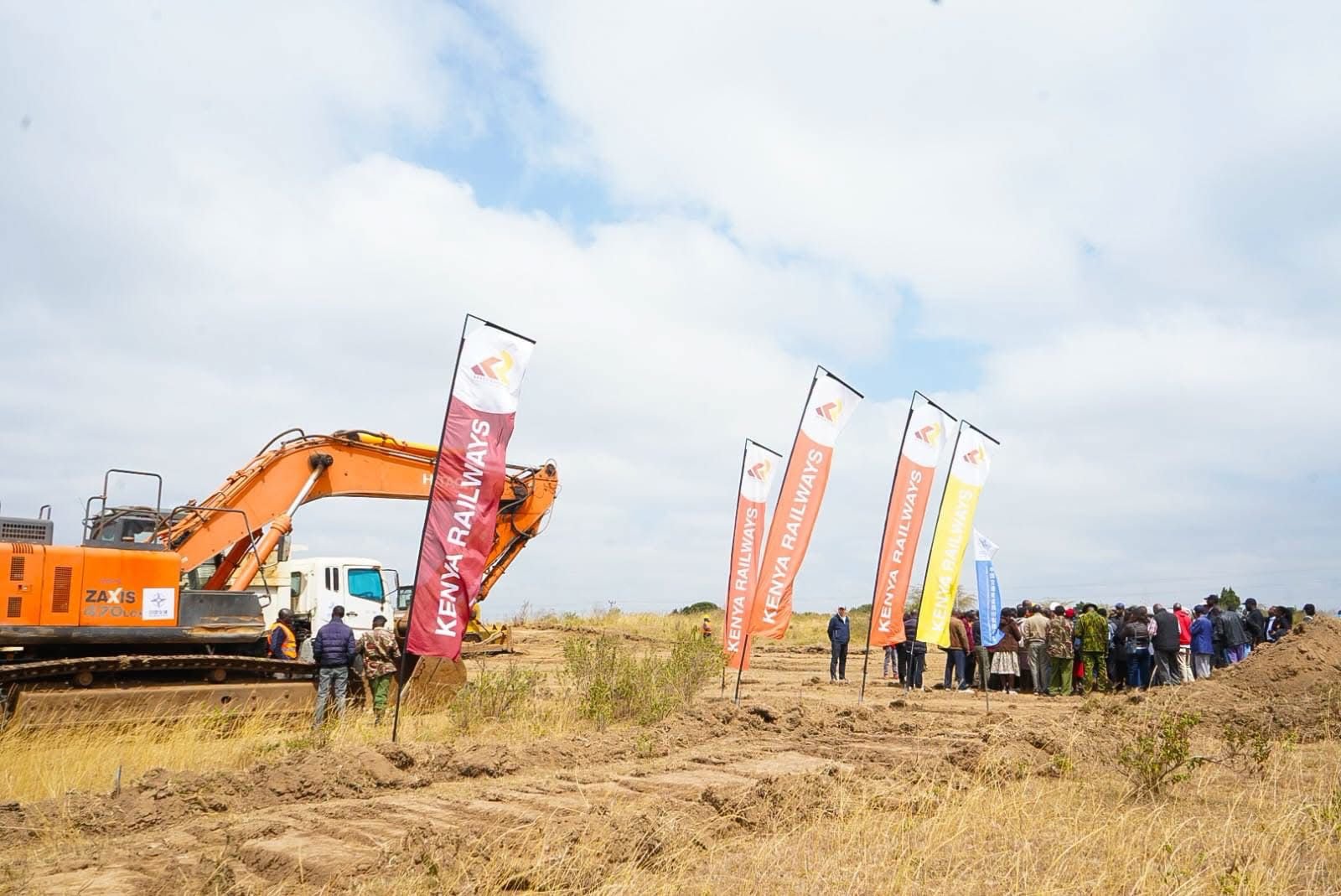
NAIROBI / DAR ES SALAAM — Kenya Railways confirmed on July 1, 2026, that construction of the Naivasha-Kisumu-Malaba Standard Gauge Railway extension has officially commenced in Narok County, marking the first physical works on a project whose Ksh 700 billion price tag and long planning history have made it one of East Africa's most anticipated infrastructure announcements.
"Following the project launch by H.E. President William Ruto on 18th March 2026, construction is now officially underway, signalling a major step forward in transforming Kenya's transport and logistics landscape," Kenya Railways said in a statement.
Narok County, through which approximately 100 kilometres of the SGR corridor will pass, is the first construction zone. Kenya Railways Managing Director Philip Mainga led a high-level delegation to the county earlier this week to conduct site inspections and review construction readiness. The county's residents have expressed strong support for the project, Kenya Railways said, citing employment and economic activity expectations.
The contract and who is building it
The Ksh 700 billion contract was awarded to China Communications Construction Company and China Road and Bridge Corporation, the same consortium now building Kenya's JKIA expansion at USD 2.9 billion. CCCC and CRBC are not unfamiliar to East Africa: CRBC built the Mombasa to Naivasha SGR whose 472km of track is Kenya's existing standard gauge network, and the same combination of Chinese state-owned contractors and export finance is being replicated on the extension.
The contract award followed President Ruto's groundbreaking ceremony at Suswa in Narok County on March 18, 2026, which formally launched the project after years of planning, route validation, and financing discussions. A Court of Appeal ruling directing the government to make public documents relating to the original SGR project added political context to the extension's launch, with transparency around the financing terms remaining a live public interest question.
Land acquisition: the immediate operational challenge
Construction commencement does not mean land acquisition is complete. Kenya Railways held a public sensitisation meeting on June 24 in Kisumu County for landowners affected by the proposed Kibos Terminus, one of the key facilities planned under the extension. The meeting brought together property owners from Kisumu Town East Sub-county whose parcels were listed in Gazette Notice No. 4986 published on April 2, 2026, paving the way for compulsory acquisition.
Representatives from the National Land Commission presented the proposed Kibos Terminus design, outlined affected areas, and explained the legal procedures governing compulsory acquisition, valuation, and compensation under the Land Act, 2012. Ground verification of gazetted parcels began on June 25.
Kenya Railways urged landowners to engage directly with the National Land Commission. "By engaging directly with affected persons and validating information on-site, the team is ensuring that no critical detail is overlooked, fostering a process that is transparent, efficient, and fair to all stakeholders," the corporation said.
Land acquisition has historically been among the most significant sources of delay on East African infrastructure projects. The concurrent running of construction commencement in Narok and land acquisition in Kisumu reflects the ambition to compress the timeline, but the sequencing risk is real: construction cannot reach Kisumu until the land is secured, and the compensation process is at an early stage.
Where Kenya's SGR stands in the regional picture
Kenya's SGR extension announcement arrives as Tanzania's Central Corridor SGR is not only operational but simultaneously under construction across four additional sections totalling over 1,271 kilometres, a competitive reality whose scale the original headline number of 722km operational significantly understates.
Tanzania's SGR network spans approximately 2,000 kilometres in its full design and is being developed in six phases. Lots 1 and 2, covering the 722km from Dar es Salaam to Makutupora near Dodoma, have been operational since June 2024, with freight services added in June 2025. Lot 3 covers 294km from Makutupora to Tabora and Lot 4 covers 130km from Tabora to Isaka: a USD 1.277 billion financing package for both sections was signed in Dodoma on April 28, 2026, with Yapi Merkezi and CCECC as contractors. Lot 5 covers 341km from Isaka to Mwanza and reached 68.77 percent completion by March 2026, financed at USD 1.32 billion through a Sinosure-backed facility. Lot 6 covers 506km from Tabora to Kigoma on the eastern shores of Lake Tanganyika, with the African Development Bank approving a USD 696 million package in December 2023 for this phase and planned extensions toward Burundi and the DRC.
Beyond the six domestic lots, Tanzania has signed an MOU with Burundi for a 180km extension from Uvinza to Musongati on the Burundian border, with Burundi laying the foundation for its first railway on August 17, 2025. The Isaka to Kigali section at 371km, budgeted at USD 942 million, would connect Tanzania's SGR to Rwanda. When fully realised, Tanzania's Central Corridor rail network would link Dar es Salaam directly to Rwanda, Burundi, and through lake ferry connections at Mwanza, to Uganda and the DRC.
The Tanzania Railways Corporation has achieved enough financial stability to stop depending on government salary subsidies starting from the 2026/27 financial year, a milestone that Transport Minister Prof. Makame Mbarawa described as evidence that the infrastructure investment is generating real commercial returns. The 341-kilometre Mwanza–Isaka section has reached 68.77 percent completion, and the government has secured a concessional loan worth USD 1.277 billion to speed up construction of the Makutupora–Tabora and Tabora–Isaka sections after earlier implementation delays. THE RESPONDENTTHE RESPONDENT
The 722km Dar es Salaam–Makutupora section, covering Lots 1 and 2, has been operational since June 2024, with freight services added in June 2025. Lot 3 covers 294km from Makutupora to Tabora, while Lot 4 covers 130km from Tabora to Isaka. A sixth phase from Tabora to Kigoma at 506km is being built by CCECC and China Railway Construction Company, with partial funding from the African Development Bank.
The strategic endpoint of Tanzania's network is a rail connection from the Indian Ocean port of Dar es Salaam all the way to Lake Victoria at Mwanza, Lake Tanganyika at Kigoma, and through those lake ports to Rwanda, Burundi, Uganda, and the DRC. Once fully operational, the new railway will reduce cargo transportation costs from a minimum of USD 6,000 per tonne between the Dar es Salaam port and the DRC to roughly USD 4,000 per tonne, according to President Samia.
Against that context, Kenya's SGR extension from Naivasha to Kisumu and Malaba, at approximately 490km and commenced on July 1, 2026, is an important regional infrastructure development whose competitive significance is clear. But the scale comparison matters: Tanzania has 722km operational and over 1,270km under active construction or in advanced financing. Kenya has 472km operational and approximately 490km now under construction. Tanzania leads on both metrics and has the more advanced financing and contractor mobilisation status across its pipeline.
The competition between the two corridors will not be decided by these snapshot comparisons. It will be decided by which network reaches the landlocked markets first, operates most reliably, and prices freight most competitively. Tanzania's head start on construction is significant. Kenya's geographic advantage on the Northern Corridor for Uganda and some DRC trade is equally significant. The race is real and both sides are building.
Table: East Africa SGR Networks — Comparative Status July 2026
| Phase / Section | Country | Route | Distance | Status | Notes |
| Lot 1 | Tanzania | Dar es Salaam – Morogoro | 300km | Operational since June 2024 | Passenger and freight services running |
| Lot 2 | Tanzania | Morogoro – Makutupora (Dodoma) | 422km | Operational since June 2024 | Passenger services running, freight added June 2025 |
| Lot 3 | Tanzania | Makutupora – Tabora | 294km | Under construction | USD 1.277B financing signed April 2026, Yapi Merkezi and CCECC |
| Lot 4 | Tanzania | Tabora – Isaka | 130km | Under construction | Part of USD 1.277B package signed April 2026 |
| Lot 5 | Tanzania | Isaka – Mwanza | 341km | Under construction | 68.77% complete as of March 2026, CCECC and CRCC, USD 1.32B contract |
| Lot 6 | Tanzania | Tabora – Kigoma | 506km | Under construction | AfDB USD 696M package approved December 2023, CCECC and CRCC |
| Planned | Tanzania | Uvinza – Musongati (Burundi border) | 180km | Planned | MOU signed January 2022, AfDB partial funding committed |
| Planned | Tanzania | Isaka – Kigali (Rwanda border) | 371km | Planned | USD 942M budgeted, World Bank expressed interest |
| Total Tanzania SGR | Dar es Salaam to Mwanza and Kigoma | ~2,000km core network | 722km operational, ~1,271km under construction or advanced planning | ||
| Existing | Kenya | Mombasa – Naivasha | 472km | Operational | SGR Phase 1, opened 2017 |
| Extension | Kenya | Naivasha – Kisumu – Malaba | ~490km | Under construction | Construction commenced July 1, 2026, Ksh 700B contract CCCC and CRBC |
| Total Kenya SGR | Mombasa to Malaba | ~962km | 472km operational, ~490km under construction | ||
| Planned | Uganda | SGR network | TBC | Planning stage | EACOP oil pipeline priority, SGR planning ongoing |
| Planned | Rwanda | No SGR | — | No current plan | Aviation priority, Bugesera airport Phase 1 opens 2027 |
| Foundation laid | Burundi | Burundi first railway | TBC | Foundation laid August 17, 2025 | Linked to Tanzania Central Corridor |
Sources: Tanzania Railways Corporation, TanzaniaInvest SGR tracker, Wikipedia Tanzania SGR, Zawya April 2026, Kenya Railways, Construction Review Online. Tanzania Lot distances: Lot 1 300km, Lot 2 422km, Lot 3 294km, Lot 4 130km, Lot 5 341km, Lot 6 506km. Completion status as of mid-2026.
The corridor competition that this construction starts
The Naivasha-Kisumu-Malaba extension, when complete, will connect Kenya's existing SGR network to the Ugandan border at Malaba for the first time. That connection is significant for three reasons.
First, it opens the possibility of rail continuity between the Mombasa port and Uganda's interior, reducing the road freight dependence that currently characterises the Northern Corridor's landlocked leg. Uganda's transit cargo, moving between Mombasa and Kampala, would gain a rail option for the entire journey rather than only the Mombasa-Naivasha section.
Second, it positions Kenya to compete more directly with Tanzania's Central Corridor for Rwanda, Burundi, DRC, and western Uganda cargo whose current routing choice is influenced by road quality, border crossing efficiency, and total logistics cost rather than rail availability. When Tanzania's SGR reaches the Rwandan and Burundian borders, that routing choice will increasingly include rail. Kenya needs its own rail extension toward those markets to remain competitive.
Third, the Kisumu connection revives the lake transport link that historically connected East Africa's interior through Lake Victoria ferry services. A rail-to-lake multimodal connection at Kisumu could serve Uganda's lake ports and potentially create a new logistics route for goods moving between the Northern Corridor and Tanzania's Lake Zone without requiring road transport.
What Uganda and Rwanda are building instead
Uganda's infrastructure priority in 2026 is not rail but oil. The East African Crude Oil Pipeline reached 82.6 percent completion by April 2026, and when operational it will represent Uganda's most transformative infrastructure investment, converting landlocked oil reserves into an exportable commodity through Tanzania's Indian Ocean coast. Uganda's SGR network remains at the planning stage, with the oil pipeline's completion and the beginning of oil revenue flows the prerequisite for the fiscal space that large rail investment would require.
Rwanda's infrastructure priority is aviation. The Bugesera International Airport, targeting 14 million passengers annually with a seven-million-passenger first phase due to open in 2027, is Rwanda's transformative transport infrastructure of the current period. Rwanda's development model, anchored in services, tourism, and governance quality rather than industrial production and commodity exports, makes aviation connectivity more immediately valuable than heavy freight rail.
The question Kenya's construction start raises
Kenya's extension construction commencement raises two questions that the July 1 announcement does not answer.
The first is the financing terms. The Ksh 700 billion contract with CCCC and CRBC implies Chinese export finance, but the specific terms, interest rate, repayment period, grace period, and revenue guarantee structure, have not been publicly disclosed at the level of detail that the project's parliamentary oversight and public interest require. The Court of Appeal ruling on the original SGR's document transparency adds urgency to this question for the extension.
The second is the timeline to completion. Construction has started in Narok County, but land acquisition in Kisumu is at early stages. The two processes need to converge before the extension can be completed as a continuous network rather than a series of disconnected construction sections. How Kenya Railways manages that sequencing will determine whether the extension delivers within a competitive timeframe relative to Tanzania's westward SGR expansion.
East Africa is building two parallel railways toward the same landlocked markets. The competition between them will be decided not by which country started construction first but by which one completes its network fastest, operates most reliably, and prices its freight services most competitively.
On July 1, 2026, Kenya answered the starting question. The completion question is still open.
 Uchumi360
Business Intelligence
Uchumi360
Business Intelligence
Uchumi360 covers business, investment, and economic policy across East, Central, and Southern Africa.
For the serious reader
You read to the end. That places you in a small group.
Uchumi360 is built for readers who demand precision over speed, structure over sentiment, and analysis that holds uncomfortable conclusions rather than softening them. If this work sharpens how you think about Africa's economy, help us keep building the infrastructure behind it.
Institutional Partners
Commission intelligence. Shape the conversation.
Uchumi360 works with development finance institutions, investment firms, sovereign bodies, and strategic organisations across the coverage region. Institutional partnership unlocks:
- Commissioned sector and country intelligence reports
- Branded research series under your institution's authority
- Exclusive data briefings for internal strategy teams
- Speaking and editorial presence at Uchumi360 events
- Co-published investment outlooks for your markets
Support Our Work
Independent analysis has a cost. Help us bear it.
Uchumi360 does not carry advertising. It does not take editorial direction from sponsors. Every article is produced without commercial compromise. Your contribution funds the reporting, research, and editorial infrastructure that keeps this analysis free from influence.
Secure checkout: One-time and monthly support are processed securely. Add payment credentials to enable checkout here.
Stay Connected
Keep up with every new insight.
Follow our latest analysis, policy coverage, and market intelligence as soon as it is published. If you need something specific, reach out directly and we will point you to the right research.
