
We Dream of the Very Best. We Go Get It” — Ruto as Kenya Opens Raila Odinga Stadium With Bayern and Ajax
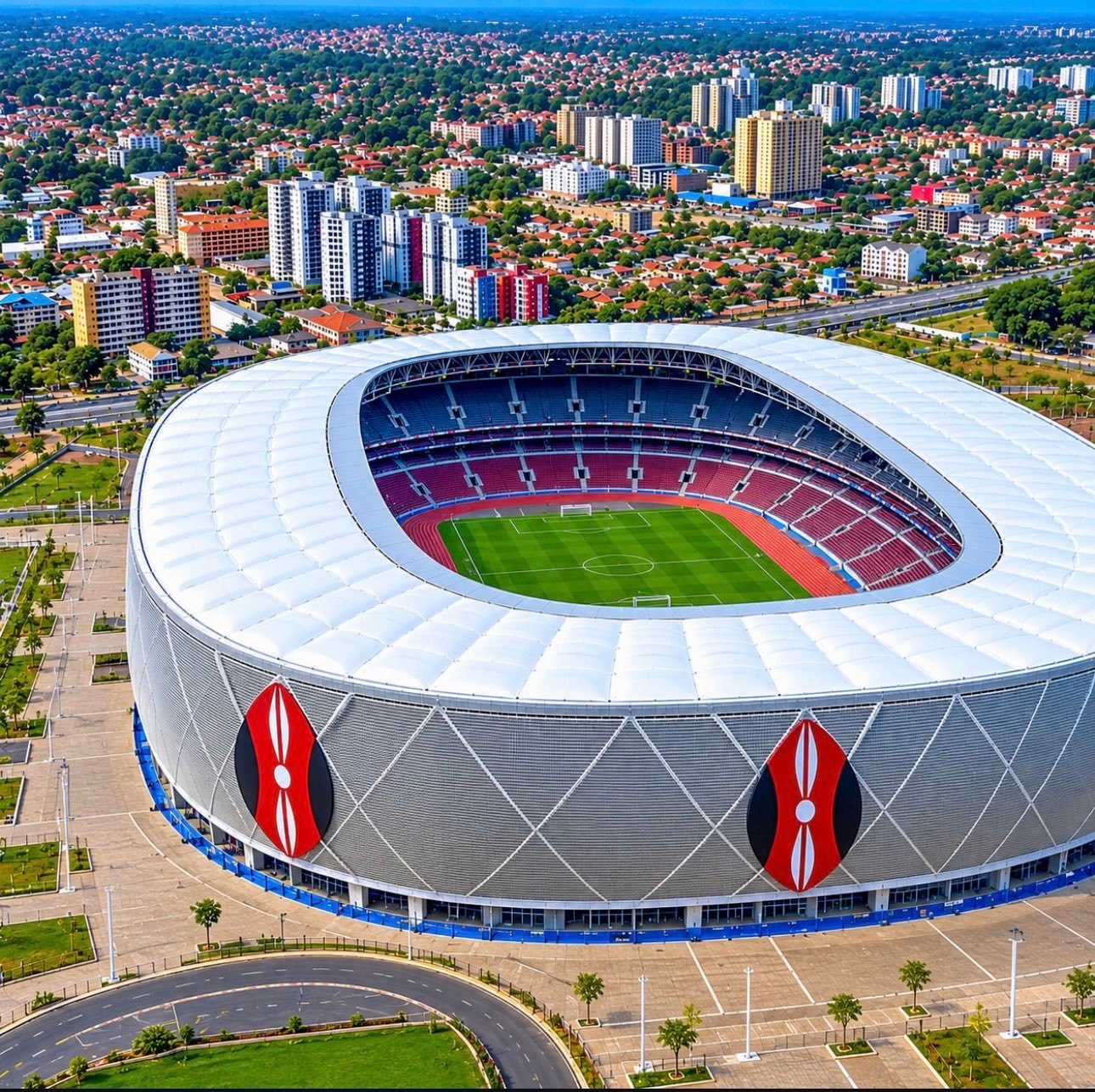
Ready
Bayern Munich and Ajax will open Nairobi’s new 60,000 seat Raila Odinga International Stadium on January 5, 2027, giving Kenya an early test of whether its major AFCON infrastructure investment can generate ticket income, sponsorship, tourism and private sector revenue before the continental tournament begins.
Kenya will open the new 60,000-seat Raila Odinga International Stadium at Talanta Sports City with a match between Bayern Munich and Ajax on January 5, 2027, turning the launch of one of its largest recent sports infrastructure investments into an early commercial test ahead of the Africa Cup of Nations that Kenya will co-host with Tanzania and Uganda six months later.
President William Ruto announced the fixture on October 28, saying the government had promised to build a stadium capable of attracting some of the world’s biggest teams and that the Bayern Ajax match would be delivered through corporate partnerships rather than treated only as a ceremonial state event. “This match will be delivered by corporate partnerships and a self-sustaining commercial model confirming that world-class sport can attract private investment, earn its own revenue and create lasting opportunity for our people,” Ruto said.
The economic significance of the announcement extends beyond the two clubs. Kenya has spent heavily on stadium construction and wider preparations for the 2027 Africa Cup of Nations, while the government has repeatedly argued that sports infrastructure should support tourism, entertainment, events, sponsorship and private sector activity rather than remain dependent on public expenditure after construction. The Bayern Ajax match therefore provides an early opportunity to test whether the new Talanta complex can convert a high-profile international fixture into ticket income, sponsorship, hospitality demand, broadcast exposure and commercial activity before AFCON begins on June 19, 2027.
Bayern confirmed that it will travel to Nairobi for the match, describing the fixture as part of the grand opening of the new national stadium and as a way of strengthening the club’s relationship with African supporters. Rouven Kasper, Bayern’s board member for marketing and sales, said the club sees Africa as an increasingly important market within its international strategy. “FC Bayern has millions of fantastic fans in Africa with whom we feel a close connection,” he said, adding that the Nairobi trip would give the club “a new opportunity to further strengthen our connection with our fans in Africa” and help raise the international profile of the Bundesliga.
Ajax separately confirmed the January 5 fixture, calling the stadium opening a major football event for East Africa and a defining moment for Kenya ahead of AFCON 2027. The Dutch club said the new Raila Odinga International Stadium has a capacity of 60,000 and is expected to be among the venues used during the tournament, while the Bayern match will also serve as part of Ajax’s preparation for the second half of its domestic season.
Kenya Is Trying to Turn Stadium Investment Into a Revenue-Producing Asset
The government’s commercial framing is significant because large stadium projects across Africa have often struggled to generate enough activity after major tournaments to justify their construction and maintenance costs. Kenya is trying to avoid that problem by positioning Talanta Sports City as a venue that can host international football, entertainment, corporate events and other high-value activities beyond AFCON itself.
The facility has been developed as more than a football ground. Government reporting describes a wider sports complex that includes three training grounds, parking areas, a boulevard, swimming facilities, conference spaces, food courts and fan zones, while the main stadium has been designed around modern broadcast, hospitality and event requirements. By July 2026, construction was reported to be more than 92 percent complete.
That infrastructure matters economically because the long-term return on a stadium depends on the number of days it can generate revenue rather than the number of seats it contains. International friendlies, club tours, concerts, conferences, hospitality events, sponsorship programmes and domestic competitions can all increase utilisation, while a stadium that operates only around occasional national team matches imposes continuing maintenance costs without generating sufficient commercial income.
Ruto’s reference to a self-sustaining commercial model therefore points to a broader policy ambition: using globally recognised clubs to establish Talanta as an international sports venue before AFCON creates a larger wave of demand.
Bayern Is Also Treating Nairobi as a Market
Bayern’s participation is not only sporting. The club’s own statement places Africa inside its international commercial strategy, alongside markets where it has previously used overseas tours to strengthen brand recognition, supporter relationships and sponsorship visibility.
“For many years, we have consistently maintained a presence in America and Asia with our Audi Summer Tour,” Kasper said. “Now we have a new opportunity to further strengthen our connection with our fans in Africa too, to allow people to experience FC Bayern firsthand and to underline our club’s international appeal.”
That is important for Kenya because the commercial relationship is moving in both directions. Nairobi gains international attention and a major event capable of attracting fans, broadcasters and sponsors, while Bayern gains direct access to an African audience that European football clubs increasingly view as commercially valuable.
The club also confirmed that the match will be broadcast on ProSieben and its FC Bayern TV PLUS streaming platform, extending the event beyond the 60,000 spectators who can attend physically and giving Nairobi additional international exposure. For Kenya, that broadcast reach effectively turns the opening of a public sports facility into a destination marketing event, particularly at a time when the government is preparing to host one of Africa’s largest sporting competitions.
AFCON 2027 Is Already Becoming a Commercial Project
The stadium opening is taking place inside a wider effort by Kenya, Tanzania and Uganda to commercialise AFCON 2027 before the tournament begins. CAF recently concluded a commercial roadshow across the three host countries, meeting companies in banking, aviation, telecommunications, tourism, technology and trade as it sought new partnerships around the tournament. CAF said the previous AFCON edition in Morocco recorded a 95 percent increase in commercial revenue, reached a cumulative television audience of 3.2 billion and attracted a record 23 sponsors, illustrating the scale of the commercial property East Africa will inherit in 2027.
The next tournament will run from June 19 to July 17, 2027 and is expected to attract more than 1.5 million fans across the three host countries, according to CAF. It will be the first Africa Cup of Nations jointly hosted by three countries and the first held in East Africa in more than five decades.
For Kenya, the economic opportunity extends into hotels, airlines, restaurants, transport, tourism, media, security and retail, while the infrastructure programme itself has already created construction employment and demand for local suppliers. The National Treasury has treated AFCON as an economic and infrastructure priority for several years, arguing that hosting the tournament requires investment not only in stadiums but also in roads, airports, accommodation, communications and security.
The 2026/27 budget also allocated KSh1.5 billion specifically to Pamoja AFCON 2027 and KSh3.8 billion for land compensation associated with Talanta Stadium, alongside wider spending under sports, culture, recreation and tourism.
The challenge is therefore no longer simply completing the stadium. Kenya now has to demonstrate that the public capital committed to sports infrastructure can support recurring commercial activity and generate wider economic returns after the construction phase ends.
The Bayern Ajax Match Gives Kenya an Early Stress Test
The January fixture will also allow Kenya to test operational systems before AFCON places far greater pressure on them. A 60,000 seat event involving two internationally recognised clubs will test ticketing, transport, security, hospitality, broadcasting, crowd management, food and beverage operations and the ability of local businesses to capture matchday spending.
CAF has already been assessing these systems across all three host countries. Its September inspection included stadiums, training grounds, team hotels, airport facilities, transport, safety, media and logistics, with the federation describing the new 60,000 seat Talanta Stadium as part of Nairobi’s core tournament infrastructure.
For Kenya, identifying weaknesses during a January friendly would be considerably cheaper than discovering them during AFCON six months later, when the country will be receiving teams, officials, broadcasters and large numbers of international visitors simultaneously.
The event can therefore function both as a commercial launch and as a real-world test of infrastructure that has so far been assessed mainly through construction milestones and technical inspections.
Sports Tourism Could Become Part of the Return on AFCON Spending
Kenya is also betting that international football can strengthen a tourism industry already supported by safari, beach and conference travel. AFCON creates an opportunity to attract visitors who may extend their stay beyond matchdays, while fixtures involving globally recognised European clubs can expose Nairobi to supporters who would not otherwise travel to Kenya for domestic football.
CAF itself has identified tourism, trade and investment as part of the economic case for the three-country tournament, and the host governments are working on mobility arrangements intended to make it easier for fans and officials to move across Kenya, Tanzania and Uganda during the competition. The proposed Pamoja visa framework is intended to simplify travel and customs procedures across the three markets during AFCON.
That regional mobility could expand the tournament’s economic footprint beyond individual host cities because supporters may travel between Nairobi, Dar es Salaam and Kampala while combining football with tourism and other commercial activity.
The Bayern Ajax fixture provides a much smaller preview of that model, with international football used as a trigger for travel, hospitality spending and destination exposure.
The Bigger Test Begins After AFCON
The commercial case for Talanta Sports City will ultimately be judged after July 2027, when AFCON ends and Kenya is left with a 60,000 seat national stadium that will require maintenance, staffing and continuous programming.
Ruto’s emphasis on private investment and self generated revenue is therefore more consequential than the January match itself. If Kenya can establish a calendar of major football matches, concerts, regional tournaments, corporate events and international entertainment, the stadium could become a productive urban asset rather than an infrastructure project whose economic value peaks during AFCON.
The presence of Bayern and Ajax at the opening gives the government an unusually strong first event with which to test that proposition. Bayern is one of Europe’s largest commercial football brands, Ajax carries one of the continent’s most recognisable football identities, and both clubs are using the fixture as part of their own international positioning.
“Two years ago I promised the people of Kenya a world class stadium where the greatest teams in the world would come to play,” Ruto said when announcing the fixture. “Come fifth January 2027, we will open this stadium with a historic match between two giants of European football.”
The importance for Kenya will extend beyond whether the stadium sells out. The more consequential question is whether the country can convert the attention around the match into a functioning commercial model that continues producing revenue, tourism demand, sponsorship and private investment after Bayern and Ajax leave Nairobi and after AFCON 2027 is over.
 Uchumi360
Business Intelligence
Uchumi360 covers business, investment, and economic policy across East, Central, and Southern Africa.
For the serious reader
You read to the end. That places you in a small group.
Uchumi360 is built for readers who demand precision over speed, structure over sentiment, and analysis that holds uncomfortable conclusions rather than softening them. If this work sharpens how you think about Africa's economy, help us keep building the infrastructure behind it.
Institutional Partners
Commission intelligence. Shape the conversation.
Uchumi360 works with development finance institutions, investment firms, sovereign bodies, and strategic organisations across the coverage region. Institutional partnership unlocks:
- Commissioned sector and country intelligence reports
- Branded research series under your institution's authority
- Exclusive data briefings for internal strategy teams
- Speaking and editorial presence at Uchumi360 events
- Co-published investment outlooks for your markets
Support Our Work
Independent analysis has a cost. Help us bear it.
Uchumi360 does not carry advertising. It does not take editorial direction from sponsors. Every article is produced without commercial compromise. Your contribution funds the reporting, research, and editorial infrastructure that keeps this analysis free from influence.
Secure checkout: One-time and monthly support are processed securely. Add payment credentials to enable checkout here.
Stay Connected
Keep up with every new insight.
Follow our latest analysis, policy coverage, and market intelligence as soon as it is published. If you need something specific, reach out directly and we will point you to the right research.
