
Tanzania Has Reached 70 Million People. By 2050 It Will Have 118 Million. The Economy Has 25 Years to Create Enough Jobs, Industries, and Productivity to Turn That Into an Advantage Rather Than a Crisis.
Ready
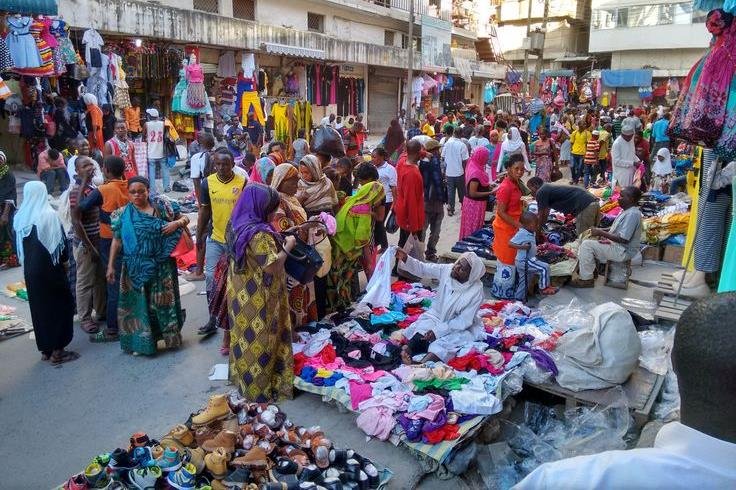
Tanzania's population reached an estimated 70.04 million in 2026, confirmed by National Bureau of Statistics projections, up from 12.3 million in 1967 and 61.7 million in the 2022 census. NBS projects 77.7 million by 2030 and 118.1 million by 2050. Dar es Salaam is the largest city at 6 million, followed by Mwanza at 4.24 million, Tabora at 3.90 million, Morogoro at 3.57 million, and Geita, Kagera, and Dodoma each approaching or exceeding 3.4 million. The dependency ratio is 86 dependents per 100 working-age adults. Life expectancy has reached 66 for men and 71 for women. The population pyramid is dominated by children and young adults, creating the demographic dividend whose conversion into economic growth requires industrialisation, formal economy expansion, and sustained human capital investment at the pace and scale that Vision 2050's USD 1 trillion economy aspiration demands. Tanzania's 8.3 million people added in four years is the demand signal whose implications for housing, food systems, energy, transport, healthcare, education, and financial services are immediate. Its 48 million additional people by 2050 is the planning horizon that infrastructure, industrial, and education policy decisions made in the current budget cycle will either have prepared for or failed to anticipate. Population alone does not create prosperity. What Tanzania does with its people between now and 2050 is the entire argument. Tanzania reached 70 million people in 2026. South Korea reached its current GDP per capita of over USD 30,000 with a population of 51 million. The difference between those two trajectories is not population. It is what a country builds alongside its people.
DAR ES SALAAM — Tanzania's population has officially reached an estimated 70.04 million people in 2026, according to projections published by the National Bureau of Statistics. The figure places Tanzania among Africa's most populous nations and confirms a demographic trajectory whose economic implications are among the most consequential planning variables facing the country's policymakers, investors, and development partners over the coming quarter century.
The trajectory is striking in its pace. Tanzania had 12.3 million people in 1967. It reached 61.7 million in the 2022 Population and Housing Census. It has added 8.3 million people in the four years since. NBS projects the population reaching 77.7 million by 2030 and 118.1 million by 2050, adding nearly 48 million people over the next 25 years, which is the same horizon that Vision 2050's USD 1 trillion economy aspiration covers.
The coincidence of those two timelines is not accidental. A country whose population reaches 118 million by 2050 is a country whose economic structure in 2050 must be capable of employing, feeding, housing, educating, treating, and connecting 118 million people. The question Vision 2050 is really answering is whether Tanzania can build that economic structure fast enough to convert demographic scale into productive capacity rather than demographic pressure.
What 70 million people means as a market
The immediate economic significance of the 70 million milestone is the market size it represents. Tanzania at 70 million is one of Africa's largest domestic markets, larger than South Korea, larger than France, larger than the United Kingdom. A domestic market of that scale justifies manufacturing investment, logistics infrastructure, retail expansion, and services sector development that smaller markets cannot economically support.
Every sector whose economics are driven by scale benefits from a population of 70 million rather than 40 million or 50 million. A pharmaceutical manufacturer serving a 70 million person domestic market can achieve the unit economics that make local production competitive with imports at a scale that a 20 million person market cannot provide. A mobile money operator whose network effect requires density can achieve the adoption threshold that makes interoperable digital finance viable. A logistics company whose hub-and-spoke distribution economics require minimum volumes can justify investment in secondary city infrastructure that a smaller population base would not support.
The demand signal that 70 million people creates is already visible across Tanzania's economic data. The Bank of Tanzania's 2025 National Payment Systems Report confirmed 672.24 million digital transactions, 2.79 million merchant acceptance points, and 75.8 million active mobile money accounts. NMB Bank's 9.9 million customer base, CRDB's expanding agent network of 38,883 points, and the banking sector's 14.7 percent net profit growth in 2025 all reflect commercial institutions responding to the demand that 70 million people generate. TISEZA's manufacturing investment acceleration at over 900 project approvals in 2025 reflects industrial investors assessing a domestic market whose size is large enough to justify committed production capacity rather than opportunistic import competition.
The 118 million projection for 2050 amplifies this market logic. A Tanzania of 118 million people is a market larger than Germany, larger than France, larger than the United Kingdom, and comparable in size to the Philippines and Ethiopia. At that scale, Tanzania becomes a credible anchor market for regional manufacturing whose exports serve the broader East and Central African corridor of more than 300 million consumers that the SGR Central Corridor's logistics infrastructure is positioning Tanzania to serve.
The urban geography of 70 million people
The population's geographic distribution reveals the urbanisation pattern whose infrastructure and investment implications are as consequential as the aggregate number.
Dar es Salaam at 6 million people is Tanzania's largest city and one of Africa's fastest-growing urban centres. Its growth from a colonial administrative capital to a metropolitan economy whose financial sector generated TZS 760.1 billion in NMB profits and TZS 728.6 billion in CRDB profits in a single year reflects the economic concentration that urban scale creates. But Dar es Salaam's 6 million is a fraction of Tanzania's 70 million, and the secondary city population confirms that Tanzania's urbanisation is not a single-city story.
Mwanza at 4.24 million is East Africa's second largest city on Lake Victoria and the commercial anchor of Tanzania's lake zone. Tabora at 3.90 million sits at the junction of the SGR Central Corridor whose freight service launched in June 2025 is changing the logistics economics of Tanzania's interior. Morogoro at 3.57 million is positioned on the Dar es Salaam to Dodoma corridor whose industrial development potential is among the highest in the country given its SGR connectivity, agricultural hinterland, and proximity to both the coast and the capital. Geita, Kagera, and Dodoma each approaching or exceeding 3.4 million describe a country whose population density outside the two largest cities is sufficient to justify the urban infrastructure investment, logistics hub development, and services sector growth that secondary city economics can sustain.
The Tanzania Startup Ecosystem Status Report 2025's documentation of Dar es Salaam and Arusha concentration at approximately 67 percent of digital economy activity, against the country's geographic population distribution, identifies the specific gap between where Tanzania's people are and where Tanzania's economic opportunity is currently concentrated. The FY2026/27 budget's commitment to rebalancing regional economic activity, combined with the SGR network whose Central Corridor connectivity makes Tabora and Morogoro economically proximate to Dar es Salaam in ways they never were under road-only logistics, creates the infrastructure conditions in which secondary city economic development can accelerate.
The dependency ratio that defines the planning challenge
Tanzania's dependency ratio of 86 dependents per 100 working-age adults is the demographic statistic whose implications are most demanding for economic policy. It means that a relatively small productive population is sustaining a large share of children and elderly citizens whose consumption the economy must generate sufficient income to support.
The dependency ratio is high because Tanzania's population pyramid is dominated by children and young adults. That dominance is simultaneously the source of the demographic dividend and the source of the demographic pressure. A young population is a productive population in prospect: the children who constitute most of the dependent cohort today are the working-age adults who will constitute the productive cohort in 2035, 2040, and 2045. If they enter a labour market with sufficient employment at adequate productivity levels, the dependency ratio will decline as the productive cohort expands relative to the dependent cohort, generating the per-capita income growth whose accumulation is the demographic dividend that successful demographic transitions have historically produced.
If they do not, the same demographic cohort whose productive potential is the dividend becomes the unemployment pressure whose consequences include the social instability, the informal economy expansion, and the human capital waste that demographically stressed economies whose job creation has not kept pace with labour force growth have documented across multiple developing regions.
Tanzania added 8.3 million people in four years. The NBS projection adds approximately 1.9 million people per year through 2030. Each year's cohort of young Tanzanians entering the labour market requires the economy to create new formal employment opportunities at a pace that Tanzania's current formal employment base, estimated to cover approximately 10 percent of the working-age population, has not historically achieved.
The TISEZA manufacturing investment acceleration at one new factory per day in 2024 and over 900 project approvals in 2025 is the most direct available policy response to the employment creation challenge the dependency ratio defines. A factory employing 500 workers addresses 500 families' income and 500 households' purchasing power simultaneously. The SINOVEST textile factory at Bagamoyo, whose 5,000 direct job creation was confirmed by TISEZA, is the individual expression of the industrial employment creation whose aggregate scale the dependency ratio demands. The Koysha Dam's 2,200 megawatts, the Julius Nyerere Hydropower Project's 2,115 megawatts, and the Tanzol Solar Manufacturing Complex's 300-worker workforce are the productive infrastructure whose employment multiplier effects compound across the supply chains, services, and communities whose activity each major investment enables.
Life expectancy, healthcare, and the changing consumption pattern
Tanzania's life expectancy reaching 66 years for men and 71 years for women is the health system achievement whose economic implications extend across the consumption, savings, and productivity dimensions simultaneously.
A population living longer is a population consuming healthcare for longer, whose demand for pharmaceutical products, hospital services, and long-term care infrastructure grows as the age structure shifts. Tanzania's pharmaceutical manufacturing sector, identified by Uchumi360's local content analysis as one of the highest-leverage import substitution opportunities given domestic production capacity that already exists at commercial scale, faces a demand environment whose growth is structurally assured by the life expectancy improvement whose continuation NBS's projections assume.
A population living longer is also a population with a longer productive working life, during which skills accumulation, capital formation, and institutional learning can occur at a deeper level than a shorter working life permits. The improvement in life expectancy, combined with the improvement in education quality that Tanzania's education investment is targeting, creates the conditions in which the human capital whose accumulation is the primary driver of long-run productivity growth can be built at the individual and institutional level.
The pension system implication of rising life expectancy is the fiscal pressure that Tanzania's FY2026/27 budget has begun to address through the pension floor increase from TZS 100,125.87 to TZS 250,000. As life expectancy rises and the cohort of Tanzanians reaching retirement age grows with the maturing of the population pyramid, the fiscal sustainability of pension obligations depends on the productive capacity of the working-age population whose tax contributions and PSSSF membership finance the pension system.
The demographic dividend and what converts it into economic reality
The demographic dividend is not automatic. It is a potential whose conversion into actual economic growth requires specific policy choices whose presence or absence determines whether a demographic transition produces the income growth that the concept describes or the employment pressure that demographic stress produces instead.
China converted its demographic dividend through manufacturing export growth that absorbed the rural-to-urban migration of hundreds of millions of workers into productive formal employment within a generation. Vietnam replicated a compressed version of the same model through industrial park development, export processing zone investment, and the foreign manufacturing investment whose attraction was enabled by regulatory reform, infrastructure development, and workforce training. South Korea's demographic transition coincided with the chaebol-driven export industrialisation whose employment creation absorbed the population growth whose cohort entered the labour market in the 1970s and 1980s.
Tanzania's Vision 2050 is attempting to execute a version of this model under conditions that differ from those Asian precedents in important respects. Tanzania is not a purely export-driven economy and its domestic market of 70 million people growing to 118 million provides a demand base that the Asian economies at comparable development stages did not have. Tanzania has a natural resource endowment in minerals, agriculture, and energy whose value chain development creates productive employment at higher wage levels than pure labour-cost manufacturing. Tanzania's coastal and logistics positioning as the Central Corridor gateway to 300-plus million consumers provides the trade infrastructure whose presence makes manufacturing location decisions favourable in ways that landlocked economies at comparable development stages could not offer.
But the demographic dividend's conversion requires the specific investments that Tanzania's FY2026/27 budget is beginning to prioritise: formal economy expansion through the 12-month income tax holiday and Universal Billing System whose combined effect draws informal businesses into the documented economy, manufacturing investment attraction through TISEZA's accelerated approval framework, education quality improvement through the human capital development that the gross tertiary enrolment ratio of 7.83 percent must increase toward if the labour force entering Tanzania's economy between now and 2050 is to be productive at the level Vision 2050 requires, and the English proficiency development whose absence, confirmed by George Atuahene of Ataraxis Management as the single highest-leverage variable separating Tanzania from Kenya in global outsourcing competitiveness, limits the digital services employment that could absorb educated urban young people whose numbers the population growth is compounding annually.
The 25-year race and what determines its outcome
Tanzania will add approximately 48 million people between 2026 and 2050. Vision 2050 targets USD 1 trillion GDP over the same period. The relationship between those two trajectories is the central planning challenge whose resolution cannot be deferred to later budget cycles or later five-year plans.
Each year's cohort of Tanzanian children born in 2026 will enter the formal labour market around 2044. The education quality they receive, the infrastructure they inherit, the institutions they interact with, and the economic opportunities they find will be determined by the choices made in the current budget cycle, the current five-year plan, and the current generation of infrastructure and industrial investment. The SGR track being laid today is the logistics infrastructure that will serve those workers. The TISEZA factories being approved today are the employers whose supply chains, skills demand, and productivity standards will shape the labour market those workers enter.
The Ataraxis Global Outsourcing Talent Index's finding that Tanzania's gross tertiary enrolment ratio of 7.83 percent is a binding constraint on outsourcing competitiveness is simultaneously a finding about demographic dividend conversion: a population growing toward 118 million whose tertiary education participation rate remains at 7.83 percent is a population whose productive potential is being systematically underutilised at the highest value-added end of the economic spectrum.
Tanzania's population reaching 70 million is a milestone whose significance is entirely prospective. The number itself creates nothing. It is the demand signal, the market opportunity, the labour force in formation, and the policy obligation simultaneously. What Tanzania builds between now and 2050, in factories, schools, hospitals, roads, digital infrastructure, and institutions, will determine whether 118 million Tanzanians in 2050 are the productive workforce of a USD 1 trillion economy or the pressure on a government that built impressive infrastructure without building the human capital to make it productive.
South Korea has 51 million people and a GDP per capita exceeding USD 30,000. Tanzania is heading toward 118 million. The population difference does not explain the income gap. What explains the income gap is what South Korea built alongside its people: the education system, the industrial policy, the institutional quality, and the export competitiveness that converted a demographic transition into a development miracle. Tanzania has 25 years and 48 million more people to get that right.
FAQ
What is Tanzania's current population in 2026? Tanzania's population has reached an estimated 70.04 million people in 2026, according to projections published by the National Bureau of Statistics. This is up from 61.7 million recorded in the 2022 Population and Housing Census, representing an addition of approximately 8.3 million people in four years.
What is Tanzania's projected population by 2050? NBS projects Tanzania's population will reach approximately 77.7 million by 2030 and 118.1 million by 2050, adding nearly 48 million people over the next quarter century. This projection covers the same 25-year horizon as Tanzania Development Vision 2050's USD 1 trillion economy aspiration.
What are Tanzania's largest cities in 2026? Dar es Salaam is Tanzania's largest city at an estimated 6 million people, followed by Mwanza at 4.24 million, Tabora at 3.90 million, Morogoro at 3.57 million, and Geita, Kagera, and Dodoma each approaching or exceeding 3.4 million residents.
What is Tanzania's dependency ratio? Tanzania has 86 dependents for every 100 working-age adults, reflecting a population pyramid dominated by children and young adults. The high dependency ratio means a relatively small productive population is supporting a large share of the total population, creating the employment creation imperative that drives the industrialisation and formal economy expansion agenda at the centre of Vision 2050.
What is Tanzania's life expectancy? Life expectancy in Tanzania has reached 66 years for men and 71 years for women, reflecting improvements in healthcare and living standards. The improvement creates both a longer productive working life whose human capital accumulation potential increases, and growing demand for healthcare, pharmaceutical, and long-term care services whose provision creates additional economic activity and employment.
 Uchumi360
Business Intelligence
Uchumi360
Business Intelligence
- National Bureau of Statistics Tanzania, Population Projection Profile 2026
- Tanzania population 70.04 million, Dar es Salaam 6 million, Mwanza 4.24 million, Tabora 3.90 million, Morogoro 3.57 million, 2030 projection 77.7 million, 2050 projection 118.1 million, dependency ratio 86 per 100, life expectancy men 66 women 71.Available at nbs.go.tz
- National Bureau of Statistics Tanzania, 2022 Population and Housing Census
- Tanzania 61.7 million confirmed
- Available at nbs.go.tz
- Bank of Tanzania, National Payment Systems Report 2025
- 672.24 million transactions, 2.79 million merchants, 75.8 million mobile money users.Available at bot.go.tz
- Uchumi360, "NMB Made TZS 760 Billion
- CRDB Made TZS 729 Billion," June 2026
- Banking sector performance data
- Available at uchumi360.com
- Tanzania Investment and Special Economic Zones Authority, manufacturing investment data.Over 900 approvals 2025, one factory per day 2024
- SINOVEST 5,000 jobs confirmed.Available at tiseza.go.tz
- Tanzania Startup Association, TSESR 2025
- Gross tertiary enrolment ratio 7.83 percent, Dar es Salaam and Arusha digital economy concentration 67 percent.Available at tsa.co.tz
- Ataraxis Management, 2026 Global Outsourcing Talent Index
- George Atuahene, CEO
- English proficiency as highest-leverage variable for Tanzania.Available at ataraxismgmt.com
- Tanzania Ministry of Finance, FY2026/27 Budget Speech
- Pension floor TZS 250,000, formal economy expansion measures
- Available at mof.go.tz
- World Bank, Tanzania population and demographic development data.Available at worldbank.org
- African Development Bank, East Africa demographic dividend research
- Available at afdb.org
- IMF, Tanzania economic outlook and demographic projections context
- Available at imf.org
- UN Population Division, World Population Prospects
- East Africa demographic comparison data
- Available at population.un.org
Uchumi360 covers business, investment, and economic policy across East, Central, and Southern Africa.
For the serious reader
You read to the end. That places you in a small group.
Uchumi360 is built for readers who demand precision over speed, structure over sentiment, and analysis that holds uncomfortable conclusions rather than softening them. If this work sharpens how you think about Africa's economy, help us keep building the infrastructure behind it.
Institutional Partners
Commission intelligence. Shape the conversation.
Uchumi360 works with development finance institutions, investment firms, sovereign bodies, and strategic organisations across the coverage region. Institutional partnership unlocks:
- Commissioned sector and country intelligence reports
- Branded research series under your institution's authority
- Exclusive data briefings for internal strategy teams
- Speaking and editorial presence at Uchumi360 events
- Co-published investment outlooks for your markets
Support Our Work
Independent analysis has a cost. Help us bear it.
Uchumi360 does not carry advertising. It does not take editorial direction from sponsors. Every article is produced without commercial compromise. Your contribution funds the reporting, research, and editorial infrastructure that keeps this analysis free from influence.
Secure checkout: One-time and monthly support are processed securely. Add payment credentials to enable checkout here.
Stay Connected
Keep up with every new insight.
Follow our latest analysis, policy coverage, and market intelligence as soon as it is published. If you need something specific, reach out directly and we will point you to the right research.
