
Zanzibar Launches Electric Buses, With 15 of a Planned 500 Now on the Road
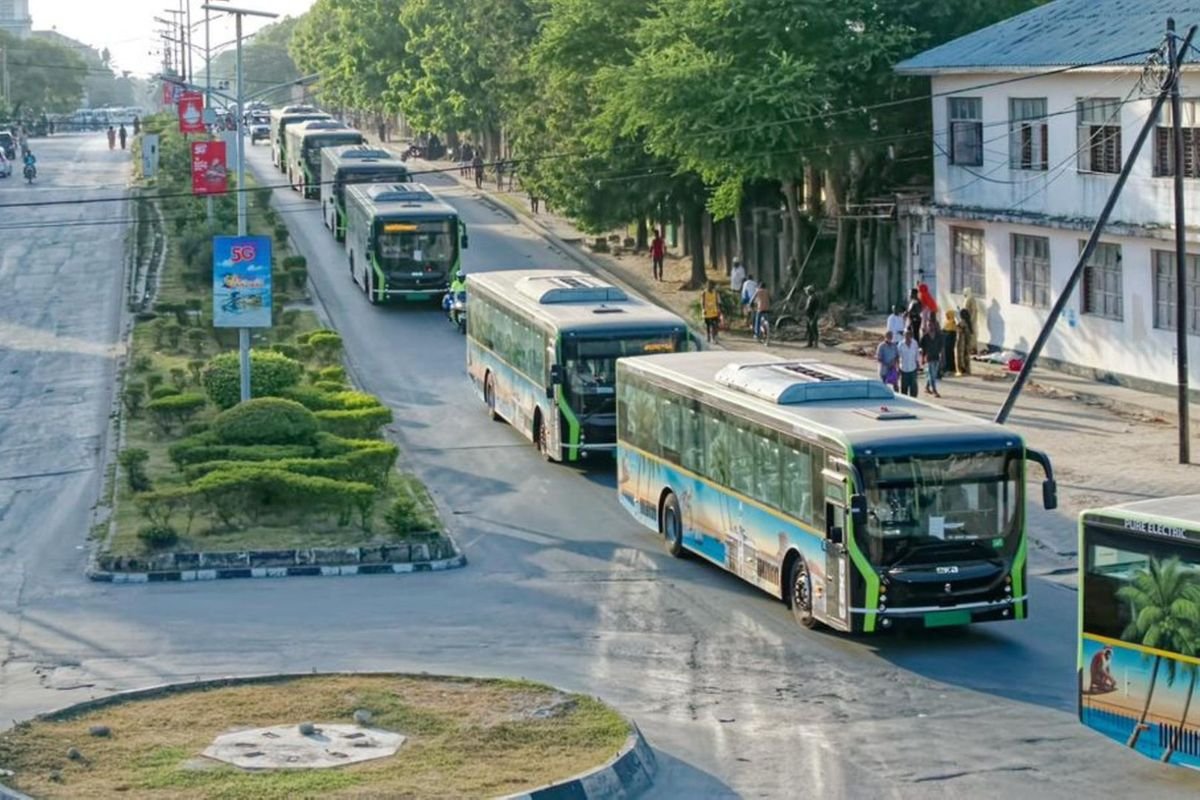
Ready
Zanzibar President Dr Hussein Ali Mwinyi launched the island's electric bus network on 23 July 2026, inaugurating the new Malindi Bus Terminal and putting the first 15 electric buses into service, out of a planned fleet of 500. The project, executed by the Zanzibar Social Security Fund (ZSSF) in partnership with India's GRT Limited, introduces tiered smart-card fares, from Sh700 for standard passengers to Sh350 for students and senior citizens, alongside a broader 16% increase in public transport fares across the island that takes effect the same week. The launch arrived roughly five months later than originally planned, after the first batch of buses docked in January 2026 with an initial target of late February. For an island whose entire paved road network runs to only about 86 kilometres, the electric bus rollout is one part of a wider infrastructure push that also includes road rebuilding, a new flyover and airport and port upgrades ahead of continental sporting events.
ZANZIBAR — President Dr Hussein Ali Mwinyi launched Zanzibar's electric public transport system on Thursday, 23 July 2026, inaugurating the Malindi Bus Terminal in Urban West Region and putting the first phase of an electric bus fleet into passenger service. The event marked the formal start of a project the government first announced in late 2025 and had originally hoped to launch by February 2026.
"The electric bus project is part of our efforts to improve public transport services, reduce environmental pollution and increase the use of environmentally friendly energy," Mwinyi told the launch audience.
What Actually Launched, and What Is Still Coming
The scale of what began operating on 23 July is a fraction of the government's stated ambition. Fifteen electric buses entered service in this first phase, out of a planned total fleet of 500, with the remaining vehicles awaiting completion of supporting charging and terminal infrastructure. Mwinyi was direct about the sequencing: "We have started with these 15 buses, but the goal is 500. Once we complete public transport, we will move to government vehicles, and ultimately to private cars. We want all of Zanzibar to use electric vehicles."
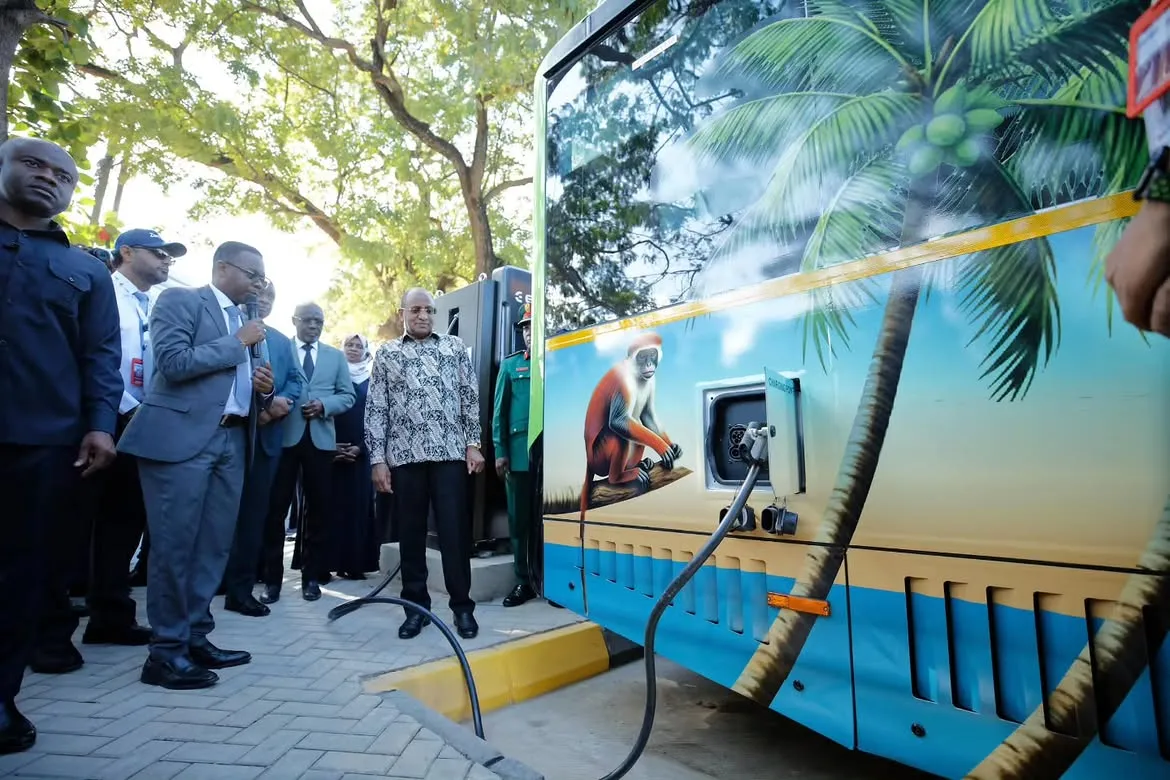 Dr Mwinyi Inspecting Bus Charging Stations
The project is being executed by the Zanzibar Social Security Fund (ZSSF) in partnership with India's GRT Limited, and Mwinyi used the launch to direct ZSSF to accelerate construction of additional modern bus terminals, framing terminal infrastructure as a precondition for the wider fleet expansion rather than a parallel workstream.
How Passengers Pay
The launch introduced a tiered smart-card fare system designed to simplify collection and improve accessibility for specific passenger groups.
| Card Type | Fare | Eligible Passengers |
| Dark blue (standard) | Sh700 | General passengers |
| Gold (student) | Sh350 | Students |
| Black (senior citizen) | Sh350 | Passengers aged 70 and above |
The new fare structure did not arrive in isolation. On 21 July 2026, two days before the electric bus launch, Zanzibar's Minister for Works and Transport, Dr Khalid Salum Mohammed, announced a roughly 16% increase in public transport fares across both urban and rural routes, raising the minimum daladala fare from Sh500 to Sh700, effective 1 August 2026, the same date electric bus operations were set to begin charging standard fares. Passengers travelling the Malindi-Buyu and Malindi-airport routes will pay the same Sh700 fare, with students and senior citizens continuing to pay half the approved rate. The minister attributed the broader fare increase to rising operating costs driven by global fuel prices rather than to the electric bus rollout specifically, though the two changes taking effect within days of each other means most Zanzibari commuters experienced both shifts as a single adjustment to their daily transport costs.
A Rollout That Slipped by About Five Months
The July launch followed a materially slower timeline than originally announced. The first batch of ten electric buses docked at Malindi Port on 25 January 2026 before being transferred to the Kijangwani New Bus Terminal in West Urban District, with officials at the time targeting passenger operations for late February 2026, serving routes linking Buyu, Chukwani, Mnazi Mmoja, Malindi and the airport corridor. The actual public launch came nearly five months later, in late July, with the fleet size for phase one settling at 15 buses rather than the original batch of 10.
Mwinyi addressed the gap directly at the launch, responding to what reporting described as political criticism and scepticism from opposition figures about the delay, and stating that the administration remained committed to delivering on its promises. The lag between an infrastructure announcement and its operational launch is not unusual for a first-of-its-kind transit project requiring new charging infrastructure, terminal construction and fleet logistics, but it is a useful data point for assessing how quickly the remaining 485 buses in the planned fleet are likely to reach service, given that even the initial 10 to 15 vehicles required roughly six months from delivery to passenger operations.
The Wider Infrastructure Context
Zanzibar's electric bus programme is arriving alongside, not instead of, a broader set of road and mobility investments. The island's total paved road network currently runs to only about 86 kilometres, a genuinely small base relative to the scale of the transport ambitions layered on top of it. The government has separately announced plans to rebuild 100.9 kilometres of roads across Unguja island, and Mwinyi inaugurated Zanzibar's first flyover corridor in the second week of January 2026, part of a wider effort to reduce congestion on the archipelago's narrow street network.
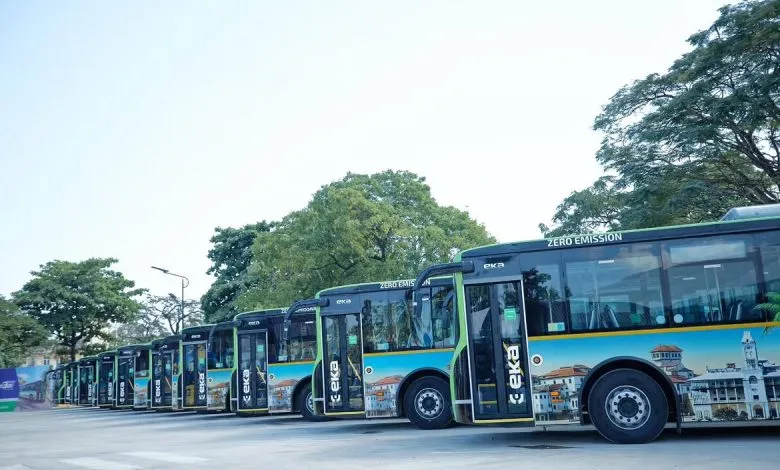 15 buses are operational at launch, with a full fledged project expecting to bring up to 500 electric buses to the archipelago.
Mwinyi reaffirmed at the bus launch that the government remains committed to parallel investment in roads, water supply, ports, airports, healthcare facilities and the Sports City development being built ahead of continental sporting events, including the Africa Cup of Nations. That combination, an expanding but still modest road network, a flyover, port and airport upgrades, and now an electric bus system, reflects a government treating urban mobility as one interconnected infrastructure priority rather than a standalone environmental initiative.
Why the Economics Matter Beyond the Buses Themselves
Zanzibar's rationale for electrification extends beyond emissions reduction. As an island economy, Zanzibar imports the petroleum products that power its existing diesel-based daladala fleet, meaning every litre of diesel burned domestically also represents a foreign-exchange cost. Electrifying public transport, even gradually, offers a path to reducing that import dependence over time, provided the electricity used to charge the fleet is generated reliably and at a competitive cost relative to imported fuel, a calculation that will depend heavily on Zanzibar's own power generation mix as the fleet scales toward its 500-vehicle target.
The tourism dimension adds further weight to the investment case. Zanzibar's economy depends substantially on visitor arrivals, and reliable, modern public transport connecting the airport, key tourist areas and urban centres supports both resident commuting and the visitor experience that underpins the island's tourism revenue. Whether the electric bus system delivers on that dual promise will depend less on the ceremonial launch of the first 15 vehicles and more on how quickly ZSSF and GRT can complete the charging and terminal infrastructure the remaining 485 buses require, and on how the fare structure settles once the initial adjustment beds in.
FAQ
How many electric buses are currently running in Zanzibar? Fifteen buses entered service at the 23 July 2026 launch, the first phase of a planned fleet of 500 vehicles that the government intends to deploy as supporting charging and terminal infrastructure is completed.
Who is building and operating the electric bus system? The project is executed by the Zanzibar Social Security Fund (ZSSF) in partnership with India's GRT Limited.
How much do electric bus fares cost? Standard passengers pay Sh700 via a dark blue smart card, while students and senior citizens aged 70 and above pay Sh350 via gold and black cards respectively.
Did all public transport fares in Zanzibar increase at the same time? Yes. On 21 July 2026, Zanzibar's Minister for Works and Transport announced a roughly 16% increase in public transport fares, raising the minimum daladala fare from Sh500 to Sh700, effective 1 August 2026, the same fare structure applied to the new electric buses; officials attributed the change to rising fuel-driven operating costs rather than to the electric bus programme.
Was the electric bus launch delayed? Yes. The first batch of buses docked in Zanzibar in late January 2026, with passenger operations originally targeted for late February 2026. The actual public launch came nearly five months later, in July 2026, with President Mwinyi directly addressing political criticism about the delay at the launch event.
How does the electric bus programme fit into Zanzibar's wider infrastructure plans? It runs alongside a broader push that includes rebuilding 100.9 kilometres of roads on Unguja island, the island's first flyover corridor, inaugurated in January 2026, and port, airport and Sports City investments tied to upcoming continental sporting events, reflecting a government treating transport modernisation as one interconnected priority rather than a standalone project.
 Uchumi360
Business Intelligence
Uchumi360
Business Intelligence
Uchumi360 covers business, investment, and economic policy across East, Central, and Southern Africa.
For the serious reader
You read to the end. That places you in a small group.
Uchumi360 is built for readers who demand precision over speed, structure over sentiment, and analysis that holds uncomfortable conclusions rather than softening them. If this work sharpens how you think about Africa's economy, help us keep building the infrastructure behind it.
Institutional Partners
Commission intelligence. Shape the conversation.
Uchumi360 works with development finance institutions, investment firms, sovereign bodies, and strategic organisations across the coverage region. Institutional partnership unlocks:
- Commissioned sector and country intelligence reports
- Branded research series under your institution's authority
- Exclusive data briefings for internal strategy teams
- Speaking and editorial presence at Uchumi360 events
- Co-published investment outlooks for your markets
Support Our Work
Independent analysis has a cost. Help us bear it.
Uchumi360 does not carry advertising. It does not take editorial direction from sponsors. Every article is produced without commercial compromise. Your contribution funds the reporting, research, and editorial infrastructure that keeps this analysis free from influence.
Secure checkout: One-time and monthly support are processed securely. Add payment credentials to enable checkout here.
Stay Connected
Keep up with every new insight.
Follow our latest analysis, policy coverage, and market intelligence as soon as it is published. If you need something specific, reach out directly and we will point you to the right research.
