

Prosperity Without Power Is an Illusion: Why Tanzania Must Rethink Military Strength
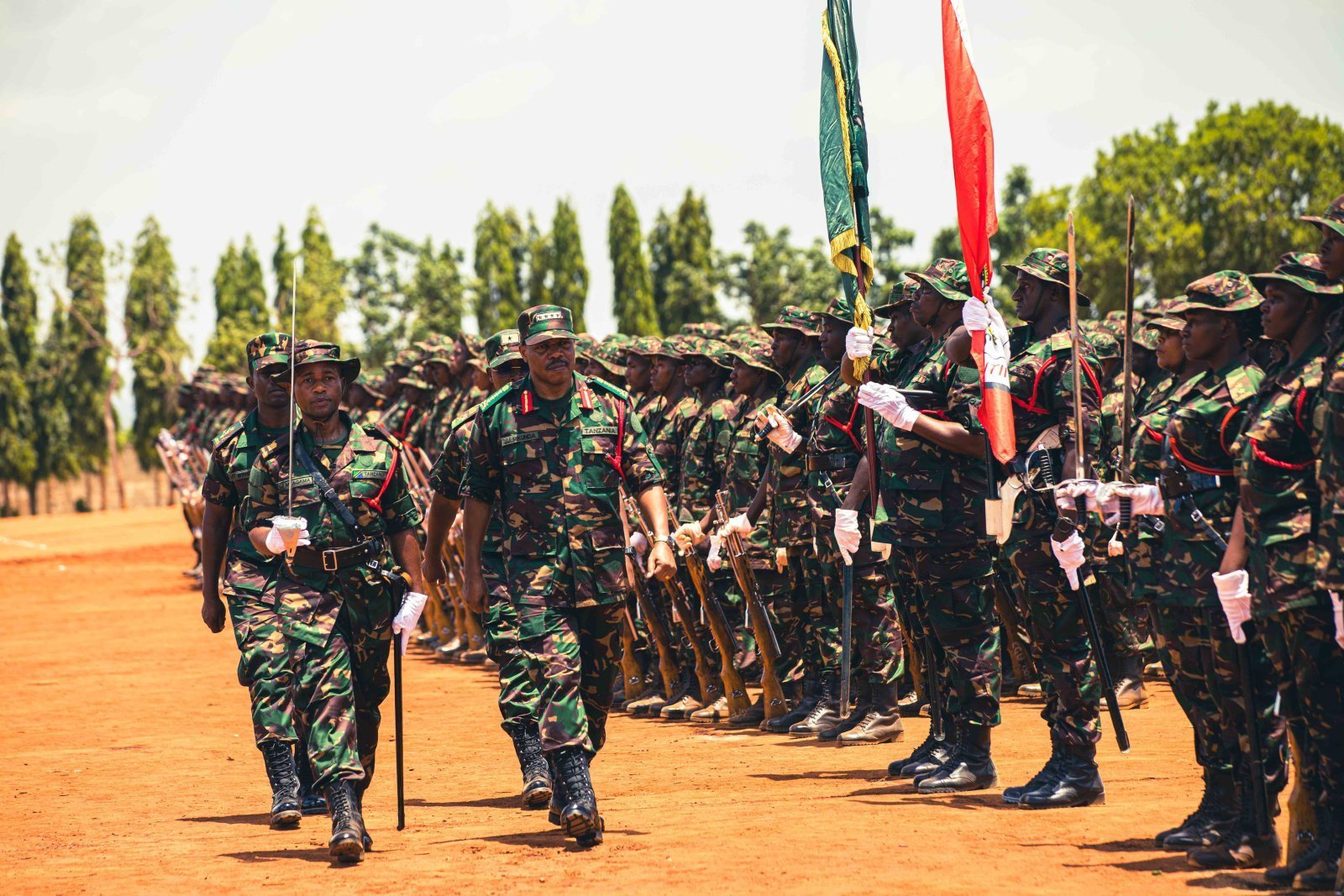
For centuries, economic prosperity has rested on one hard truth: wealth must be defended to endure. As technological warfare reshapes global power dynamics and resource-rich regions face rising instability, Tanzania must recognize that credible military strength, innovation, and domestic defense capability are not luxuries but prerequisites for safeguarding long-term economic sovereignty.
“Defense is of much more importance than opulence.” — Adam Smith
The father of modern economics understood a truth that development debates often avoid: wealth cannot survive where it cannot be defended.
For thousands of years, economic dominance has followed military capability. Empires, superpowers, and regional leaders alike built prosperity on the ability to secure territory, protect trade routes, and deter external coercion. In today’s era of technological warfare and resource competition, that historical pattern is reasserting itself with renewed force.
Recent developments in eastern Democratic Republic of Congo illustrate the point starkly. Armed groups equipped with drones, surveillance tools, and asymmetric tactics are contesting control of territories rich in cobalt, coltan, and gold, minerals essential to global electronics and energy industries. Control of land increasingly means control of supply chains and revenue.
This is not an isolated conflict. It is a preview of how power will shape economic outcomes in the 21st century.
The Myth of Development Without Hard Power
Many developing nations assume that economic growth, diplomacy, and international norms will ensure stability. History offers little support for this optimism.
Trade routes must be secured. Borders must be enforced. Infrastructure must be protected. Resource wealth must be shielded from coercion or illicit extraction.
Without these foundations, prosperity becomes fragile. Investors demand higher returns to compensate for risk. Insurance costs escalate. Long-term projects stall. Capital migrates to safer jurisdictions.
Military capability functions as economic insurance. It rarely appears in national accounts, yet its absence can erase decades of development in a matter of months.
As Frederick the Great famously observed, diplomacy without arms is like music without instruments. Economic policy operates under the same constraint.
Technology Has Changed the Rules of Power
Modern warfare no longer depends primarily on large armies or heavy equipment. Power increasingly derives from technological sophistication:
- Armed and reconnaissance drones
- Cyber operations and digital sabotage
- Electronic warfare systems
- Precision strike capabilities
- Space-based surveillance
- Autonomous platforms
These tools allow relatively modest actors to disrupt critical infrastructure, challenge state authority, and influence global markets at far lower cost than traditional warfare once required.
The conflicts of the 2020s demonstrate that technological asymmetry can outweigh numerical superiority.
Global Trade Still Depends on Military Protection
Markets do not secure themselves.A significant share of the world’s energy supply moves through strategic maritime chokepoints such as the Strait of Hormuz, whose stability depends on naval deterrence. Similarly, disruptions to Black Sea shipping during the Russia–Ukraine conflict triggered global spikes in food prices, demonstrating how military control of territory can reshape entire commodity markets.
Eastern DRC offers another example. Despite vast mineral wealth, persistent insecurity has prevented the region from translating resources into broad prosperity. Armed control determines who captures economic value. Hard power creates the conditions in which markets can function.
Why Tanzania Cannot Afford Strategic Complacency
Tanzania’s economic profile is changing rapidly. The country now sits at the center of major regional trade flows and possesses assets of growing global significance.
These include:
- One of East Africa’s longest and most strategic coastlines
- Major ports serving multiple landlocked countries
- Natural gas reserves and energy infrastructure
- Mining operations linked to global supply chains
- Expanding transport corridors across the region
- Emerging industrial zones
As these assets grow in value, they also become potential targets for disruption, coercion, or illicit exploitation. A state unable to secure its economic infrastructure risks losing control over its development trajectory.
Innovation Is the New Deterrence
Building credible military strength today is less about quantity and more about capability.
Tanzania should prioritize a defense strategy anchored in technology, domestic expertise, and strategic autonomy:
Domestic innovation ecosystems
Defense-linked research can catalyze breakthroughs in engineering, artificial intelligence, communications, and materials science, with spillovers into civilian industries.
Homegrown digital and cyber capability
Modern conflicts increasingly target data, communications, and financial systems. Local expertise is essential for resilience.
Assembly and manufacturing of military hardware
Local production reduces dependence on external suppliers while building industrial capacity and technical skills.
Targeted procurement from trusted partners
Access to advanced equipment from friendly countries can accelerate capability development without compromising sovereignty.
Israel’s experience demonstrates how defense-driven innovation can evolve into globally competitive technology sectors, generating exports and high-skill employment.
Defense Spending as Industrial Strategy
In advanced economies, defense sectors often serve as engines of technological progress. Aerospace, computing, satellite systems, and advanced manufacturing all benefited from military investment before transforming civilian economies.
For Tanzania, strategic defense industrialization could:
- Create high-value jobs
- Transfer advanced technical knowledge
- Strengthen domestic manufacturing capacity
- Build resilient supply chains
- Reduce long-term import dependence
Viewed through this lens, defense spending is not merely consumption. It is an investment in national capability.
The Cost of Weakness Is Higher Than the Cost of Strength
Military capability requires substantial resources. Yet vulnerability can impose far greater costs.

Instability simultaneously damages tourism, trade, public finances, and investor confidence. Infrastructure destruction or disruption can set back development by decades. Weak states negotiate from a position of constraint. Strong states negotiate from a position of choice.
A credible defense posture does not signal aggression. It signals sovereignty and stability. As George Washington noted, preparedness for war is one of the most effective means of preserving peace..
A Strategic Path Forward
Tanzania does not need to emulate global superpowers. It needs a military calibrated to its risks and ambitions, focused on deterrence, rapid response, and technological competence.
Key priorities could include:
- Maritime security to protect coastal assets
- Air defense and surveillance capability
- Drone and counter-drone systems
- Cybersecurity infrastructure
- Protection of critical national infrastructure
- Intelligence and early warning systems
- Indigenous defense research partnerships with industry and universities
Such investments would strengthen national resilience while supporting broader economic modernisation.
The Bottom Line
Prosperity without security is temporary. Security without capability is illusory.
In an era of technological warfare, resource competition, and shifting global power balances, nations that neglect credible defense risk becoming arenas of competition rather than independent actors.
For Tanzania, investing in military strength rooted in innovation, domestic capability, and strategic partnerships is not a diversion from development. It is a prerequisite for protecting it.
Economic independence ultimately rests on the ability to defend it.