

The Future of Tanzania’s Energy Mix and Industrial Competitiveness
As demand grows across manufacturing, mining, transport, agriculture, and digital services, Tanzania must rethink its energy strategy to support industrial competitiveness. Without a modern energy system, factories may face power outages, higher production costs, and lost investment opportunities, pushing businesses to neighbouring countries such as Kenya, Zambia, and South Africa.
Energy as the Foundation of Industrialization
Tanzania has set ambitious goals to become a semi-industrialized nation by 2035. A critical pillar of this vision is reliable, affordable, and diversified energy.
As demand grows across manufacturing, mining, transport, agriculture, and digital services, Tanzania must rethink its energy strategy to support industrial competitiveness. Without a modern energy system, factories may face power outages, higher production costs, and lost investment opportunities, pushing businesses to neighbouring countries such as Kenya, Zambia, and South Africa.
1. The Current Energy Mix: Hydro, Natural Gas, and the Challenges
Tanzania’s energy system is currently dominated by:
- Natural gas (55%+) – powering thermal plants and industrial users
- Hydropower (30%+) – including plants at Mtera, Kidatu, and Kihansi
- Thermal and diesel – supplementary and costly for peak demand
- Solar and wind – still minimal despite high potential
Key Challenges
- Hydropower vulnerability to drought: Reduced rainfall lowers electricity generation, leading to load shedding.
- High cost of thermal power: Diesel and gas-fired plants are expensive, inflating electricity tariffs.
- Limited transmission infrastructure: Grid coverage gaps constrain industrial growth, particularly in rural areas.
- Slow adoption of renewables: Despite abundant solar and wind resources, investment remains low due to financing, policy, and technical bottlenecks.
Impact: Energy instability increases production costs, discourages industrial investment, and limits Tanzania’s ability to compete regionally.
2. The Strategic Role of Natural Gas
Tanzania holds approximately 57 trillion cubic feet (TCF) of natural gas, making it one of Africa’s largest reserves. Gas is central to industrialization, electricity generation, and transport.
Industrial and Economic Applications
- Manufacturing: Reliable gas supply lowers production costs for cement, steel, and agro-processing.
- Fertilizer production: Gas-to-fertilizer plants support agriculture and reduce import dependence.
- Transport: Compressed natural gas (CNG) buses and vehicles reduce fuel costs and emissions.
- Electricity generation: Gas-fired plants supplement hydropower and stabilize the grid.
- Exports: LNG projects provide foreign exchange and fiscal revenue.
Challenges
- Transmission infrastructure must expand to deliver gas reliably nationwide.
- Pricing reforms are needed to make gas competitive for industrial users.
3. The Julius Nyerere Hydropower Project (JNHPP): A Turning Point
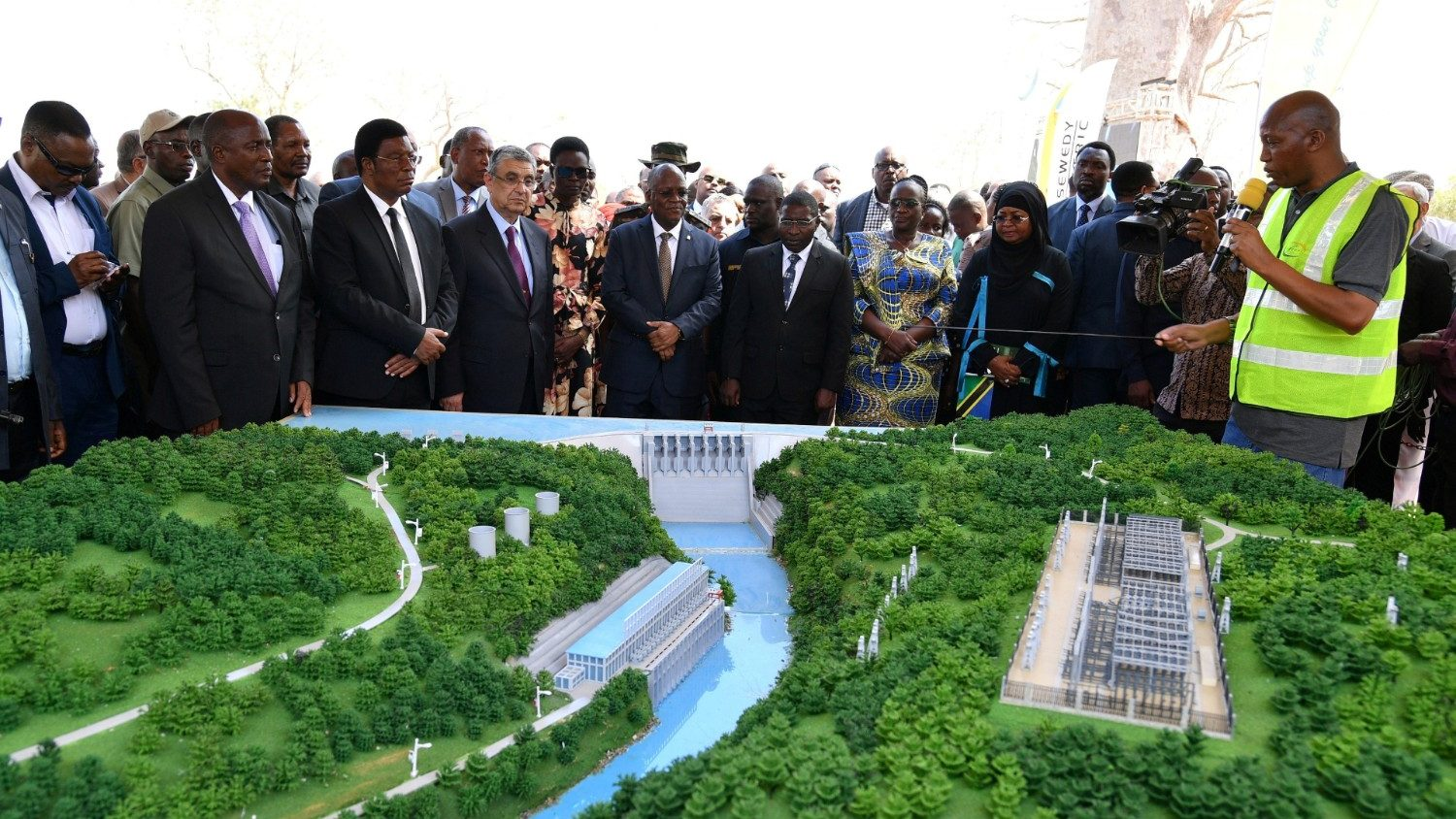
The 2115 MW Julius Nyerere Hydropower Project on the Rufiji River is poised to reshape Tanzania’s electricity landscape.
Benefits
- Potential reduction of electricity tariffs for households and industries
- Reduced dependency on expensive diesel imports
- Enhanced grid stability and capacity, supporting industrial clusters
Concerns
- Environmental sustainability, including ecosystem disruption and relocation of communities
- Dependence on rainfall may affect long-term reliability
JNHPP could make Tanzania more competitive by providing stable, lower-cost power for industry and commerce.
4. Renewables: Tanzania’s Untapped Goldmine
Tanzania has significant solar and wind resources:
- Solar: 4–7 kWh/m²/day across most regions, ideal for off-grid electrification and industrial solar farms
- Wind: High-potential corridors in Singida, Makambako, and parts of Dodoma
Opportunities
- Reduce energy costs: Solar and wind can supplement expensive thermal generation.
- Expand rural electrification: Off-grid solutions can power agriculture and micro-industries.
- Attract green investors: Investors increasingly seek sustainable energy projects.
- Support EV adoption: Solar-powered charging stations for electric vehicles reduce dependency on imported fuels.
Example: Singida’s wind corridors could host turbines powering agro-processing clusters, reducing reliance on diesel and enhancing industrial competitiveness.
5. Energy for Industry: The Cost Competitiveness Factor
Manufacturers require electricity that is:
- Reliable: Consistent supply to avoid production stoppages
- Predictable: Stable pricing for budgeting
- Affordable: Competitive with regional alternatives
Challenges
Energy instability forces firms to:
- Invest in backup generators, raising operating costs
- Delay production or limit capacity utilization
- Consider relocation to countries with cheaper, more reliable power
Example: Cement factories and textile industries in Dar es Salaam face higher production costs due to intermittent supply and high diesel reliance, impacting export competitiveness.
6. Policy Reforms Needed
To secure a modern, industrial-friendly energy system, Tanzania must implement key reforms:
- Transparent pricing: Clear tariffs to incentivize investment and efficient consumption
- Faster Independent Power Producer (IPP) approvals: Accelerate private investment in solar, wind, and gas projects
- Regional power trading: Integrate with East African grids to balance supply and demand
- Encourage private solar farms: Reduce the load on TANESCO and expand renewable adoption
- Upgrade transmission & distribution infrastructure: Improve efficiency and reach industrial zones
These reforms will attract both local and foreign investors, reduce energy costs, and stabilize supply for industries.
Conclusion: A Modern Energy Mix Will Shape Tanzania’s Industrial Future
Tanzania’s competitiveness in manufacturing, mining, agriculture, transport, and digital services hinges on a diversified, reliable, and affordable energy system.
A future energy mix combining natural gas, hydropower, solar, wind, and strategic regional trade will not only support industrial growth but also attract investment, reduce import dependency, and accelerate Tanzania’s journey toward semi-industrialization.
The key question: Can Tanzania implement policy reforms, infrastructure upgrades, and green energy investments quickly enough to meet industrial demand while maintaining sustainability and affordability? The answer will define the nation’s economic trajectory for decades.