
How EACOP Secured Financing After 40 Banks Rejected the Pipeline
Ready
The $5.6 billion East African Crude Oil Pipeline has advanced to more than 93% completion despite years of environmental campaigns, bank withdrawals and insurance restrictions. Its shareholders responded by committing more equity, securing loans from African and Islamic financial institutions, and drawing on their own financial resources. The financing strategy has kept Uganda and Tanzania's largest joint energy infrastructure project moving, although questions remain about its final capital structure, financial disclosure and environmental consequences.
The East African Crude Oil Pipeline (EACOP) has advanced to 93.9% implementation progress despite an international campaign that persuaded dozens of commercial banks and insurers to rule out or restrict their involvement, demonstrating how its shareholders assembled an alternative financing structure after conventional international project lending became increasingly difficult to secure.
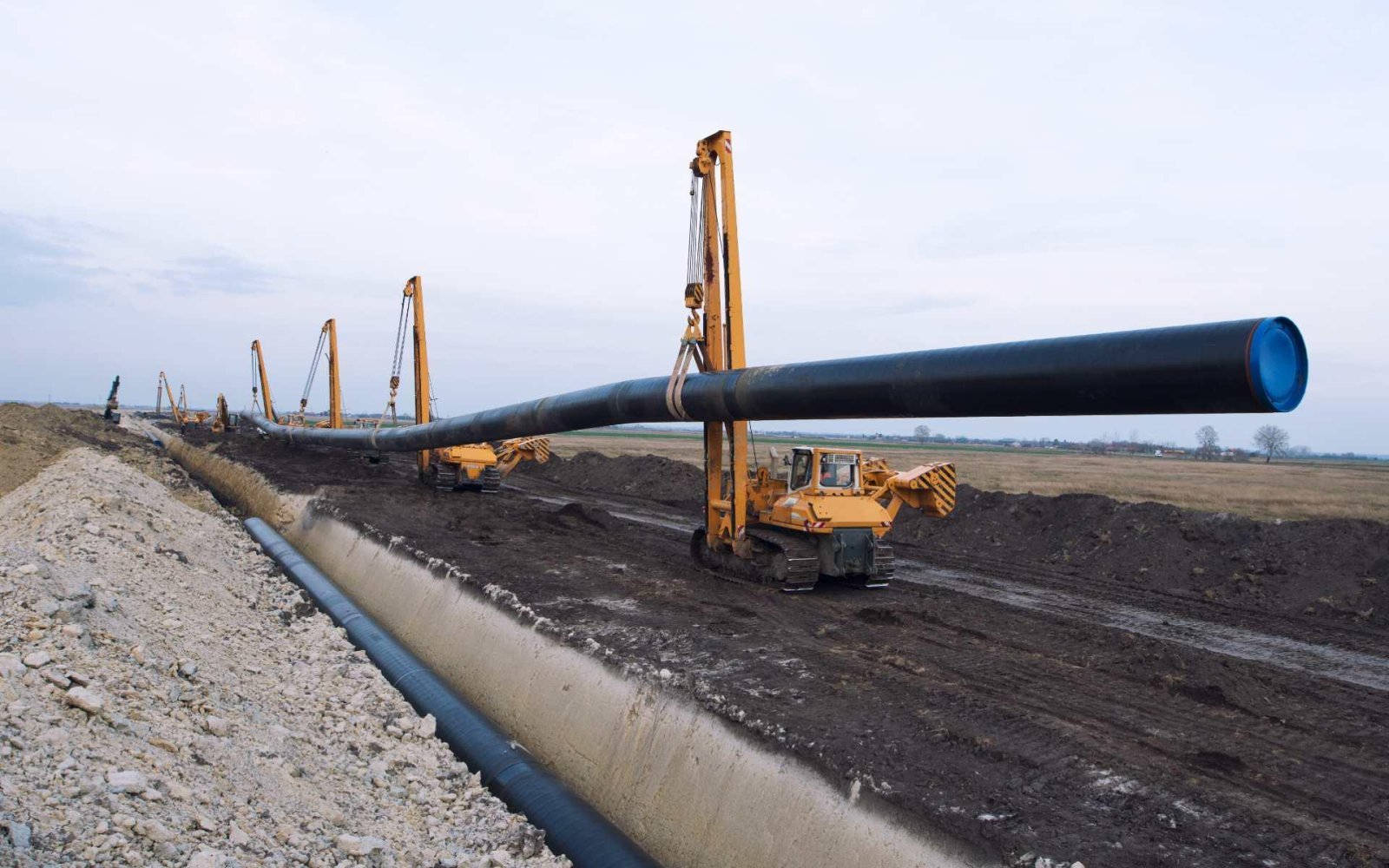
The 1,443-kilometre heated pipeline, designed to transport Uganda's crude oil from Hoima to Tanzania's Indian Ocean coast near Tanga, has been financed through a combination of shareholder equity, external loans and sponsor-supported financing. Its financial arrangements have involved African commercial banks, a continental trade finance institution and the private sector financing arm of the Islamic Development Bank Group. The project illustrates an increasingly consequential development in African infrastructure finance: international environmental opposition can increase the cost and difficulty of raising capital without necessarily preventing construction when investors with sufficient financial resources remain committed to delivering the asset.
EACOP's financing experience also shows the limits of that conclusion. Although Ugandan government officials told The EastAfrican in November 2025 that the project was fully funded through first oil, the developers have not published a complete, independently reconciled account of every financing commitment, lender exposure, shareholder contribution and repayment obligation. Financing sufficient to complete construction is different from securing every dollar through conventional external project finance.
The financing challenge emerged against the backdrop of the international StopEACOP campaign, whose participating organisations have targeted banks, insurers, pension funds and other financial institutions involved in the proposed pipeline. According to the coalition, more than 40 banks and 30 insurers have either declined participation or introduced restrictions relevant to the project. In October 2026, 149 civil society organisations renewed their demands for disclosure of financial arrangements involving African and Middle Eastern lenders.
Yet the project continued progressing. During their November 18, 2026, meeting in Entebbe, Presidents Yoweri Museveni and Samia Suluhu Hassan reported that EACOP had reached 93.9% completion and agreed to accelerate the remaining work. That figure represents reported implementation progress, not confirmation that the pipeline is already commercially operating.
The commercial and political implications extend beyond Uganda and Tanzania. EACOP has become an example of how African energy projects can attract financing from institutions outside the traditional Western lending market, while raising questions about the financial risks transferred to project sponsors, state-owned companies and participating regional banks.
Western Bank Withdrawals Changed the Financing Structure
EACOP reached its final investment decision in February 2022, when TotalEnergies, CNOOC, Uganda's national oil company UNOC and Tanzania Petroleum Development Corporation committed to advancing the development.
The ownership arrangement gave TotalEnergies a 62% interest, UNOC and TPDC 15% each, and CNOOC the remaining 8%. The project was initially expected to rely substantially on external debt, an arrangement frequently used for large infrastructure developments because it allows sponsors to finance construction without contributing the entire investment requirement from their own resources.
The difficulty was finding lenders willing to provide that debt. International environmental organisations focused their campaigns on the banks and insurers whose participation would normally be required to finance and protect a project of EACOP's scale. The coalition argued that the pipeline would contribute to greenhouse gas emissions, expose sensitive ecosystems to potential petroleum spills and impose unacceptable costs on communities affected by land acquisition.
Several European and international banks subsequently indicated that they would not finance EACOP or adopted financing policies that excluded the project. Their decisions reduced the pool of conventional lenders available to the developers.
The response was to increase the financial commitments made by shareholders and seek lenders in other markets. An analysis by the Institute for Energy Economics and Financial Analysis (IEEFA), published in January 2026, estimated that EACOP's shareholders had committed more than $2.6 billion in equity while the project had secured approximately $1.2 billion in external debt. The report questioned whether the project's financing arrangements were as secure as official statements suggested and highlighted the risk created by delays and increased construction costs.
The original financing plan had frequently been described as requiring more debt than equity. Subsequent reporting indicated that the structure shifted towards approximately 52% equity and 48% debt, reflecting the need for shareholders to contribute more capital.
Those percentages should be treated as a reported financing structure rather than an audited final capitalisation table. Sponsor loans, conventional bank debt and shareholder equity may be classified differently, and the full details of the arrangements have not been publicly disclosed.
The practical consequence was that construction could advance even while the developers continued negotiating external financing.
Rather than waiting for every bank loan to be concluded before undertaking major works, the shareholders provided capital to finance procurement, engineering and construction. By the time EACOP announced its first external financing tranche in March 2025, the company reported that overall project progress had already exceeded 50% at the end of 2024.
The sequence is central to understanding how the project continued. Sponsors with substantial financial resources absorbed a larger share of the early construction requirements, while lenders entered after significant work had been completed.
This reduced some remaining construction uncertainty, although it did not eliminate exposure to delays, cost overruns, commodity prices or environmental and legal risks.
Five Regional Financial Institutions Closed the First External Financing Tranche
On March 26, 2025, EACOP Ltd announced that it had closed its first external financing tranche. The announcement named five participating institutions, confirming that a portion of the project's debt financing had been secured from lenders outside the traditional Western commercial banking group.
The financing syndicate included African Export Import Bank (Afreximbank), Standard Bank of South Africa, Stanbic Bank Uganda, KCB Bank Uganda and the Islamic Corporation for the Development of the Private Sector (ICD).
East African Crude Oil Pipeline
| Institution | Financial profile | Publicly confirmed role |
| Afreximbank | Pan African trade finance institution | Initial loan syndicate |
| Standard Bank of South Africa | African commercial banking group | Initial loan syndicate |
| Stanbic Bank Uganda | Ugandan commercial bank | Initial loan syndicate |
| KCB Bank Uganda | East African commercial bank | Initial loan syndicate |
| ICD | Islamic Development Bank Group private sector institution | Initial loan syndicate |
EACOP's announcement did not disclose the amounts provided by individual banks, the interest rates, repayment schedule, security package or complete loan covenants.
Subsequent reporting provided additional information. In November 2025, The East African cited an Ernst & Young audit of EACOP's financial statements showing that the first debt tranche amounted to approximately $755 million. The newspaper also reported that other banks subsequently joined the financing arrangements, increasing the commercial bank debt facility to approximately $1.2 billion.
Uganda's Ministry of Energy Permanent Secretary, Irene Batebe, told the newspaper that the financing already secured, including shareholder and sponsor debt facilities, was sufficient to take the project through first oil.
This is the central distinction in EACOP's financing story. The project did not necessarily obtain the entire construction budget through ordinary syndicated bank lending. Instead, its developers combined external lending with substantial shareholder commitments and other financing arrangements.
The structure allowed construction to proceed while reducing dependence on any single category of financial institution. It also shifted more capital requirements and financial risk towards EACOP's shareholders, including the state owned oil companies of Uganda and Tanzania.
Did Chinese Banks Finance the Final Stage?
Chinese companies have participated in Uganda's petroleum development and pipeline construction, while Chinese lenders have repeatedly been identified as potential financiers.
CNOOC holds an 8% equity interest in EACOP and is the operator of Uganda's Kingfisher upstream oil project. Chinese suppliers have also provided equipment and materials, including pipes required for construction.
The EastAfrican reported in November 2025 that EACOP officials expected a final debt tranche from Chinese financial institutions. The article stated that China's export credit and insurance institutions had been approached during earlier fundraising efforts, although the amounts reported were smaller than initially sought.
The available public evidence does not establish the final committed amounts, disbursements or contractual terms of every Chinese facility. It would therefore be inaccurate to present a fully quantified Chinese lending package as independently verified.
The more defensible conclusion is that Chinese financial institutions were involved in financing discussions, while CNOOC's ownership and the participation of Chinese contractors and suppliers are established. The absence of complete public disclosure also illustrates why construction progress alone cannot confirm the precise composition of a project's financing.
The $5.6 Billion Project Was Funded Through Several Different Channels
The development's total estimated cost has increased substantially since its initial planning. IEEFA's January 2026 assessment placed the latest project cost at approximately $5.6 billion, compared with a preinvestment decision estimate of around $3.6 billion. The increase reflects a considerably larger financing requirement than shareholders originally anticipated.
The main published financial figures can be distinguished as follows.
| Financial measure | Reported amount | Interpretation |
| Earlier project estimate | $3.6B | Historical estimate before the 2022 investment decision |
| Revised project cost | $5.6B | Estimated total including financing and historical costs |
| First external loan tranche | $755M | Amount reported from audited financial statements |
| Expanded commercial debt facility | About $1.2B | Reported by Ugandan officials in November 2025 |
| Shareholder equity commitments | More than $2.6B | IEEFA estimate as of its January 2026 analysis |
| Financing associated with the project, 2025 to 2026 | About $3.7B | Reclaim Finance estimate requiring reconciliation of financial instruments and exposures |
The figures in this table cannot simply be added together. Some represent revisions to earlier amounts, some reflect financing commitments rather than disbursements, and the Reclaim Finance estimate may include different categories of credit exposure.
The October 2026 Reclaim Finance investigation is especially relevant because it suggests that more financial institutions have become involved than were named in EACOP's original announcement. The organisation identified financing links involving NMB Bank Tanzania, Qatar National Bank and Uganda Development Bank, among other institutions, and called for disclosure of the complete arrangements.
Those links should be attributed to Reclaim Finance rather than treated as individual project loan amounts independently confirmed by each institution. The distinction is essential when assessing the claim that EACOP has secured all the financing it requires.
According to Ugandan officials, the project had secured sufficient funding to reach first oil. But the precise balance between externally committed debt, sponsor loans, shareholder equity, guarantees and potential refinancing remains less transparent than the project's construction status.
The $12.77 Per Barrel Tariff Helped Establish a Predictable Revenue Model
EACOP's commercial structure provided another foundation for its financing. Uganda's East African Crude Oil Pipeline (Special Provisions) Act, 2021 establishes an initial transportation tariff of $12.77 per barrel for the first 1.046 billion barrels transported under the specified arrangements. The tariff is adjusted annually after the first commercial delivery by the lower of US inflation or 2%.
The legislation gives project investors a defined transportation pricing framework, which is relevant to assessing the pipeline company's future income and ability to service borrowing.
At a hypothetical throughput of 200,000 barrels per day for a full year, the initial tariff would generate approximately $932 million in gross annual transportation charges. This is an illustrative calculation rather than a revenue forecast. Actual receipts will depend on production, shipments, contractual billing arrangements and tariff adjustments.
The tariff does not guarantee that the pipeline will earn the same revenue regardless of circumstances. The precise obligations of shippers, minimum volume commitments, payment protections and remedies for nonperformance depend on contractual documents that are not fully public.
Nor should the $12.77 charge be treated as money paid directly to Tanzania or Uganda. It is revenue to EACOP Ltd, from which operating costs, financing obligations, taxes and potential shareholder returns must be met.
Uganda's parliamentary committee records show that the original tariff included allowances for capital recovery, operating expenditure, financing charges and expected investor returns. The structure was intended to support project economics while keeping the transportation cost affordable for upstream oil production.
The governments also made fiscal concessions to reduce the project's cost structure. IEEFA reports that Tanzania waived a proposed transit levy and Uganda provided corporate tax relief. Uganda's parliamentary committee explained that tax concessions were incorporated into the arrangements to avoid increasing the tariff charged for transporting crude.
The commercial bargain was therefore more complicated than simply attracting lenders through an unusually profitable tariff. The governments accepted certain tax concessions to support the economics of the pipeline and the wider upstream oil developments.
That choice carries an opportunity cost because foregone taxation must be weighed against the revenues and economic benefits expected from projects that might otherwise have remained undeveloped.
Did Western Banks Really Withdraw From the Project?
The environmental campaigns substantially narrowed EACOP's direct lending options, but the relationship between Western financial institutions and the project is more complicated than a complete withdrawal of Western capital.
In November 2025, The EastAfrican reported that TotalEnergies had issued two large corporate bond transactions during that year, worth a combined €6.15 billion. The underwriting groups included several major international banks, including institutions that had previously ruled out direct project financing for EACOP.
The newspaper reported that part of TotalEnergies' financing supported its wider investment requirements, including commitments associated with the pipeline. However, the full bond proceeds cannot be attributed to EACOP because the securities were issued by TotalEnergies for broader corporate purposes.
This distinction exposes a limitation of campaigns focused narrowly on project finance. A bank can refuse to provide a dedicated loan to a particular pipeline while continuing to provide general financial services to a company that owns the project. Corporate bonds, revolving credit facilities and other forms of financing can support a company's overall liquidity without being contractually restricted to one investment.
BankTrack's Ryan Brightwell raised this issue in the newspaper's reporting, questioning the narrow interpretation some financial institutions appeared to apply to their commitments.
The result was a financing environment in which some Western banks avoided direct exposure to EACOP while the project's largest shareholder retained access to international capital markets.
That does not establish that the banks secretly financed the pipeline, and corporate lending cannot automatically be traced to individual projects. It does show why the withdrawal of dedicated project finance does not necessarily prevent a well capitalised multinational company from funding infrastructure through other channels.
Environmental Opposition Changed the Financial Risk, but Did Not Stop Construction
The continued construction of EACOP should not be interpreted as evidence that environmental opposition had no economic effect. The campaigns narrowed the number of institutions willing to participate in financing and increased public scrutiny of the project's environmental, social and financial risks.
IEEFA's January 2026 report found that EACOP's shareholders had been required to provide considerably more capital than originally anticipated. It also identified rising construction costs and the limited availability of external debt as challenges to project returns.
The report argued that financing constraints may have been influenced by environmental concerns alongside the project's own financial characteristics, including cost escalation and exposure to future oil prices.
That distinction is central to evaluating the campaign's results. A development can proceed while becoming more expensive or financially demanding for its sponsors. The fact that construction continues does not demonstrate that lending restrictions were ineffective, just as the withdrawal of individual banks does not establish that a project has become commercially unviable.
There is also continuing disagreement over EACOP's social and environmental performance. EACOP and TotalEnergies maintain that the project has adopted environmental and social management arrangements based on applicable national requirements and international standards. The company has described its land acquisition, resettlement and livelihood restoration programmes as part of those commitments.
Human Rights Watch, however, documented concerns about compensation, livelihood disruption and access to information among affected communities in Uganda. The organisation disputed aspects of the project's handling of land acquisition and questioned whether affected residents had received adequate protection.
These disputes remain relevant even after construction financing has been secured. A project's ability to attract capital does not independently establish compliance with environmental standards or the adequacy of compensation arrangements.
The October 2026 financing investigation demonstrates that scrutiny has also shifted towards the project's newer lenders. Reclaim Finance reported that 149 organisations were demanding greater transparency about approximately $3.7 billion in financing linked to the pipeline, including the financial exposure of regional and Middle Eastern institutions.
Consequently, EACOP's financing has not ended the dispute between developers and campaigners. It has changed which financial institutions are involved and where demands for accountability are directed.
What EACOP's Financing Means for African Infrastructure Investment
The project's financing arrangements offer several lessons for African governments developing large infrastructure projects in sectors exposed to international environmental restrictions.
One concerns the role of domestic and regional financial institutions. Afreximbank, Standard Bank, Stanbic Bank Uganda, KCB Bank Uganda and ICD demonstrated that financing could be mobilised from institutions with a direct commercial interest in African and regional investment markets.
However, their participation does not mean African banks can independently finance every major infrastructure project on the continent. Large developments can create concentrated credit exposures, require substantial foreign currency liquidity and involve long repayment periods that exceed the normal financing capacity of some banks.
A second consideration is the financial strength of project sponsors.
TotalEnergies and CNOOC possess substantial international operations and access to financial resources beyond Uganda and Tanzania. Their involvement enabled EACOP to continue construction while its financing structure was being revised.
Many African infrastructure projects lack sponsors with comparable capital resources. The EACOP experience therefore cannot be assumed to provide a universally replicable model for projects promoted by smaller companies or financially constrained governments.
The third consideration is the cost of financing. Increasing equity contributions can allow construction to proceed when banks are reluctant to lend, but equity investors generally expect returns commensurate with their risk. Sponsor loans may also create future repayment obligations and refinancing requirements.
The financial burden does not disappear when conventional bank loans are replaced by shareholder funding. It changes form, potentially affecting investor returns, the cash available for public equity holders and the overall cost of the project.
For Uganda and Tanzania, the public financial implications are particularly relevant because UNOC and TPDC each hold 15% of the pipeline company. Their participation creates opportunities for future equity income but also requires them to meet their capital obligations.
The case raises a larger question about the development finance available to African economies. Governments seeking to invest in petroleum, electricity, railways, ports and other capital intensive infrastructure increasingly face different financing conditions depending on the sector, environmental risk, currency exposure and expected commercial returns.
Regional finance institutions can expand the options available, but their involvement also creates a need for transparent lending terms, prudent risk management and clear public reporting, particularly where government owned enterprises are borrowers or shareholders.
Construction Is Nearing Completion, but the Financial Test Comes With First Oil
EACOP's physical progress provides the clearest evidence that its sponsors found a way to sustain construction despite international financing opposition.
By November 18, 2026, Ugandan and Tanzanian officials were reporting 93.9% overall implementation progress, with the remaining work focused on completing the infrastructure and preparing it for operation.
The pipeline has a designed transport capacity of approximately 246,000 barrels of crude oil per day. Its commercial performance will depend on production from Uganda's Tilenga and Kingfisher developments and the ability of the entire export system to operate continuously.
The beginning of oil exports will introduce a new phase of financial obligations and revenue flows. Transportation charges will support the pipeline's operating expenditure, debt service and other commitments, while shareholders will seek returns on their substantial capital contributions.
The project will also remain exposed to oil production schedules, international crude prices, maintenance costs and the possibility of additional financing or refinancing requirements.
Uganda and Tanzania have established that EACOP could advance without the participation of many international banks that had originally been expected to finance such a development. Its sponsors substituted substantial shareholder capital and obtained external loans from a different group of institutions.
That achievement has come with important qualifications. The project's reported cost increased to approximately $5.6 billion, shareholders assumed more financial exposure than initially planned, and the complete terms of its financing remain insufficiently disclosed for an independent assessment of its final capital structure.
The environmental campaign did not prevent construction from approaching completion, but the evidence indicates that EACOP's financing became more demanding for its sponsors. Whether the revised structure ultimately delivers satisfactory financial returns will depend on the project operating successfully and generating sufficient transportation income over its commercial life.
 Uchumi360
Business Intelligence
Uchumi360 covers business, investment, and economic policy across East, Central, and Southern Africa.
For the serious reader
You read to the end. That places you in a small group.
Uchumi360 is built for readers who demand precision over speed, structure over sentiment, and analysis that holds uncomfortable conclusions rather than softening them. If this work sharpens how you think about Africa's economy, help us keep building the infrastructure behind it.
Institutional Partners
Commission intelligence. Shape the conversation.
Uchumi360 works with development finance institutions, investment firms, sovereign bodies, and strategic organisations across the coverage region. Institutional partnership unlocks:
- Commissioned sector and country intelligence reports
- Branded research series under your institution's authority
- Exclusive data briefings for internal strategy teams
- Speaking and editorial presence at Uchumi360 events
- Co-published investment outlooks for your markets
Support Our Work
Independent analysis has a cost. Help us bear it.
Uchumi360 does not carry advertising. It does not take editorial direction from sponsors. Every article is produced without commercial compromise. Your contribution funds the reporting, research, and editorial infrastructure that keeps this analysis free from influence.
Secure checkout: One-time and monthly support are processed securely. Add payment credentials to enable checkout here.
Stay Connected
Keep up with every new insight.
Follow our latest analysis, policy coverage, and market intelligence as soon as it is published. If you need something specific, reach out directly and we will point you to the right research.
