
Zanzibar Targets 180 MW of Solar Power as It Seeks Greater Energy Independence
Ready
Zanzibar's largest planned solar development is advancing at Bambi in Unguja, with an initial 30 MW phase and an 80 MW electricity purchase agreement. The project could reduce the islands' dependence on power imported from mainland Tanzania, although commercial electricity generation has not yet been independently confirmed.
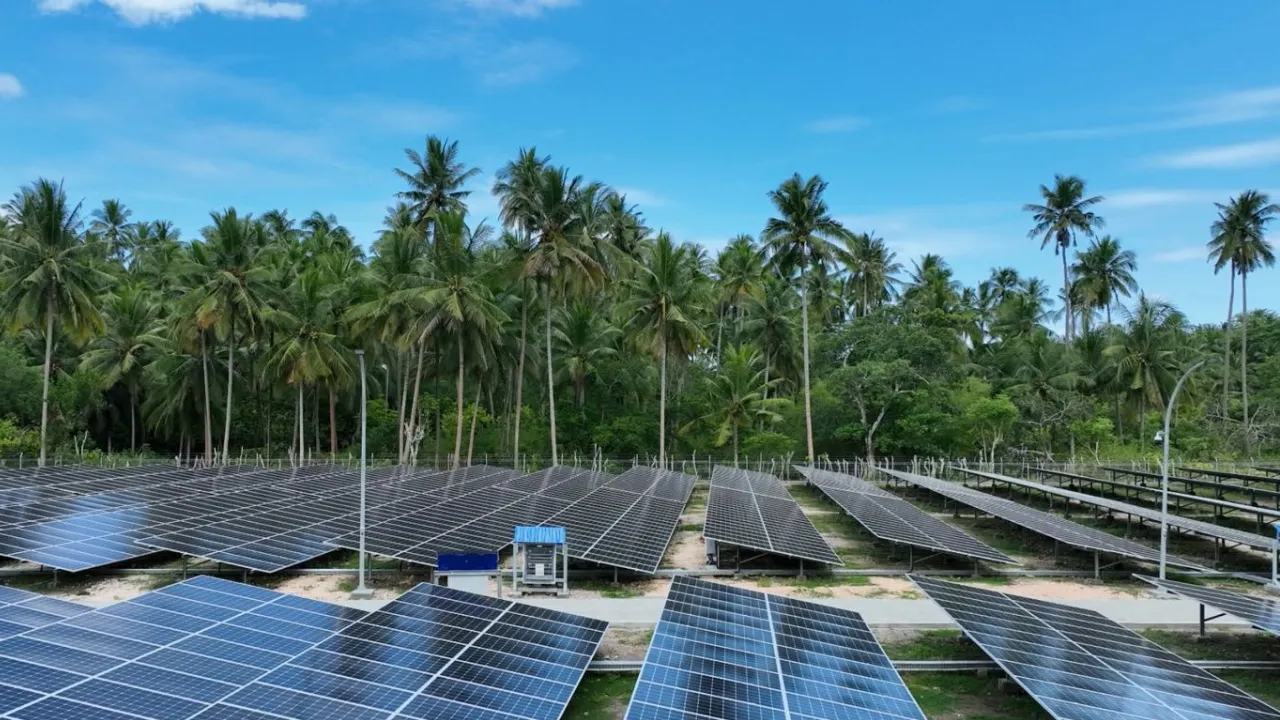
Zanzibar is advancing plans to develop a 180-megawatt solar electricity project at Bambi in Unguja, marking one of its largest investments in domestic power generation as the semi-autonomous archipelago seeks to reduce its dependence on electricity imported from mainland Tanzania. The project, developed by Generation Capital Zanzibar in partnership with Taifa Group Zanzibar, is expected to begin with 30 MW of generating capacity under a broader 25-year power purchase agreement with the Zanzibar Electricity Corporation (ZECO) covering 80 MW.
Construction of the first phase was reported to be approaching completion in early November 2026, with developers targeting initial electricity supply before the end of the year. According to a November 3 report by The Citizen, project manager Steve Wasira said the company planned to begin testing an initial 8 MW in November and deliver 20 MW directly to ZECO's grid by December. However, independent confirmation that these commissioning milestones have been achieved was not available as of November 26.
The project forms part of Zanzibar's wider effort to establish domestic electricity generation and address growing demand from tourism, housing, commercial activities and public infrastructure. Electricity is currently supplied predominantly through submarine cables connected to mainland Tanzania, leaving the islands exposed to transmission constraints, cable failures and disruptions in the mainland electricity system.
Bambi project moves towards initial electricity supply
The solar power development is located in Bambi, Central District, South Unguja, where the investors are constructing photovoltaic facilities intended to supply electricity directly into Zanzibar's distribution system. Generation Capital and Taifa Group entered into the project arrangement with ZECO in May 2023, initially targeting completion of the first 30 MW phase in 2024.
The original schedule has subsequently shifted. In November 2026, project representatives reported that more than 12,000 solar panels were ready at the site and that installation works were progressing. Contractor Genergies was undertaking construction, while REI was responsible for design and technical standards, according to The Citizen's reporting.
Wasira said the project was preparing to begin testing 8 MW within seven to ten days of the November 3 site visit. The developers also reported that approximately 140 workers were engaged in construction, with installation activities involving as many as 2,000 panels daily.
ZECO Managing Director Haji Mohamed Haji said preparations to receive electricity from the development were 97% complete. The utility had constructed an evacuation line connecting the project to Uroa and the southern electricity network, with provisions for transferring additional electricity towards the northern network.
The project has also required land allocation for the solar installation and associated battery facilities. According to the November report, the Zanzibar government allocated 66 acres, including 50 acres for Generation Capital and 16 acres for battery infrastructure. Additional land would be required to accommodate the full 180 MW development, with members of Zanzibar's House of Representatives calling for compensation arrangements covering a further 130 hectares.
These developments indicate progress towards physical completion of the initial phase, but they do not establish that the plant has entered commercial operation. Grid synchronisation, testing, metering, performance verification and formal commissioning remain essential steps before electricity can be counted as operational supply.
Zanzibar's electricity dependence creates pressure for domestic generation.
Zanzibar's existing electricity system is heavily dependent on power transmitted from mainland Tanzania through submarine cables. The government's Zanzibar Energy Policy 2025 identifies transmission capacities of approximately 145 MW for Unguja and 20 MW for Pemba, while reporting peak electricity demand of around 120 MW in Unguja and 13.1 MW in Pemba at the time of the policy assessment.
The figures illustrate how closely the islands' electricity requirements have approached the limits of their existing transmission infrastructure, particularly during periods of high demand. Continued growth in hotel construction, residential developments, commercial facilities and public services is expected to increase pressure on the network.
In February 2026, Zanzibar's Minister of Water, Energy and Minerals, Nadir Abdullatif Alwardi, told the House of Representatives that the submarine cables supplying the islands were operating close to their maximum transmission capacity. The government has also acknowledged recurring electricity outages associated with ageing infrastructure and increased demand.
For an economy that depends heavily on tourism, the reliability of electricity is a direct commercial consideration. Hotels, restaurants, airports, healthcare facilities and other businesses require a consistent supply for refrigeration, air conditioning, communications, water pumping and daily operations. Interruptions can increase operating costs by forcing businesses to rely on backup generators, frequently powered by imported diesel.
Domestic solar generation could reduce part of this dependence by supplying electricity locally during daylight hours. However, the extent to which Bambi can reduce imports will depend on the actual electricity generated, its availability throughout the day and the capacity of ZECO's network to absorb and distribute the power.
The distinction between installed capacity and electricity delivered is particularly relevant for solar projects. A 30 MW photovoltaic installation can reach its rated output under suitable conditions, but its production varies with sunlight, cloud cover, equipment performance and time of day. It cannot be assumed to replace 30 MW of continuous imported electricity over a full 24 hour period.
Battery storage will determine how much solar power can support evening demand.
Electricity storage is a major component of Zanzibar's renewable energy strategy because solar generation alone cannot provide continuous supply after sunset.
The Bambi development was initially planned to feed daytime electricity directly into ZECO's network without investor-supplied batteries. According to the November 3 reporting, ZECO's management indicated that the government was investing separately in battery infrastructure to support electricity storage and avoid increasing consumer tariffs through the solar power purchase agreement.
The utility said that incorporating investor-financed batteries could have increased the electricity price to approximately $0.21 per kilowatt hour, a level it considered inconsistent with the government's policy of maintaining affordable tariffs.
Battery storage would allow part of the electricity generated during daylight hours to be retained and released later, particularly during evening demand peaks. However, the amount of electricity available from storage depends on battery energy capacity, expressed in megawatt hours, rather than the solar plant's generating capacity alone.
The technical and financial structure of storage is therefore central to the project's economic value. A large solar installation without adequate storage may reduce daytime imports but leave Zanzibar dependent on mainland electricity during the evening and overnight. Storage investment can improve the usefulness of solar generation, although it adds capital costs, maintenance requirements and eventual battery replacement expenses.
In March 2026, ZECO officials said the government planned to install batteries associated with the Bambi and Makunduchi developments as part of efforts to stabilise supply during periods when renewable generation is unavailable.
Zanzibar is investing in solar and new mainland electricity connections.
Bambi is one element of a larger electricity investment programme intended to expand supply and strengthen the reliability of Zanzibar's grid.
The government is developing an additional solar facility at Makunduchi in Unguja, supported through financing associated with the World Bank and development partners. The project has been reported at approximately 18.5 MW, with related investments in storage and transmission infrastructure.
At the same time, Zanzibar is pursuing additional submarine power connections rather than abandoning imports from mainland Tanzania.
In July 2025, the African Development Bank approved $282.07 million to support new high and medium-voltage submarine electricity connections linking mainland Tanzania with Unguja, Pemba and Mafia Island. The five-year programme is intended to increase available electricity transfer capacity across the three islands from approximately 143 MW to 440 MW, while supporting additional household connections and cleaner cooking technologies.
The programme demonstrates that Zanzibar's energy strategy is pursuing two complementary objectives: increasing domestic generation and strengthening its access to mainland electricity.
Zanzibar's electricity investment priorities
| Bambi solar development | 180 MW planned, including 30 MW initial phase |
| ZECO purchase agreement | 80 MW over 25 years |
| Makunduchi solar development | Approximately 18.5 MW reported |
| Submarine cable investment | $282.07 million AfDB approved programme covering Unguja, Pemba and Mafia |
Sources: ZECO project reporting, Zanzibar Ministry of Water, Energy and Minerals, The Citizen and African Development Bank. Projects are at different development stages and their capacities should not be added together as currently available power.
The continued investment in submarine transmission is economically relevant because electricity systems benefit from access to multiple supply sources. Imported hydropower, natural gas generation, local solar facilities and battery storage can complement one another when properly coordinated.
A diversified supply system could also reduce the economic consequences of a single transmission failure. Zanzibar's dependence on submarine cables has previously exposed it to prolonged interruptions, making alternative generation and supply routes especially valuable for essential services and tourism businesses.
The economic implications of 180 MW of solar capacity
The full 180 MW Bambi development would represent a considerable increase in Zanzibar's planned domestic generation capacity. Its rated capacity would exceed the peak demand recorded for Unguja in the government's 2025 energy policy, although the comparison should not be interpreted as evidence that the project could supply the island independently throughout the day.
Its potential contribution is better understood through annual electricity generation, the timing of output and the proportion of mainland electricity imports it could replace.
For illustration, a 180 MW solar plant operating at an assumed annual capacity factor of 20% would generate approximately 315 million kilowatt hours of electricity annually. This is a scenario calculation, not an independently verified production forecast for Bambi. Actual generation would depend on solar irradiation, equipment design, losses, availability and operating conditions.
The economic benefits would also depend on the price ZECO pays for electricity under the power purchase agreement relative to the cost of imported power. The tariff, indexation arrangements, payment guarantees, curtailment provisions and financing conditions have not been sufficiently established in the reviewed public information to assess the project's financial competitiveness.
For Zanzibar's tourism sector, additional local generation could improve supply reliability and reduce the need for expensive backup electricity. For the wider economy, a more dependable electricity system could support commercial construction, processing businesses, public infrastructure and investments in services.
However, the long term cost of electricity will depend on how the generation facilities, storage systems and transmission upgrades are financed and operated. Public investment in supporting infrastructure may improve the overall economics of a project, but it also requires transparent assessment of capital expenditure, maintenance and fiscal commitments.
Zanzibar's 2025 energy policy recognises renewable electricity as part of its strategy to improve reliability and diversify power supply. The development of Bambi would represent progress towards that objective if commissioning proceeds and the installation delivers the contracted electricity.
Commercial commissioning will be the next major milestone
The immediate test for the Bambi development is whether its initial generating capacity can be commissioned and connected to ZECO's network under the reported schedule.
As of November 26, 2026, the available evidence establishes the 180 MW development target, the reported 80 MW power purchase agreement, construction progress on the first 30 MW phase and the developers' intention to begin delivering electricity during November and December. It does not establish that the first 8 MW has completed testing or that the planned 20 MW December supply has commenced.
Further expansion towards the contracted 80 MW and eventual 180 MW capacity will also require additional land, equipment, network investment and financing, together with confirmation of future development phases.
The Bambi project could reduce Zanzibar's reliance on imported electricity, but its contribution to energy independence will be measured by actual generation, reliability, the cost of supply and the extent to which domestic power replaces mainland imports.
For Zanzibar, these outcomes will carry direct implications for tourism investment, electricity costs, public services and the capacity of its economy to expand without recurring power shortages.
 Uchumi360
Business Intelligence
Uchumi360 covers business, investment, and economic policy across East, Central, and Southern Africa.
For the serious reader
You read to the end. That places you in a small group.
Uchumi360 is built for readers who demand precision over speed, structure over sentiment, and analysis that holds uncomfortable conclusions rather than softening them. If this work sharpens how you think about Africa's economy, help us keep building the infrastructure behind it.
Institutional Partners
Commission intelligence. Shape the conversation.
Uchumi360 works with development finance institutions, investment firms, sovereign bodies, and strategic organisations across the coverage region. Institutional partnership unlocks:
- Commissioned sector and country intelligence reports
- Branded research series under your institution's authority
- Exclusive data briefings for internal strategy teams
- Speaking and editorial presence at Uchumi360 events
- Co-published investment outlooks for your markets
Support Our Work
Independent analysis has a cost. Help us bear it.
Uchumi360 does not carry advertising. It does not take editorial direction from sponsors. Every article is produced without commercial compromise. Your contribution funds the reporting, research, and editorial infrastructure that keeps this analysis free from influence.
Secure checkout: One-time and monthly support are processed securely. Add payment credentials to enable checkout here.
Stay Connected
Keep up with every new insight.
Follow our latest analysis, policy coverage, and market intelligence as soon as it is published. If you need something specific, reach out directly and we will point you to the right research.
