
The Lobito Corridor Just Closed $753 Million in Financing. DRC Approved Its Half a Week Later.
Ready
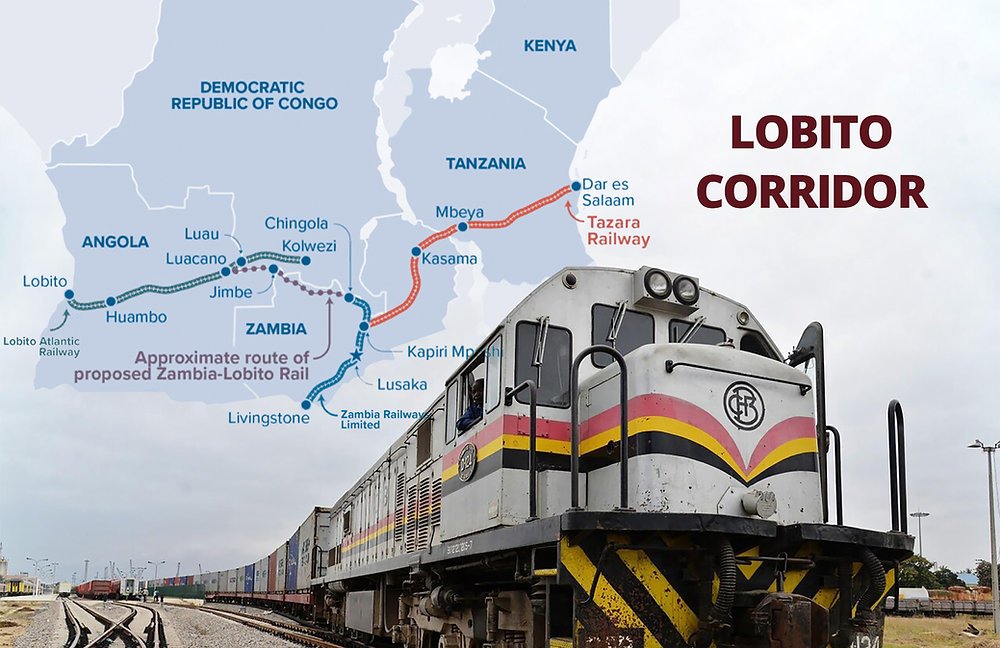
Two announcements nine days apart in July 2026 show where the real competition over Africa's critical minerals has moved. On 3 July, the Africa Finance Corporation closed $753 million in financing, $553 million from the U.S. International Development Finance Corporation and $200 million from the Development Bank of Southern Africa, to rehabilitate the 1,300-kilometre Lobito Corridor railway linking Angola's Atlantic coast to the DRC border. On 10 July, the DRC's cabinet approved a partnership with Portugal's Mota-Engil to fully rehabilitate the Congolese section running through Kolwezi, Tenke and Lubumbashi. Both deals are about moving copper and cobalt, not mining it. A separate setback, Trafigura's mid-July withdrawal from a related power transmission project, shows the same corridor can advance and lose participants simultaneously. For Tanzania, which already moves Zambian Copperbelt minerals to the Indian Ocean via TAZARA and the Port of Dar es Salaam, the pattern raises a direct question about whether more corridors mean more business or more competition.
LOBITO, ANGOLA — Two announcements, nine days apart in July 2026, mark the clearest evidence yet that the contest over Africa's critical minerals has moved from who controls the mines to who controls the routes those minerals travel.
On 3 July, the Africa Finance Corporation announced financial close on a $753 million package to modernise the Lobito Corridor Railway, the line running 1,300 kilometres from Angola's Port of Lobito to Luau on the DRC border. The financing splits into a $553 million, 15-year senior secured loan from the U.S. International Development Finance Corporation and $200 million from the Development Bank of Southern Africa. The concessionaire is Lobito Atlantic Railway, a joint venture between Portuguese construction group Mota-Engil and commodities trader Trafigura.
Nine days later, on 10 July, the DRC's cabinet approved its own half of the same corridor. Congo's government endorsed a public-private partnership with Mota-Engil to undertake what cabinet minutes described as a complete rehabilitation of the railway running from the Angolan border through Kolwezi, Tenke and Lubumbashi, the mining heartland responsible for most of the country's copper and cobalt output. Mota-Engil and the DRC government are now negotiating a 30-year operating agreement. Total U.S. financial commitment to the corridor, spanning a 2025 pledge and current DFC instruments, has reached approximately $4 billion.
What the Financing Actually Buys
The numbers behind the Lobito deal explain why two governments and multiple financiers moved on it within the same two weeks. The rehabilitation is projected to lift the corridor's freight capacity roughly tenfold, from current levels to about 4.6 million tonnes a year, while cutting the cost of moving critical minerals by an estimated 30%. Train frequency is set to rise from 12 to 20 departures a week by 2027. For mining hubs like Kolwezi and Tenke, officials estimate cargo could reach the Atlantic coast at Lobito within five to eight days, against roughly 25 days for the same cargo routed south to the port of Durban.
The DRC has attached specific export targets to that improvement. Over the next five years, the government wants 50% of state-linked copper exports, 30% of cobalt and 90% of zinc routed through the corridor. Separately, Congo is preparing an international tender for the Tenke-Kolwezi-Dilolo section, a project estimated at $400 to $410 million, with major construction expected to begin in the final quarter of 2026.
The strategic logic is explicit on the American side of the financing too. The DRC holds close to 70% of the world's cobalt reserves and overtook Peru in 2023 to become the second-largest copper producer globally, yet Chinese-linked miners including CMOC Group and Zijin Mining Group still account for most of that production. A December 2025 agreement between Washington and Kinshasa gives American investors preferential access to deposits of copper, cobalt, lithium and tantalum, explicitly citing the strategic nature of the Lobito Corridor. The Trump administration has backed Mota-Engil's push to win the DRC rehabilitation contract, and the DFC has issued a letter of interest for up to $1 billion specifically tied to that portion of the work.
The Setback That Shows the Corridor Is More Than One Deal
Not every piece of infrastructure tied to this corridor is moving at the same pace. On 15 July, Reuters reported that Trafigura had withdrawn from a separate, 2,000-megawatt power transmission project designed to carry surplus hydropower from Angola's Lauca and Cambambe dams to mining operations in the DRC and Zambia. The withdrawal ends a non-binding memorandum of understanding Trafigura signed with engineering firm ProMarks and the Angolan government in July 2024. An Angolan government official confirmed the exit and said the project itself continues, with the composition of the consortium under revision rather than abandoned outright.
The gap is not going unfilled. Meridia Energy, a joint venture between Dubai's Averi Finance and Morocco's Somagec, is advancing two competing transmission lines, one linking Malanje in Angola to the DRC's Fungurume mining region, another connecting Soyo in northern Angola to the Inga dam site. A separate, U.S.-based project from HYDRO-LINK, valued at $1.5 billion, plans 1,200 kilometres of transmission infrastructure and five substations serving the Lualaba and Katanga mining provinces, with construction expected to take roughly two and a half years once financing closes. Combined, more than $3.2 billion in competing transmission projects remain in active development across the same corridor. Trafigura, notably, has not exited the corridor itself. It remains a partner in the Lobito Atlantic Railway consortium even as it steps back from the separate power line, evidence that a single company's withdrawal from one layer of a mineral corridor does not signal retreat from the corridor as a whole.
Freight Already Moving, Interrupted by Flooding
The Lobito railway is not a paper project waiting on financing to begin operating. Freight traffic on the existing line resumed in mid-2026 following a roughly two-month closure caused by severe regional flooding in April, with emergency repair works restoring the link before the July financing announcements. The Port of Lobito itself operates a dedicated minerals terminal with a 13.5-metre draft capable of handling Panamax-sized vessels, and current outbound shipments already include copper, cobalt, zinc and lithium, alongside inbound cargo of sulfur, ammonia, reagents and fuel destined for the mining operations upstream.
What This Means for Tanzania
Tanzania is not a bystander to this competition. The China-backed TAZARA railway already connects Zambia's Copperbelt to the Indian Ocean via the Port of Dar es Salaam, giving Tanzania an existing, operational route for the same minerals the Lobito Corridor is now being rehabilitated to capture. Tanzania also holds its own strategic deposits of graphite, nickel and rare earth elements, giving it a mineral-exporter interest in corridor economics that goes beyond transit fees alone.
The emergence of a well-financed, U.S.-backed Atlantic alternative does not necessarily come at Tanzania's expense. Zambia and the DRC, as producers, gain negotiating leverage from having more than one viable export route, and are unlikely to route all output through a single corridor regardless of which one receives the largest headline financing package. For Tanzania as a transit economy, the more relevant question is whether TAZARA's own condition, reliability and freight capacity can compete on cost and speed with a corridor that has just secured $753 million in financing and set a public target of cutting transport costs by 30%. Infrastructure competition of this kind tends to reward the route that is fastest and cheapest at the moment producers are deciding where to ship, not the route with the longer institutional history.
The Larger Pattern
Two deals closing nine days apart, on opposite sides of the same border, financed by different institutions but converging on the same 1,300 kilometres of track, is not a coincidence of timing. It reflects a deliberate, coordinated push by Western development finance to build an alternative to China's two-decade head start in African mineral logistics and refining capacity. Whether that push succeeds will be measured less by financial close announcements than by whether freight volumes, currently transitioning from 12 to 20 trains a week, actually reach the tonnage the corridor was financed to carry, and whether the power, digital tracing, and cross-border customs systems the corridor also depends on keep pace with the railway itself.
FAQ
What exactly closed on 3 July 2026, and what does it fund? The Africa Finance Corporation announced financial close on a $753 million package, $553 million from the U.S. International Development Finance Corporation and $200 million from the Development Bank of Southern Africa, to rehabilitate, modernise and operate the 1,300-kilometre Lobito Corridor railway running from Angola's Port of Lobito to the DRC border.
What did the DRC approve on 10 July, and how does it relate to the Lobito financing? The DRC's cabinet approved a public-private partnership with Portugal's Mota-Engil to fully rehabilitate the Congolese section of the same corridor, the railway running from the Angolan border through the mining hubs of Kolwezi, Tenke and Lubumbashi, with a 30-year operating agreement now under negotiation. It is effectively the Congolese half of the same rehabilitation the Angolan-side financing supports.
Why did Trafigura withdraw from a project connected to the same corridor? Trafigura withdrew from a separate 2,000-megawatt power transmission line intended to carry surplus Angolan hydropower to DRC and Zambian mining operations, a different project from the railway itself. Trafigura remains a partner in the Lobito Atlantic Railway consortium that operates the rail line, so the withdrawal reflects an exit from one specific power project rather than a retreat from the corridor as a whole.
How much cheaper or faster will exporting minerals through Lobito become? Officials project the rehabilitation will cut critical mineral transport costs by roughly 30% and increase freight capacity about tenfold, to around 4.6 million tonnes a year, while cutting the journey from mining hubs like Kolwezi to the Atlantic coast to five to eight days, compared with roughly 25 days via the southern route through Durban.
Does this threaten Tanzania's role as a mineral transit route? Not automatically. Zambia and the DRC, as producers, generally benefit from having more than one viable export corridor, since it strengthens their negotiating position rather than forcing a single choice. Tanzania's TAZARA railway and Port of Dar es Salaam remain an established, operational route to the Indian Ocean, but the Lobito Corridor's new financing and cost targets raise the bar Tanzania's own route now has to compete against on price and reliability.
Why is the United States investing so heavily in this specific railway? The DRC holds an estimated 70% of the world's cobalt reserves and is the world's second-largest copper producer, yet Chinese-linked mining companies dominate much of its current output and China controls much of the global refining capacity for these minerals. U.S. financing of the Lobito Corridor, alongside a December 2025 agreement giving American investors preferential access to Congolese mineral deposits, is aimed at building an alternative supply route to Atlantic and Western markets that does not depend on Chinese-controlled logistics.
 Uchumi360
Business Intelligence
Uchumi360 covers business, investment, and economic policy across East, Central, and Southern Africa.
For the serious reader
You read to the end. That places you in a small group.
Uchumi360 is built for readers who demand precision over speed, structure over sentiment, and analysis that holds uncomfortable conclusions rather than softening them. If this work sharpens how you think about Africa's economy, help us keep building the infrastructure behind it.
Institutional Partners
Commission intelligence. Shape the conversation.
Uchumi360 works with development finance institutions, investment firms, sovereign bodies, and strategic organisations across the coverage region. Institutional partnership unlocks:
- Commissioned sector and country intelligence reports
- Branded research series under your institution's authority
- Exclusive data briefings for internal strategy teams
- Speaking and editorial presence at Uchumi360 events
- Co-published investment outlooks for your markets
Support Our Work
Independent analysis has a cost. Help us bear it.
Uchumi360 does not carry advertising. It does not take editorial direction from sponsors. Every article is produced without commercial compromise. Your contribution funds the reporting, research, and editorial infrastructure that keeps this analysis free from influence.
Secure checkout: One-time and monthly support are processed securely. Add payment credentials to enable checkout here.
Stay Connected
Keep up with every new insight.
Follow our latest analysis, policy coverage, and market intelligence as soon as it is published. If you need something specific, reach out directly and we will point you to the right research.
