
TAZARA Plus: Towards Africa's First Regional Value Chain?
Ready
As the race for critical minerals intensifies among advanced economies, African countries once again sit at the crossroads of this fierce competition. With greater regional coordination, this renewed attention can be turned into an opportunity to advance industrialization through regional value chains. The article explores one such instance with the revival of the TAZARA transport corridor.
Within the 6th phase administration in Tanzania, the government has outlined its intent to champion Africa’s economic liberation. This sentiment has been repeatedly highlighted at various levels domestically and internationally. For instance, at a summit held earlier in 2026, President Samia Suluhu Hassan and the current President of Namibia, Dr. Netumbo Nandi-Ndaitwah stressed that economic liberation is the next frontier in the continent’s political trajectory. Similarly, in a visit to Tanzania, Mozambican Head of State President Chapo outlined the importance of regional integration as a gateway to accelerating economic development and achieving economic freedom. In concert with his counterparts, at the 2026 Indaba Mining Conference in South Africa, President Hakainde Hachilema of Zambia emphasised that the continent cannot continue exporting raw materials and must break free from this centuries-old habit.
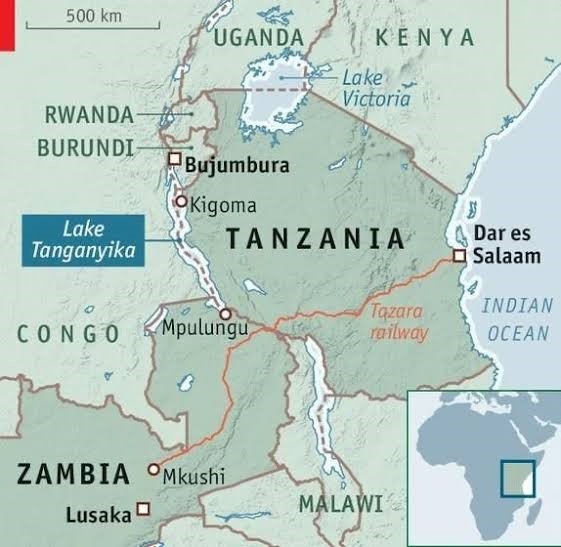
Across the board, there is widespread commitment to turbocharge industrialisation by increasing domestic processing of mineral resources. Translating this political will into tangible gains has often been the more difficult feat. However, as momentum is building in this direction, the prevailing opportunities should also not be wasted. For instance, in partnership with the Chinese government, Tanzania and Zambia have entered into an agreement to overhaul and revamp the 1,860 km long Tanzania-Zambia Railway by significantly expanding its cargo handling capacity (200,000 tonnes to 2.4 million metric tonnes) and modernising its freight and passenger service. Upon completion, the refurbished railway will provide a significantly improved transport corridor and logistical network to countries that hold some of the region’s largest deposits of copper (Zambia), cobalt (Zambia), nickel (Tanzania), manganese (Zambia) and graphite (Tanzania).
The Case for Connecting Tanzania, Zambia and Zimbabwe
Building off of this, a little creative ingenuity of extending the railway just 690 km south to Harare in Zimbabwe could prove transformative. An expanded network in this form will connect to Africa’s largest holder of lithium deposits. Consequently, the interconnected system will then provide a transport route to the central ingredients used in manufacturing lithium ion batteries, a core component of modern electric vehicles. Through leveraging their collective resource endowment, these select countries can then make inroads in advancing the first African regional value chain and build production capabilities in EV batteries.

Extended Map of TAZARA featuring Zimbabwe
As the global economy accelerates its transition away from fossil fuels, electric car batteries have witnessed a surge in worldwide demand. For instance, between 2010 and 2026, the number of electric cars in circulation has increased astronomically from approximately 100,000 to around 80 million. By 2035, estimates point to an increase to approximately 530 million electric cars in circulation, with 30% of new car sales coming from electric vehicles. The downstream implications of such a substantial increase in demand are multifold. Manufacturers of EV batteries will increasingly look to areas where these raw materials can be obtained while also seeking a competitive advantage over rival companies by sourcing finished and semi-finished batteries from locations where they can be produced competitively and at scale. From this standpoint, the resource endowment and geographic positioning of a TAZARA railway that also encompasses Zimbabwe could prove strategic.
Put simply, a railway allows for the efficient movement of goods and labour across dispersed territories. When fully operational, it facilitates the growth and expansion of factories, eases transport costs for workers, improves supply chain connectivity, enables the expansion of tourist attractions, and prompts the development of real estate formations across its network. Cumulatively, it can trigger economic growth in remote regions and, in so doing, also enable the government to realise larger tax revenues.
Economic Synchronization that extends beyond Infrastructure
With respect to a regional value chain, constructing the railway across these three countries would only serve as a meaningful first step. An expanded TAZARA would connect three different countries with their own set of separate fiscal, monetary, and regulatory arrangements alongside external tariff structures.
At the legislative and regulatory level, authorities from the three countries would need to agree on a framework that incentivises cross-border investment and specialisation in the different stages of battery production. For instance, a competitive fiscal regime would constitute a basic revenue-sharing framework across the three countries, incentivise upfront investment and minimise the risk of double taxation that emanates from a manufacturer or supplier operating across more than one country. Similarly, to overcome challenges arising from currency risk, the three sets of authorities would also be tasked with agreeing to a set of acceptable currencies that could be used across the three countries. In concert with these changes are labour mobility guidelines to enable workers involved in different stages of battery production to migrate freely across the three countries with minimal interruption.
Beyond a core regulatory framework, another positive step would encompass agreements on regional specialisation across each of the 4 stages of battery production, namely electrode manufacturing, cell assembly, cell finishing, and finally, pack integration. In other words, each country and sub-region would be allocated a specific task within the battery production value chain and would also be responsible for attracting investments in this specific function. If regions were to agree on specialisation, niche ecosystems could be developed that further enable producers, manufacturers, and customers to take advantage of economies of scale and designated sourcing centres while also overcoming logistical challenges associated with procuring similar items from multiple locations.
From Connectivity to Competitiveness: Tanzania’s Role
Beyond the railway, regional specialisation, and availability of natural resources, Tanzania’s resource endowment and geographic positioning could further improve the overall competitiveness of such a regional value chain. On one hand, the port of Mtwara could be offered as a gateway to provide exclusive access for the export of finished lithium ion batteries. On the other hand, through its state-owned enterprise, the Tanzania Petroleum Development Corporation (TPDC), Tanzania could make use of modern transportation equipment such as cryogenic tanks to transport and sell large quantities of its onshore deposits of natural gas to the different sub-regions that require large amounts of electricity to successfully produce their individual components of lithium-ion batteries. In doing so, the benefits accruing to Tanzania would expand beyond the immediate manufacture of batteries into other aspects such as increased use of the Mtwara Port and windfall revenues from the sale of natural gas across different countries. Both of these initiatives would be significant, as the use of Mtwara as an export hub would reduce the risk of delays sometimes associated with the Dar-es-Salaam port, whereas the sale of natural gas would cheapen the costs of production.
Domestic Reforms for Regional Manufacturing
A regional value chain of this magnitude can ultimately prove pivotal in reshaping the industrial course of countries within this region. Specific country and region level reforms and commitments are needed alongside deliberate investments in industrial infrastructure to turn this proposition into a reality.
Once again, individual countries in their own capacities are moving in this direction. For example, within Zimbabwe, companies involved in lithium mining are banned from exporting raw concentrates and are specifically mandated to produce battery-ready lithium chemicals by 2027. As a result of this key reform, Zimbabwe has realised USD 2.2bn in lithium exports in 2026. Within Tanzania, local content and beneficiation laws, alongside restrictions on the export of raw materials, also compel players within the mining industry to produce battery-ready graphite and nickel. Taken individually, such advancements are indeed commendable efforts to increase domestic processing of mineral resources and capture more value domestically. But ultimately, they only improve the processing of individual elements and components of lithium ion batteries. Joint efforts could see to it that lithium-ion batteries in their entirety are produced along the corridor.
An exhaustive framework would include environmental standards and guidelines for operators, production quotas for the extraction of different mineral resources, unified fiscal incentives alongside revenue sharing agreements for the different countries, prohibitions on exports of raw materials, a specialisation agenda clearly designating regional responsibilities, labour mobility guidelines for workers, and finally, energy transmission and distribution infrastructure alongside gas purchasing agreements for the industrial clusters. Given the breadth and scope of such a framework, it would also need to be reviewed and updated regularly to accommodate for the concerns f of the different stakeholders.

TAZARA with rerouted port access through Mtwara
Branding the TAZARA Gateway
The main intention behind these comprehensive reforms would be to attract and convince players within the value chain to relocate their operations across the corridor. While it may be a tall order to convince established brands to rebase their operations, emphasis could shift to emerging producers looking to gain a competitive advantage over their peers and break into the rapidly emerging industry. The sales pitch behind relocating to TAZARA would centre around expansive access to natural resources, specialisation clusters, premium processing facilities, affordable and reliable energy, and efficient logistics. By positioning itself in this manner, the advantages to establishing operations could outweigh the perceived risk profile.
Finally, since all countries along the railway corridor benefit from tariff free treatment on all goods entering China, the main focus would also shift to ensuring that the finished goods meet the standards set within the vast Chinese consumer market alongside other developed economies.
Beyond Battery Production: Rethinking the Possible
At its initial phase, the main beneficiaries to the project would be restricted to 3 countries. However, as the benefits become more visible, the network could also expand to Mozambique, Malawi, and the DRC, with each holding substantial deposits of graphite, natural gas, cobalt, copper, and lithium.
Successful implementation of a battery belt across TAZARA to other countries would bring enormous benefits to the regions’ industrialization efforts. Manufacturing lithium ion electric batteries could pave the way for other industrial synergies such as data center batteries, smart phone assembly alongside the growth and expansion of a domestic auto industry. For example, within Tanzania, the railway network sits within close proximity to the Mchuchuma Liganga Iron ore deposits under development. As a result there is significant scope to further develop an industrial cluster around vehicle production by transporting natural gas to Mbeya and developing industrial clusters centered on automobile production.

Lithium Ion Batteries in Electric Vehicles
Should the growth of the automobile industry take place, then Tanzania could leverage its participation within the Africa Continental Free Trade Atea (AfCFTA) to ensure that such vehicles are not just produced for the domestic market but also for regional exports to neighboring countries such as Zambia, the DRC, and Rwanda. Consequently, the export market would help improve on the overall quality and standards needed to compete within Africa and eventually other parts of the world.
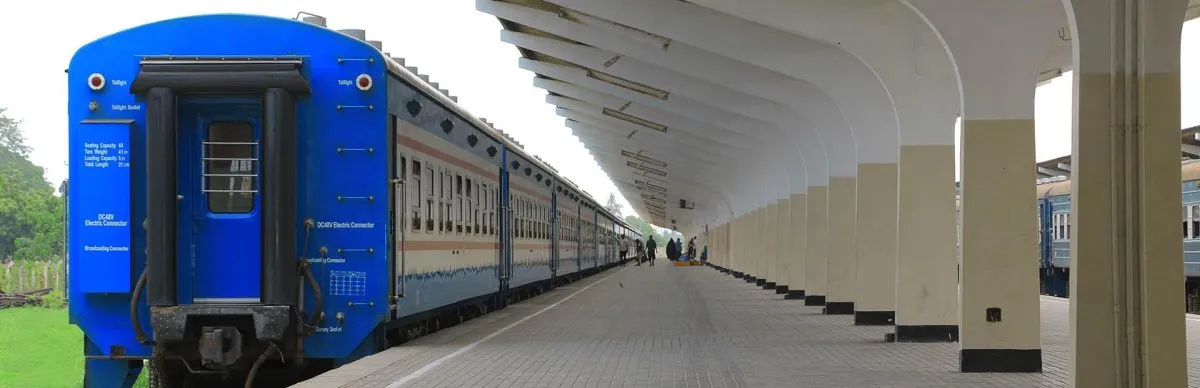
While an expanded network and industrial synergies represent distant extrapolations of a battery belt, they are nonetheless potential prospects. At the very least however, policymakers should firmly engage on the benefits of expanding the railway 690 km south and developing a battery focused regional value chain. Decades from now, one of the worst realities to wake up to is the specter of our mineral deposits and energy reserves fueling the 4th industrial revolution elsewhere while we yet again remain confined as importers of 2nd hand manufactured electric vehicles and finished goods. If concerted efforts are taken now, then a different future is possible. By the time the refurbished 1860km network is completed, a lot of the hard work on the transport corridor would have already been accomplished. Extending it some more and coordinating across countries could help in realizing Africa’s own Mkanda wa Betri.
 Uchumi360
Business Intelligence
Uchumi360 covers business, investment, and economic policy across East, Central, and Southern Africa.
For the serious reader
You read to the end. That places you in a small group.
Uchumi360 is built for readers who demand precision over speed, structure over sentiment, and analysis that holds uncomfortable conclusions rather than softening them. If this work sharpens how you think about Africa's economy, help us keep building the infrastructure behind it.
Institutional Partners
Commission intelligence. Shape the conversation.
Uchumi360 works with development finance institutions, investment firms, sovereign bodies, and strategic organisations across the coverage region. Institutional partnership unlocks:
- Commissioned sector and country intelligence reports
- Branded research series under your institution's authority
- Exclusive data briefings for internal strategy teams
- Speaking and editorial presence at Uchumi360 events
- Co-published investment outlooks for your markets
Support Our Work
Independent analysis has a cost. Help us bear it.
Uchumi360 does not carry advertising. It does not take editorial direction from sponsors. Every article is produced without commercial compromise. Your contribution funds the reporting, research, and editorial infrastructure that keeps this analysis free from influence.
Secure checkout: One-time and monthly support are processed securely. Add payment credentials to enable checkout here.
Stay Connected
Keep up with every new insight.
Follow our latest analysis, policy coverage, and market intelligence as soon as it is published. If you need something specific, reach out directly and we will point you to the right research.
