
What Tanzania Must Do to Catch Up With Kenya, Uganda and Rwanda in Electric Vehicle Adoption
Ready
Kenya sold more than 25,000 electric motorcycles in 2025, Uganda exceeded 30,000, and Rwanda has restricted the registration of new petrol motorcycle taxis in Kigali. Tanzania has a large commercial transport market, expanding electricity generation capacity and growing local interest in electric mobility, but regulatory uncertainty, limited financing and inadequate charging infrastructure continue to constrain adoption. Five coordinated reforms could accelerate the transition, reduce transport operating costs and position Tanzania to attract investment in vehicle assembly, battery services and associated industries.
Tanzania needs a coordinated national electric mobility strategy, predictable vehicle taxation, affordable financing, commercially located charging infrastructure and enforceable battery standards if it intends to catch up with Kenya, Uganda and Rwanda in the adoption of electric vehicles. The country's three East African neighbours have demonstrated how different combinations of government policy, private investment and financing arrangements can accelerate the transition from petrol motorcycles to electric alternatives, particularly among commercial transport operators. Tanzania possesses many of the conditions required for a similar expansion, including a substantial motorcycle and three-wheeler market, growing electricity generation capacity and a network of urban transport operators whose earnings are heavily influenced by petrol and maintenance costs, but its progress has been constrained by the absence of sufficiently coordinated market development arrangements.
The difference is increasingly visible in regional sales figures. According to the International Energy Agency's Global EV Outlook 2026, Uganda sold more than 30,000 electric two-wheelers in 2025, while Kenya recorded sales exceeding 25,000, equivalent to approximately 15% of new motorcycle registrations. Rwanda has pursued a more direct regulatory approach, prohibiting the registration of new petrol powered motorcycle taxis in Kigali since January 2025 while supporting investment in electric alternatives and battery swapping infrastructure. These developments suggest that electric motorcycles are becoming an established commercial transport option in neighbouring markets rather than remaining products associated primarily with environmental demonstrations or small pilot programmes.
Tanzania has begun developing its own electric mobility market, with companies introducing electric motorcycles, three wheelers and charging services, while the government has taken steps to recognise electric vehicles in registration legislation and establish rules for charging infrastructure. In April 2026, the Energy and Water Utilities Regulatory Authority (EWURA) published guidelines for electric vehicle charging stations and battery swapping facilities, while the 2026/27 national budget introduced further tax measures intended to encourage investment in electric mobility. However, the progress has yet to produce commercial expansion comparable with the recent growth recorded in Kenya and Uganda, and operators continue reporting difficulties involving vehicle registration, access to financing, technical support and the development of reliable charging networks.
The economic argument for accelerating adoption has become stronger as Tanzania's transport fuel costs have increased. In November 2026, EWURA set the maximum retail price of petrol in Dar es Salaam at TZS 4,083 per litre, with diesel reaching TZS 4,128. For boda boda riders, bajaji operators and delivery businesses, fuel represents a recurring expense that directly reduces daily earnings. Electric vehicles can offer lower energy and maintenance costs under suitable operating conditions, but those savings are commercially meaningful only when the vehicle can be purchased or financed affordably, operated reliably and serviced without prolonged interruption.
The government's principal opportunity therefore lies in creating conditions under which electric vehicles become economically attractive to transport operators without requiring large public expenditure on vehicle purchases. The experience of neighbouring countries demonstrates that adoption can expand when policy, financing and infrastructure address the commercial problems facing buyers and suppliers. For Tanzania, five reforms deserve priority.
1. Establish a National Electric Mobility Policy and Coordinate Its Implementation
Tanzania's first priority should be the establishment of a comprehensive national electric mobility policy covering vehicle registration, importation, taxation, technical standards, charging infrastructure, battery swapping, financing and public transport operations. The country already possesses several legal and regulatory instruments addressing these activities, but their implementation has developed across different government institutions without a sufficiently clear national framework connecting the responsibilities of each authority.
 The Tanzania Revenue Authority is responsible for customs and taxation, while the Tanzania Bureau of Standards establishes technical requirements for qualifying products. Vehicle registration involves the police and relevant administrative systems, while the Land Transport Regulatory Authority regulates commercial road transport operations. EWURA supervises electricity related services, including the new charging and battery swapping guidelines, and TANESCO is responsible for electricity supply and connections within its operating mandate. Local government authorities also influence the availability of land, business licences and locations suitable for charging facilities. These institutions each perform legitimate regulatory functions, but electric mobility investors require clarity on how their requirements fit together.
Research published by the Africa E Mobility Alliance on barriers to electric mobility in Tanzania identifies uncertainty surrounding registration, customs treatment and the interpretation of existing rules as constraints affecting electric vehicle businesses. The report documents cases in which companies struggled to understand applicable import charges or obtain registration for electric motorcycles and three wheelers, while also identifying inadequate coordination between authorities. The findings are consistent with reporting by The Citizen in February 2026, which described electric vehicles operating without registration despite existing legislation recognising electric motorcycles and bajajis.
A national policy could address these problems by establishing a standard classification system for electric vehicles and their components, clarifying registration and insurance requirements, defining acceptable battery and charging technologies, and assigning implementation responsibilities to specific institutions. It should also provide a clear process through which manufacturers, assemblers, importers and charging operators can obtain approvals without navigating conflicting administrative interpretations.
The distinction between establishing regulations and enforcing them consistently is relevant. Tanzania's 2026/27 budget and EWURA's April guidelines indicate that the country has already begun introducing important measures, but investors need assurance that the applicable requirements will remain clear and predictable. A manufacturer importing electric motorcycle components must be able to estimate duties and fees before ordering equipment, while a lender must know whether the completed vehicle can be registered, insured and legally operated. Uncertainty at either stage can prevent investment from proceeding.
Kenya provides a useful institutional comparison. Its government officially launched a National Electric Mobility Policy on February 3, 2026, establishing a framework for vehicle adoption, infrastructure, financing, manufacturing and coordination between public authorities and investors. Although commercial electric motorcycle adoption in Kenya had already begun expanding before the formal launch, the policy provides a basis for organising subsequent investment and regulatory decisions. Tanzania could adopt a similar approach while ensuring that its strategy is adapted to domestic transport patterns, existing laws and the country's electricity and natural gas resources.
The policy should also establish measurable implementation targets. These could include the number of commercially registered electric motorcycles, approved charging and swapping facilities, investment commitments realised, average registration processing times and the proportion of vehicles meeting applicable safety requirements. Publishing regular progress reports would allow businesses and policymakers to assess whether reforms are producing greater adoption rather than merely increasing the number of policy documents issued.
2. Make Vehicle Importation and Assembly Costs Predictable
The second priority should be a transparent and predictable tax framework for qualifying electric vehicles, batteries, charging equipment and components used in local assembly. High import costs can substantially increase the selling price of an electric motorcycle or three wheeler, making it difficult for buyers to justify switching even where electricity and maintenance expenses would be lower over the vehicle's useful life. Uncertainty about customs classifications and applicable duties creates additional difficulties because companies cannot establish reliable prices or financing arrangements without knowing the total cost of bringing vehicles and components into Tanzania.
The government has already taken steps in this direction. In its 2026/27 budget speech, the Ministry of Finance proposed value added tax relief for qualifying electric vehicle charging equipment and import duty concessions for selected electric vehicle components. The measures recognise the potential contribution of electric transport to reducing petroleum consumption and supporting domestic manufacturing. However, the relevant rates, eligibility requirements and administrative procedures must be consistently applied under the final enacted provisions and implementing regulations if investors are to benefit from them.
A more effective framework would distinguish between vehicles imported fully assembled, components intended for local assembly, batteries, charging equipment and replacement parts. Each category has different economic implications. Reducing import costs on a completed motorcycle can make adoption more affordable in the immediate term, while carefully structured concessions for components and machinery can support local assembly and related employment. Preferential treatment should nevertheless be designed around realistic production capabilities rather than assuming that local assembly automatically creates substantial domestic industrial value.
The incentives should also be time limited, transparent and linked to measurable outcomes. Indefinite tax exemptions can create fiscal costs without guaranteeing that savings are passed on to consumers or that domestic industries become commercially competitive. The government could establish a defined period of preferential treatment, review adoption and investment annually, and adjust the framework according to evidence concerning vehicle registrations, realised investment, employment and tax revenue.
Consumer protection should remain part of the arrangement. Vehicles receiving favourable tax treatment should comply with appropriate safety and quality standards, while batteries and charging equipment should meet requirements governing electrical safety, performance and environmental management. Without such safeguards, a market can expand through inexpensive but unreliable products that ultimately reduce public confidence in electric mobility.
The purpose of tax reform should be to reduce legitimate barriers to investment and adoption while protecting public finances. A predictable tax system is likely to be more useful to an investor than concessions that are generous on paper but difficult to access or subject to inconsistent interpretation.
3. Make Electric Motorcycles and Bajajis Affordable Through Asset Financing
Financing is likely to determine how quickly ordinary Tanzanians adopt electric vehicles. Commercial motorcycle operators may recognise that an electric motorcycle consumes less expensive energy and requires fewer routine engine related repairs than a petrol model, but those benefits provide little immediate value if the purchase price exceeds their available savings or if suitable credit is unavailable. Many boda boda riders and bajaji operators rely on daily earnings, making it difficult to qualify for conventional bank loans requiring collateral, formal salary records or substantial deposits.
Tanzania could accelerate adoption by attracting commercial banks, microfinance institutions, specialised asset financing companies and vehicle suppliers into arrangements designed around the earnings of transport operators. Under such models, buyers could obtain approved electric motorcycles through affordable deposits and daily or weekly repayments, while suppliers provide maintenance, battery access and technical support. Financing terms would need to reflect the actual commercial performance of vehicles, including the distance travelled, energy costs, maintenance requirements and expected earnings of operators.
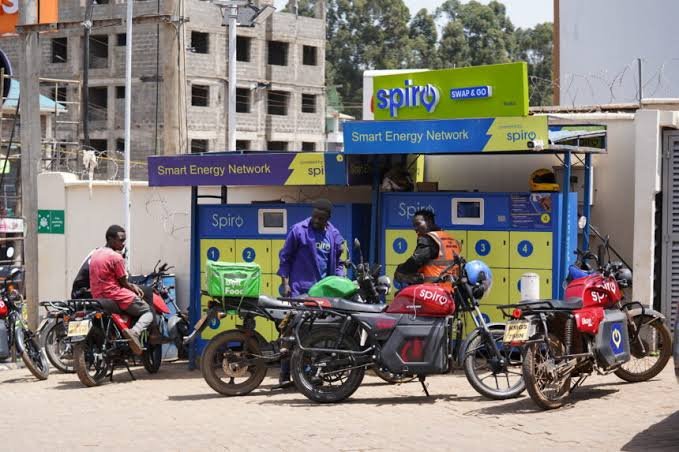
Kenya and Uganda demonstrate how these arrangements can support commercial adoption. Companies operating in their electric motorcycle markets have developed financing models that separate the cost of the vehicle from access to its battery or allow riders to repay vehicle financing through instalments linked to their income. Battery swapping services can reduce the need for riders to purchase the full battery system upfront, although the economics depend on the charges applied and the availability of swapping stations along operating routes.
The relevant financial comparison concerns the total cost of operating an electric motorcycle against a comparable petrol motorcycle. A rider considering a switch needs to account for the vehicle's purchase price, financing charges, electricity or battery swapping expenses, insurance, registration, maintenance, depreciation and expected resale value. Lower energy expenditure may provide a substantial advantage, but that advantage can disappear if loan repayments are excessive, batteries must be replaced unexpectedly or charging interruptions reduce the number of hours available for earning income.
Financial institutions also require mechanisms to manage their risks. Electric motorcycle lending is still relatively new in Tanzania, and lenders may have limited information about battery life, resale prices, maintenance costs and vehicle recovery procedures. Partnerships with established manufacturers and distributors could provide warranties, servicing agreements and arrangements for recovering and remarketing vehicles where borrowers default. The availability of reliable operational data would allow lenders to develop repayment models based on actual experience rather than assumptions imported from other markets.
Government intervention could help where clear market failures exist, particularly through limited credit guarantees, technical assistance or financing arrangements developed with specialised institutions. However, direct public subsidies should be carefully assessed because they can become expensive if vehicle demand depends on continuing government support. The objective should be to make electric mobility commercially financeable, allowing lenders and suppliers to expand adoption through ordinary market transactions.
The initial focus should be commercial transport rather than privately owned electric cars. A boda boda rider travelling substantial distances daily has a stronger financial incentive to reduce energy and maintenance costs than a household using a private car occasionally. Financing products designed for these operators could therefore generate faster adoption while producing more immediately measurable economic benefits.
4. Build Charging and Battery Swapping Infrastructure Where Commercial Demand Already Exists
Tanzania's fourth priority should be the development of charging and battery swapping infrastructure around established transport demand rather than the indiscriminate construction of facilities across the country. Electric vehicle adoption depends on whether operators can obtain sufficient energy to complete their working day, and commercial transport businesses are particularly sensitive to charging time because every hour spent waiting can represent lost income.
Battery swapping provides an attractive option for motorcycles and some three wheelers because it allows operators to exchange depleted batteries for charged units within a short period. However, the commercial viability of a swapping network depends on a sufficient number of compatible vehicles using its services. Stations require investment in batteries, charging equipment, premises, electricity connections, staffing and maintenance, all of which must be recovered through revenue from users. Establishing stations before demand exists can produce underused assets, while introducing large numbers of vehicles without adequate infrastructure can reduce reliability and discourage customers.
The World Bank's September 2026 assessment of Uganda's electric mobility market illustrates the potential scale of this approach. Uganda's battery swapping network expanded from approximately 150 stations in mid 2024 to more than 350 by late 2025, supporting growing fleets of commercial electric motorcycles. The Bank also warned that large scale adoption would require investment in electricity distribution, improved charging coordination and financing arrangements capable of supporting both vehicles and infrastructure.
Tanzania could begin by identifying commercially suitable locations in Dar es Salaam, where motorcycle taxis, bajajis and delivery vehicles operate across established routes connecting residential areas, commercial centres and transport terminals. Potential pilot corridors could include Kariakoo, Mbagala, Temeke, Ubungo, Kimara, Tegeta, Mbezi and other locations where verified demand is sufficient to support charging or battery swapping businesses. These areas should be evaluated through actual rider movements, existing vehicle concentrations and electricity network conditions rather than selected merely because they are prominent urban locations.
TANESCO and private charging operators would need to assess the electricity capacity available at potential sites, the cost of new connections and the effects of concentrated charging demand on local distribution networks. EWURA's charging and battery swapping guidelines provide an initial regulatory foundation, but operators also need predictable tariff arrangements and connection procedures that allow them to estimate costs and determine the financial viability of their businesses.
The appropriate infrastructure model will differ according to vehicle type. Commercial motorcycles may benefit most from battery swapping, while private cars and some three wheelers could use slower charging at homes, workplaces or commercial premises. Electric buses are more likely to require depot charging arrangements designed around fleet schedules, route lengths and electricity demand. A national strategy should recognise these differences rather than applying a single charging model to every vehicle category.
After initial commercial networks have demonstrated reliable operation, expansion could proceed to Dodoma, Arusha, Mwanza, Mbeya, Morogoro and other urban centres according to verified demand. This approach would allow investors to learn from operational experience, identify commercially viable locations and avoid committing substantial capital to infrastructure whose utilisation remains uncertain.
5. Establish Battery Standards, Warranties, Maintenance and Recycling Requirements
Battery reliability represents one of the largest financial and technical risks confronting electric vehicle buyers. A conventional petrol motorcycle has a relatively familiar maintenance system, with widespread availability of mechanics, spare parts and established resale markets. Electric motorcycles introduce different requirements involving batteries, controllers, electrical systems, charging equipment and specialised diagnostic tools. Buyers may hesitate to adopt vehicles if they are uncertain about battery lifespan, the cost of replacement, access to repairs or the possibility of reselling a vehicle after several years of use.
Tanzania should establish enforceable technical standards for electric vehicles and batteries, including electrical safety, battery management systems, charging compatibility, performance testing and the information manufacturers must provide to consumers. These requirements should be applied consistently to imported vehicles, locally assembled products and replacement components, with responsibilities clearly divided between TBS, relevant transport regulators, EWURA and other institutions.
Battery warranties are particularly relevant because a battery can represent a substantial portion of the total cost of an electric motorcycle. Buyers need clear information about the expected lifespan of a battery, the conditions under which performance is guaranteed and the obligations of suppliers when a product fails. Where batteries are supplied through subscription or swapping arrangements, contracts should explain who owns the battery, who pays for replacement, the circumstances in which users may incur additional charges and what happens when the service is interrupted.
The development of trained technicians is equally necessary. Electric vehicle suppliers should be encouraged to establish certified maintenance facilities and provide training for mechanics, electricians and technical personnel. Technical and vocational institutions could introduce relevant modules involving electric drivetrains, battery diagnostics, charging safety and vehicle maintenance, particularly in cities where electric mobility businesses are developing.
Environmental management must also be addressed before battery deployment reaches substantial scale. Batteries eventually require replacement, refurbishment, recycling or safe disposal, and poorly managed waste can create environmental and public health risks. Requirements governing battery tracking, collection, storage and recycling would help prevent the accumulation of damaged or discarded batteries while supporting the development of specialised recycling and waste management services.
The policy should also address battery compatibility and competition. Where each supplier operates a completely incompatible battery swapping system, riders may become dependent on a single company and its pricing arrangements. Some degree of standardisation or interoperability could improve market flexibility, although compulsory technical uniformity should be introduced only after assessing the cost, safety and commercial implications. The objective should be to protect users and encourage competition without preventing manufacturers from developing better technologies.
What Tanzania Can Learn From Kenya, Uganda and Rwanda
The three neighbouring countries have pursued different approaches to electric mobility, but their experiences provide evidence that commercial adoption can accelerate when government policies and private investment address specific market constraints.
| Country | Verified development | Main lesson for Tanzania |
| Kenya | More than 25,000 electric two wheelers sold in 2025; national electric mobility policy launched in February 2026 | Combine financing, commercial vehicle supply and coordinated regulation |
| Uganda | More than 30,000 electric two wheelers sold in 2025; over 350 battery swapping stations by late 2025 | Build charging services around commercial riders and actual demand |
| Rwanda | Registration of new petrol motorcycle taxis in Kigali restricted since January 2025 | Clear regulation can create demand, but affordability and supply must be addressed |
| Tanzania | Electric vehicle registration provisions, emerging operators and EWURA charging guidelines issued in April 2026 | Improve implementation, financing and infrastructure coordination |
Sources: International Energy Agency, Global EV Outlook 2026; World Bank Uganda Electric Mobility Assessment, September 2026; Rwanda Parliament, January 2025; EWURA, April 2026. Figures for Kenya and Uganda refer to annual sales, while Uganda's swapping station figure is an infrastructure count. They are not directly comparable measures of total national EV fleets.
Kenya demonstrates the importance of an emerging commercial industry supported by lenders, motorcycle suppliers and charging operators. Its growth began before the formal adoption of a comprehensive national policy, suggesting that private investment and customer demand can develop even when regulation is still evolving. The government's subsequent policy framework creates an opportunity to address remaining institutional and infrastructure constraints while supporting continued market expansion.
Uganda's experience places greater emphasis on battery swapping and the development of supporting electricity infrastructure. The country's rapid growth in electric motorcycle sales shows that commercial operators can adopt the technology when vehicles and energy services become accessible. However, the World Bank's assessment also demonstrates that expansion introduces new challenges involving electricity distribution, charging demand, access to finance and the cost of maintaining service networks.
Rwanda offers a different lesson through targeted regulation. By restricting new petrol motorcycle taxi registrations in Kigali, the government created a defined policy direction for commercial electric motorcycles. The measure applies specifically to new entrants in the capital's motorcycle taxi market and does not amount to a nationwide ban on existing petrol motorcycles. It also creates responsibilities for ensuring that affordable electric alternatives, financing and charging services are available, particularly for operators who might otherwise be excluded from entering the market.
Tanzania can draw from all three experiences without copying their policies in full. Its larger geography, substantial motorcycle and three wheeler markets, growing electricity system and existing compressed natural gas programme create different commercial conditions. A targeted approach that initially supports voluntary adoption through lower operating costs and affordable financing may therefore be more appropriate than an immediate nationwide prohibition on petrol motorcycles.
Tanzania Should Begin With Vehicles That Generate Income
The most commercially attractive opportunity for accelerating electric mobility in Tanzania is likely to be among people who depend on vehicles for their livelihoods. Boda boda riders, bajaji owners, delivery operators and organised passenger transport fleets generally use their vehicles more frequently than private car owners, making energy and maintenance costs a more substantial part of their financial calculations. Where electric alternatives can reduce these expenses without increasing downtime or financing burdens, adoption can provide an immediate economic benefit.
Dar es Salaam offers a suitable initial market because of its large population, substantial daily transport demand and existing commercial vehicle networks. A pilot programme could involve electric motorcycles and bajajis operating along selected routes, supported by financing providers, vehicle suppliers and charging operators. The programme should measure daily distance travelled, energy consumption, operating costs, maintenance requirements, rider earnings and the reliability of charging or swapping facilities.
The results would provide evidence on whether electric vehicles are genuinely more affordable under Tanzanian operating conditions. They would also help lenders estimate financing risk, electricity utilities plan infrastructure and government institutions identify regulatory problems requiring correction. A pilot based on actual commercial operations would provide more useful information than demonstrations involving vehicles that operate only occasionally.
The same approach could support organised bus fleets where financing, routes and depot operations are sufficiently predictable. Zanzibar's electric bus programme provides an existing Tanzanian example of institutional investment in electric public transport, although its operating conditions differ from those of mainland cities. Lessons concerning fleet management, electricity supply, vehicle maintenance and passenger demand could inform future deployments in Dar es Salaam, Dodoma and other urban centres.
A Practical Two Year Programme Could Establish the Market's Foundations
Tanzania could organise the proposed reforms through a two year implementation programme involving the Ministry of Transport, Ministry of Energy, Ministry of Finance, relevant regulators, financial institutions and private electric mobility companies. The programme would need a designated coordinating institution with responsibility for monitoring progress, resolving regulatory conflicts and publishing results.
During the first six months, the government could consolidate existing electric vehicle regulations, publish standard registration and tax procedures, establish requirements for batteries and charging equipment, and identify commercially suitable pilot locations. Consultations with operators, lenders, manufacturers and technical institutions would help determine which problems are preventing investment and which can be resolved through administrative changes rather than new legislation.
The following six to twelve months could concentrate on commercial financing arrangements and the expansion of battery swapping and charging services in selected Dar es Salaam corridors. Financial institutions and suppliers could develop repayment products based on verified operating costs, while TANESCO and charging operators assess electricity requirements and connection procedures. Training for technicians and the implementation of warranty requirements should proceed alongside vehicle deployment to avoid creating fleets without adequate maintenance support.
The second year could focus on evaluating the commercial results and expanding successful models to additional urban centres. Progress should be assessed using the number of registered electric vehicles operating commercially, the cost of ownership compared with petrol alternatives, charging and swapping reliability, realised investment, actual jobs created and the performance of financing arrangements. Such evidence would provide a basis for adjusting incentives and deciding whether further policy interventions are justified.
The programme would not require the government to finance the purchase of every electric vehicle. Public institutions would primarily provide regulatory clarity, infrastructure coordination, consumer protection and carefully assessed financial support where commercial financing remains unavailable. Vehicle suppliers, transport operators, investors and lenders would remain responsible for most commercial decisions and expenditure.
Electric Mobility Must Become an Economically Attractive Choice
Tanzania's slower adoption of electric mobility reflects constraints that are increasingly identifiable and capable of being addressed through coordinated policy and investment. Kenya, Uganda and Rwanda have demonstrated that electric motorcycles can develop into a commercial transport market when vehicles are available, financing is accessible and charging services are sufficiently reliable. Tanzania has introduced relevant tax and regulatory measures, but a more coordinated national approach is required to connect those instruments with the conditions facing buyers, suppliers and investors.
The economic opportunity extends beyond reducing vehicle emissions. Greater use of electricity in transport could reduce demand for imported petrol, create opportunities for vehicle assembly and maintenance, support battery and charging businesses, and lower operating costs for transport workers where the technology is commercially appropriate. These potential benefits require careful assessment against infrastructure expenditure, financing costs, the environmental management of batteries and the need to maintain reliable electricity services.
The country's existing natural gas transport programme should also be considered within the wider strategy. Compressed natural gas and electric vehicles can serve different categories of transport users, and the availability of domestic gas does not eliminate the commercial potential of electric motorcycles, bajajis or buses. An effective transport energy policy would allow different technologies to compete according to operating costs, reliability and the requirements of specific users.
The most important test is whether an ordinary commercial transport operator can obtain an electric vehicle, finance it affordably, complete a normal working day and retain more income after all operating expenses than would be possible with a comparable petrol vehicle. When that condition is met consistently, adoption can expand through the decisions of businesses and consumers rather than depending primarily on government campaigns or subsidies.
Tanzania already possesses a substantial potential market. The reforms required to unlock it concern the institutions, financial arrangements and infrastructure that determine whether electric mobility becomes a practical and competitive option for the people who use transport to earn a living.
Research Sources
- International Energy Agency, Global EV Outlook 2026: Trends in Other EV Modes. Electric motorcycle sales and regional market developments.
- World Bank, The Battery Under the Seat: How Uganda Is Gearing Up for Electric Mobility at Scale, September 21, 2026. Battery swapping networks, financing and electricity infrastructure.
- Kenya Ministry of Roads and Transport, National Electric Mobility Policy, February 3, 2026. Kenya's electric mobility regulatory framework.
- Parliament of Rwanda, Government Explanation of the Restriction on New Petrol Motorcycle Taxi Registrations, January 2025.
- Africa E Mobility Alliance, Barriers and Solutions for Electric Mobility in Tanzania. Industry research on registration, financing, standards and policy coordination.
- EWURA, Electricity Regulatory Tools and Electric Mobility Charging Guidelines, April 2026.
- Tanzania Ministry of Finance, 2026/27 Government Budget Speech. Proposed tax measures supporting electric mobility and charging equipment.
- The Citizen, Weak Enforcement Fuels Surge in Unregistered Electric Vehicles, February 10, 2026.
 Uchumi360
Business Intelligence
Uchumi360 covers business, investment, and economic policy across East, Central, and Southern Africa.
For the serious reader
You read to the end. That places you in a small group.
Uchumi360 is built for readers who demand precision over speed, structure over sentiment, and analysis that holds uncomfortable conclusions rather than softening them. If this work sharpens how you think about Africa's economy, help us keep building the infrastructure behind it.
Institutional Partners
Commission intelligence. Shape the conversation.
Uchumi360 works with development finance institutions, investment firms, sovereign bodies, and strategic organisations across the coverage region. Institutional partnership unlocks:
- Commissioned sector and country intelligence reports
- Branded research series under your institution's authority
- Exclusive data briefings for internal strategy teams
- Speaking and editorial presence at Uchumi360 events
- Co-published investment outlooks for your markets
Support Our Work
Independent analysis has a cost. Help us bear it.
Uchumi360 does not carry advertising. It does not take editorial direction from sponsors. Every article is produced without commercial compromise. Your contribution funds the reporting, research, and editorial infrastructure that keeps this analysis free from influence.
Secure checkout: One-time and monthly support are processed securely. Add payment credentials to enable checkout here.
Stay Connected
Keep up with every new insight.
Follow our latest analysis, policy coverage, and market intelligence as soon as it is published. If you need something specific, reach out directly and we will point you to the right research.
