

Tanzania’s Urban Housing Crunch: Why Residential and Commercial Real Estate Is Becoming a Strategic Investment Priority
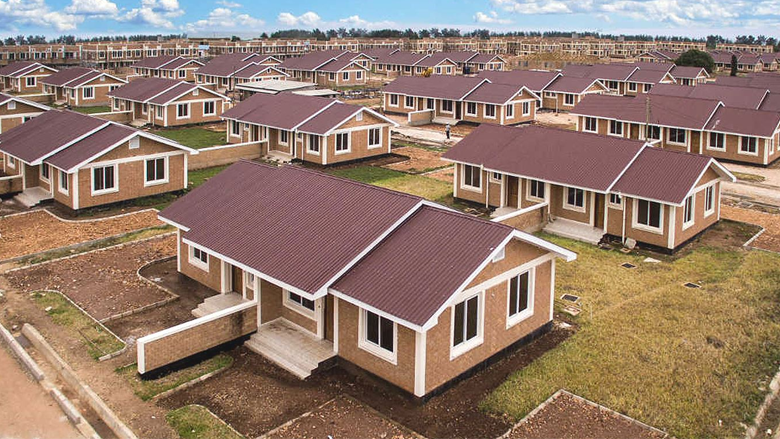
Tanzania’s major cities are facing an acute housing and office-space shortage driven by rapid population growth, expanding urban economies and the relocation of government functions to Dodoma. Demand for modern residential units, commercial buildings and hospitality facilities is rising faster than supply. With joint venture opportunities through NHC, TBA and private developers, investors are positioned to fill a structural gap in one of East Africa’s fastest-growing real estate markets.
Tanzania’s property market is entering a pressure phase that few investors can afford to ignore. The country’s rapid population growth, expanding urban economies and accelerating government relocation to Dodoma have created a structural shortage of both residential and commercial accommodation. This is no longer a cyclical mismatch. It is a long-term supply deficit driven by macroeconomic shifts, infrastructure investments and demographic momentum.
The numbers behind the trend speak for themselves. Tanzania’s population has reached approximately 60 million and continues to grow at 2.7 percent annually, one of the fastest rates in Africa. Urbanisation is rising even faster. Dar es Salaam, already among the continent’s fastest-growing cities, is absorbing new residents at a pace well beyond existing housing stock. Dodoma, now the country’s administrative capital, is experiencing an even sharper spike. The relocation of central government functions has triggered a surge in demand for modern residential units, offices, hotels and serviced apartments.
In both cities, the market imbalance is evident. Supply pipelines remain thin compared to the volume of incoming residents and businesses. Public sector expansion, private sector growth and increased diplomatic presence have all intensified the need for high-quality accommodation. The result is a rental and purchase market that consistently operates near full absorption, especially for properties that meet international standards. For investors, this creates an opportunity anchored not in speculation, but in structural demand.
Institutional partnerships are emerging as a strategic route into the sector. The National Housing Corporation and the Tanzania Building Agency control extensive land banks and possess established development frameworks, yet their capacity to deliver at the scale required is limited. Joint ventures offer a clear path for private capital to access prime land while leveraging existing regulatory and planning structures. These partnerships reduce entry friction, accelerate project approvals and create room for large-scale residential estates, mixed-use developments and commercial towers.
Beyond Dar es Salaam and Dodoma, similar dynamics are unfolding in secondary cities. Mwanza, Arusha and Mbeya are expanding on the back of industrial growth, logistics corridors and rising consumer markets. Demand for modern housing is no longer confined to expatriates or high-income earners. A growing middle class is reshaping the residential landscape, with rising expectations for gated communities, affordable condos, serviced apartments and retail-integrated neighborhoods. Developers who can offer modern, well-designed units at competitive price points are positioned to dominate a market in transition.
The commercial side of the equation is just as compelling. Office space that meets contemporary standards is limited in both major cities. As financial services, NGOs, consulting firms and regional corporations expand their footprint, they need facilities that offer reliable utilities, ICT infrastructure, security and proximity to administrative centers. Dodoma, in particular, is experiencing a surge in demand for such properties as ministries, agencies and private enterprises cluster around the growing political capital.
Hotel and hospitality facilities face the same pressures. Administrative travel, conferences, diplomatic events and private sector engagements have outpaced the available stock of high-quality accommodation in Dodoma. Modern hotels, serviced apartments and conference properties remain a scarce but essential asset class.
The investment case is reinforced by macro trends: a young population, rising incomes, sustained economic growth and heavy infrastructure spending in roads, energy and public services. These fundamentals point to a market that will expand steadily over the next decade. Housing deficits of this scale are rarely short-lived; they require years of supply-side investment to correct.
For investors, the opportunity is clear. Tanzania’s real estate sector is not an overheated bubble waiting to cool. It is an economy outgrowing its built environment. The mismatch between population growth, administrative relocation and existing stock has created a long-term accommodation gap that can only be closed by sustained development.
Residential estates, mixed-use commercial projects, modern office towers and hospitality facilities are all positioned for strong absorption. Joint ventures with national housing institutions reduce entry risk and accelerate project timelines. Private developers who move early will shape the next phase of Tanzania’s urban landscape.
In a market where demographic pressure and economic expansion run ahead of construction capacity, the question is no longer whether demand exists. It is who will build fast enough, and at scale to meet it.