
Aliko Dangote Has Named the Ten Most Promising African Countries for Investment. Tanzania, Kenya, Rwanda, and Ethiopia Made the List.
Ready
In a podcast conversation with Nicolai Tangen of Norges Bank Investment Management, Aliko Dangote named more than ten African countries he considers the most promising investment destinations: Nigeria, Ethiopia, Kenya, Tanzania, Rwanda, Egypt, Algeria, Ghana, Côte d'Ivoire, Guinea, and others he described as part of a group of more than ten very good countries where serious capital can deploy productively. Dangote's assessment is grounded in four decades of operating industrial businesses across the continent, a USD 45 billion capital deployment plan through 2030, and the direct commercial experience of navigating investment environments across 17 African countries whose differences in governance quality, infrastructure development, market size, and policy consistency have shaped his portfolio decisions across cement, refining, fertiliser, petrochemicals, and port infrastructure. This article reports the full list, situates each country within its regional economic context and the Uchumi360 coverage geography, and identifies what Dangote's practitioner assessment reveals about the investment conditions whose presence across East, West, and North Africa his list reflects.Dangote's list is not a ranking. It is a practitioner's verdict on which African markets have built enough of the conditions that industrial investment requires to justify committing serious capital. That verdict, from the man planning to spend USD 45 billion across Africa by 2030, deserves more analytical attention than most investment climate indices receive
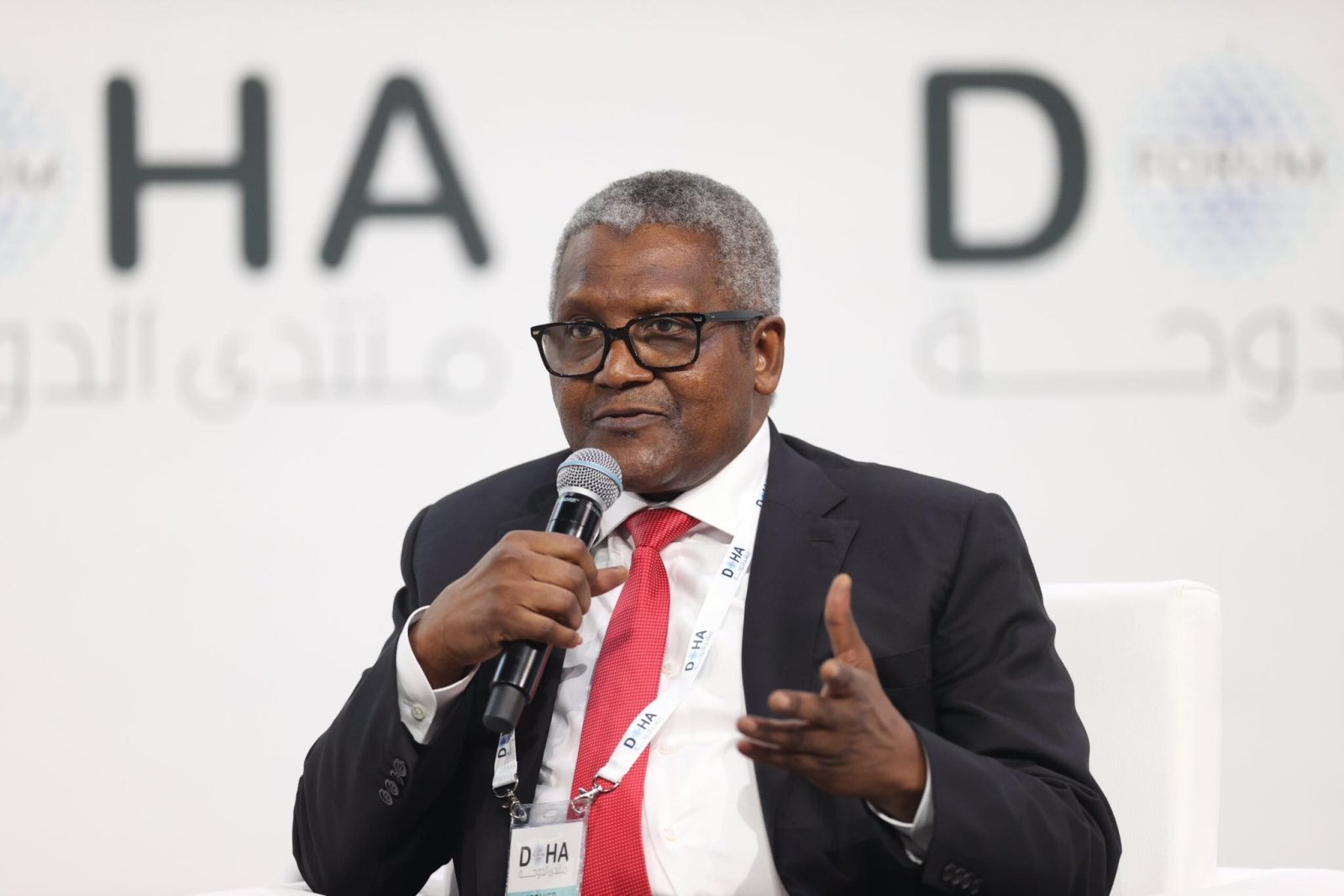
Aliko Dangote was asked a direct question in a conversation with Nicolai Tangen, CEO of Norges Bank Investment Management, for the In Good Company podcast: which African countries are the most promising for investment?
He did not hedge.
"The promising countries: Nigeria, Ethiopia, Kenya, Tanzania, Rwanda — it's small but it's very, very promising. You have Egypt is promising. Algeria is also promising, even though they are not very open. So there are more than ten very good countries in Africa that you can go and invest. Ghana is doing extremely well. Côte d'Ivoire, which is in West Africa, they are doing extremely very well. Even in Guinea today, you look at the mines that was just opened by Rio Tinto which cost over USD 20 billion. So people are coming in now, they realize that yes, Africa is open for business."
The list carries weight that no consulting firm's ranking or development institution's investment climate report can replicate. Dangote is not assessing these countries from the outside. He has built cement factories, refineries, fertiliser plants, petrochemical facilities, and port infrastructure across 18 businesses in 17 African countries using his own capital, his own operational teams, and his own balance sheet. His assessment of which markets are promising is the judgment of a practitioner who has operated in most of them, not an analyst who has studied them from abroad.
The Dangote Group is currently deploying USD 45 billion in capital across Africa through 2030 in refining, fertiliser, petrochemicals, LNG, cement, and port infrastructure. When the man making those commitments names the countries where he sees the most promise, the list is worth examining country by country.
1. Nigeria
Nigeria leads the list as the country Dangote knows most intimately and whose industrial transformation his group has done more to advance than any other private actor on the continent. The USD 20 billion Dangote Refinery, now processing crude at 650,000 barrels per day and beginning to export petroleum products to East Africa and other African markets, has transformed Nigeria's petroleum product economics and displaced the import mafia whose billion-dollar subsidy economics it was designed to disrupt. Nigeria is Africa's largest economy by GDP and most populous nation, with a domestic market whose scale justifies the industrial investment that smaller markets cannot commercially support at equivalent returns. Dangote's assessment of Nigeria as the continent's most promising investment destination reflects the same logic he has applied throughout his career: large domestic demand for basic goods whose domestic production is more commercially rational than continued importation.
2. Ethiopia
Ethiopia's inclusion reflects several converging factors whose combination Dangote identified in his conversation with Tangen. Ethiopia is Africa's second most populous country and among its fastest-growing economies, with infrastructure investment, manufacturing park development at Hawassa and successor facilities, and government commitment to industrialisation creating the enabling conditions that large-scale industrial investment requires. Dangote's group operates cement manufacturing in Ethiopia, taking advantage of the government's electricity pricing support that reduced production costs significantly and enabled competitive regional pricing. Ethiopia's demographic scale, whose working-age population growth makes it one of the continent's most significant labour markets for manufacturing employment, is the long-run investment rationale that its current political economy disruption has complicated but not eliminated.
3. Kenya
Kenya's inclusion reflects its position as East Africa's most commercially sophisticated economy, with the deepest financial markets, the most developed private sector, the strongest regional aviation connectivity, and the most established logistics and services infrastructure in the coverage region. According to Kenya National Bureau of Statistics economic data, Kenya's GDP per capita and private sector depth make it the region's most commercially attractive market for consumer goods, financial services, and industrial investment that requires sophisticated supply chain management. Dangote's group has active cement operations in Kenya, and his broader assessment of Kenya as a promising market reflects the combination of market size, institutional quality, and infrastructure development that the country offers relative to regional peers. President Ruto's April 2026 announcement of the joint East African refinery project, in which Dangote is a central figure, confirms that the Kenya-Dangote commercial relationship extends well beyond cement into the energy infrastructure whose development is the most consequential industrial investment in the region's current economic cycle.
4. Tanzania
Tanzania's inclusion on Dangote's list is particularly significant given the week in which the conversation was published. On 16 May 2026, Dangote met President Samia Suluhu Hassan at State House in Dar es Salaam, with Tanzania's State House confirming through official photographs and statements that discussions covered the possibility of Dangote Group partnering with the government of Tanzania in implementing a crude oil refinery project estimated to cost approximately USD 17 billion that would serve East African countries and Ethiopia. Dangote also commended President Samia for personally intervening to resolve challenges at the Mtwara Cement Plant and announced plans to introduce 400 natural gas-powered trucks for cement distribution as part of a broader 700-truck alternative energy conversion programme.
Tanzania's inclusion reflects the convergence of enabling conditions that Uchumi360 has documented across its 2026 infrastructure coverage: approximately 57 trillion cubic feet of proven natural gas reserves per TPDC data, electricity generation above 4,000 megawatts per TANESCO operational records, the SGR logistics corridor whose USD 2.33 billion financing Standard Chartered arranged in April 2026, Dar es Salaam and Tanga port expansion, and the critical minerals pipeline across graphite, nickel, and helium whose strategic significance for the global energy transition is attracting international capital. Dangote described Tanzania as an important and strategic destination for foreign investment in Africa, a characterisation whose weight reflects the operational experience of running a cement factory in Mtwara and the commercial assessment of a businessman planning a USD 17 billion refinery investment.
5. Rwanda
Dangote described Rwanda as small but very, very promising, a characterisation whose precision reflects the specific nature of Rwanda's investment attraction: exceptional governance quality and institutional discipline in a small landlocked market rather than the demographic and resource scale that drives investment rationale in larger economies. According to Rwanda Development Board data, Rwanda's investment climate indices consistently rank among Africa's highest, reflecting the institutional quality, regulatory consistency, and policy predictability that industrial investors identify as necessary conditions alongside physical infrastructure and market size. Rwanda's smallness is the constraint whose acknowledgement Dangote's characterisation carries alongside the promise: the governance quality is present at a scale whose domestic market cannot independently justify the large industrial investments that the governance quality would otherwise attract. Rwanda's role in Dangote's assessment is as a hub and gateway economy rather than as a primary production market.
Dangote's group has discussed cement investment in Rwanda previously, and the country's Central Corridor connectivity through Tanzania's SGR infrastructure makes it a distribution market for Tanzanian-produced industrial goods whose quality of governance makes commercial contract enforcement and regulatory predictability available at standards that larger but less institutionally developed regional markets do not consistently provide.
6. Egypt
Egypt's inclusion reflects its position as Africa's third-largest economy, the Arab world's most populous country, and a market whose combination of industrial heritage, infrastructure depth, and demographic scale creates investment conditions that the continent's other large economies approach but do not replicate. Egypt's Suez Canal position, its natural gas production whose domestic industrial applications include fertiliser manufacturing and petrochemicals, and its government's active industrial investment promotion through the Sovereign Fund of Egypt and associated economic development programmes create the commercial environment that Dangote's backward integration investment logic identifies as promising. Egypt's inclusion alongside the caveat about Algeria being promising but not very open reflects Dangote's assessment of the difference between market size and market accessibility, two variables that the most commercially promising investment destinations combine at levels that make entry commercially rational.
7. Algeria
Algeria's inclusion with the qualification that it is not very open is the most analytically precise entry on the list, because it identifies a market whose resource endowment, population scale, and industrial infrastructure create genuine investment potential that the regulatory and ownership restriction environment has historically prevented from attracting the international private capital whose deployment would realise it. Algeria holds Africa's largest natural gas reserves and significant hydrocarbon wealth whose domestic industrial utilisation for petrochemicals, fertilisers, and manufacturing energy supply creates the enabling conditions that Dangote's industrial investment strategy requires, but whose state-dominated economic architecture and foreign investment restrictions have limited private sector entry at the scale that the resource endowment commercially justifies. Dangote's acknowledgement of Algeria's promise alongside its openness constraint is a practitioner's honest assessment of the difference between a good investment opportunity and an accessible one.
8. Ghana
Dangote described Ghana as doing extremely well, a characterisation that reflects the country's recovery from the 2022 to 2023 sovereign debt crisis and the return of the investment confidence whose loss during the IMF programme period constrained private capital deployment. Ghana's combination of political stability, democratic governance, natural resource endowment including gold, oil, and cocoa, and relatively sophisticated financial and services sector creates the investment environment that regional peers whose governance quality is lower cannot match at equivalent market development stages. Ghana's cocoa processing opportunity, whose domestic value addition Uchumi360's analysis of Africa's raw material export patterns identifies as among the most commercially significant agro-processing gaps in West Africa, connects directly to the backward integration logic that Dangote's investment strategy has applied most consequentially in Nigeria's petroleum sector.
9. Côte d'Ivoire
Côte d'Ivoire's inclusion reflects its emergence as West Africa's fastest-growing large economy and the most commercially dynamic market in the ECOWAS region outside Nigeria. The country's combination of political stabilisation following the post-election conflict period, sustained GDP growth whose pace has made it one of Africa's most consistent growth performers across the past decade, Abidjan's position as the region's premier financial and logistics hub, and its cocoa production dominance as the world's largest producer of the commodity whose processing opportunity represents one of the continent's most significant value addition gaps together create the investment environment that Dangote identified as very promising. The Abidjan port's regional significance for West African trade, comparable to Dar es Salaam's emerging role for East African trade, makes Côte d'Ivoire the natural anchor market for West African industrial investment whose logistics economics the port's connectivity enables.
10. Guinea
Guinea's inclusion is the most resource-specific entry on the list and reflects the catalyst that Rio Tinto's USD 20 billion Simandou iron ore project represents for the broader investment environment whose development a single transformational resource project can produce. "Even in Guinea today, you look at the mines that was just opened by Rio Tinto which cost over USD 20 billion. So people are coming in now, they realize that yes, Africa is open for business," Dangote said. Guinea holds the world's largest known bauxite reserves and the Simandou iron ore deposit whose development Rio Tanto is advancing represents one of the most significant mining investments globally. The supply chain, logistics, construction, and services demand that a USD 20 billion mining project creates generates the secondary business opportunities that Dangote's analysis of oil economy supply chains in Nigeria's context identifies as the primary commercial entry points for entrepreneurs and investors who do not own the resource but can serve the ecosystem that its development creates.
What the list reveals about Dangote's investment logic
Across all ten countries, the common thread is not geographical or political. It is the presence of at least one or more of the specific enabling conditions that Dangote's backward integration investment strategy requires to be commercially rational: large domestic demand for basic goods currently met through imports, infrastructure sufficient to connect production to market, policy environment stable enough to justify long-horizon capital commitment, and either resource endowment or demographic scale sufficient to support the industrial investment's commercial case.
The list is also notable for what it excludes by implication. Countries whose political instability, regulatory unpredictability, or currency risk create investment conditions that make long-horizon industrial capital deployment commercially irrational do not appear, regardless of their resource endowment or market size. Dangote's refinery experience in Nigeria, whose construction survived naira devaluation from 156 to 1,900 against the dollar, five years of land obstruction, and sustained commercial pressure from incumbent import interests, has given him a tolerance for investment environment adversity that most investors do not share. His list of promising countries therefore represents markets that even his high tolerance for difficulty identifies as commercially viable rather than markets that would meet the comfort threshold of less experienced or less capitalised investors.
The man planning to spend USD 45 billion across Africa by 2030 has named the countries where he sees the most promise. That verdict is worth more than any investment climate index produced by an institution that has never built a factory on the continent.
FAQ
Which East African countries did Dangote name as most promising? In his conversation with Nicolai Tangen for the In Good Company podcast, Dangote specifically named Tanzania, Kenya, Rwanda, and Ethiopia as among Africa's most promising investment destinations. He described Rwanda as small but very, very promising, a characterisation reflecting its exceptional governance quality. Tanzania's inclusion is particularly significant given his simultaneous State House meeting with President Samia and the USD 17 billion refinery discussions whose confirmation State House announced on 16 May 2026.
Why did Dangote describe Algeria as promising but qualify it? Because Algeria holds Africa's largest natural gas reserves, significant hydrocarbon wealth, and industrial infrastructure that create genuine investment potential, but its state-dominated economic architecture and foreign investment restrictions have historically limited private sector entry at the scale the resource endowment commercially justifies. Dangote's qualification, promising even though not very open, reflects the practitioner's distinction between a good investment opportunity and an accessible one, a distinction that investment climate indices measuring legal frameworks often fail to capture at the operational level.
What does Guinea's inclusion reveal about Dangote's investment logic? Guinea's inclusion reflects the catalyst effect that a single transformational resource project, Rio Tinto's USD 20 billion Simandou iron ore development, creates for the broader investment environment. Dangote's observation that people are coming in now reflects the supply chain, logistics, construction, and services demand that a project of this scale generates for the secondary businesses that serve the ecosystem around primary resource development, which is the same logic he has applied to oil economy supply chain opportunities in Nigeria.
Why does Dangote's country list matter more than standard investment rankings? Because Dangote has built industrial operations across 17 African countries using his own capital and operational teams, has survived naira devaluation from 156 to 1,900, five years of land obstruction on the Nigeria refinery, and sustained commercial pressure from incumbent import interests, and is planning to deploy USD 45 billion across Africa by 2030. His assessment of which countries are promising is grounded in the operational experience of actually building factories, refineries, and logistics infrastructure in those markets rather than in the regulatory framework analysis and perception surveys that most investment climate indices use as their primary data sources.
What common thread runs across all ten countries on Dangote's list? The presence of at least one of the specific enabling conditions that Dangote's backward integration investment strategy requires: large domestic demand for basic goods currently met through imports, infrastructure sufficient to connect production to market, policy environment stable enough to justify long-horizon capital commitment, and either resource endowment or demographic scale sufficient to support the industrial investment's commercial case. Countries whose political instability, regulatory unpredictability, or currency risk creates conditions that make long-horizon industrial capital deployment commercially irrational do not appear on the list regardless of their resource endowment or market size.
 Uchumi360
Business Intelligence
Uchumi360
Business Intelligence
- Aliko Dangote, conversation with Nicolai Tangen, CEO Norges Bank Investment Management, In Good Company podcast, published May 2026
- Full episode available at Norges Bank Investment Management YouTube channel
- Standard Chartered Bank, SGR financing announcement, 28 April 2026
- Tanzania context
- Available at sc.com
- Tanzania Petroleum Development Corporation, natural gas reserve data
- Available at tpdc.go.tz
- Tanzania Electric Supply Company, operational records
- Available at tanesco.co.tz
- State House United Republic of Tanzania, official statement on Dangote-Samia meeting, 16 May 2026
- USD 17 billion refinery partnership and Mtwara Cement Plant commendation
- Kenya National Bureau of Statistics, GDP per capita and economic data
- Available at knbs.or.ke
- Rwanda Development Board, investment climate and governance data
- Available at rdb.rw
- Uganda Bureau of Statistics, economic and investment data
- Available at ubos.org
- Ethiopian Investment Commission, Hawassa Industrial Park and manufacturing development data
- Available at invest.gov.et
- Ghana Statistical Service, economic growth and recovery data
- Available at statsghana.gov.gh
- Institut National de la Statistique de Côte d'Ivoire, economic growth data
- Available at ins.ci
- Rio Tinto, Simandou iron ore project Guinea documentation
- Available at riotinto.com
- Sovereign Fund of Egypt, investment promotion documentation
- Available at sfe.com.eg
- DRC Institut National de la Statistique, economic and investment data for regional comparative context
- Available at ins-rdc.org
- Zambia Statistics Agency, regional comparative data
- Available at zamstats.gov.zm
Uchumi360 covers business, investment, and economic policy across East, Central, and Southern Africa.
For the serious reader
You read to the end. That places you in a small group.
Uchumi360 is built for readers who demand precision over speed, structure over sentiment, and analysis that holds uncomfortable conclusions rather than softening them. If this work sharpens how you think about Africa's economy, help us keep building the infrastructure behind it.
Institutional Partners
Commission intelligence. Shape the conversation.
Uchumi360 works with development finance institutions, investment firms, sovereign bodies, and strategic organisations across the coverage region. Institutional partnership unlocks:
- Commissioned sector and country intelligence reports
- Branded research series under your institution's authority
- Exclusive data briefings for internal strategy teams
- Speaking and editorial presence at Uchumi360 events
- Co-published investment outlooks for your markets
Support Our Work
Independent analysis has a cost. Help us bear it.
Uchumi360 does not carry advertising. It does not take editorial direction from sponsors. Every article is produced without commercial compromise. Your contribution funds the reporting, research, and editorial infrastructure that keeps this analysis free from influence.
Secure checkout: One-time and monthly support are processed securely. Add payment credentials to enable checkout here.
Stay Connected
Keep up with every new insight.
Follow our latest analysis, policy coverage, and market intelligence as soon as it is published. If you need something specific, reach out directly and we will point you to the right research.
