
COP31 Unveils $1.2 Billion Electricity Investment Plan as Africa Faces $150 Billion Financing Gap
Ready
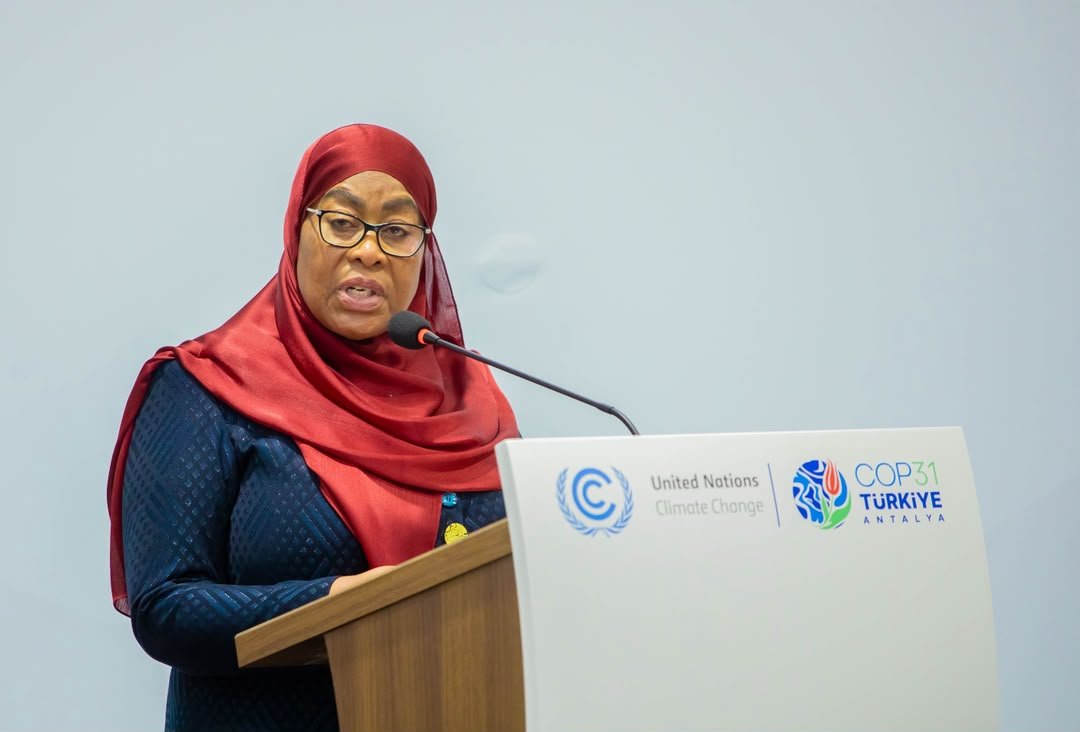
The Electrify Now Finance Coalition, launched at COP31 in Antalya, Türkiye, on November 10, 2026, aims to attract private investment into electricity generation, transmission networks and storage across developing economies, with the World Bank Group participating in its leadership in 2027. The Climate Investment Funds announced $94 million in catalytic financing intended to mobilise more than $1.2 billion in private investment, including a proposed $253 million grid financing arrangement in South Africa. Tanzania will receive $2 million in technical assistance to improve conditions for private renewable energy investment, while another $4 million will support regional electricity trading through the East Africa Power Pool. The initiative comes as the International Energy Agency estimates that nearly $150 billion will be required to achieve universal electricity access in Sub Saharan Africa by 2035, exposing the considerable difference between international financing announcements and the continent's infrastructure requirements.
An international financing coalition launched at COP31 in Türkiye is seeking to attract private investment into electricity generation, transmission networks and storage across developing economies, with the World Bank Group assuming a leadership role in 2027. The initiative includes a proposed $253 million grid financing arrangement in South Africa, $2 million in technical assistance for Tanzania and $4 million to support regional electricity trade in East Africa. However, the International Energy Agency estimates that approximately 600 million Africans remain without electricity and nearly $150 billion will be required to achieve universal access by 2035.
The World Bank Group, international development institutions and private finance organisations have launched a new electricity investment coalition at the COP31 climate summit in Antalya, Türkiye, seeking to address financing constraints that continue to limit electricity generation, transmission and access across Africa and other developing economies. The Electrify Now Finance Coalition, announced on November 10, 2026, will work with national governments, financial institutions and electricity sector regulators to prepare investment projects, reduce commercial risks and attract private capital into power infrastructure. The initiative comes alongside $94 million in catalytic financing announced by the Climate Investment Funds, which is intended to support five investment arrangements capable of mobilising more than $1.2 billion in private financing.
Africa features prominently in the initiative's early announcements, with proposed financing arrangements for South Africa's electricity transmission infrastructure and technical assistance programmes intended to improve the conditions for private electricity investment in Tanzania and regional power trading across East Africa. The World Bank Group is expected to cochair the coalition's programme during 2027, working with the COP31 presidency, Ethiopia as incoming COP32 host, other development finance institutions and private investors. The African Development Bank is participating in the South African grid investment arrangement and is among the institutions expected to contribute expertise to a separate technical assistance initiative for electricity networks, although it was not listed among the coalition's initial confirmed members in the November 10 announcement.
According to the official Electrify Now announcement, the coalition will operate through COP33 in 2028, providing a defined period for identifying priority investments, preparing financing structures and addressing regulations that prevent electricity projects from attracting capital. Its launch reflects an increasingly prominent problem in international energy finance: developing countries account for a substantial share of growth in electricity demand but receive a disproportionately small share of global investment in modern energy infrastructure.
Analysis released by Sustainable Energy for All alongside the initiative estimates that developing economies are responsible for approximately 80% of growth in global electricity demand, while around 90% of investment in the energy transition continues to flow to advanced economies and China. Africa receives approximately 2% of global clean energy investment, despite having substantial renewable resources, rapidly growing populations and some of the world's largest electricity access deficits. These figures indicate that the principal constraint is not simply the availability of energy resources or generation technologies but the cost and availability of financing, the financial condition of electricity utilities and the ability of countries to prepare commercially viable projects.
Speaking at the launch, COP31 President Murat Kurum said the coalition would bring governments, development banks and investors together to prepare projects and attract financing. “This coalition will help developing countries build strong project pipelines and attract the investment they need,” he said, presenting the initiative as a means of translating international electricity commitments into investment.
The financing announcements are considerable in their potential scale, but their status requires distinction. The $94 million announced through the Climate Investment Funds represents catalytic financing instruments designed to absorb selected risks and encourage additional investment. The projected $1.2 billion represents private capital that participating institutions hope to mobilise, rather than financing already committed to construction or disbursed to electricity projects. Similarly, the new technical assistance allocations for Tanzania and East Africa are directed towards regulatory development, project preparation and investment conditions, rather than the immediate construction of power stations or transmission lines.
South Africa's Grid Constraints Put Financing Guarantees at the Centre of COP31
One of the most commercially developed proposals announced in Antalya concerns South Africa, where the Climate Investment Funds plan to provide $15 million in junior equity to a credit guarantee vehicle developed with the African Development Bank through the Infrastructure Credit Enhancement Platform. The financing arrangement is intended to help attract approximately $253 million in private capital for transmission and electricity grid infrastructure, with the potential to mobilise larger amounts if additional financing commitments materialise.
The proposed structure addresses a specific difficulty affecting electricity investment. Building renewable generation capacity does not automatically ensure that electricity can reach consumers, particularly when transmission networks lack sufficient capacity or when generation projects are located far from major demand centres. South Africa has experienced constraints in connecting renewable energy projects to its electricity network, particularly in areas with substantial wind and solar resources. These limitations can delay investment even when private developers have secured land, completed feasibility studies and demonstrated commercial interest in building generation facilities.
A credit guarantee vehicle can improve the financial attractiveness of infrastructure investments by absorbing defined risks that commercial lenders and investors would otherwise be unwilling to accept. In the South African proposal, the $15 million contribution would provide a junior layer of capital within a larger financing structure, potentially making participation more attractive to investors whose funds would benefit from the additional protection. The projected mobilisation of $253 million would represent approximately $16.87 in private investment for every dollar of the initial catalytic contribution, although the actual ratio will depend on the final structure, investor participation and the projects financed.
The distinction between the proposed guarantee and the capital it may attract matters. The initial $15 million is not equivalent to $253 million in approved grid construction expenditure, and the announced mobilisation estimate should not be reported as money already invested. The next stages will require the participating institutions to establish the guarantee arrangements, secure commercial financing and identify eligible projects capable of reaching financial close.
For South Africa, the economic argument is directly connected to industrial competitiveness. Reliable electricity is necessary for mining, manufacturing, commercial services and other productive activities, while constrained transmission capacity can prevent lower cost generation from reaching consumers. Investment in grid infrastructure can therefore increase the economic value of generation assets that already exist or are being developed, while potentially reducing the cost of electricity supply over time.
The South African arrangement is one of five investments supported by the Climate Investment Funds' AMPLIFi programme. Other proposals include a $15 million renewable energy guarantee arrangement for small island developing states, a $15 million payment guarantee for solar and battery storage projects in Liberia, a $15 million investment supporting clean infrastructure funds in Latin America and the Caribbean, and a €27 million guarantee supporting green lending through the European Bank for Reconstruction and Development across multiple countries.
In Liberia, the proposed guarantee is particularly relevant because electricity projects often depend on the ability of national utilities to honour long term purchasing agreements. Where investors perceive a substantial risk that an electricity purchaser may fail to pay for delivered power, they can require higher returns or decline to finance the project altogether. A payment guarantee can reduce this exposure, potentially making private generation investments commercially viable without requiring the government to finance the entire project directly.
Climate Investment Funds Chief Executive Officer Tariye Gbadegesin said the financing model was intended to attract between six and twelve units of private capital for every unit of catalytic financing. The projected performance of these instruments, however, will ultimately depend on how many investments reach construction and how much private capital is actually committed.
Tanzania Receives $2 Million to Prepare Private Electricity Investments
Tanzania is among the countries receiving direct support under the financing announcements, with the United Kingdom providing $2 million through the World Bank's Energy Sector Management Assistance Program (ESMAP) to improve the conditions for private participation in renewable electricity generation and transmission infrastructure.
According to the United Kingdom government's November 2026 Global Clean Power Alliance Finance Mission update, the programme will support improvements to Tanzania's legal and regulatory framework, the development of an independent transmission investment model and preparation of pilot projects intended to attract private financing. The assistance is linked to Tanzania's National Energy Compact, which forms part of the wider African effort to accelerate electricity access and investment.
The $2 million allocation should not be confused with capital available to construct a renewable power plant. Its purpose is to address the institutional and commercial arrangements required before larger investments can proceed. These may include contractual frameworks, project preparation, investment regulations and structures governing how private investors participate in generation and transmission assets.
This distinction is especially relevant to Tanzania because the country has undertaken substantial public investment in electricity infrastructure while continuing to pursue additional generation capacity and improved access. The Julius Nyerere Hydropower Project has substantially expanded the country's installed electricity generation capacity, but future electricity investment will also require stronger transmission networks, distribution infrastructure and financing arrangements capable of supporting demand from industries, households, mining operations and expanding urban areas.
The development of a model for private participation in transmission could be particularly consequential. Electricity transmission has traditionally required substantial public investment because networks are expensive to construct, operate as interconnected systems and must comply with national technical and regulatory requirements. Introducing private capital requires clear rules governing ownership, tariffs, revenue recovery, technical responsibilities and the allocation of financial risks.
Private investors are unlikely to commit substantial sums to transmission infrastructure without confidence that projects can generate predictable revenues and that contractual obligations will be enforceable. Technical assistance can help governments establish these conditions, but actual investment will depend on whether commercially credible projects subsequently emerge.
The announcement therefore provides Tanzania with support for investment preparation rather than an immediate expansion of electricity supply. Its economic effect will depend on whether the government uses the programme to advance identifiable projects towards financing and implementation.
East Africa Power Pool Receives $4 Million to Strengthen Regional Electricity Trade
A separate $4 million commitment announced by the United Kingdom will support the East Africa Power Pool through the World Bank's Regional Electricity Trade for Development in Eastern Africa programme, known as RETRADE.
The financing, delivered through ESMAP, is intended to strengthen regulatory arrangements for trading electricity across national borders and improve the conditions for investment in regional transmission infrastructure. The initiative recognises that electricity development in East Africa increasingly involves more than individual national generation projects, particularly as countries seek to connect their power networks and exchange electricity according to available supply and demand.
Regional electricity trade can provide economic benefits where countries have different generation resources, seasonal production patterns and electricity demand characteristics. A country with surplus hydropower or other relatively inexpensive generation may be able to export electricity to a neighbouring market facing higher generation costs or temporary shortages. Importing electricity can sometimes be cheaper than constructing additional domestic generation capacity, particularly where the required transmission infrastructure is available and supply arrangements are reliable.
However, cross border electricity markets require more than the physical construction of interconnectors. Participating countries must agree on pricing arrangements, transmission access, settlement procedures, technical operating standards and mechanisms for managing contractual disputes. National utilities must also possess sufficient financial capacity to make payments under electricity purchasing agreements, while regional institutions require dependable systems for coordinating transmission and market operations.
The $4 million allocation is intended to address some of these institutional requirements. It does not represent the construction cost of a new international electricity interconnector, and the announcement does not identify a specific transmission line that will be built using the funds.
For East African economies pursuing industrialisation, improved electricity trade could become a means of reducing supply costs and strengthening energy security. Countries such as Tanzania, Kenya, Uganda and Ethiopia have different electricity generation structures and investment programmes, creating potential opportunities for trade where connections and commercial agreements permit. The scale of the benefits will depend on the cost of generation, available transmission capacity, network reliability and the willingness of national utilities to participate in regional markets.
Ethiopia is also receiving support through a separate partnership under the Global Clean Power Alliance Finance Mission. Announced at COP31, the arrangement will focus on building institutional capacity, preparing investment plans and removing financing obstacles associated with Ethiopia's National Electrification Program 3.0. Ethiopia's Minister for Energy and Water, Habtamu Itefu, described electrification as a fundamental development requirement and said the country would seek to mobilise financing to expand access as it prepares to host COP32 in 2027.
The Ethiopian programme illustrates another distinction in the financing announcements. Cooperation agreements and project preparation support can establish the conditions for future investments, but they do not automatically indicate that financing has been secured for the projects under consideration.
Africa Needs $150 Billion for Electricity Access as Investment Remains Far Below Requirements
The new coalition is being established against an electricity financing deficit that is much larger than the individual announcements made at COP31.
According to the International Energy Agency's October 2025 report, Financing Electricity Access in Africa, approximately 600 million people across Africa remain without access to electricity, with the vast majority living in sub Saharan Africa. The agency estimates that reaching universal electricity access in sub Saharan Africa by 2035 will require nearly $150 billion in cumulative investment, equivalent to approximately $15 billion annually over the relevant investment period.
The financing required is substantial when compared with recent spending. The IEA found that less than $2.5 billion was committed to new electricity access connections in sub Saharan Africa in 2023, the most recent year for which comprehensive data were available in the study. Although commitments had increased compared with 2019, the amount remained far below the annual investment needed to achieve universal access within the following decade.
This gap reflects several overlapping problems. Electricity infrastructure requires large initial investments, while many households without access have limited capacity to pay the full cost of connections or electricity consumption. Distribution networks serving sparsely populated rural communities may generate insufficient commercial revenue to recover construction expenditure, making government support, concessional financing or carefully designed subsidies necessary. Meanwhile, electricity utilities facing financial difficulties may struggle to attract private investors because their ability to pay generators and service infrastructure obligations is uncertain.
The IEA estimates that approximately 45% of households currently without electricity could be connected through grid expansion under its universal access scenario, while the remainder would be served through a combination of mini grids and standalone electricity systems. The most economically appropriate technology depends on population density, distance from existing infrastructure, electricity demand and the cost of alternative supply arrangements.
Private capital can contribute to closing the financing gap, but many electricity access investments cannot be financed entirely through conventional commercial arrangements. Development finance institutions and governments must therefore consider how scarce public resources can be used to reduce risks, support affordability and attract investors where commercial participation is feasible.
The proposed $1.2 billion private investment mobilisation associated with the Climate Investment Funds' new programme would represent less than 1% of the IEA's estimated $150 billion cumulative electricity access requirement if the two figures were compared directly. However, they cover different geographical areas and investment categories, so the comparison is useful only to illustrate the difference in scale. The $1.2 billion is a global mobilisation target covering several forms of clean electricity investment, whereas the $150 billion estimate concerns achieving universal electricity access in sub Saharan Africa.
COP31 Targets 35% Electricity Use by 2035, but Investment Must Extend Beyond Generation
The financing coalition also supports the COP31 presidency's Global Electrification Pledge, which seeks to increase electricity's share of final global energy consumption from approximately 23% to 35% by 2035. The target covers electricity used across economies, including transport, buildings and industry, and is intended to accelerate the replacement of technologies dependent on fossil fuels with more efficient electric alternatives.
According to the COP31 presidency's pledge, achieving the target will require expansion of electricity generation alongside investment in transmission networks, storage, system flexibility and technologies that increase electricity consumption in productive activities. The ambition therefore extends beyond connecting additional households. It includes increasing the use of electricity in industries, commercial facilities, heating, transport and other activities historically powered by oil, gas or coal.
This creates a different investment challenge for developing economies. Many African countries must simultaneously expand basic electricity access and prepare for higher electricity demand from industrialisation, urbanisation and new technologies. A government attempting to establish manufacturing industries or increase domestic mineral processing may require substantially more generation and transmission capacity than would be necessary simply to connect existing households.
Electricity infrastructure must therefore be planned around future productive demand as well as current consumption. Industrial parks, mines, transport systems and growing cities can require large and reliable power supplies, while rural electrification programmes may need more distributed and lower cost technologies. The financing structures suitable for these different investments are unlikely to be identical.
The emphasis on transmission and distribution is especially relevant because electricity generation projects can become commercially stranded if networks cannot accommodate their output. Likewise, expanding connections without sufficient generation or reliable distribution infrastructure can produce poor service quality, undermining the economic benefits expected from electrification.
The Global Electrification Pledge has also generated debate over the relationship between increasing electricity consumption and reducing greenhouse gas emissions. A larger share of electricity in final energy use does not automatically produce lower emissions if the additional electricity is generated from highly polluting sources. The environmental effect depends on the generation mix, efficiency of electric technologies and the pace at which fossil fuel based energy consumption is replaced.
At COP31, the World Resources Institute welcomed the pledge but called for governments to publish credible national electricity investment plans, including arrangements for modernising grids, expanding clean generation and supporting the adoption of electric technologies. The organisation's Global Director for Energy Transition, Nick Wayth, argued that countries must move beyond endorsing international targets and establish the policies and investment programmes required to meet them.
For African governments, this means that international electricity commitments must be translated into national programmes reflecting actual demand, available resources and the financial capacity of utilities and consumers.
The Coalition's Commercial Test Will Be Whether Projects Reach Financial Close
The Electrify Now Finance Coalition introduces an additional international mechanism for preparing and financing electricity investments, with participation from development banks, investors, technical institutions and governments. Its initial announcements demonstrate particular interest in financial guarantees, transmission infrastructure, regulatory improvements and preparation of projects capable of attracting commercial capital.
The approach recognises that many developing countries possess commercially valuable electricity resources but face difficulties converting them into financed construction projects. Private investors consider the cost of capital, expected revenues, regulatory stability, currency exposure, the financial condition of electricity purchasers and the enforceability of contracts before committing funds. Where these risks are substantial, projects may remain at the planning stage despite strong demand for electricity.
The coalition's success will therefore depend less on the number of institutions participating in its discussions than on the projects prepared, financing arrangements concluded and investments that move into construction. The South African grid guarantee proposal will need to demonstrate that its initial risk capital can attract private financing. Tanzania's technical assistance will need to produce investment arrangements capable of supporting privately financed generation or transmission projects. The East Africa Power Pool programme will need to strengthen the rules and commercial arrangements required for additional regional electricity trade.
These outcomes can be measured through identifiable projects, signed financing agreements, capital committed, infrastructure completed and electricity supplied. Until those results are available, the amounts announced at COP31 should be understood according to their respective financial status, with technical assistance, catalytic capital and projected investment mobilisation reported separately.
Africa's electricity financing requirements remain substantial. The continent must expand access for hundreds of millions of people while also financing the reliable electricity systems needed for manufacturing, mining, commercial activity and urban development. The November 10 announcements provide new instruments and institutional arrangements for addressing parts of that challenge, but the scale of the investment deficit means they will have to be followed by considerably larger financing commitments and sustained improvements in the preparation and implementation of electricity projects.
For Tanzania and other East African economies, the opportunity created by COP31 lies in converting international support into investment programmes that can reach financial close and provide additional electricity services. The $2 million allocated to Tanzania and $4 million supporting regional electricity trade are relatively modest amounts, but the institutional changes they are intended to finance could influence whether substantially larger investments become commercially viable. Their eventual contribution will be determined by the projects and financing arrangements that emerge from that work.
 Uchumi360
Business Intelligence
Uchumi360 covers business, investment, and economic policy across East, Central, and Southern Africa.
For the serious reader
You read to the end. That places you in a small group.
Uchumi360 is built for readers who demand precision over speed, structure over sentiment, and analysis that holds uncomfortable conclusions rather than softening them. If this work sharpens how you think about Africa's economy, help us keep building the infrastructure behind it.
Institutional Partners
Commission intelligence. Shape the conversation.
Uchumi360 works with development finance institutions, investment firms, sovereign bodies, and strategic organisations across the coverage region. Institutional partnership unlocks:
- Commissioned sector and country intelligence reports
- Branded research series under your institution's authority
- Exclusive data briefings for internal strategy teams
- Speaking and editorial presence at Uchumi360 events
- Co-published investment outlooks for your markets
Support Our Work
Independent analysis has a cost. Help us bear it.
Uchumi360 does not carry advertising. It does not take editorial direction from sponsors. Every article is produced without commercial compromise. Your contribution funds the reporting, research, and editorial infrastructure that keeps this analysis free from influence.
Secure checkout: One-time and monthly support are processed securely. Add payment credentials to enable checkout here.
Stay Connected
Keep up with every new insight.
Follow our latest analysis, policy coverage, and market intelligence as soon as it is published. If you need something specific, reach out directly and we will point you to the right research.
