
Eritrea’s Mining Wealth Faces an Energy Test, Fuel Disruption Exposes Export Risks
Ready
Zinc, copper and gold generate more than 95 per cent of Eritrea’s export earnings. October’s fuel-related interruption at Bisha highlights the vulnerability of that revenue base, while solar investment offers a broader economic opportunity, provided approved projects translate into reliable electricity.
Eritrea’s mineral wealth provides its principal source of export earnings, but the country’s ability to turn those resources into sustained economic growth depends on infrastructure that mineral prices alone cannot deliver: dependable fuel supplies, reliable electricity and functioning transport connections.
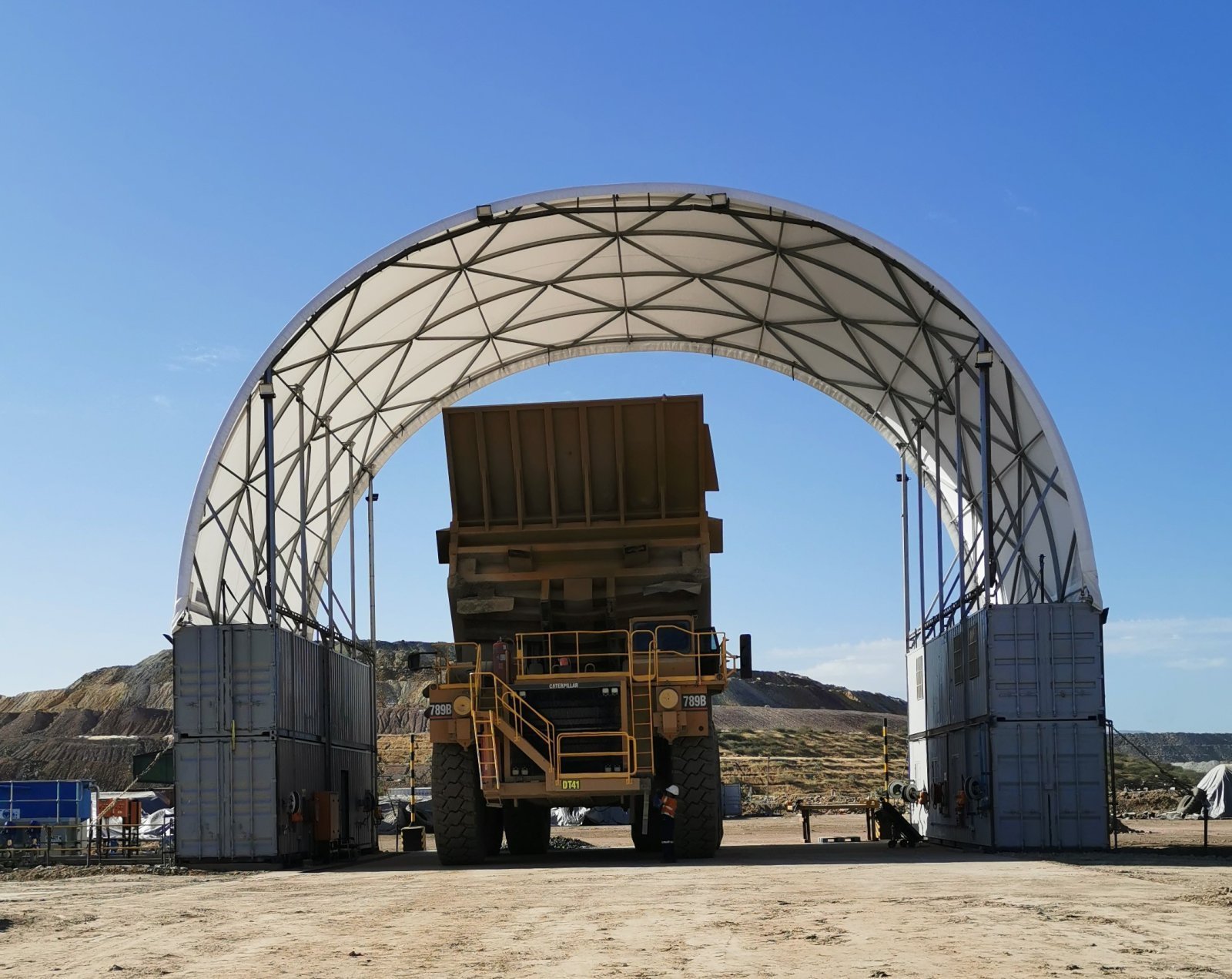
An interruption at the Bisha copper-zinc mine in October brought that dependence into focus. Miningmx reported on October 16, citing Bloomberg, that operator Zijin Mining had brought forward scheduled maintenance because of a temporary regional fuel shortage, potentially delaying concentrate deliveries to customers.
Zijin said fuel supplies had subsequently stabilised but did not provide a firm processing-restart date in that report. Eritrean Information Minister Yemane Gebremeskel described the closure as maintenance and said operations were expected to resume shortly, citing the mine’s management. These accounts concern October’s interruption, not confirmation that processing remains suspended in November.
The economic significance extends beyond one mine. Where exports are concentrated in a small number of commodities, an operational disruption can affect foreign-currency receipts, government income and payments to suppliers simultaneously.
Export concentration raises the stakes
The World Bank’s October 2026 Macro Poverty Outlook says zinc, copper and gold account for more than 95 per cent of Eritrea’s export earnings. That concentration leaves the economy exposed both to international metal prices and to the ability of its mines to maintain production and ship material.
Higher commodity prices can strengthen receipts, but they cannot fully compensate for prolonged interruptions in output. A mine must process ore, move concentrate and fulfil deliveries before favourable market conditions become cash.
Bisha illustrates the scale of the industrial activity involved. Zijin’s project profile records production of approximately 83,000 tonnes of zinc and 23,000 tonnes of copper in 2025, measured on a whole-operation basis. The company holds a 55 per cent interest, while the Eritrean National Mining Corporation holds the remaining 45 per cent.
That ownership structure gives the state a direct commercial interest alongside any taxes and other payments generated by the operation. However, government equity ownership should not be confused with immediate access to an equivalent share of gross sales. Shareholder returns depend on costs, investment requirements, financing obligations and distributable profits.
For the wider economy, reliable production is therefore more consequential than the headline value of mineral deposits.
A current-account surplus does not remove the fuel constraint
The World Bank estimates that Eritrea’s current-account surplus will narrow to 11.4 per cent of GDP in 2026 from 14.1 per cent in 2025. Its October assessment identifies higher fuel costs associated with the Middle East conflict as a pressure on the external position.
A surplus does not necessarily mean individual businesses can obtain foreign currency or imported inputs whenever they need them. The timing of export receipts, import controls, banking arrangements and allocation of foreign exchange can all influence commercial access.
Fuel creates a particularly important dependency because it helps generate the export earnings needed to pay for further imports.
Mining machinery, transport fleets and supporting services require energy to keep production moving. If fuel availability becomes unreliable, the consequences can extend from missed deliveries to higher inventory requirements and additional working-capital costs.
Holding larger fuel stocks can reduce operational exposure, but it ties up money and requires suitable storage and safety arrangements. Running with smaller reserves reduces those costs while increasing vulnerability to interruptions.
The commercial challenge is therefore not simply securing cheaper fuel. It is securing a dependable supply at a cost the operation can sustain.
Solar investment offers a broader economic opportunity
Eritrea has secured development-finance support intended to reduce electricity constraints.
On February 18, the African Development Bank Group approved US$58.04 million for the Eritrea Energy Integrated Project serving communities around three towns in the southwestern Gash Barka region.
The approved package envisages 34 megawatts of solar mini-grid capacity and construction or upgrading of 542 kilometres of distribution lines. The bank expects approximately 306,000 people to benefit. These are planned project outputs and expected beneficiaries, not evidence that all the infrastructure has already been delivered.
The programme’s economic importance goes beyond adding generating capacity. The bank links electricity access to irrigation, water pumping, agro-processing and small-enterprise development.
Those activities offer a route through which infrastructure spending could support incomes outside mining. Electricity can allow a processor to operate machinery, a shop to refrigerate products or an agricultural business to pump water more reliably.
However, installed megawatts are only one part of the outcome. Distribution networks, maintenance, customer connections, affordable service and the ability of businesses to purchase productive equipment will determine how much economic activity follows.
Solar generation also cannot be treated as a complete substitute for petroleum. Electrifying stationary equipment may reduce some fuel requirements, but transport and mobile machinery can remain dependent on liquid fuels. Nor should a town-focused electrification programme be presented as proof that Bisha itself has switched to renewable power.
More mining is not the same as diversification
Additional mineral projects could widen Eritrea’s production base and generate further export receipts. But expanding from one mineral operation to several does not necessarily diversify the economy away from commodity dependence.
Different mines may still rely on the same imported equipment, fuel supply arrangements, transport infrastructure and external customers. They can therefore remain exposed to common disruptions even when they produce different commodities.
The stronger development outcome would be a mining sector that supports competitive domestic suppliers and infrastructure useful to other businesses.
Maintenance services, engineering, transport and technical training can create links beyond the mine gate. But these benefits depend on procurement practices, workforce development and the ability of local firms to meet commercial requirements.
A contract has limited developmental value if a supplier cannot finance equipment, obtain inputs or survive the period between completing work and receiving payment.
Private-sector constraints affect the spillovers
The World Bank identifies state-enterprise dominance, regulatory restrictions and a shallow financial sector as constraints on private investment in Eritrea. These conditions matter because mining-led growth does not spread automatically through an economy. Businesses need room to enter markets, import necessary equipment, obtain finance and retain enough earnings to expand.
Without those conditions, stronger mineral exports can coexist with limited opportunities for smaller enterprises.
For regional engineering companies, equipment suppliers and logistics businesses, the practical assessment should consequently begin with specific procurement opportunities and contractual arrangements not assumptions that mineral expansion creates an unrestricted commercial market.
Payment security, access to inputs and the allocation of delivery risks will be as important as the size of the underlying resource.
Limited data require cautious conclusions
Assessing Eritrea’s performance also requires unusual care with statistics.
The World Bank says national accounts are unpublished, inflation coverage is limited to Asmara and balance-of-payments statistics are incomplete. Its growth, trade and fiscal figures should therefore be read with those limitations in mind.
That does not make analysis impossible. It makes transparent attribution and operational evidence more important.
Mine production disclosures, dated project reports, procurement records and verified commissioning milestones provide firmer measures of progress than broad claims about economic transformation.
What happens next
The immediate indicators to watch are subsequent production and shipment disclosures from Bisha, evidence of more dependable fuel supplies, and implementation milestones for the approved electricity investments.
For the solar programme, procurement and construction progress will matter before claims about new connections, operating businesses or lower production costs can be tested.
The longer-term question is whether mining earnings help finance an economy with more reliable infrastructure and a wider range of productive enterprises.
Eritrea’s mineral deposits give it an export foundation. Its next economic advance will depend on making energy and infrastructure dependable enough for those earnings to support activity beyond the mines.
 Uchumi360
Business Intelligence
Uchumi360 covers business, investment, and economic policy across East, Central, and Southern Africa.
For the serious reader
You read to the end. That places you in a small group.
Uchumi360 is built for readers who demand precision over speed, structure over sentiment, and analysis that holds uncomfortable conclusions rather than softening them. If this work sharpens how you think about Africa's economy, help us keep building the infrastructure behind it.
Institutional Partners
Commission intelligence. Shape the conversation.
Uchumi360 works with development finance institutions, investment firms, sovereign bodies, and strategic organisations across the coverage region. Institutional partnership unlocks:
- Commissioned sector and country intelligence reports
- Branded research series under your institution's authority
- Exclusive data briefings for internal strategy teams
- Speaking and editorial presence at Uchumi360 events
- Co-published investment outlooks for your markets
Support Our Work
Independent analysis has a cost. Help us bear it.
Uchumi360 does not carry advertising. It does not take editorial direction from sponsors. Every article is produced without commercial compromise. Your contribution funds the reporting, research, and editorial infrastructure that keeps this analysis free from influence.
Secure checkout: One-time and monthly support are processed securely. Add payment credentials to enable checkout here.
Stay Connected
Keep up with every new insight.
Follow our latest analysis, policy coverage, and market intelligence as soon as it is published. If you need something specific, reach out directly and we will point you to the right research.
