
Ethiopia's Five Megaprojects Worth Over $23 Billion: Where They Stand in 2026
Ready
From the $12.5 billion Bishoftu International Airport to a new fertilizer complex, oil refinery, hydropower station and railway corridor, Ethiopia is pursuing major infrastructure and industrial investments. Their implementation status reveals substantial differences between projects approaching completion and those still dependent on financing, procurement and construction.
Ethiopia is advancing five major infrastructure and industrial projects with a combined announced investment value exceeding $23 billion, reflecting its ambition to expand aviation capacity, strengthen domestic manufacturing, increase electricity generation and improve transport connectivity. The projects include the $12.5 billion Bishoftu International Airport, the more than $4 billion Gode fertilizer complex, the approximately €3 billion Koysha hydropower project, the $1.7 billion Awash to Woldia railway contract and the proposed $2.5 billion Gode oil refinery.
The projects are at markedly different stages of implementation. Bishoftu has progressed through contractor prequalification, the fertilizer complex has secured an equipment supply agreement, Koysha is approaching four fifths completion, and the railway is undergoing restoration after years of delays. The proposed oil refinery remains at an earlier development stage, with limited independently verified information about physical construction progress.
Their combined value should be interpreted as an indication of announced project scale rather than capital already invested. The figures include estimates, an original engineering contract and projects with different financing structures. Actual expenditure, financing commitments and remaining investment requirements have not been established consistently across all five projects.
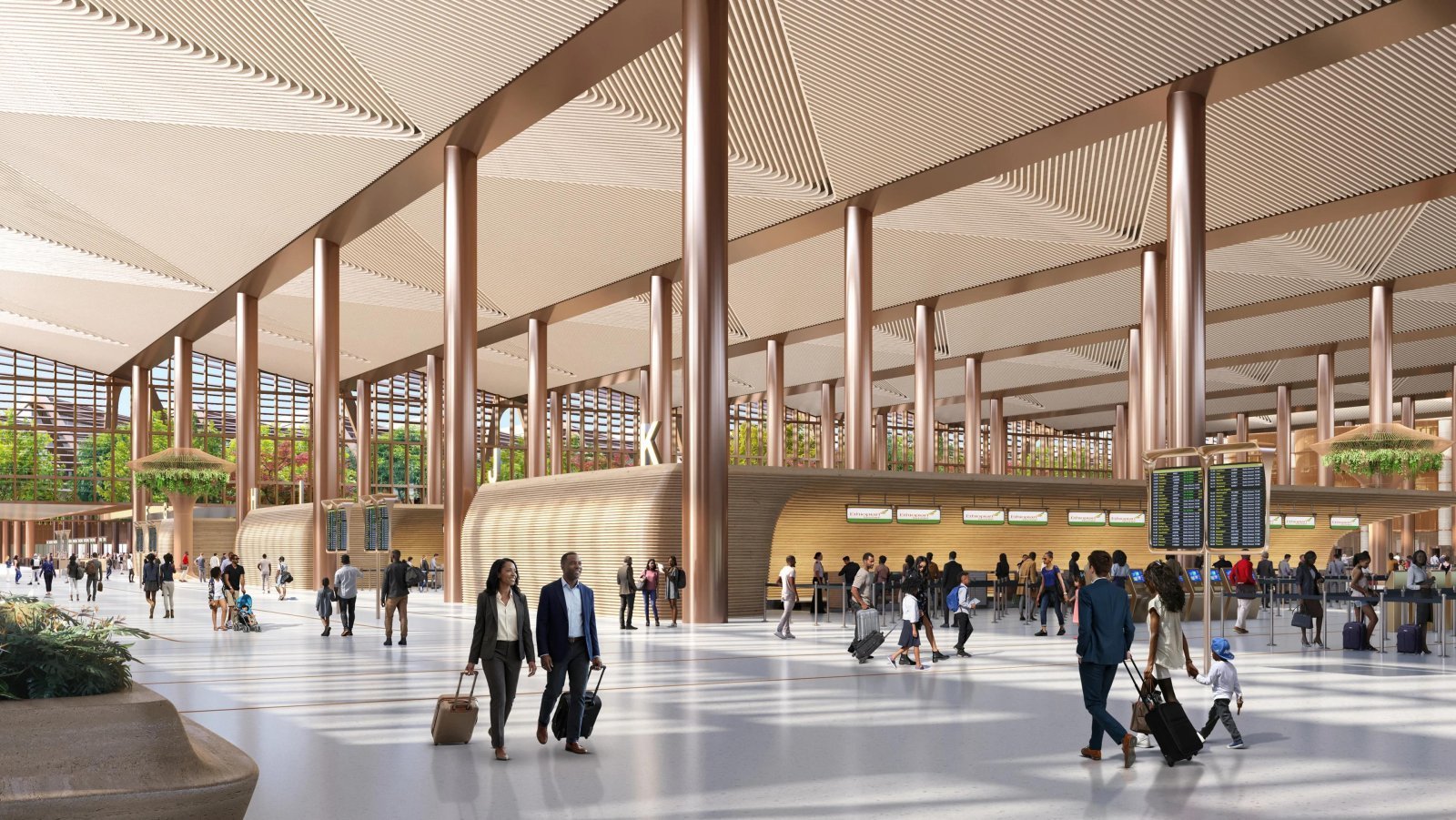
Bishoftu Airport's $12.5 Billion Financing Challenge.

The Bishoftu International Airport is the largest investment among the five projects, with a first phase estimated at $12.5 billion. Located approximately 40 kilometres southeast of Addis Ababa, it is designed to accommodate 60 million passengers annually during its initial phase and eventually expand to 110 million passengers, making it one of the world's largest aviation facilities by planned capacity.
The project is central to Ethiopian Airlines' expansion strategy. The carrier operates an extensive network connecting African cities with destinations in Europe, Asia, the Middle East and the Americas. Its existing hub at Addis Ababa Bole International Airport faces capacity constraints, making additional airport infrastructure necessary if the airline is to sustain its planned growth.
Ethiopian Airlines has completed prequalification for four principal construction packages, including terminal facilities and supporting infrastructure. International contractors from China, Europe, South Korea and other markets have been shortlisted. The procurement structure requires contractors to participate in arranging financing alongside engineering and construction, adding a financial dimension to the tender process.
Financing remains a major implementation challenge. The African Development Bank was appointed in August 2025 to coordinate the mobilisation of debt financing. Its proposed $500 million participation remains subject to the necessary approval procedures. Ethiopian Airlines has indicated that it intends to provide approximately 30% of the project financing through equity, with the remaining 70% expected from lenders and other financing institutions.
In August 2026, Ethiopian Airlines Chief Executive Mesfin Tasew said prospective lenders had expressed interest in financing the airport, but formal loan agreements had not yet been signed. Contractor selection was subsequently pushed towards January 2027, while financing approvals were expected to continue into March 2027.
The airport's economic viability will depend on passenger growth, transit traffic, cargo operations, airline connectivity and the terms of financing. Its projected capacity is substantially larger than the country's existing aviation infrastructure, meaning that construction must be accompanied by sustained growth in traffic and supporting commercial activities.
Dangote's Gode Fertilizer Complex Advances Equipment Procurement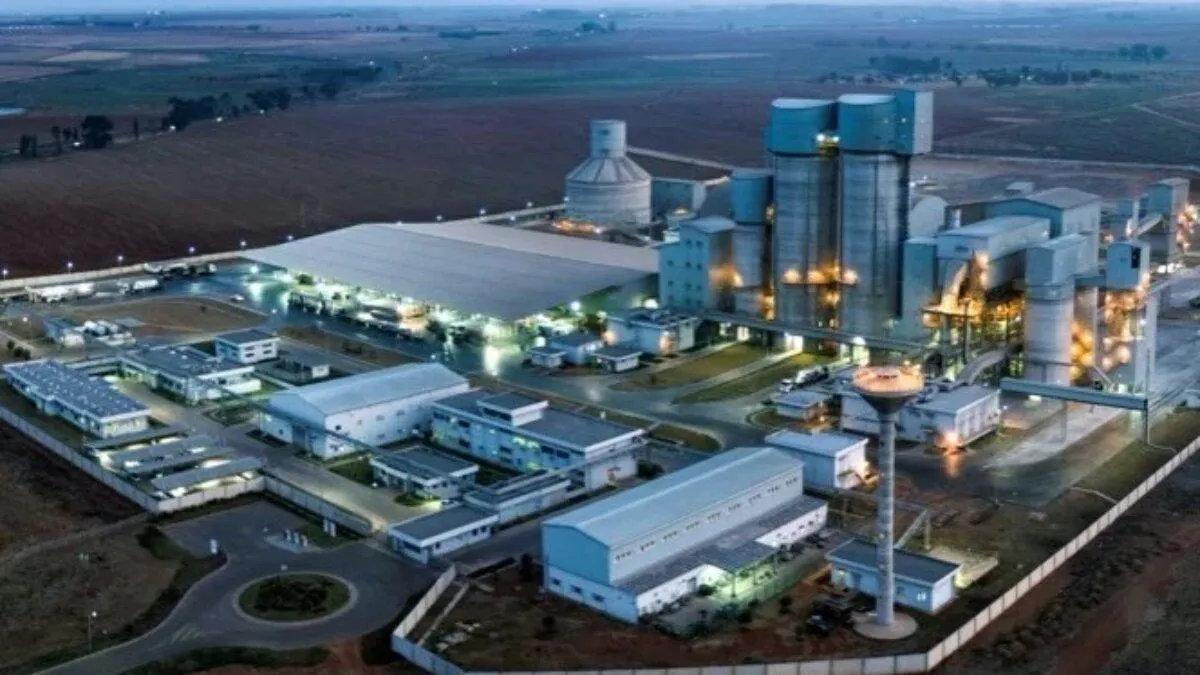
The Dangote Group's fertilizer project in Gode, Ethiopia's Somali Region, has an estimated investment value exceeding $4 billion and is designed to produce three million tonnes of urea annually. Developed in partnership with Ethiopian Investment Holdings, the facility is intended to use domestic natural gas to manufacture fertilizer for Ethiopia's agricultural sector and potentially supply neighbouring markets.
The project represents an attempt to connect Ethiopia's natural gas resources with domestic industrial production. Ethiopia has historically depended heavily on imported fertilizer, creating demand for foreign currency and exposing agricultural input costs to international prices and shipping conditions.
A major procurement development occurred on October 28, 2026, when Spain's Técnicas Reunidas announced that Dangote had awarded it a contract to design, procure, manufacture and supply two hydrogen production reformers for the complex. The equipment will have a combined hydrogen production capacity exceeding 200,000 normal cubic metres per hour, supplying hydrogen required for ammonia production, which is subsequently used to manufacture urea.
The award provides evidence of progress in equipment procurement, although it does not establish that the entire fertilizer complex has secured financing or reached an advanced stage of construction. Delivery of the reformers, completion of gas infrastructure, installation of production equipment and commissioning remain necessary before commercial output can begin.
The project was initially associated with an investment estimate of approximately $2.5 billion, but its announced value subsequently increased to more than $4 billion. Reporting on the expanded scope indicates that additional infrastructure, including gas transportation and power supply, contributed to the higher estimate.
Its commercial performance will depend on the cost and reliability of natural gas supply, fertilizer demand, production efficiency and the economics of transporting finished products to domestic and regional markets. Ethiopia's large agricultural sector provides a potential domestic customer base, but commercial viability will still depend on the price at which locally produced urea can compete with imports.
Koysha Hydropower Reaches 78.36% Completion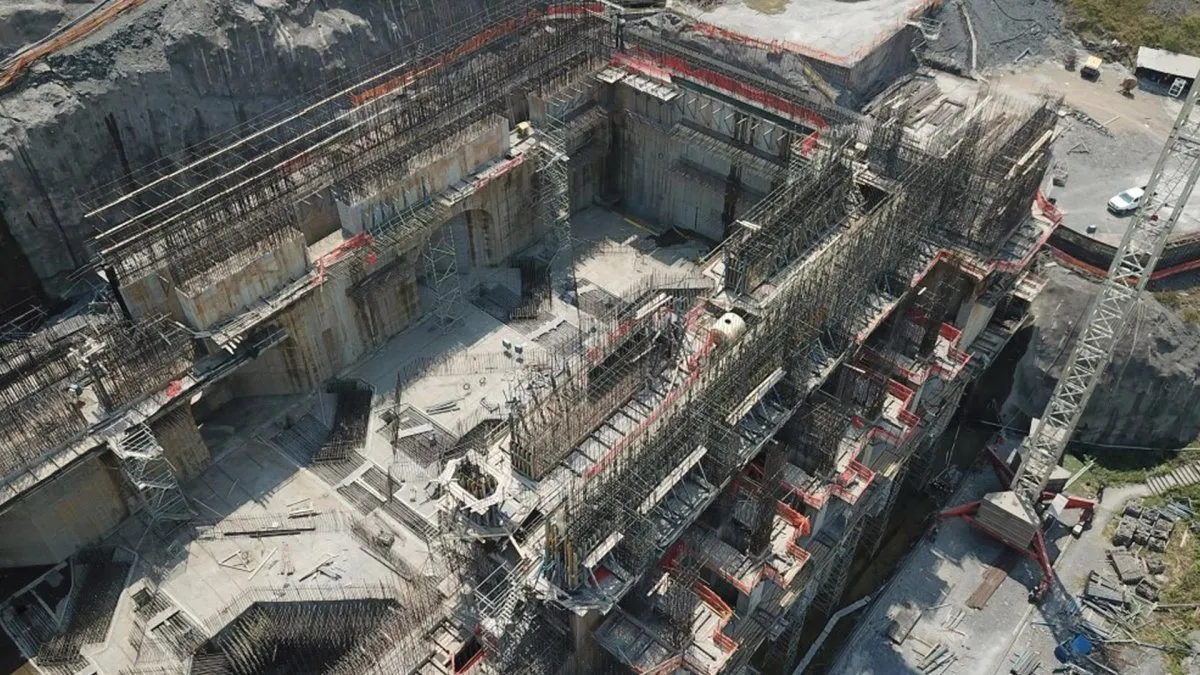 The Koysha Hydropower Project has reached 78.36% overall completion, making it one of the most advanced investments among the five developments. Located on the Omo River in southwestern Ethiopia, the project is designed to generate 1,800 megawatts of electricity and approximately 6,344 gigawatt hours annually.
Ethiopian Electric Power reported the latest construction progress on November 13, 2026, following its first quarter performance review. Cumulative roller compacted concrete placement had reached 82.29% of the required volume, while work continued on the six turbines and associated electromechanical systems.
The project has an estimated total cost of approximately €3 billion. Construction has experienced delays associated with financing constraints, foreign currency shortages and other implementation difficulties. Ethiopian Electric Power has identified additional financing requirements of approximately €500 million, including planned external financing and contributions from its own resources. The final status of that financing has not been independently established.
Operational testing of the first turbine is targeted for October or November 2028, while full completion is planned for 2029. These dates remain implementation targets rather than confirmed commissioning schedules.
Koysha would increase Ethiopia's electricity generation capacity and support industrial expansion, household electrification and potential regional power exports. However, additional generation capacity produces economic benefits only when transmission infrastructure, distribution networks and demand are sufficient to absorb the electricity.
The project's commercial performance will also depend on electricity tariffs, the financial position of the national utility and the reliability of power purchase arrangements. Ethiopia's ability to export surplus electricity to neighbouring countries could create additional foreign currency income, provided cross border transmission infrastructure and commercial agreements are in place.
Awash Railway Restoration Tests Ethiopia's Transport Investment Strategy.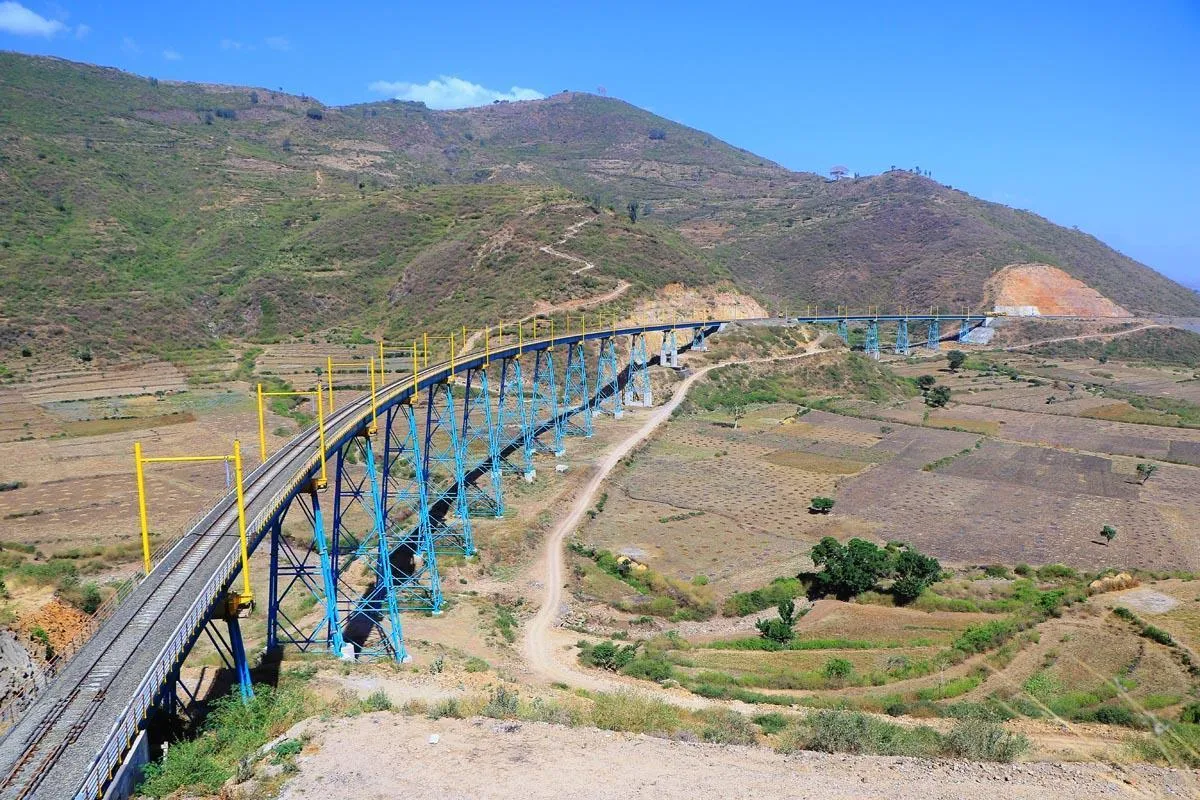 Ethiopia's 392-kilometre Awash to Woldia and Hara Gebeya railway project is undergoing restoration after years of delays, conflict related damage and contractual disputes. Originally awarded to Turkish contractor Yapı Merkezi under a $1.7 billion engineering, procurement and construction contract in 2015, the railway was intended to strengthen connections between central and northern Ethiopia.
The Ethiopian Railways Corporation has assumed responsibility for restoration work, deploying its own workforce and equipment to repair damaged sections and prepare the line for eventual operation. According to reporting by The Reporter on October 10, approximately 70 kilometres of track had been repaired, with preparations for test operations underway.
The project has also been affected by a contractual dispute involving the former contractor. Ethiopian railway officials have reported progress in resolving claims, although the final financial implications and outstanding restoration costs remain uncertain.
The corporation aims to complete the first section to Kombolcha within approximately two years. Reporting by Capital Ethiopia on October 18 indicated that the government had made arrangements to undertake remaining construction and restoration work, but the precise financing allocation had not been disclosed.
The railway's economic importance lies in its potential to reduce freight transport costs and improve connections between industrial centres, population centres and Ethiopia's wider railway network. Rail transport can offer advantages for moving heavy or bulk cargo over long distances, particularly where road congestion, fuel costs and vehicle maintenance increase logistics expenses.
Nevertheless, railway infrastructure requires sufficient freight volumes to cover operating and maintenance costs. Ethiopia's experience with delayed railway projects demonstrates that construction expenditure must be accompanied by viable commercial operations, reliable maintenance financing and coordination with industrial producers and logistics operators.
Gode Oil Refinery Remains at an Early Development Stage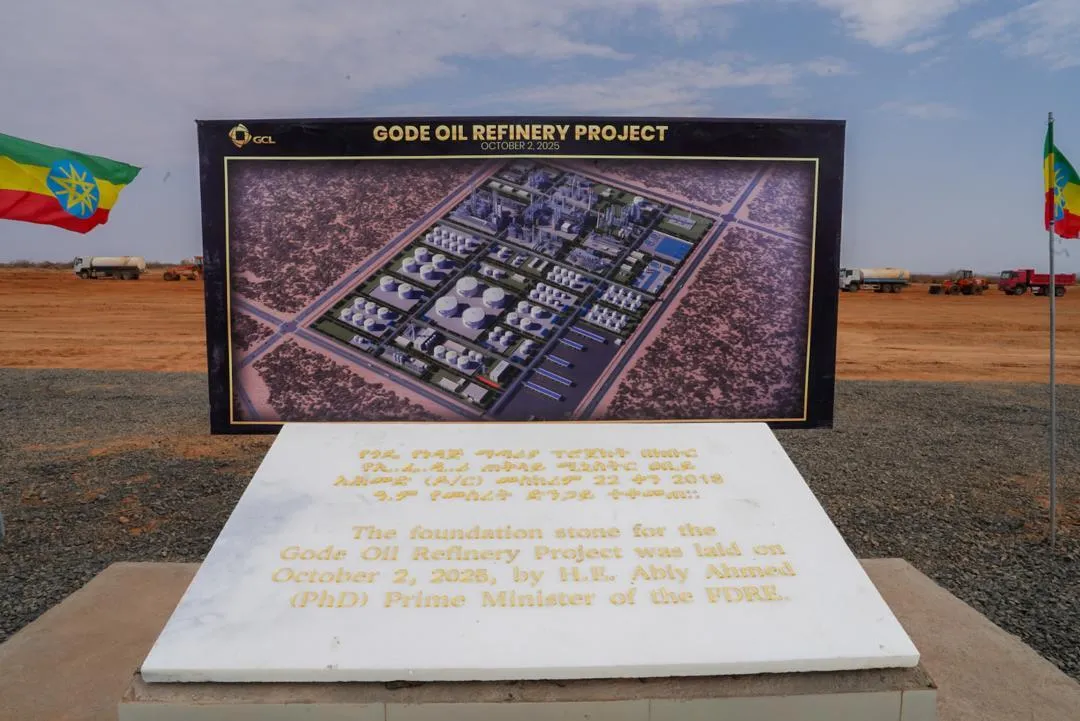
Ethiopia's proposed Gode oil refinery is being developed by China's Golden Concord Group, with plans to process approximately 3.5 million tonnes of crude oil and condensate annually. The facility is intended to use domestic petroleum resources, particularly from the Hilala field in the Ogaden Basin.
Prime Minister Abiy Ahmed laid the foundation stone for the refinery on October 2, 2025, alongside the fertilizer development in Gode. The Ethiopian News Agency reported that the refinery would form part of a wider industrial programme intended to increase domestic processing of natural resources.
Ethiopia currently depends heavily on imported petroleum products, making fuel supply a substantial source of foreign currency demand. A domestic refinery could reduce some of that dependence if sufficient crude oil is produced locally and the refinery operates at commercially competitive costs.
However, the refinery remains at an earlier development stage than the airport, fertilizer complex or hydropower project. Publicly available information establishes the proposed capacity, developer and foundation ceremony, but does not provide sufficiently detailed evidence of major construction progress, completed financing arrangements or an independently verified commissioning date.
The reported $2.5 billion investment estimate also requires qualification. Ethiopian Investment Holdings referred to a $2.5 billion figure in reporting on the Gode fertilizer and refinery developments, creating uncertainty over whether that amount represents the refinery alone or a wider project package. The figure should therefore not be treated as a separately verified refinery construction cost.
The refinery's viability will depend on commercially recoverable crude production, pipeline and storage infrastructure, refining margins, domestic fuel demand and the cost of competing imported products. The existence of petroleum resources does not automatically establish that domestic refining will be cheaper than importing finished fuels.
Implementation Status Shows Different Levels of Progress
| Project | Announced investment | Latest verified status |
| Bishoftu International Airport | $12.5B | Main contractor prequalification completed; financing arrangements progressing |
| Gode Fertilizer Complex | More than $4B | Hydrogen reformer supply contract awarded October 2026 |
| Koysha Hydropower | About €3B | 78.36% construction completion |
| Awash Railway | $1.7B original contract | Approximately 70 km restored; first section targeted within two years |
| Gode Oil Refinery | Cost not independently established | Foundation laid; major construction progress not verified |
Sources: Ethiopian Airlines, Ethiopian Electric Power, Técnicas Reunidas, Ethiopian News Agency, The Reporter Ethiopia and Capital Ethiopia. Status as reported through November 20, 2026.
The projects illustrate several distinct approaches to infrastructure and industrial development. Bishoftu is being structured around aviation growth and international project financing. Gode's fertilizer complex seeks to convert natural gas into higher value industrial output. Koysha expands electricity generation capacity, while the railway aims to restore transport connectivity. The refinery would establish a domestic petroleum processing industry if its technical and financial requirements are met.
Their implementation challenges also differ. The airport must secure substantial long term financing and complete a complex procurement process. The fertilizer complex requires reliable gas supply and the installation of specialised equipment. Koysha must complete civil and electromechanical works while resolving outstanding financing requirements. The railway faces restoration costs and contractual issues, while the refinery must progress from an announced development into a financed and operational industrial facility.
Financing and Commercial Demand Will Determine Their Economic Returns
Ethiopia's investment programme is being implemented during a period in which access to foreign currency, public debt obligations and the availability of long term financing remain central economic concerns. Large infrastructure projects typically require imported machinery, specialised contractors and substantial financing before generating revenue.
The combined announced value of the five developments exceeds $23 billion when Koysha's euro denominated cost is converted into dollars and the refinery's reported estimate is included. However, because the refinery cost is not independently established and the figures refer to different types of commitments, this should not be presented as a confirmed total investment requirement.
For Ethiopia, the economic contribution of these projects will depend on their ability to generate measurable benefits after completion. The airport must attract sufficient passenger and cargo traffic, the fertilizer complex must produce competitively priced agricultural inputs, Koysha must supply electricity that can be sold and transmitted, the railway must carry commercially viable freight volumes, and the refinery must operate with reliable crude supply and competitive refining costs.
Their implementation status provides a clearer indication of near term prospects than announced investment values alone. Koysha has reached an advanced stage of physical construction, while the airport and fertilizer complex have achieved procurement milestones. The railway is being restored, and the refinery's progress remains less clearly documented.
Ethiopia has committed substantial institutional and financial resources to infrastructure and industrial development. Whether these investments strengthen its economic position will depend on completing the projects, managing their financing obligations and ensuring that the resulting assets are used productively.
 Uchumi360
Business Intelligence
Uchumi360 covers business, investment, and economic policy across East, Central, and Southern Africa.
For the serious reader
You read to the end. That places you in a small group.
Uchumi360 is built for readers who demand precision over speed, structure over sentiment, and analysis that holds uncomfortable conclusions rather than softening them. If this work sharpens how you think about Africa's economy, help us keep building the infrastructure behind it.
Institutional Partners
Commission intelligence. Shape the conversation.
Uchumi360 works with development finance institutions, investment firms, sovereign bodies, and strategic organisations across the coverage region. Institutional partnership unlocks:
- Commissioned sector and country intelligence reports
- Branded research series under your institution's authority
- Exclusive data briefings for internal strategy teams
- Speaking and editorial presence at Uchumi360 events
- Co-published investment outlooks for your markets
Support Our Work
Independent analysis has a cost. Help us bear it.
Uchumi360 does not carry advertising. It does not take editorial direction from sponsors. Every article is produced without commercial compromise. Your contribution funds the reporting, research, and editorial infrastructure that keeps this analysis free from influence.
Secure checkout: One-time and monthly support are processed securely. Add payment credentials to enable checkout here.
Stay Connected
Keep up with every new insight.
Follow our latest analysis, policy coverage, and market intelligence as soon as it is published. If you need something specific, reach out directly and we will point you to the right research.
