
Ethiopia's Infrastructure Gains 9.8 Points as Economic Confidence Falls 24.3
Ready
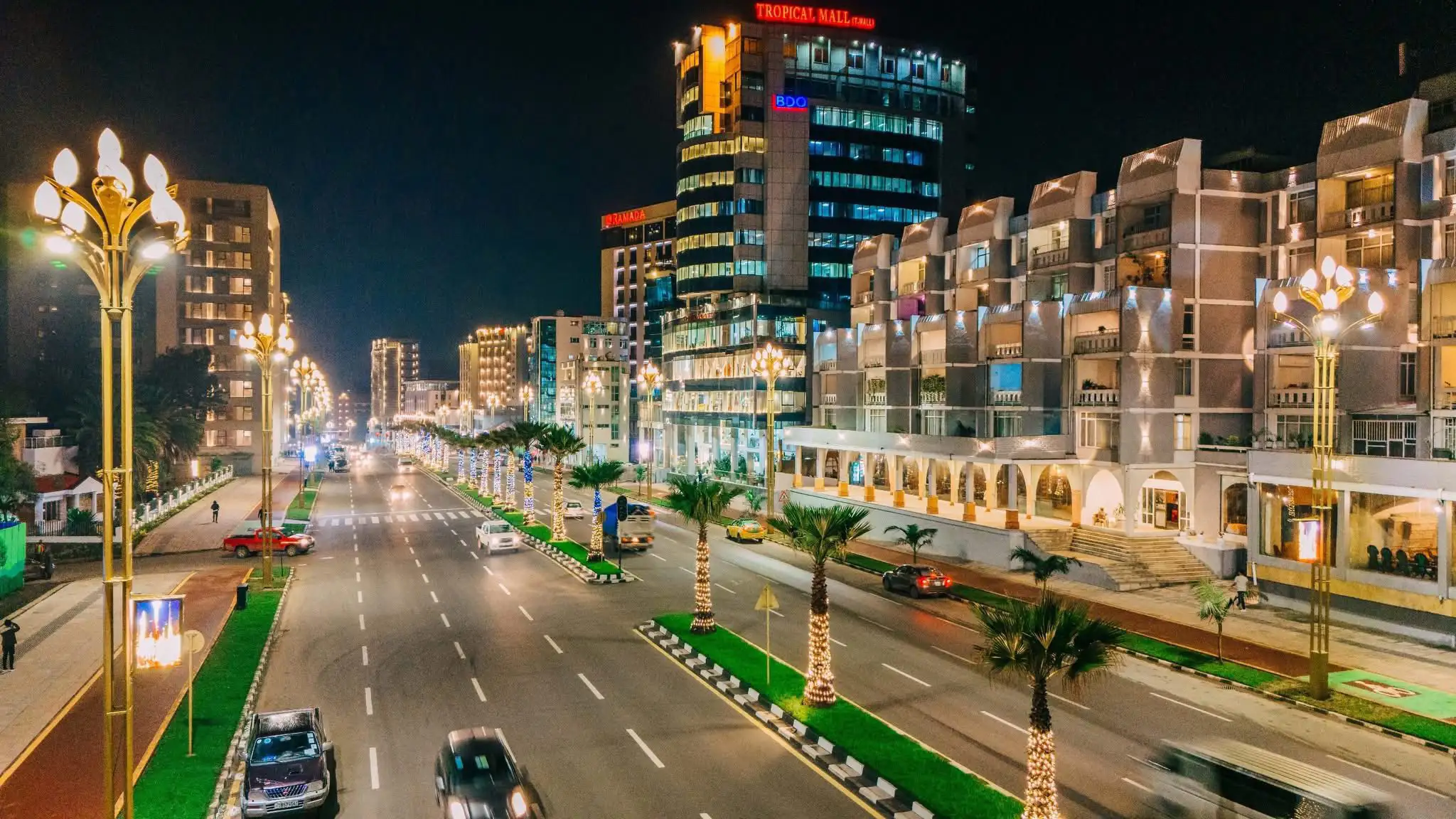
Ethiopia improved its infrastructure governance score by 9.8 points between 2016 and 2025, supported by investments in energy, telecommunications, logistics and regional connectivity. Yet the 2026 Ibrahim Index of African Governance records a 24.3 point deterioration in public perceptions of economic opportunities, alongside declining security, judicial impartiality and social protection. As Ethiopia pursues ambitious economic reforms and faces renewed tensions with Eritrea, the findings raise questions about whether major infrastructure investments and strong economic growth are improving household welfare, employment and business confidence.
Ethiopia's infrastructure governance score increased by 9.8 points between 2016 and 2025, while public perceptions of economic opportunities deteriorated by 24.3 points over the same period, according to the 2026 Ibrahim Index of African Governance (IIAG) released by the Mo Ibrahim Foundation on October 31, 2026. The contrasting results reflect a country that has expanded electricity generation, telecommunications, logistics infrastructure and regional connectivity while facing persistent difficulties involving household purchasing power, employment, conflict and the conditions under which businesses operate. Ethiopia's Infrastructure score reached 46.6 out of 100 in 2025, placing it 18th among Africa's 54 countries, but Public Perception of Economic Opportunities fell to 35.8, indicating that improvements in economic infrastructure have not been accompanied by comparable progress in citizens' assessments of their economic prospects.
The findings are particularly relevant to Ethiopia's development model, which has relied heavily on public infrastructure investment and state directed economic expansion while gradually introducing reforms intended to increase private sector participation. Over the past decade, the country has completed Africa's largest hydroelectric power station, expanded its electricity network, invested in road and railway infrastructure, developed industrial parks and pursued improvements in logistics facilities connecting its economy with the port of Djibouti. These investments have created additional productive capacity in one of Africa's most populous countries, but the Ibrahim Index suggests that the expansion of economic infrastructure has occurred alongside substantially weaker assessments of employment opportunities, security and some institutional conditions affecting businesses and households.
Ethiopia ranked 30th in overall governance in 2025, with a score of 48.4 out of 100, representing an improvement of 1.8 points compared with 2016. Its Foundations for Economic Opportunity score increased by 4.8 points to 54.5, while Human Development improved by 1.8 points to 53.6. However, Security & Rule of Law deteriorated by 2.4 points to 43.8, and Security & Safety declined by 11.8 points to 56.9. The country's Rights subcategory fell by 10.4 points, while Social Protection & Welfare declined by 6.4 points. The foundation identifies Ethiopia as one of three countries, alongside Tanzania and Eritrea, displaying warning signs in their overall governance trajectories, meaning that their scores remained above or equal to their 2016 positions but had deteriorated since 2021.
The 2026 Ibrahim Index of African Governance assesses governance performance across 54 African countries using 319 variables obtained from 51 sources and organised into 96 indicators. Its framework considers security, public administration, political participation, economic opportunity, infrastructure, health, education and other dimensions of governance. The measurements combine statistical information, institutional assessments and public perception data, allowing the performance of individual countries to be examined beyond their overall rankings. The index does not establish that Ethiopia's infrastructure investments caused deterioration in economic confidence, nor does it directly measure the financial returns generated by individual projects. Its findings nevertheless identify a substantial divergence between improvements in the physical conditions supporting economic activity and citizens' perceptions of the opportunities available to them.
Ethiopia's Infrastructure Expansion Has Been Strongest in Energy, Communications and Logistics
Ethiopia's Infrastructure score improved by 9.8 points to 46.6 between 2016 and 2025, supported by substantial improvements in Shipping & Postal Network, Mobile Communications, Internet and Access to Energy. The Shipping & Postal Network indicator recorded the largest increase, gaining 29.1 points to reach 70.0 and placing Ethiopia third in Africa. Mobile Communications improved by 10.4 points to 73.9, Internet increased by 9.1 points to 35.9, and Access to Energy gained 7.8 points to 30.3. Public Perception of Infrastructure also improved by 7.3 points to 43.6, suggesting that selected advances in the country's infrastructure were reflected in public assessments, although the perception score remained considerably below those recorded by several other East African countries.
| Infrastructure indicator | 2025 score / 100 | Africa rank | Change since 2016 |
| Infrastructure overall | 46.6 | 18th | +9.8 |
| Shipping & Postal Network | 70.0 | 3rd | +29.1 |
| Mobile Communications | 73.9 | 30th | +10.4 |
| Internet | 35.9 | 23rd | +9.1 |
| Access to Energy | 30.3 | 35th | +7.8 |
| Transport Network | 26.1 | 23rd | −4.3 |
| Public Perception of Infrastructure | 43.6 | 20th | +7.3 |
Source: Mo Ibrahim Foundation, 2026 IIAG, Ethiopia country scorecard, page 41. Changes represent index points rather than percentages.
The strongest physical demonstration of Ethiopia's infrastructure ambitions is the Grand Ethiopian Renaissance Dam, inaugurated on September 9, 2025, following more than a decade of construction on the Blue Nile. With an installed generating capacity of approximately 5,150 megawatts, the project is Africa's largest hydroelectric power station and represents a major expansion of Ethiopia's domestic electricity generation capacity. Its construction has been central to the government's objective of increasing electricity availability, supporting industrial activity and developing electricity exports to neighbouring countries. However, installed generating capacity is different from electricity actually produced and delivered, and the project's economic contribution will depend on generation performance, transmission infrastructure, domestic demand, export arrangements and the financial terms under which power is supplied.
The investment also illustrates the regional implications of Ethiopia's development strategy. The dam has attracted opposition and concern from Egypt and Sudan because of the importance of Nile water flows to their economies, while Ethiopia maintains that the project is essential to its development and can contribute to regional electricity supply. The disagreement demonstrates that large infrastructure investments can have economic benefits within one country while generating diplomatic and resource management challenges beyond its borders. For Ethiopia, the financial and productive value of the project will depend partly on how effectively additional electricity is used by households and industries, particularly where weak transmission networks, limited purchasing power or insufficient industrial demand constrain utilisation.
The International Energy Agency's Ethiopia 2026 assessment identifies electricity access and energy system investment as priorities for the country's development. It reports that Ethiopia has expanded the number of people connected to electricity, but rapid population growth means that access rates have improved more slowly than the absolute number of connections. The agency also identifies substantial dependence on traditional biomass for cooking, with approximately 120 million people relying on traditional cooking fuels in 2024. These findings demonstrate why increased generation capacity cannot be treated as equivalent to universal access to modern energy services, particularly where rural households continue facing difficulties obtaining electricity and clean cooking alternatives.
Ethiopia has also invested in the logistics infrastructure required to connect its landlocked economy with international markets. The Addis Ababa to Djibouti railway, modern logistics centres and related road infrastructure form part of efforts to reduce transportation costs and strengthen access to maritime trade. In September 2026, Prime Minister Abiy Ahmed inaugurated the first phase of the expanded Mojo Modern Logistics Centre, describing the facility as part of a wider strategy to improve freight handling, customs procedures and connections between Ethiopia's domestic transport network and regional corridors. The government has also announced plans with Djibouti and private partners for a refined petroleum products pipeline connecting Damerjog with Dewele, intended to reduce dependence on tanker trucks and improve fuel logistics.
These developments reflect the economic challenges associated with Ethiopia's geography. The country has no sovereign access to the sea and depends heavily on Djibouti for international freight movement, creating substantial commercial exposure to transport charges, port services and the capacity of regional corridors. Improvements in logistics can reduce these costs and support exports, manufacturing and agricultural commerce, but their benefits depend on actual freight volumes, operating efficiency, customs administration and the competitiveness of businesses using the facilities.
Ethiopia's Transport Network indicator presents an important qualification to the broader infrastructure improvement. Despite investments in railways, roads and logistics, the index records a 4.3 point deterioration in Transport Network, leaving the country with a score of 26.1 and ranking 23rd in Africa. This does not establish that the country's transport projects have failed, because the indicator measures internationally comparable transport conditions rather than the construction or performance of individual assets. It does, however, indicate that infrastructure expansion has not produced uniform improvements across every dimension of the transport system.
Economic Confidence Has Deteriorated Despite Improvements in Business Regulation
The most pronounced economic contradiction in Ethiopia's scorecard concerns public perceptions of economic opportunity. The indicator declined by 24.3 points between 2016 and 2025, reaching 35.8 out of 100, even as the wider Foundations for Economic Opportunity category improved by 4.8 points. Business & Labour Environment gained 4.0 points to reach 43.9, Business & Competition Regulations improved by 17.1 points to 60.5, and Access to Banking Services increased by 9.8 points to 26.4. Regional Integration recorded an especially substantial improvement of 38.5 points, reaching 55.3 and ranking 16th in Africa.
These indicators suggest that Ethiopia has improved selected institutional conditions affecting economic activity while public assessments of opportunity have become considerably less favourable. The distinction is economically relevant because regulatory reforms, financial sector development and infrastructure investment are intended partly to enable businesses to expand production, attract investment and create employment. However, improvements in these conditions may take time to influence household earnings, particularly when enterprises continue facing constraints involving access to foreign currency, credit, market demand, transportation costs and political insecurity.
| Economic governance indicator | 2025 score / 100 | Change since 2016 |
| Foundations for Economic Opportunity | 54.5 | +4.8 |
| Business & Labour Environment | 43.9 | +4.0 |
| Business & Competition Regulations | 60.5 | +17.1 |
| Regional Integration | 55.3 | +38.5 |
| Access to Banking Services | 26.4 | +9.8 |
| Secure Employment Opportunities | 37.9 | +3.1 |
| Labour Relations | 26.6 | −13.3 |
| Public Perception of Economic Opportunities | 35.8 | −24.3 |
Source: Mo Ibrahim Foundation, 2026 IIAG, Ethiopia country scorecard, page 41.
The World Bank's assessment of Ethiopia identifies the limitations of the country's earlier public investment led development model. According to the institution, substantial economic growth over previous decades was not accompanied by sufficient improvements in productivity and employment to transform the economy or absorb approximately 1.8 million new jobseekers annually under its historical estimate. The Bank also reports that poverty increased from 27% to 32% between 2016 and 2021, a period affected by economic imbalances, conflict, drought and external shocks. These figures cover an earlier period and should not be presented as Ethiopia's current poverty rate, but they provide evidence that sustained aggregate economic growth did not consistently translate into improvements in household welfare.
The employment challenge has become more urgent as Ethiopia's population continues expanding. In June 2026, the World Bank launched a new Country Partnership Framework that places employment creation at the centre of its engagement with Ethiopia. The institution estimates that more than two million people now enter the country's labour market annually, creating sustained demand for productive opportunities across agriculture, manufacturing, energy, digital services and other sectors. The updated estimate should be distinguished from the Bank's earlier figure of 1.8 million jobseekers, because they describe different reference periods and assessments of labour market entry.
The distinction between infrastructure capacity and employment generation is particularly relevant for Ethiopia's industrial ambitions. The country has developed industrial parks and manufacturing facilities intended to attract investment, expand exports and create wage employment, particularly in textiles, garments, agroprocessing and other industries. However, factories require more than physical buildings and electricity connections to operate profitably. They need reliable supplies, affordable financing, access to foreign currency for imported inputs, competitive transport services, skilled workers and predictable market access. Weaknesses in these conditions can prevent infrastructure investments from generating the scale of employment originally anticipated.
The World Bank's June 2026 strategy reflects this concern by emphasising the conditions required for businesses to invest, expand and employ workers. It identifies agriculture, manufacturing, energy and digital services as sectors capable of supporting employment growth if improvements in infrastructure are accompanied by appropriate economic reforms and stronger institutions. The approach reflects an economic challenge that extends beyond Ethiopia: public investment can create capacity, but the productive enterprises necessary to convert that capacity into higher household incomes must also be able to operate commercially.
Inflation and Foreign Exchange Reforms Have Complicated Household Economic Conditions
Ethiopia's deterioration in public perceptions of economic opportunity should also be considered against the country's prolonged experience of inflation, foreign currency shortages and macroeconomic instability. These problems have affected households and businesses through higher prices, difficulties obtaining imported goods and equipment, and uncertainty surrounding the value of the Ethiopian birr. The effects have varied across income groups and economic sectors, but they provide relevant context for understanding why improvements in infrastructure and formal business regulation may not necessarily be accompanied by greater public confidence in economic prospects.
In July 2024, Ethiopia introduced major changes to its foreign exchange arrangements, allowing the birr to move towards a market determined exchange rate and implementing reforms intended to reduce longstanding foreign currency imbalances. The changes formed part of the government's Homegrown Economic Reform Agenda 2.0, supported by a four year Extended Credit Facility programme approved by the International Monetary Fund in July 2024. The programme was initially valued at approximately $3.4 billion and was intended to support macroeconomic stabilisation, debt sustainability, financial sector reforms and the conditions required for greater private sector participation.
The previous foreign exchange system had created difficulties for firms requiring dollars to import machinery, spare parts, intermediate goods and essential commodities. Companies could face long delays obtaining foreign currency through official channels, while differences between official and parallel market exchange rates complicated pricing and investment decisions. Allowing the exchange rate to respond more directly to market conditions was intended to improve foreign currency allocation and reduce those distortions, but depreciation can also increase the domestic currency cost of imported products, particularly where businesses and consumers depend on foreign supplies.
In June 2026, the IMF completed the fifth review of Ethiopia's Extended Credit Facility arrangement, reporting continued progress in implementing monetary and foreign exchange reforms while identifying risks associated with inflation, public debt, fiscal conditions and external shocks. The Fund projected real GDP growth of approximately 9.2% for the 2025/26 Ethiopian fiscal year and 7.8% for 2026/27. These were forecasts published during the programme review rather than final independently verified outcomes, and they should be distinguished from subsequent national accounts releases or revised projections. The IMF also identified continuing vulnerabilities involving external financing, debt sustainability and the financial position of state owned enterprises.
More recent monetary data demonstrate that inflation remains a material concern. On November 3, 2026, the National Bank of Ethiopia reported that annual headline inflation stood at 14.9% in September, compared with 15.1% in June. Food inflation eased to 14.8%, while nonfood inflation increased to 15.1% from 12.2% in June. The central bank maintained its benchmark monetary policy rate at 16%, indicating that inflation remained above its medium term objective of achieving a single digit rate. The figures suggest that price pressures had moderated from earlier periods but continued affecting the cost of goods and services.
For households, inflation influences economic opportunities through purchasing power. A worker may receive a higher nominal wage while experiencing little improvement in living standards if food, transport, rent and other essential costs increase at a comparable or faster rate. Small businesses may increase sales revenue without improving profitability when imported inputs, electricity, fuel and financing become more expensive. Consequently, stronger GDP growth and improved infrastructure may coexist with unfavourable public assessments of economic prospects where income growth is insufficient to offset increases in the cost of living.
The Ibrahim Index's public perception indicator does not provide a direct causal explanation linking the 24.3 point deterioration to inflation, currency reform or any particular policy. Its assessment covers the entire period from 2016 to 2025, including several years before the July 2024 reforms. Nevertheless, the longer history of inflation and foreign exchange shortages provides a relevant economic context, while the latest monetary data show that household purchasing power remains an issue confronting Ethiopia's current policy programme.
Ethiopia's Governance Gains Have Been Weakened by Conflict and Institutional Deterioration
The country's security indicators reveal another substantial divergence from its economic and infrastructure performance. Ethiopia's Security & Safety score declined by 11.8 points between 2016 and 2025, reaching 56.9 and ranking 44th in Africa. The Absence of Armed Conflict indicator deteriorated by 31.7 points to 51.4, placing Ethiopia 50th, while Absence of Violence against Civilians declined by 11.2 points to 38.6. These measurements reflect a decade in which Ethiopia experienced severe conflict, including the war in Tigray between 2020 and 2022, violence in other regions and recurring displacement and insecurity.
The Mo Ibrahim Foundation identifies the deterioration in Absence of Armed Conflict as Ethiopia's largest decline among the indicators highlighted in its country analysis. The report also raises concerns about the potential for renewed confrontation involving Eritrea and Ethiopia's efforts to secure access to the Red Sea. Its assessment establishes that improvements in economic opportunity and infrastructure occurred alongside substantially weaker security conditions, illustrating how different dimensions of national development can move in opposite directions over the same period.
The economic consequences of conflict include disruptions to production, damage to infrastructure, displacement of workers, restrictions on transport routes and increased government expenditure on security. Agricultural communities may lose access to land or markets, while businesses can face difficulties moving goods and maintaining operations. Conflict also affects the public finances through reconstruction requirements, reduced economic activity and pressure to redirect expenditure towards urgent security or humanitarian needs. The specific magnitude of these costs varies by region and requires independent evidence, but the mechanisms help explain why security conditions remain relevant to the effectiveness of infrastructure investment.
Ethiopia's judicial and rights indicators have also deteriorated. Rule of Law & Justice declined by 4.7 points to 35.3, while Impartiality of the Judicial System fell by 17.2 points and Equality before the Law by 10.4 points. Rights deteriorated by 10.4 points to 29.1, with Media Freedom falling by 13.0 points and Protection against Discrimination by 22.2 points. These findings suggest weaknesses in institutional conditions relevant to dispute resolution, public participation and the protection of citizens, although the measures should not be interpreted as evidence that every legal institution or administrative procedure has deteriorated uniformly.
The findings also contain important qualifications. Ethiopia's Accountability & Transparency score increased by 10.0 points to 36.2, supported by a 19.1 point improvement in Disclosure of Public Records and an 18.6 point increase in Civic Checks & Balances. Public Perception of Accountability improved by 16.6 points to 70.0, placing the country third in Africa, while Public Perception of the Rule of Law improved by 17.7 points to 74.5, ranking second. These favourable perception scores coexist with weak institutional measurements, indicating that the experiences and assessments captured by public opinion may differ from the criteria used to evaluate formal legal and accountability arrangements.
The contrast is relevant to Ethiopia's economic reforms because investors and businesses depend on institutional predictability as well as infrastructure and market access. Strong public administration can facilitate business registration, financial management and the implementation of investment projects, but firms also require confidence that contracts will be enforced and disputes resolved through reliable procedures. Weaknesses in judicial impartiality and legal protection can increase uncertainty even where other aspects of government administration improve.
Renewed Tensions With Eritrea Threaten Ethiopia's Regional Economic Ambitions
The security concerns have become more immediate following developments during 2026. Ethiopia and Eritrea have experienced a substantial deterioration in relations after cooperating during the Tigray war, with disputes involving northern Ethiopia, regional armed groups and Addis Ababa's repeated demands for reliable sovereign access to the sea. Ethiopia has argued that maritime access is necessary for its long term economic and strategic interests, while Eritrea has accused Addis Ababa of using the issue to justify threats against its sovereignty. The competing allegations have increased concern about the possibility of renewed conflict between the neighbours.
A November 6, 2026 assessment by the United States Congressional Research Service identified the possibility of a wider Ethiopia and Eritrea conflict as a substantial regional security risk. The report noted that the countries had exchanged accusations involving support for armed groups and warned that a new war could affect the wider Horn of Africa, where instability in Sudan, Somalia and the Red Sea already creates significant security and commercial risks. The assessment also placed the dispute within Ethiopia's longstanding dependence on maritime transport through neighbouring countries.
On November 18, Reuters reported that Ethiopia and Eritrea had amassed forces along their shared border, citing conflict monitors and individuals connected to armed groups in northern Ethiopia. The report described allegations of drone strikes and artillery exchanges around disputed areas, while noting that both governments had traded accusations concerning military activity. These developments should be treated as reported allegations and observations rather than independently established evidence of every claimed military action. Nevertheless, they indicate that the possibility of renewed conflict has become a material risk for the region.
The economic implications are substantial because Ethiopia's infrastructure and trade ambitions depend on access to regional transport corridors and predictable relations with neighbouring countries. The country relies heavily on Djibouti for maritime trade, while its efforts to diversify transport connections involve cooperation with other governments. A new conflict could increase insurance and transport costs, disrupt commercial activity and divert public resources towards security expenditure, potentially weakening the economic gains generated by infrastructure and macroeconomic reform.
For investors, the risk also affects the calculation of long term commitments. Manufacturing projects, logistics facilities and energy investments often require substantial upfront expenditure and depend on stable operations over many years. Even where domestic demand is strong and government incentives are attractive, uncertainty involving armed conflict, transport access and foreign exchange availability can affect financing terms and the willingness of companies to commit capital.
The Ibrahim Index does not incorporate these November 2026 developments because its assessment ends in 2025. They are relevant as contemporary evidence of the security risks confronting Ethiopia's economic programme, particularly because the foundation had already identified deteriorating security and warning signs in its governance trajectory.
Ethiopia's State Investment Model Faces a Test of Private Sector Productivity
Ethiopia's infrastructure gains reflect several decades of government investment intended to expand productive capacity, improve public services and support industrialisation. Large infrastructure projects can increase the availability of electricity, reduce some transport constraints and create assets that support economic activity over long periods. However, the effectiveness of this approach depends on whether public investment enables sufficient growth in private enterprises, exports and employment to justify the financial commitments required.
The World Bank's assessment of Ethiopia identifies the need to reduce the dominance of the state in selected economic activities and strengthen opportunities for private investment. Its June 2026 Country Partnership Framework places particular emphasis on firms' ability to invest, expand and employ workers, alongside improvements in public services and infrastructure. These priorities reflect the limitations of relying on the construction of public assets as the principal measure of economic development, particularly where large numbers of people continue entering the labour market annually.
The country's reforms are intended to address some of these constraints through changes in foreign exchange allocation, financial sector regulation, trade policy and the conditions governing private investment. According to the World Bank, improved access to foreign currency has begun easing a major constraint affecting companies' ability to import goods and manage production. The institution also identifies the importance of competition, access to finance and public sector reforms in creating an economy where businesses can respond more effectively to commercial opportunities.
However, Ethiopia's own Ibrahim Index indicators show that institutional conditions remain uneven. Business & Competition Regulations improved by 17.1 points, while Labour Relations deteriorated by 13.3 points to 26.6, ranking 44th in Africa. Access to Banking Services improved but remained at 26.4, while Secure Employment Opportunities reached 37.9. These figures suggest that progress in business regulations and selected financial services has not eliminated weaknesses affecting access to finance, labour conditions and the availability of secure employment.
The relationship between infrastructure and private investment is particularly relevant to Ethiopia's manufacturing ambitions. Industrial parks and logistics facilities can reduce some barriers to production, but companies must also obtain raw materials, purchase machinery, recruit workers, finance operations and sell products at competitive prices. Improvements in electricity availability can support factory operations, while efficient transport corridors can reduce shipping delays. However, those benefits may be limited if enterprises continue facing expensive financing, exchange rate uncertainty, security problems or restrictions affecting their ability to operate profitably.
The economic consequences also depend on the structure of employment. Large infrastructure investments can generate temporary construction work and a smaller number of permanent operational positions, while their broader contribution to job creation emerges through businesses that use the resulting facilities. Measuring that contribution requires information on industrial output, exports, firm productivity, employment, wages and the operating performance of completed projects. The Ibrahim Index provides evidence of improved infrastructure conditions, but separate economic data are necessary to determine how much additional productive employment has resulted from the investment.
Poverty, Food Security and Social Protection Remain Important Tests of Economic Progress
Ethiopia's Human Development score improved by 1.8 points between 2016 and 2025, reaching 53.6 and ranking 27th in Africa. Health increased by 2.9 points and Education by 3.9 points, while Sustainable Environment improved by 6.7 points. However, Social Protection & Welfare deteriorated by 6.4 points to 51.9, indicating weaker performance in a set of measures associated with social safety, poverty reduction policies, inequality, housing, food security and perceptions of lived poverty.
Several underlying indicators moved unfavourably. Social Safety declined by 7.2 points to 22.6, Poverty Reduction Policies deteriorated by 5.9 points, and Socioeconomic Inequality Mitigation fell by 8.1 points. Food Security declined by 3.3 points to 59.6, while Public Perception of Social Protection & Lived Poverty decreased by 15.0 points to 43.5. These measurements suggest that improvements in health, education and infrastructure have occurred alongside deterioration in some conditions associated with household economic protection.
The relationship between growth and welfare is central to Ethiopia's current development strategy. A country can record substantial increases in aggregate production while households face difficulties associated with inflation, conflict, weak employment opportunities or unequal access to productive assets. Improvements in public infrastructure can support long term productivity, but their benefits may take time to reach households, particularly where direct employment effects are limited or where economic shocks reduce purchasing power.
The World Bank's October 2026 Macro Poverty Outlook reports that Ethiopia's macroeconomic conditions improved during the second year of its reform programme, supported by stronger exports, government revenue and foreign exchange reserves. However, it also identifies the importance of sustaining reforms and ensuring that economic stabilisation translates into job creation and poverty reduction. The assessment reflects the distinction between macroeconomic progress and household welfare, particularly where households are still adjusting to changes in prices, exchange rates and economic conditions.
Food security presents an additional challenge because Ethiopia's agriculture remains exposed to weather variability, conflict and transport disruptions. Rural households may depend on rain fed agriculture and informal employment, making income and food availability vulnerable to droughts, flooding, displacement and market interruptions. Investments in roads, electricity and irrigation can improve agricultural conditions, but their effectiveness depends on access to productive inputs, functioning markets and the ability of households to withstand economic shocks.
The IIAG's deterioration in Social Protection & Welfare therefore deserves attention alongside Ethiopia's economic growth forecasts. Its findings indicate that improvements in infrastructure and selected economic governance measures have not produced uniform progress in the conditions associated with household welfare. Understanding the causes requires examination of income distribution, inflation, agricultural production, conflict exposure and the operation of social assistance programmes.
Ethiopia's Economic Progress Will Depend on Converting Infrastructure Into Household Gains
The 2026 Ibrahim Index presents Ethiopia as a country that has improved infrastructure, business regulation, regional integration and several dimensions of human development while experiencing substantial deterioration in security, rights, labour relations and public perceptions of economic opportunities. Its overall governance score increased by only 1.8 points over the decade, and the foundation's warning classification indicates that performance has weakened more recently despite remaining above the 2016 level.
The infrastructure gains are measurable. Ethiopia expanded electricity generation, telecommunications and logistics capacity, while its Shipping & Postal Network indicator improved by 29.1 points and Regional Integration gained 38.5 points. The country has also introduced economic reforms intended to address foreign exchange shortages, improve monetary stability and enable greater private investment. These developments create opportunities for productive activity, but their economic value depends on whether businesses can use the available infrastructure to expand output, create employment and generate income.
The deterioration in public perceptions of economic opportunities identifies a different dimension of the country's experience. The 24.3 point decline does not establish that economic opportunities have uniformly disappeared, nor does it prove that infrastructure investment has failed. It indicates that the conditions assessed by the index and the experiences reported through its public perception measures have moved in different directions. The decline in Social Protection & Welfare, together with evidence of inflation, employment pressures and conflict, provides additional reasons to examine the distribution of economic gains.
Ethiopia's development challenge is also increasingly influenced by security conditions. The deterioration in Absence of Armed Conflict and the latest tensions involving Eritrea create risks for trade, investment and the continuity of economic activity. Large infrastructure projects require predictable financing and stable operations to generate their expected returns, while businesses need confidence that transport corridors, financial services and markets will remain accessible.
For Ethiopia, the next assessment of economic progress will therefore require attention to how new infrastructure is used, whether private firms expand production, the number and quality of jobs created, changes in household purchasing power and the institutional conditions affecting investment. The country's record demonstrates substantial capacity to develop large infrastructure assets, but the Ibrahim Index and more recent economic evidence show that converting that capacity into broadly experienced economic opportunity remains an unresolved development challenge.
 Uchumi360
Business Intelligence
Uchumi360 covers business, investment, and economic policy across East, Central, and Southern Africa.
For the serious reader
You read to the end. That places you in a small group.
Uchumi360 is built for readers who demand precision over speed, structure over sentiment, and analysis that holds uncomfortable conclusions rather than softening them. If this work sharpens how you think about Africa's economy, help us keep building the infrastructure behind it.
Institutional Partners
Commission intelligence. Shape the conversation.
Uchumi360 works with development finance institutions, investment firms, sovereign bodies, and strategic organisations across the coverage region. Institutional partnership unlocks:
- Commissioned sector and country intelligence reports
- Branded research series under your institution's authority
- Exclusive data briefings for internal strategy teams
- Speaking and editorial presence at Uchumi360 events
- Co-published investment outlooks for your markets
Support Our Work
Independent analysis has a cost. Help us bear it.
Uchumi360 does not carry advertising. It does not take editorial direction from sponsors. Every article is produced without commercial compromise. Your contribution funds the reporting, research, and editorial infrastructure that keeps this analysis free from influence.
Secure checkout: One-time and monthly support are processed securely. Add payment credentials to enable checkout here.
Stay Connected
Keep up with every new insight.
Follow our latest analysis, policy coverage, and market intelligence as soon as it is published. If you need something specific, reach out directly and we will point you to the right research.
