
Ethiopia Plans 1.5 Million Homes in Five Years, but Financing and Construction Capacity Face a Major Test
Ready
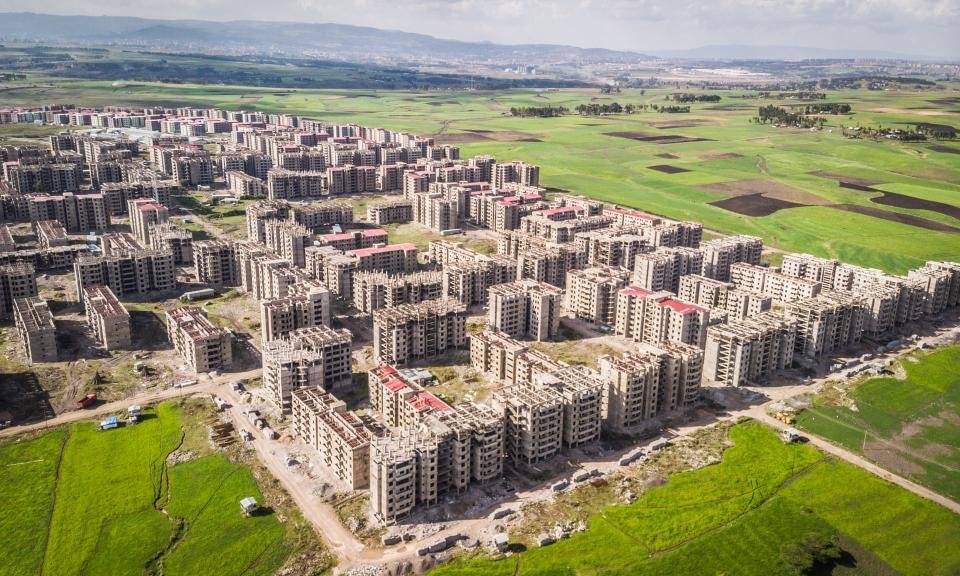
Ethiopia plans to construct 1.5 million homes over five years, requiring an average of 300,000 housing units annually as Prime Minister Abiy Ahmed seeks to address a housing deficit intensified by rapid urbanisation. The government has approved a national housing policy, introduced demonstration projects using 3D printing and prefabricated construction, and signed a framework with the International Finance Corporation to establish a mortgage refinancing company capitalised at a proposed 100 billion birr. However, Ethiopia's established public condominium programme historically delivered around 25,000 to 35,000 units annually, while independent researchers estimate national housing requirements exceed 470,000 units per year. The programme's success will depend on financing, construction capacity, affordability and the delivery of completed homes rather than announced targets.
Prime Minister Abiy Ahmed has pledged to deliver 1.5 million homes across Ethiopia by 2031, requiring an average of 300,000 units annually and a substantial expansion of construction and mortgage financing. The government says 1.2 million homes were built during the preceding years, but independent housing research records much lower delivery under the country's established public condominium programme. A new mortgage refinancing initiative, private investment and industrialised construction technologies are central to the plan, as Ethiopia confronts one of Africa's largest urban housing deficits.
Ethiopia is preparing one of Africa's largest national housing construction programmes, with Prime Minister Abiy Ahmed pledging to deliver at least 1.5 million homes over five years through public investment, private developers and partnerships between government and commercial financiers. The target, reiterated before Parliament on July 7, 2026, would require construction of approximately 300,000 homes annually, substantially exceeding the historical output of Ethiopia's established public condominium housing programme and introducing a major test of the country's ability to mobilise long term finance, expand domestic construction industries and make completed homes affordable to households.
The government intends to develop housing across urban and rural areas rather than concentrating the entire programme in Addis Ababa. It has approved a national housing development policy, begun preparing a new mortgage financing framework and introduced demonstration projects using 3D printing, prefabricated steel structures and other construction methods intended to reduce building times. Prime Minister Abiy has also argued that expanding domestic production of cement, steel and other building materials will be necessary to ensure that construction demand does not overwhelm local industrial capacity.
According to Ethiopian Broadcasting Corporation's July 8 report, Abiy told Parliament that Ethiopia had constructed approximately 1.2 million homes during the preceding seven years, while outlining the new target of at least 1.5 million additional units. A separate account published by Addis Media Network referred to the preceding five years, leaving the precise measurement period unclear. Neither announcement provided a sufficiently detailed breakdown of completed homes by location, developer, financing mechanism and date of occupation to independently verify the reported 1.2 million total.
That distinction is consequential because Ethiopia's previous government housing programme has a considerably smaller documented record of delivery. The Centre for Affordable Housing Finance in Africa (CAHF) estimates that the Integrated Housing Development Programme, introduced during the mid-2000s, produced approximately 383,000 housing units over nearly two decades, with historical annual production capacity generally ranging between 25,000 and 35,000 units. The government’s latest target would therefore require annual delivery between approximately nine and twelve times that established programme's historical production rate.
The government's 1.2 million figure may include privately constructed housing, rural homes and other categories outside the Integrated Housing Development Programme. It cannot be directly compared with public condominium completions without a consistent definition of what constitutes a completed housing unit. Nonetheless, the difference illustrates why Ethiopia's new target requires more detailed reporting than an overall construction pledge. Investors, households and policymakers need to know how many units have entered construction, how many have received financing, how many are finished and how many have been transferred to occupants.
The programme is being introduced as Ethiopia faces rapid urban growth and a housing shortage that has accumulated over decades. Speaking at a World Cities Day dialogue hosted at the United Nations Economic Commission for Africa in Addis Ababa on October 26, Urban and Infrastructure Minister Mohammed Abdurahman said the country's urban population was expanding at approximately 5.4% annually. He linked the government's housing programme to efforts to strengthen municipal capacity, infrastructure provision and employment creation in growing urban centres.
Housing construction on the proposed scale could generate substantial demand for cement, steel, glass, electrical equipment, plumbing, transport and labour, while supporting construction companies, financial institutions and property management businesses. However, the economic return will depend on whether the homes are situated near employment opportunities, supplied with essential infrastructure and offered through financing arrangements that match the incomes of their intended residents.
The Housing Target Requires an Industrial Construction Programme
ETHIOPIA'S FIVE YEAR HOUSING TARGET
1.5 million
Homes targeted over five years
300,000
Average annual deliveries required
25,000–35,000
Historical annual public condominium delivery capacity
471,000
Estimated annual national housing requirement through 2025
Sources: Ethiopian government statements, July 2026, and CAHF housing market research. The delivery comparison uses the earlier Integrated Housing Development Programme, not Ethiopia's entire residential construction industry.
The construction requirement illustrates the difference between Ethiopia's historical housing policy and its new ambition. Delivering 300,000 units annually would mean completing an average of approximately 25,000 homes every month, assuming an even production schedule. In practice, housing projects have different development periods, and completions may be concentrated in later years as land preparation, infrastructure construction and financing arrangements progress. The government would therefore need a pipeline containing significantly more units under construction than the number expected to be delivered within any single year.
For comparison, the original Integrated Housing Development Programme was designed to produce several hundred thousand subsidised condominium units while supporting employment, construction skills and the development of smaller contractors. It introduced standardised apartment designs and financing arrangements intended to make formal homeownership possible for lower and middle income residents. Research published in the Journal of Urban History describes the programme's objectives as extending beyond accommodation to employment creation, construction sector development and urban regeneration.
The programme delivered substantial improvements in formal housing supply, but its implementation encountered persistent constraints involving financing, land allocation, affordability, construction quality and supporting services. CAHF's research identifies an estimated national requirement of approximately 471,000 housing units annually through 2025, increasing towards 486,000 units annually by 2035. Even if Ethiopia delivers the entire new target of 300,000 homes each year, the programme would remain below that estimate of annual housing need, although additional supply could be provided through construction outside the government initiative.
Prime Minister Abiy acknowledged the scale of the challenge when announcing the programme in February 2026, describing the 1.5 million target as “still modest compared to the actual demand for housing,” according to Ethiopian Broadcasting Corporation. His statement reflects a demographic problem that has become increasingly difficult for African governments to address: the number of households seeking formal accommodation can grow faster than the capacity of public construction agencies, commercial developers and mortgage markets to supply it.
Ethiopia Turns to Mortgage Refinancing to Expand Homeownership
The most consequential financing development occurred on September 3, 2026, when the National Bank of Ethiopia and the International Finance Corporation (IFC), a member of the World Bank Group, signed a framework for cooperation to establish a dedicated mortgage refinancing company. According to the Ethiopian News Agency, the proposed institution would have capitalisation of 100 billion birr and receive a minimum IFC contribution of $200 million. The agreement is intended to address liquidity constraints that have historically limited Ethiopian banks' ability to offer long-term mortgages. The figures describe the proposed financing structure, rather than proof that the full capitalisation has already been paid in or that the institution is issuing loans to homebuyers.
The economic importance of the arrangement lies in the difference between financing a developer to construct a house and financing a household to purchase one. A developer requires capital to acquire construction rights, obtain materials, employ workers and complete buildings. The eventual buyer requires access to savings or credit sufficient to purchase the completed property. Expanding construction without providing affordable housing finance can leave developers holding unsold apartments, particularly in markets where household incomes are relatively low and mortgage lending remains limited.
A mortgage refinancing company could address part of this problem by providing longer-term financing to banks that originate qualifying mortgages. Commercial banks often rely on customer deposits that can be withdrawn relatively quickly, while mortgages may require repayment periods extending over many years. Financing long-term loans using comparatively short-term deposits introduces liquidity and maturity risks. A refinancing institution can reduce those pressures by acquiring or refinancing eligible mortgage assets, subject to the funding arrangements and financial safeguards established for the institution.
Announcing the IFC cooperation, Abiy described the partnership as “a critical step toward realising our goal of delivering 1.5 million affordable, dignified homes for Ethiopian families,” while linking it to the expansion of private financial participation. The government is also developing arrangements through which households can contribute savings and acquire properties through instalment payments, with rental accommodation available for households unable to purchase homes immediately.
However, refinancing does not automatically make mortgages affordable. Banks still need borrowers with sufficient income to meet monthly repayments, while the underlying house price must remain within the household's financial capacity. Interest rates, loan maturity, down payment requirements and the availability of collateral all influence the number of families able to participate. If construction costs rise faster than household incomes, easier access to credit may expand demand without resolving the underlying affordability problem.
The development of housing finance is therefore closely connected to Ethiopia's monetary and financial reforms. Changes in interest rates, inflation and the exchange rate affect construction materials, bank lending costs and household purchasing power. Imported machinery and specialised building equipment can become more expensive when the birr depreciates, while domestic inflation can increase the cost of labour and materials. The government must also reconcile its desire to attract private investment with the need to provide housing at prices accessible to lower income families.
The previously reported 3 trillion birr programme estimate would imply an average allocation of 2 million birr per home if applied to all 1.5 million units. That calculation provides a useful illustration of the scale of financing potentially involved, but the figure has not been substantiated by a sufficiently detailed official budget or approved financing schedule in the sources reviewed. It should therefore not be presented as a fully funded government commitment. Even an average construction cost would require clarification about whether land development, roads, water, sewerage, electricity and public facilities are included, since these costs can be substantial and are often financed separately.
New Construction Technologies Could Increase Output, but Scaling Them Remains Unproven
The government is pursuing industrialised construction methods as another means of increasing production. On June 9, 2026, Prime Minister Abiy visited a demonstration housing site in Addis Ababa where developers presented three approaches: 3D printed construction, prefabricated light steel structures and container based housing. The technologies were presented as alternatives to conventional construction methods, with the potential to shorten implementation periods through standardised designs, offsite manufacturing and more efficient assembly.
Following the visit, Abiy said the demonstration showed that homes could be delivered in “days and weeks, rather than months and years,” according to the Government Communication Service. He argued that modern methods could be reproduced across the country and contribute towards the national housing target. The claim, however, concerns demonstration technologies and their potential construction speed, rather than independently verified evidence that entire residential neighbourhoods, including utilities and supporting infrastructure, can already be completed within those periods.
Industrialised construction can reduce certain costs where projects involve large volumes of similar buildings and sufficient demand to justify investment in specialised machinery or factories. Prefabricated components can be manufactured under controlled conditions and assembled on site, potentially improving consistency and reducing construction time. Three dimensional printing may lower some labour and material requirements for selected structural components, depending on the equipment, design and material formulations used.
However, the benefits depend on the scale and organisation of construction. A technology that performs effectively at a demonstration site may face different conditions when implemented across multiple cities with varying soil conditions, infrastructure availability, technical skills and building regulations. Mechanical equipment also requires maintenance, trained operators and reliable access to appropriate materials. Ethiopia would need to establish whether the technologies can be produced and operated competitively using domestic supply chains, rather than creating additional dependence on expensive imported machinery and specialised inputs.
Construction capacity extends beyond building techniques. Delivering 300,000 homes annually would require a substantial increase in the number of skilled workers, engineers, supervisors, electricians, plumbers and contractors capable of completing projects to the required standard. The expansion would also create demand for reliable electricity, transport infrastructure and industrial materials, particularly cement, steel, glass and finishing products.
Ethiopia has sought to address these requirements through investment in domestic manufacturing, but any large housing programme can generate pressure on material prices if demand increases faster than production capacity. Higher construction costs would eventually affect the prices paid by homeowners or increase the subsidies required from government.
Kenya's Housing Levy Offers a Different Financing Model
The scale of Ethiopia's ambition invites comparison with Kenya, where President William Ruto's administration has established a national affordable housing programme supported by a dedicated statutory levy. Under Kenya's Affordable Housing Act, 2024, employees contribute 1.5% of gross monthly salary, with employers making a matching contribution. The levy also applies to specified nonemployment income, creating a financing stream that is not dependent entirely on annual budget appropriations or external borrowing.
The Kenyan model differs from Ethiopia's emerging approach because it collects dedicated contributions before the construction and allocation of homes, while Ethiopia is seeking to expand mortgage finance, developer participation and partnerships involving government and private capital. Both approaches still depend on commercial execution. Kenya must demonstrate that levy collections can support completed housing at prices accessible to intended beneficiaries, while Ethiopia must ensure that developers can raise construction capital and that buyers can obtain affordable long term financing.
Kenya's public figures also illustrate the danger of presenting houses under construction as completed homes. In its June 2026 budget statement, the National Treasury reported that 277,281 housing units had been completed or were under implementation as of May, a combined category that did not establish how many households had received finished homes. Housing and Urban Development Principal Secretary Charles Hinga subsequently reported in August that approximately 8,807 units were complete, while more than 270,000 were at different stages of construction. Those figures were reported by The Star, illustrating the substantial difference between active development pipelines and completed housing delivery.
On August 26, Hinga told the Kenya Affordable Housing Conference in Naivasha that the government intended to complete 45,000 units by December 2026 and that construction contracts were stimulating demand for cement, steel, transport and professional services. According to the Kenya News Agency, he placed the value of housing contracts under implementation at approximately KSh 731.5 billion, with additional projects awaiting approval. These statements establish official targets and reported construction activity, rather than verified year end delivery outcomes.
For Ethiopia, Kenya's experience offers an important reporting and policy distinction. A government may establish a substantial financing mechanism and bring hundreds of thousands of housing units into the development pipeline, but the economic and social benefits associated with occupancy emerge only when projects have been completed, allocated and connected to infrastructure. The construction stage can generate employment and industrial demand, while the housing stage requires affordability, functioning services and access to employment.
South Africa provides another useful comparison because it has pursued subsidised housing delivery over several decades. Its model involves significant direct public support for eligible households, while Ethiopia and Kenya are pursuing approaches intended to combine government intervention with private finance. Each model involves different fiscal obligations and affordability tradeoffs. A fully subsidised programme may reach households unable to obtain mortgages but requires substantial public expenditure, while a commercially financed programme can attract private capital yet struggle to serve households whose income is insufficient to repay loans.
Ethiopia's Housing Deficit Cannot Be Solved Through Construction Alone
Ethiopia's earlier housing programme provides evidence that large public construction initiatives can expand access to formal accommodation while also creating problems involving affordability, location and infrastructure. Research on Addis Ababa's condominium developments has documented the role of subsidised land, housing finance and public investment in supporting construction, but it has also examined difficulties arising when new residential estates are located far from employment centres or lack adequate transport and other essential services.
A 2024 academic study of Ethiopia's mass housing programme examined the relationship between condominium ownership and housing security in the city's expanding peripheral areas. Its findings reinforce the need to consider where homes are built and how residents can access employment, schools, healthcare and public transport. The value of an affordable apartment may be substantially reduced if the household must spend considerable additional time and money travelling to work or accessing basic services.
The infrastructure requirements are also substantial. Residential estates require roads, water supply, sanitation, electricity, drainage and waste management, along with schools, markets and healthcare facilities. If developers construct housing faster than municipal authorities can provide these services, the programme may increase pressure on urban infrastructure rather than resolve existing settlement problems. Conversely, investments in public transport and utilities can support higher density development and make housing projects more commercially attractive.
A 2025 study examining water and wastewater infrastructure in Addis Ababa found that the expansion of condominium housing had considerably increased the number of households with indoor plumbing, while creating additional demands on water supply and wastewater management. The research identified the need to coordinate residential construction with the capacity of supporting infrastructure as the city continues expanding.
This has implications for Ethiopia's new national policy because housing demand differs substantially between urban and rural areas. Multi storey apartment construction may be appropriate in Addis Ababa and other large cities where land is scarce and densities are relatively high, while smaller urban centres and rural communities may require different building forms and financing arrangements. A single national target can help mobilise government institutions and construction businesses, but actual implementation must reflect local incomes, land availability, employment opportunities and infrastructure costs.
The affordability question is equally important. Government programmes frequently describe houses as affordable based on subsidised selling prices, yet the actual ability to purchase depends on household income, down payment requirements, repayment periods and interest rates. A household may qualify for a subsidised apartment but still be unable to obtain a mortgage or sustain monthly payments. Rental housing can provide an alternative for households without sufficient savings or stable income, although affordable rental supply also requires investment and effective property management.
The government's decision to include long term mortgages and rental options in its new housing framework recognises these differences. However, the available public announcements do not yet establish the final income eligibility thresholds, mortgage rates, repayment periods, rental subsidy arrangements or the number of units to be allocated under each financing category.
The Economic Test Will Be Delivery, Affordability and Occupancy
Ethiopia's target of 1.5 million homes represents a substantial increase in national housing ambition, and its proposed financing framework could support investment across several industries. Construction on the intended scale would create demand for cement, steel, transport, manufacturing, engineering and professional services, while additional homeownership could strengthen household asset formation and encourage the development of mortgage markets.
However, the distinction between a housing construction programme and a functioning housing market will determine whether those benefits can be sustained. Developers need access to finance and building materials, banks require commercially acceptable lending arrangements, and households must possess sufficient income to pay for completed properties. Municipal authorities must also provide infrastructure and ensure that new developments are connected to employment and public services.
The government has already announced a national policy, demonstrated alternative construction technologies and signed a framework for a mortgage refinancing institution. These are preparatory steps towards implementation, but they do not yet provide evidence of housing delivery at the scale required to meet the five year target.
The historical record establishes why closer measurement is necessary. Ethiopia's Integrated Housing Development Programme delivered hundreds of thousands of formal homes but remained substantially below the country's estimated annual housing requirement. The government's more recent claim that 1.2 million homes were constructed during the preceding years may reflect broader categories of public and private construction, but the figures require a consistent breakdown before they can be compared with the new target.
The next phase will therefore require Ethiopia to publish construction schedules, financing commitments, unit costs, affordability criteria and verified delivery figures. Distinguishing completed and occupied homes from units under construction will allow policymakers and investors to evaluate whether the programme is expanding supply at the intended rate.
Ethiopia has demonstrated a willingness to pursue large public investment programmes and introduce new methods of financing and construction. The challenge facing its housing initiative is whether those capabilities can be organised into a commercially sustainable system that delivers 300,000 homes annually without creating unaffordable financial obligations for households or excessive costs for the government.
 Uchumi360
Business Intelligence
Uchumi360 covers business, investment, and economic policy across East, Central, and Southern Africa.
For the serious reader
You read to the end. That places you in a small group.
Uchumi360 is built for readers who demand precision over speed, structure over sentiment, and analysis that holds uncomfortable conclusions rather than softening them. If this work sharpens how you think about Africa's economy, help us keep building the infrastructure behind it.
Institutional Partners
Commission intelligence. Shape the conversation.
Uchumi360 works with development finance institutions, investment firms, sovereign bodies, and strategic organisations across the coverage region. Institutional partnership unlocks:
- Commissioned sector and country intelligence reports
- Branded research series under your institution's authority
- Exclusive data briefings for internal strategy teams
- Speaking and editorial presence at Uchumi360 events
- Co-published investment outlooks for your markets
Support Our Work
Independent analysis has a cost. Help us bear it.
Uchumi360 does not carry advertising. It does not take editorial direction from sponsors. Every article is produced without commercial compromise. Your contribution funds the reporting, research, and editorial infrastructure that keeps this analysis free from influence.
Secure checkout: One-time and monthly support are processed securely. Add payment credentials to enable checkout here.
Stay Connected
Keep up with every new insight.
Follow our latest analysis, policy coverage, and market intelligence as soon as it is published. If you need something specific, reach out directly and we will point you to the right research.
