
Ethiopia’s Renewed Tigray Conflict Becomes a Macroeconomic Risk
Ready
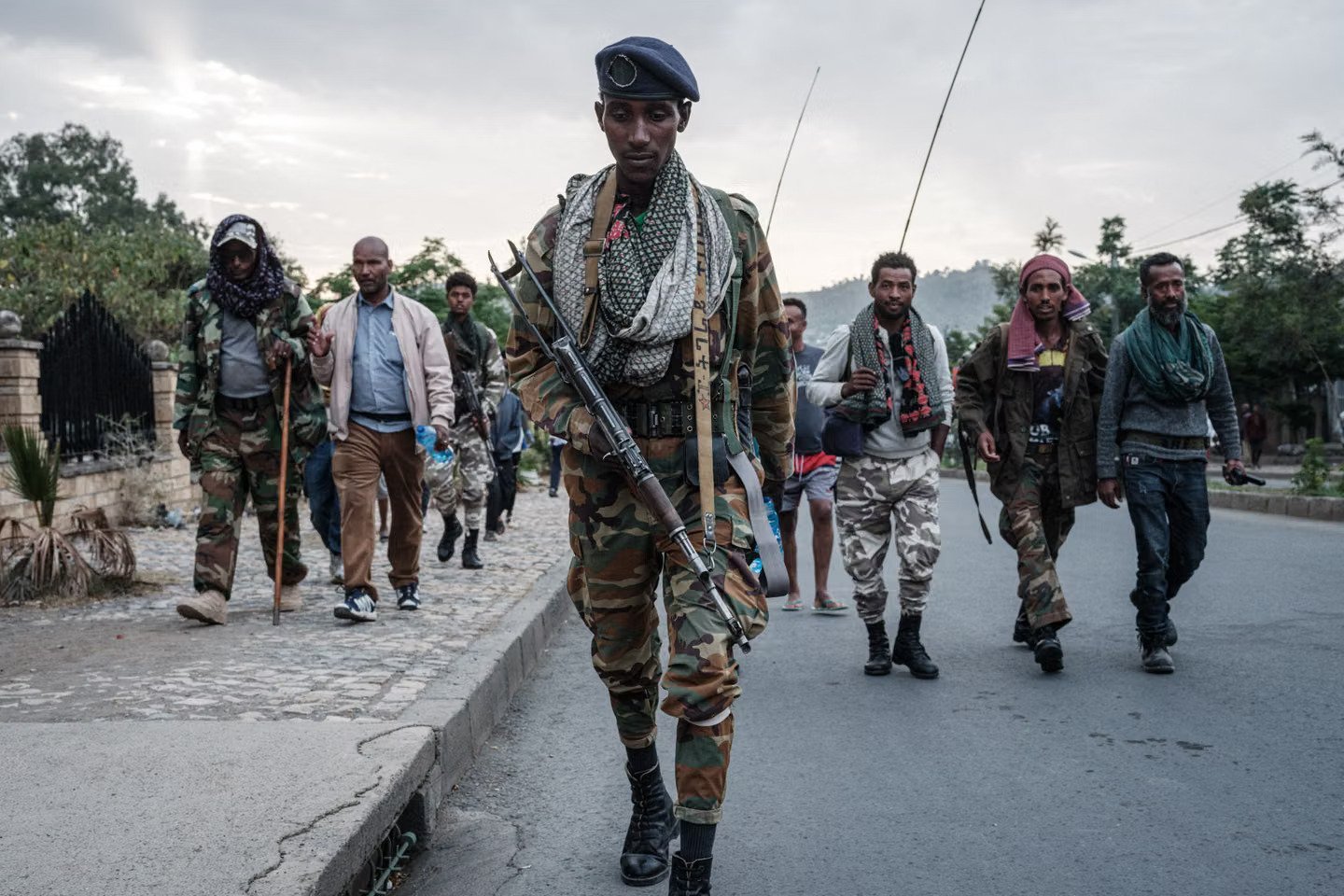
Ethiopia entered 2026 with exports rising, reserves improving and economic reforms beginning to deliver results. Renewed conflict in Tigray and worsening regional tensions now threaten investment, fiscal stability, foreign exchange and the country’s reform programme.
Ethiopia entered 2026 with one of the strongest economic recovery stories in East Africa. Exports were rising rapidly, foreign exchange availability was improving, inflation was easing, international reserves were rebuilding, and the government was pushing through reforms intended to move the economy away from administrative controls towards a more market-based system. Renewed fighting in Tigray now threatens to test how durable that recovery really is. The danger is not confined to the direct economic damage in northern Ethiopia. A prolonged conflict would affect the same variables that have supported the recent turnaround: investment, public finances, foreign exchange availability, trade, tourism and confidence in the reform programme.
The timing is particularly difficult because Ethiopia has spent the past two years attempting one of the most significant economic policy adjustments in its recent history. The second Homegrown Economic Reform programme has introduced a more market determined exchange rate, modernised monetary policy, opened previously restricted sectors to foreign participation and started restructuring the financial sector. The IMF’s $3.4 billion Extended Credit Facility programme has provided an external anchor for those changes, with total disbursements reaching about $2.18 billion by January 2026.
The conflict therefore arrives at a point when Ethiopia is trying to convince investors, creditors and domestic businesses that the rules of the economy are becoming more predictable. Military escalation introduces the opposite signal. The reforms may improve the economic framework, but they cannot remove the political risk premium that investors attach to a country facing renewed internal conflict.
How Strong Was Ethiopia’s Economic Recovery Before the Fighting?
Ethiopia’s recent export performance provides the clearest evidence that the recovery was becoming more visible. Goods exports increased from roughly $3.6 billion in 2022/23 to around $10.7 billion in 2025/26, driven largely by gold and coffee. The concentration of that growth means the export surge should not be mistaken for a broad manufacturing takeoff, but from a foreign exchange perspective the improvement was substantial. The IMF reported that goods exports had more than doubled in both volume and value during the early period of the reform programme, while formal remittance inflows strengthened and the gap between the official and parallel exchange rates narrowed after the July 2024 foreign exchange reforms.
That improvement mattered because foreign currency shortages had constrained Ethiopian businesses for years. Firms struggled to access hard currency for imported machinery, raw materials and intermediate goods, while the gap between official and parallel market exchange rates distorted pricing and allocation across the economy. The reform programme was beginning to reduce some of those frictions. Renewed insecurity risks interrupting that process before the new system has fully stabilised.
Why Does Renewed Conflict Threaten Investment?
The first economic effect is local. According to the supplied report, banks and businesses in Mekelle closed as federal aligned forces approached the city, flights were disrupted after opposition forces captured the airport and access to cash, fuel and other essential supplies became more difficult. These are immediate disruptions to commerce, but the larger macroeconomic effect comes through investment decisions.
Investors committing money to factories, mines, infrastructure or financial assets make decisions over long time horizons. A manufacturing plant may take a decade or more to recover its initial capital. Another prolonged conflict raises the return an investor will demand before accepting that risk, and in some cases it can delay the investment entirely. Ethiopia is especially exposed because the government is currently trying to attract more private capital into precisely the sectors that require long term confidence: banking, manufacturing, infrastructure, energy and previously restricted parts of the economy.
The reform programme can change licensing rules, access to foreign exchange and conditions for foreign ownership, but the security environment remains outside those policy tools. Economic reform and political stability therefore become interdependent. A more liberal investment regime attracts less capital if investors expect repeated disruption, while prolonged insecurity makes it harder for the reforms themselves to deliver the growth required to sustain public support.
Why Is the Conflict a Fiscal Risk for Ethiopia?
Conflict also places direct pressure on the budget. Military operations require fuel, logistics, equipment, personnel and financing, which creates competition for public resources that would otherwise be available for infrastructure, education, irrigation, electricity and other development priorities. The longer the fighting continues, the greater the risk that security expenditure begins to interfere with fiscal consolidation.
Ethiopia does not enter this period with unlimited fiscal room. The country is already restructuring external debt while implementing an IMF supported adjustment programme focused partly on expenditure discipline, domestic revenue mobilisation and restoring debt sustainability. The fiscal challenge is therefore not only the additional cost of military operations. It is whether those costs make it harder for the government to meet the same consolidation targets required to stabilise the wider economy.
If security spending rises while revenue, investment and growth weaken, the fiscal pressure compounds. A government can absorb a short security shock more easily than a prolonged conflict that simultaneously raises expenditure and weakens the revenue base.
Could the Conflict Reopen Ethiopia’s Foreign Exchange Problem?
Foreign exchange may become one of the most sensitive pressure points because the recent reforms were designed partly to correct long standing shortages. Renewed conflict can increase foreign currency demand through imported fuel, equipment and other supplies while reducing inflows through weaker investment, lower tourism receipts and more defensive capital behaviour.
Ethiopia was already facing external pressures before the latest escalation. The IMF had warned that higher fuel and fertiliser prices associated with conflict in the Middle East could create additional fiscal and balance of payments financing needs. A domestic security shock layered on top of those external costs would place more pressure on the same foreign exchange system that the government has spent the past two years trying to stabilise.
The economic risk therefore extends beyond slower GDP growth. A prolonged conflict can interfere with the transmission mechanism of the reforms themselves. If investors delay capital, tourism weakens, import requirements rise and the state needs more foreign currency for security related expenditure, the foreign exchange improvements achieved since 2024 become harder to preserve.
Does Retaking Mekelle Reduce the Economic Risk?
The recapture of Mekelle by government aligned forces reduces one immediate military risk, but it does not resolve the economic question. According to the supplied material, government aligned forces regained control of the city on October 4 after TPLF forces withdrew, but fighting continued elsewhere in Tigray and airstrikes and artillery exchanges were still being reported on October 5.
For investors, lenders and businesses, the critical variable is not control of a single city. It is whether the broader escalation ends quickly enough to avoid another extended period of instability. The previous Tigray war showed how rapidly a domestic conflict can acquire regional dimensions, while the current situation is unfolding alongside war in Sudan and strained relations among Ethiopia, Eritrea and Egypt.
The regional dimension adds another layer of uncertainty. Ethiopia closed its embassy in Asmara and expelled Eritrean diplomats after accusing Eritrea of supporting opposition forces. Eritrea denied the allegation and severed diplomatic relations. Addis Ababa has also accused Sudan and Egypt of supporting its opponents, allegations both countries deny. These claims remain contested, but the diplomatic deterioration itself increases the probability that investors will price regional instability into decisions about Ethiopia.
Why Does Ethiopia Have More to Lose Economically This Time?
Ethiopia today is more exposed to the investment consequences of instability because its economy is undergoing a deeper market transition than it was at the beginning of the previous Tigray war. Foreign exchange allocation has changed, banking is opening to foreign participation, export earnings have risen sharply, reserves have improved and the government is trying to attract private capital into sectors that were previously closed or heavily controlled.
That means the cost of renewed insecurity is not simply measured by damaged infrastructure or disrupted commerce in affected regions. It is also measured by investment postponed, financing made more expensive and reforms that become harder to sustain politically and fiscally. The IMF has itself identified a worsening security environment as a downside risk to the reform programme.
If the conflict is contained quickly, Ethiopia’s recent export growth, improved reserves and infrastructure base may allow the economy to absorb the shock. If the fighting becomes prolonged or expands into a wider regional confrontation, the consequences become much larger: higher public expenditure, weaker investment, renewed pressure on foreign exchange, disrupted trade and a higher cost of capital.
Ethiopia spent the past two years trying to convince investors that its economic rules were changing. The conflict now raises another question: whether political and security conditions will remain stable long enough for those reforms to produce their full economic return.
FAQ
Why is the renewed Tigray conflict an economic risk for Ethiopia? The conflict can raise government spending, disrupt trade and business activity, discourage investment and increase pressure on foreign exchange at a time when Ethiopia is implementing major economic reforms.
Was Ethiopia’s economy improving before the latest fighting? Yes. The supplied report says exports, government revenue and reserves had strengthened while inflation was easing and foreign exchange liquidity was improving under the reform programme.
How much did Ethiopia export in 2025/26? Goods exports rose to around $10.7 billion in 2025/26 from roughly $3.6 billion in 2022/23, with gold and coffee accounting for most of the increase.
Why is foreign exchange important to Ethiopia’s recovery? Foreign currency shortages had constrained imports, business investment and economic activity for years. The recent reform programme narrowed the gap between official and parallel exchange rates and improved liquidity, making renewed pressure on foreign exchange a major macroeconomic risk.
Did government aligned forces retake Mekelle? According to the supplied report, government aligned forces regained control of Mekelle on October 4 after TPLF forces withdrew, although fighting continued elsewhere in Tigray.
Why do Ethiopia’s tensions with Eritrea matter economically? A wider regional confrontation would increase security spending, weaken investor confidence and raise risks around trade and foreign exchange. Ethiopia has accused Eritrea of supporting opposition forces, which Eritrea denies.
 Uchumi360
Business Intelligence
Uchumi360
Business Intelligence
Uchumi360 covers business, investment, and economic policy across East, Central, and Southern Africa.
For the serious reader
You read to the end. That places you in a small group.
Uchumi360 is built for readers who demand precision over speed, structure over sentiment, and analysis that holds uncomfortable conclusions rather than softening them. If this work sharpens how you think about Africa's economy, help us keep building the infrastructure behind it.
Institutional Partners
Commission intelligence. Shape the conversation.
Uchumi360 works with development finance institutions, investment firms, sovereign bodies, and strategic organisations across the coverage region. Institutional partnership unlocks:
- Commissioned sector and country intelligence reports
- Branded research series under your institution's authority
- Exclusive data briefings for internal strategy teams
- Speaking and editorial presence at Uchumi360 events
- Co-published investment outlooks for your markets
Support Our Work
Independent analysis has a cost. Help us bear it.
Uchumi360 does not carry advertising. It does not take editorial direction from sponsors. Every article is produced without commercial compromise. Your contribution funds the reporting, research, and editorial infrastructure that keeps this analysis free from influence.
Secure checkout: One-time and monthly support are processed securely. Add payment credentials to enable checkout here.
Stay Connected
Keep up with every new insight.
Follow our latest analysis, policy coverage, and market intelligence as soon as it is published. If you need something specific, reach out directly and we will point you to the right research.
