
Ethiopia Takes Urban Corridor Development to 75 Cities as Addis Ababa Transformation Accelerates
Ready
Launched at scale in Addis Ababa in 2024, Ethiopia's urban corridor programme has spread to 75 cities, delivering hundreds of road, pedestrian and public space projects. With more than 241 kilometres of cycling infrastructure and 426 kilometres of walkways reported in the capital by July 2026, the initiative offers an ambitious approach to African urban renewal, although its financing, displacement of residents and long term maintenance raise questions about its social and economic costs.
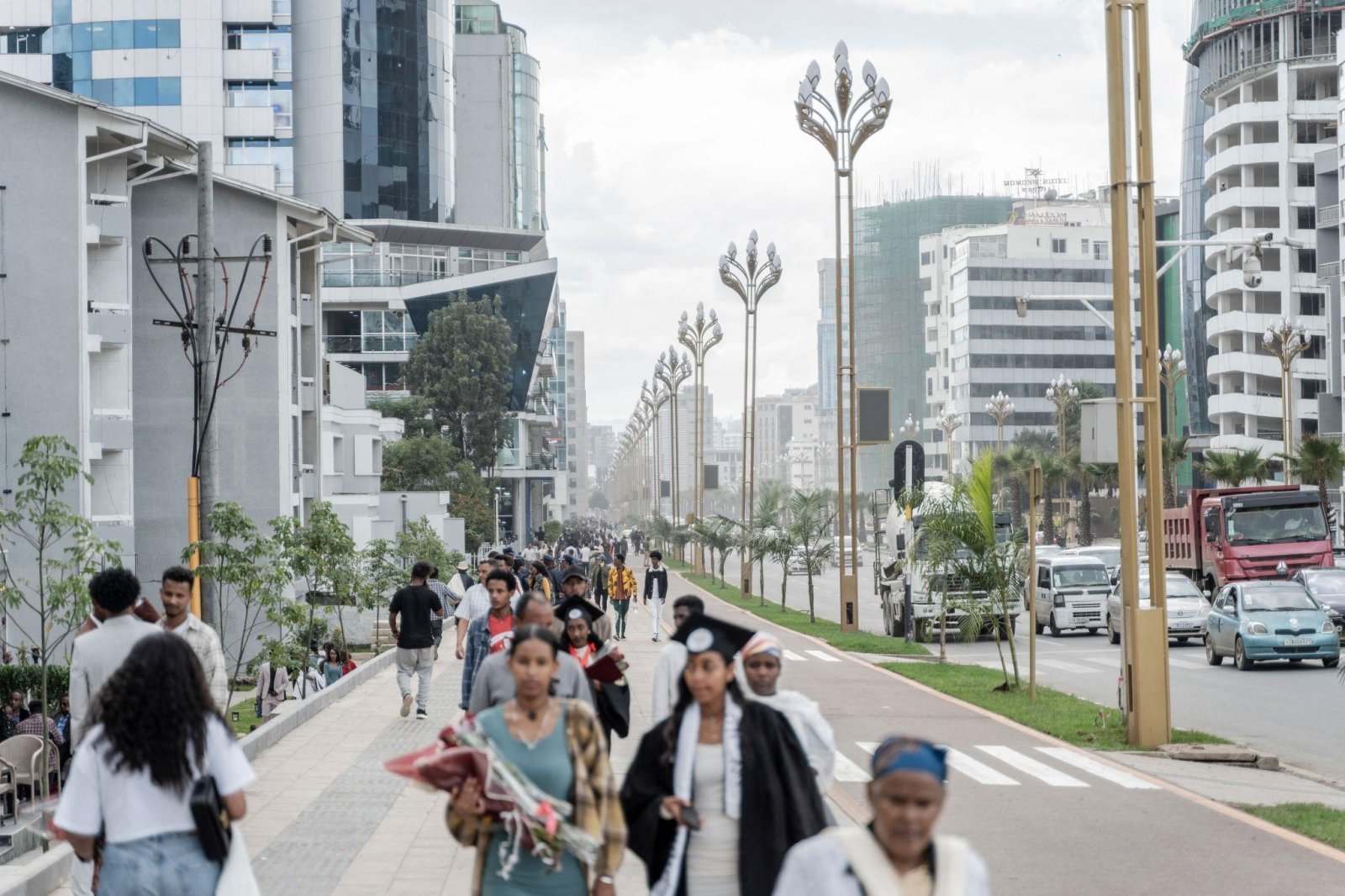
Ethiopia has expanded its Corridor Development Initiative to 75 cities, turning an urban infrastructure programme that accelerated in Addis Ababa in 2024 into a national effort to redesign streets, improve pedestrian mobility, rehabilitate public spaces and modernise essential utilities. The programme is changing how urban development is approached in one of Africa's most populous countries, with regional cities increasingly receiving the kind of coordinated infrastructure investment previously concentrated in the capital.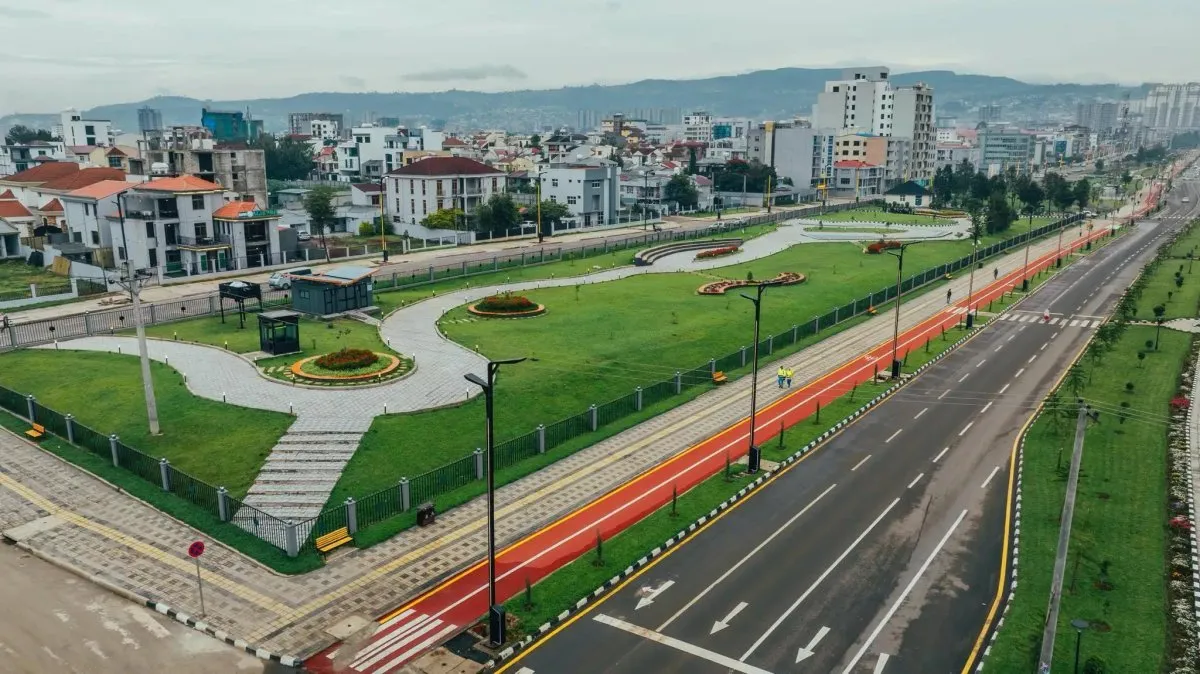 By May 2025, Ethiopia's Ministry of Urban Development and Infrastructure reported that more than 300 individual projects had become operational across participating cities, including over 500 kilometres of roads serving different urban functions. At the time, approximately 60 cities were participating and more than 30 had completed their first phase. In March 2026, State Minister Fanta Dejen confirmed that the initiative had expanded to 75 cities, with plans to extend the approach to additional urban centres.
Cities reached
75
March 2026
National projects operational
300+
May 2025
Road works reported nationally
500 km+
May 2025
Addis Ababa cycling tracks
241+ km
Addis Ababa pedestrian walkways
426+ km
The Addis Ababa figures were reported in the August 2026 Non-Motorised Transport Implementation Plan and cover delivery through July 2026.
The programme has several components beyond conventional road construction. Existing roads are being widened or reconstructed, while pedestrian walkways, dedicated cycling lanes, drainage infrastructure, street lighting, landscaped public spaces, parking facilities and underground utility systems are being introduced or upgraded together. In certain areas, projects also include riverside rehabilitation, recreation facilities, public toilets, commercial premises and electric vehicle charging infrastructure.
The scale and pace of implementation have attracted attention because many African cities face a widening gap between population growth and investment in basic urban services. Ethiopia is attempting to address several of these infrastructure deficits simultaneously, rather than treating roads, drainage, street lighting, public space and pedestrian mobility as unrelated projects.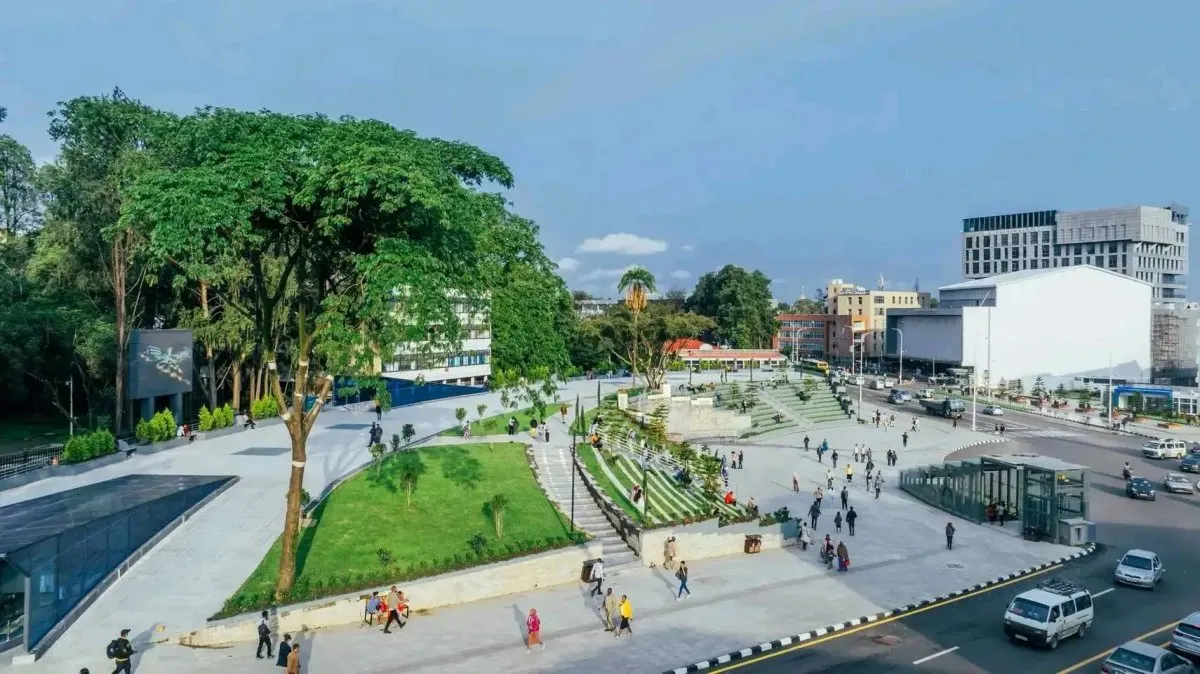 The economic promise is substantial, particularly where better urban infrastructure reduces transport costs, improves access to businesses, makes public transport more convenient and expands usable commercial space. Yet the programme has also involved demolition of existing buildings and relocation of residents and businesses. Its long term contribution will therefore depend on whether physical improvements are accompanied by affordable access, fair treatment of affected communities, sustained maintenance and measurable improvements in urban productivity.
From a 2022 Urban Renewal Concept to a Nationwide Programme in 2026
The origins of Ethiopia's corridor development policy predate its most visible construction activity. Academic research published in 2026 and documentation from Amnesty International trace the broader initiative to December 2022. The major integrated street reconstruction programme in Addis Ababa, however, was formally approved by the city cabinet on February 22, 2024, and subsequently accelerated under Prime Minister Abiy Ahmed and Mayor Adanech Abiebie. This distinction helps explain why some publications identify 2022 as the beginning of the initiative while government reports commonly refer to its launch in 2024.
Addis Ababa's initial phase covered five major transport corridors, including routes around Piassa, Arat Kilo, Bole and Mexico Square. By June 2024, sections of Piassa and Arat Kilo had reopened with reconstructed pavements, cycling infrastructure, landscaping and public amenities. The first phase ultimately delivered approximately 40 kilometres of improved streets, according to the World Resources Institute (WRI), establishing a model subsequently extended to additional corridors and regional cities.
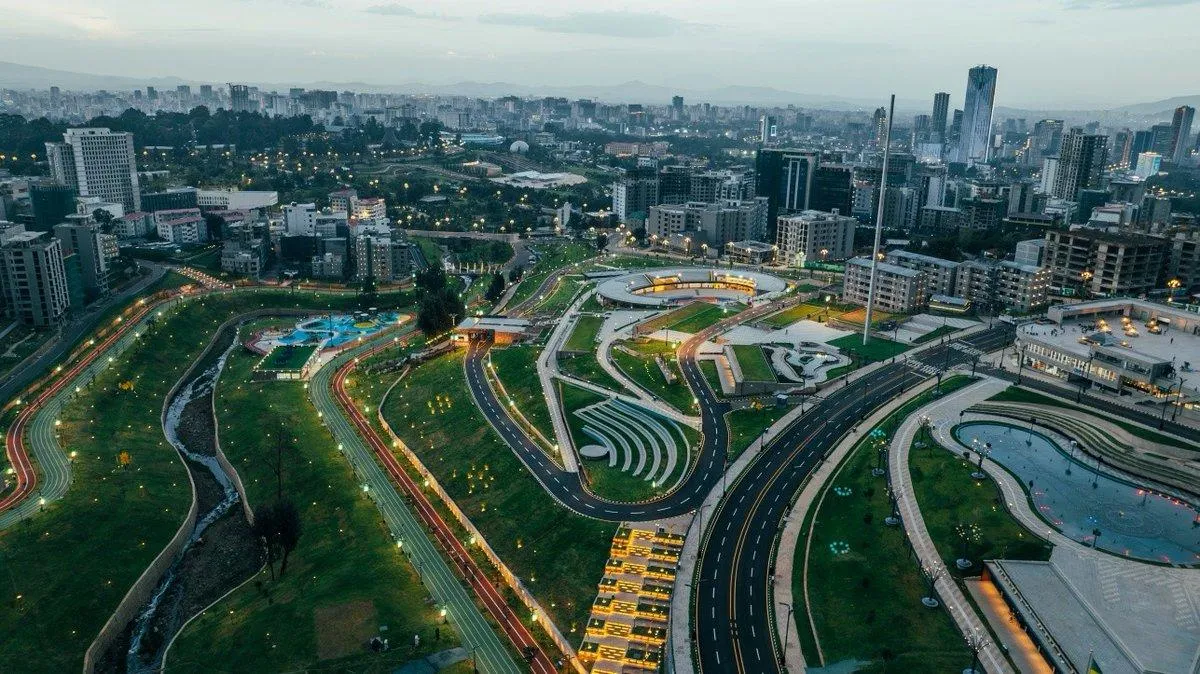 A second phase, pursued during 2024 and 2025, expanded reconstruction to eight corridor areas. Work progressed on routes connecting major commercial districts, residential areas, public institutions and transport facilities, including the Meskel Square to Megenagna corridor. In September 2025, the government inaugurated an eight kilometre section extending towards South Gate, incorporating approximately 16 kilometres of concrete pedestrian walkways, redesigned vehicular lanes, lighting and recreational facilities.
The expansion beyond Addis Ababa began before the capital's full programme was complete. By February 2025, officials had reported corridor development in seven Amhara cities and several urban centres in southern Ethiopia. Dire Dawa was implementing an 8.54 kilometre corridor, while Arba Minch was introducing a design incorporating a six metre pedestrian walkway, a 3.2 metre cycle lane and a four metre landscaped strip.
By May 2025, officials reported more than 300 operational projects in approximately 60 cities, including over 500 kilometres of road works. The number had reached 75 cities by March 2026, confirming that the programme had evolved from a capital city intervention into a national urban infrastructure policy.
The figures represent different measures of progress. A city participating in the programme may have completed selected roads or public spaces without having finished every planned corridor. Similarly, nationally reported road kilometres should not be confused with the total length of dedicated pedestrian or cycling infrastructure.
Which Ethiopian Cities Are Covered?
The initiative now extends across the capital and regional urban centres, including major commercial cities, industrial towns and administrative capitals. The government has not published a complete, independently reconciled list of all 75 participating cities in the sources reviewed. However, its reporting identifies the following locations among those where corridor development has been launched or implemented.
| Region or administrative area | Reported participating cities |
| Addis Ababa | Addis Ababa |
| Oromia | Adama, Bishoftu, Nekemte, Shashemene |
| Amhara | Bahir Dar, Gondar, Dessie, Kombolcha, Debre Birhan, Debre Markos |
| Sidama | Hawassa |
| South Ethiopia | Arba Minch, Wolaita Sodo |
| Central Ethiopia | Hosaena |
| South West Ethiopia | Jimma |
| Somali | Jigjiga |
| Dire Dawa | Dire Dawa |
| Harari | Harar |
| Tigray | Mekelle |
| Afar | Semera |
| Benishangul Gumuz | Assosa |
| Other reported locations | Dilla |
Illustrative list of 22 named cities, including Addis Ababa, reported by Ethiopian government media in June 2026. The list does not establish completion status for each city or constitute the full 75 city register.
The geographic distribution is important because Ethiopian urban investment has historically been concentrated in Addis Ababa and selected regional centres. The corridor initiative attempts to establish a common infrastructure approach across cities that differ substantially in population, economic activity, municipal revenue capacity and administrative resources.
Adama, Bishoftu and Hawassa are particularly relevant because of their relationship with industrial activity, logistics and the wider Addis Ababa economic region. Bahir Dar, Gondar, Harar and other historic or tourism oriented cities could benefit from improved public spaces and pedestrian access, provided that redevelopment protects local heritage and established businesses. Jimma, Dire Dawa, Jigjiga and other regional centres could gain from better movement of people and goods within their urban economies.
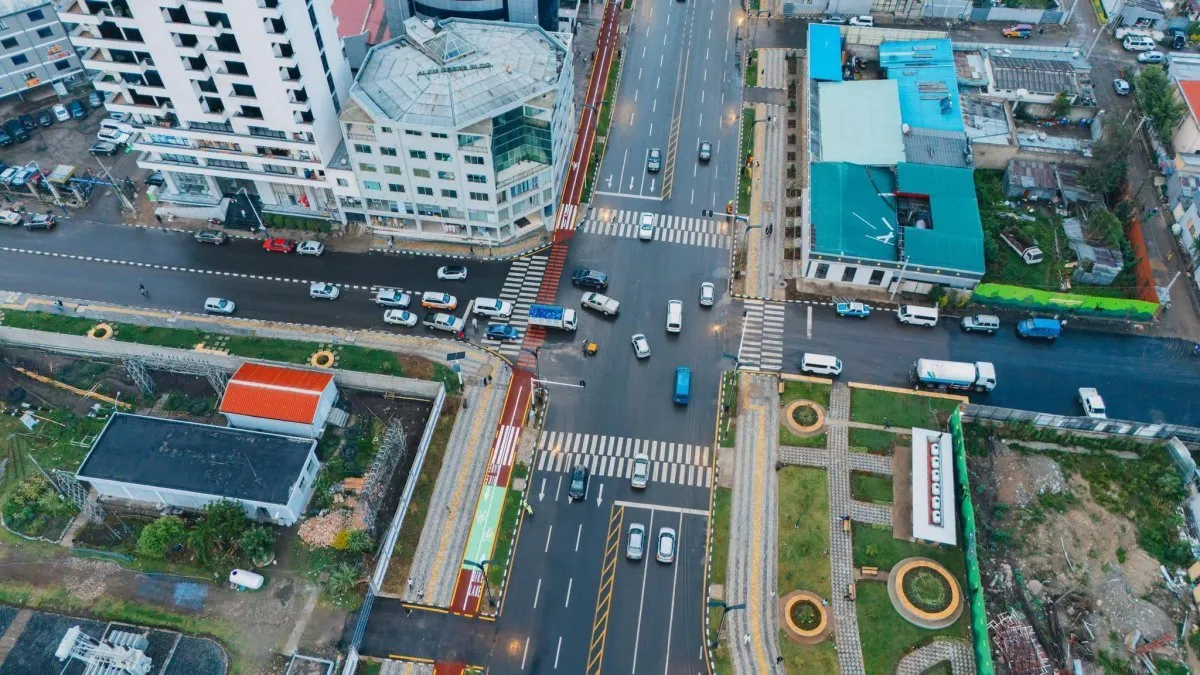 The economic effect will depend on how individual projects are designed. A reconstructed boulevard can improve urban mobility when it connects employment areas, markets and transport services, but its contribution may be limited if surrounding neighbourhoods remain underserved or if residents must travel farther after relocation.
How Much Has Ethiopia Invested?
The programme's total investment cost remains difficult to establish because expenditure is spread across municipal budgets, regional administrations, individual infrastructure contracts and associated urban renewal activities. The available evidence establishes substantial spending in Addis Ababa, but does not support a single verified nationwide total covering all 75 cities.
In December 2024, Ethiopian business publication Shega reported that Addis Ababa had invested approximately 33 billion Ethiopian birr in corridor development during the preceding reporting period, with expenditure financed by the city administration. The publication indicated that spending could potentially double in the following year, although that was an expectation rather than a confirmed subsequent expenditure figure.  A separate WRI Africa assessment published in May 2025 estimated that the 10.4 kilometre Piassa to Mexico, Sarbet, Gotera and Wollo Sefer corridor alone had cost the city approximately $325 million. The amount was associated with an extensive reconstruction intervention that involved the relocation of 3,250 households and more than 14,000 residents.
Selected reported investment and financing figures
| Piassa to Wollo Sefer corridor | Approximately $325M |
| Addis Ababa corridor spending reported in December 2024 | $202M |
| Verified nationwide expenditure total | Not established |
These are separate published measures with different reporting scopes and periods. They must not be added together. The original birr expenditure is retained in its reported currency because a comparable historical USD conversion was not verified.
Addis Ababa's municipal finances provide additional context for the investment programme. In a July 2026 interview, City Manager Wondimu Seta reported that the city budget had increased substantially over the preceding five years, with an approved allocation of approximately 502.2 billion birr for the 2026/27 financial year. This reflects increased municipal spending capacity, although the figure represents the entire municipal budget rather than expenditure dedicated to corridor development.
The same official reported that the programme had generated more than 150,000 direct construction jobs during its first year of implementation. He also stated that more than 5,000 standardised shops had been constructed under the urban improvement programme. These are city administration claims and should not be interpreted as independently audited national employment or business creation statistics.
The investment model also raises questions about how costs and benefits are distributed. Municipal financing can give local administrations greater control over project implementation, but land acquisition, relocation, compensation, utility replacement and long term maintenance may impose costs extending beyond the initial construction budget. Without comprehensive expenditure disclosure, it is difficult to determine the total public cost per kilometre or compare implementation efficiency across cities.
A nationwide financial assessment would require consolidated information on municipal spending, regional allocations, federal transfers, contractor payments, land acquisition, compensation and future maintenance obligations. No such complete consolidated account was identified in the sources reviewed.
What Has Changed in Addis Ababa, and What Comes Next?
The programme's most measurable transport achievements have emerged in Addis Ababa. According to the city's Non Motorised Transport Implementation Plan for 2025 to 2028, published by the Institute for Transportation and Development Policy (ITDP) in August 2026, corridor development had delivered more than 241 kilometres of cycle tracks and 426 kilometres of pedestrian walkways by July 2026. The same report identifies remaining weaknesses in network connectivity, infrastructure quality, institutional coordination and integration with public transport.
This is relevant to the broader economic purpose of the investment. Addis Ababa's mobility challenges have long been shaped by inadequate pedestrian infrastructure, congested roads and insufficient public transport capacity. WRI Africa estimates that walking accounts for 54% of trips in the capital, while pedestrians represent approximately 86% of traffic fatalities. Improving pedestrian infrastructure therefore addresses the needs of a substantial share of road users rather than simply introducing recreational facilities.
The next stage of investment is also extending beyond transport infrastructure into urban water management, sanitation, environmental rehabilitation and new commercial development.
On October 25, 2026, Prime Minister Abiy Ahmed inaugurated the Kechene, Ambassador, Gihon, Irreecha and Bambis riverside development, covering approximately 351 hectares along a ten kilometre urban corridor. The project forms part of efforts to rehabilitate riverbanks, create accessible public spaces and improve the surrounding urban environment.
A further project unveiled on November 18 covers 57 hectares across seven routes and connecting roads in the Bole area. These include Bole Medhanialem to Golagul and the British Embassy, Bole Medhanialem to Moenco, Bole School to Adey Abeba Model Village, Imperial Hotel to Shalla Park, Chechnya to Bole Rwanda, and Adey Abeba Stadium to Bole Road.
According to the government, this development incorporates reconstructed roads, pedestrian walkways, dedicated cycling infrastructure, underground utility systems, electric vehicle charging facilities and parking for more than 5,000 vehicles. It also includes schools, libraries, playgrounds, sports facilities and commercial public spaces.
The city's third phase also includes the Goro to Koye Feche and Tulu Dimtu corridor, alongside a 22 kilometre riverside development extending towards Akaki. The road component is planned to cover approximately 15 kilometres, with pedestrian and cycling infrastructure and landscaped areas. Associated infrastructure proposals include 12 deep wells, water supply capacity of 106,000 cubic metres per day, a wastewater treatment facility and 206 kilometres of wastewater pipelines. These are project scope figures and should not be mistaken for completed facilities.
The latest expansion suggests that Ethiopia is moving from reconstructing individual streets towards more comprehensive redevelopment of urban districts. Integrating water, drainage, wastewater, electricity and transport infrastructure within the same construction programme can reduce the repeated excavation of streets and improve coordination between public utilities, provided the responsible agencies maintain accurate asset records and implement compatible engineering standards.
The Ministry of Urban and Infrastructure has indicated that corridor development will gradually extend to additional cities beyond the 75 already participating. For Addis Ababa, the 2025 to 2028 transport implementation plan prioritises connecting existing pedestrian and cycling networks, improving links with public transport and addressing gaps in safety and accessibility.
Why Ethiopia's Approach Matters for Africa's Urban Renaissance
Ethiopia's urban corridor programme offers a useful case study for African cities because it treats the condition of streets and public spaces as part of economic infrastructure. Across the continent, rapid urban population growth has frequently outpaced investment in roads, drainage, sanitation, pedestrian facilities and public transport. Development has often proceeded incrementally, with buildings and commercial activity expanding before the infrastructure required to serve them.
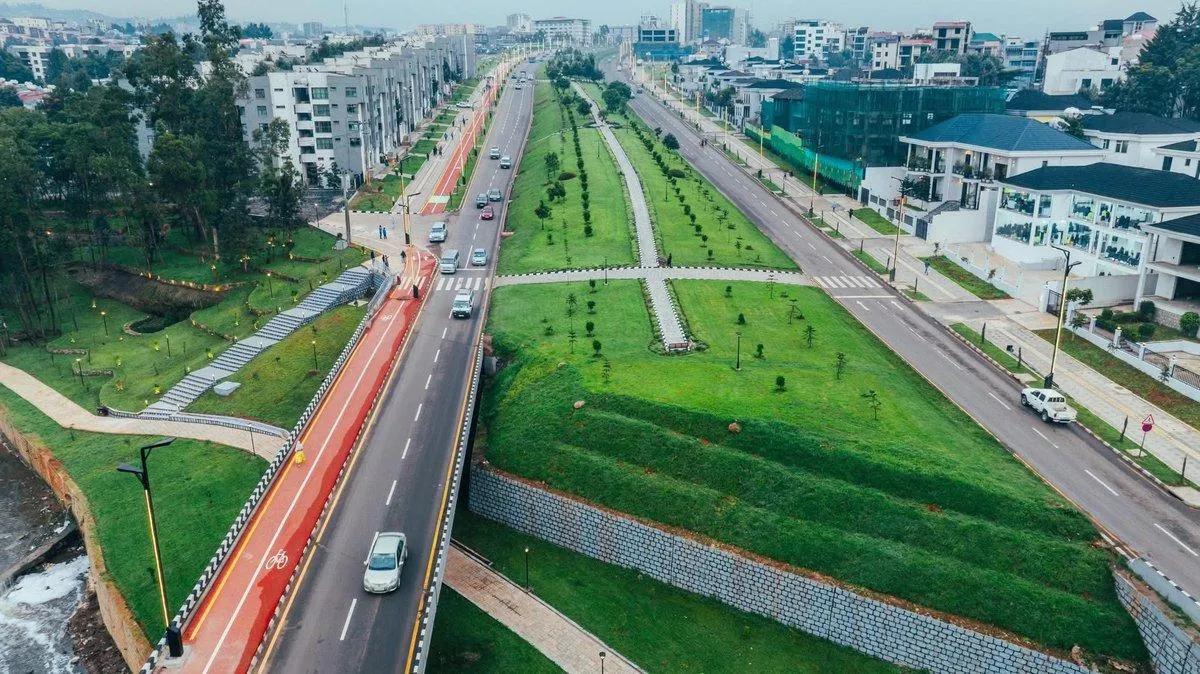 WRI Africa estimates that Africa faces an annual infrastructure investment gap of approximately $100 billion, while its urban population is projected to double by 2050. The institution also reports that pedestrian and cycling conditions remain inadequate across much of the continent's road network. Ethiopia's intervention demonstrates how an existing urban road can be redesigned to accommodate different users and services within a coordinated investment programme.
This has several implications for urban economic development;
First, improvements in pedestrian access can reduce the daily costs of travelling to employment, markets, schools and public services. In cities where walking accounts for a large share of trips, continuous, safe and accessible pavements can generate benefits for more residents than investments designed primarily around private vehicles. These benefits become greater when pedestrian networks connect to affordable, reliable public transport.
Second, improved urban infrastructure can support commercial activity. Better lighting, drainage, access routes and public spaces can make business districts more accessible and reduce some operating constraints for small enterprises. But the effect depends on whether existing traders can remain in the area, afford commercial premises and retain access to customers. Reconstructing a market street while displacing its businesses can undermine the economic activity that originally made the location valuable.
Third, Ethiopia's regional expansion challenges the concentration of major urban investments in national capitals. Cities such as Adama, Hawassa, Bahir Dar, Dire Dawa and Jimma serve regional economies with distinct industrial, commercial and administrative functions. Improving infrastructure in these centres could support employment and private investment outside Addis Ababa, while reducing pressure for economic activity to concentrate in a single metropolitan area.
The approach is relevant to cities elsewhere in eastern Africa, including Dar es Salaam, Nairobi, Kampala, Kigali and secondary urban centres experiencing rapid population growth. In Tanzania, for example, road investment and bus rapid transit development have improved parts of Dar es Salaam's transport network, but unplanned settlement growth and inadequate pedestrian connectivity remain major constraints. Ethiopia's integrated corridor approach offers a reference for coordinating road, utility and public space improvements, although the financing and land administration arrangements would have to reflect Tanzania's own institutions.
Another potential benefit is institutional. Completing multiple urban services within defined corridors requires coordination among road authorities, municipal governments, utilities, transport agencies and land administration offices. Where that coordination is effective, public investments can be delivered with fewer conflicting construction schedules and clearer responsibilities for maintenance.
However, the programme's long term economic value cannot be determined from completed kilometres or the appearance of reconstructed streets. Useful performance measures would include changes in pedestrian injuries, public transport journey times, business occupancy, drainage performance, household access to services, infrastructure maintenance costs and the financial position of participating municipalities.
Displacement and Compensation Remain Major Concerns
Ethiopia's corridor development programme has also generated substantial controversy over property demolitions and the relocation of residents.
In May 2025, Amnesty International reported that thousands of people had experienced forced evictions associated with the initiative in Addis Ababa and other urban centres. The organisation documented cases in which residents reported inadequate consultation, limited notice and insufficient or absent compensation. It called for the authorities to suspend forced evictions and ensure compliance with protections relating to housing, property and access to remedies.
WRI Africa's assessment identified the relocation of more than 14,000 residents along one 10.4 kilometre corridor alone. The institution also raised concerns about the exclusion of informal street vendors, the safety of some redesigned intersections and the need for stronger connections between cycling infrastructure and public transport. In some locations, road widening has created large intersections that remain difficult for pedestrians to cross safely.
A June 2026 academic study of the Addis Ababa Corridor Development Project examined the relationship between large urban projects, land administration, investment and political authority. The study argues that improvements in physical infrastructure have been accompanied by changes in urban land allocation that can exclude established residents and economic activities.
Addis Ababa officials dispute the characterisation of the programme as harmful to affected communities. City Manager Wondimu Seta has argued that redevelopment has moved residents into improved living conditions, increased the supply of commercial premises and expanded public infrastructure. The administration also points to employment creation, environmental rehabilitation and new housing and business facilities as benefits of the programme.
These competing accounts underline the need for independent evaluation. The existence of new housing or compensation arrangements does not, by itself, establish whether all affected households received adequate support. An assessment would need to examine relocation distances, housing affordability, access to employment, compensation amounts, business interruption, tenure security and whether affected communities participated meaningfully in decisions.
Displacement also has an economic dimension. Informal businesses often depend on customer relationships, proximity to transport routes and established trading locations. Removing enterprises from those locations can destroy income even where replacement premises are provided elsewhere. Urban renewal programmes therefore need to account for the economic value of existing communities alongside the value of the infrastructure being constructed.
For other African cities considering similar initiatives, Ethiopia's experience provides a warning about the costs of rapid implementation when consultation and relocation arrangements are contested. Physical redevelopment can produce substantial public benefits, but those benefits should be assessed alongside the costs imposed on existing residents and enterprises.
The Next Test Is Whether Better Streets Produce Better Urban Economies
Ethiopia has demonstrated that coordinated urban reconstruction can be implemented across numerous cities within a relatively short period. In roughly two years of accelerated activity, the programme has moved beyond isolated road improvements towards a national approach covering transport infrastructure, public spaces, environmental rehabilitation and utility modernisation.
Its most measurable achievements include the first phase of Addis Ababa's reconstructed corridors, hundreds of kilometres of pedestrian and cycling infrastructure, more than 300 reported operational projects across regional cities and the expansion of implementation to 75 urban centres.
Yet several questions remain unresolved. The full cost of the national programme has not been disclosed in a consolidated, independently verified account. Project completion figures are reported across different periods and categories, making direct comparisons difficult. Independent evidence on changes in journey times, traffic safety, commercial performance and operating costs remains limited, while disputes over displacement and compensation continue to affect the programme's social assessment.
The next phase will require attention to these outcomes and to the recurrent costs of maintaining reconstructed infrastructure. New pavements, drainage systems, cycle tracks, lighting, landscaped spaces and wastewater facilities create continuing obligations for municipalities. Cities with limited revenue bases may find it difficult to maintain the infrastructure to the standard established during construction unless appropriate financing and institutional responsibilities are secured.
For Africa's urban development debate, Ethiopia's initiative provides evidence that governments can undertake coordinated improvements to existing cities while extending investment beyond national capitals. The stronger test will be whether these changes improve economic opportunity, preserve access for lower income residents and deliver public infrastructure that municipalities can afford to operate and maintain.
The programme's contribution to an African urban renaissance will ultimately be established by what happens to the people and businesses using these redesigned cities over the coming decade.
 Uchumi360
Business Intelligence
Uchumi360 covers business, investment, and economic policy across East, Central, and Southern Africa.
For the serious reader
You read to the end. That places you in a small group.
Uchumi360 is built for readers who demand precision over speed, structure over sentiment, and analysis that holds uncomfortable conclusions rather than softening them. If this work sharpens how you think about Africa's economy, help us keep building the infrastructure behind it.
Institutional Partners
Commission intelligence. Shape the conversation.
Uchumi360 works with development finance institutions, investment firms, sovereign bodies, and strategic organisations across the coverage region. Institutional partnership unlocks:
- Commissioned sector and country intelligence reports
- Branded research series under your institution's authority
- Exclusive data briefings for internal strategy teams
- Speaking and editorial presence at Uchumi360 events
- Co-published investment outlooks for your markets
Support Our Work
Independent analysis has a cost. Help us bear it.
Uchumi360 does not carry advertising. It does not take editorial direction from sponsors. Every article is produced without commercial compromise. Your contribution funds the reporting, research, and editorial infrastructure that keeps this analysis free from influence.
Secure checkout: One-time and monthly support are processed securely. Add payment credentials to enable checkout here.
Stay Connected
Keep up with every new insight.
Follow our latest analysis, policy coverage, and market intelligence as soon as it is published. If you need something specific, reach out directly and we will point you to the right research.
