
From Lekki to Lamu: Dangote Wants Africa to Process Its Own Wealth
Ready
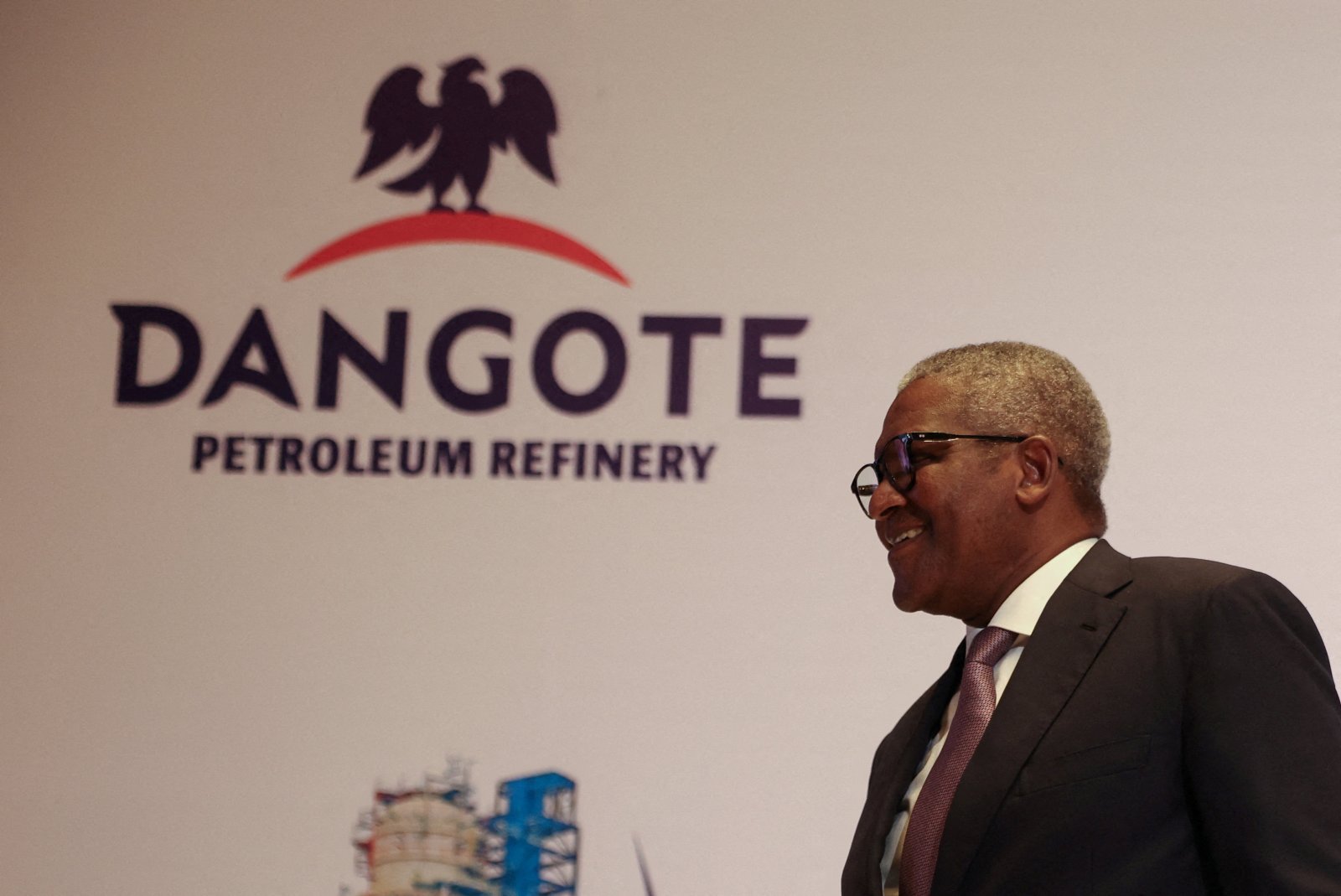
Aliko Dangote’s Lamu refinery is being presented as a $16 billion industrial project capable of processing approximately 700,000 barrels of crude per day and generating 1,000 megawatts of power. In his groundbreaking speech, Dangote said the facility will also produce one million tonnes of polypropylene and base oils, while his company intends to build an industrial network around energy, petrochemicals, logistics, engineering, marine services, manufacturing and small businesses. He said construction could employ about 60,000 people, a training school would prepare 1,000 Lamu residents, and up to 30 percent of the refinery’s equity has been earmarked for East African countries. The project began as a discussion involving Kenya, Uganda and Dangote over a possible refinery in Tanga before Lamu was selected. Dangote’s larger argument was that Africa needs to process more of what it produces, retain more value locally and build industries that serve regional markets.
LAMU, Kenya — Aliko Dangote used the groundbreaking of the proposed $16 billion East African refinery in Lamu to make a case for a different model of African industrialisation, built around processing resources on the continent, serving regional markets and keeping a larger share of economic value within African economies. The project is designed to process approximately 700,000 barrels of crude oil a day, with Dangote also announcing plans for 1,000 megawatts of power generation, one million tonnes of polypropylene production and base oil production. The refinery is expected to serve markets across East Africa, while its wider industrial footprint is intended to include petrochemicals, logistics, engineering, marine services, manufacturing and small and medium sized businesses. Reuters reported that construction formally began on September 30, with completion targeted for 2030.
Dangote’s own account of how the project emerged adds another dimension to the story. He said the idea began during a meeting with Kenyan President William Ruto in April, when Ruto had initially approached him about buying fertiliser. A subsequent discussion involving Ruto, Ugandan President Yoweri Museveni and Dangote considered Tanga in Tanzania as a possible refinery location before further research and consultations led to Lamu. “Okay, fine. We should go to Tanga and put up a refinery,” Dangote recalled of the initial conversation. He then said, “But after doing some research and consultations, we ended up with Lamu.”
That origin story is revealing because it shows that the refinery is emerging within a wider competition over where East Africa’s future energy infrastructure will be concentrated. Lamu already forms part of the LAPSSET corridor, while Tanzania has its own ambitions around Tanga, Dar es Salaam and Mtwara as gateways for petroleum and regional trade. Uganda is also pursuing refinery plans. The Lamu project therefore enters a region where ports, pipelines, refineries, railways and petroleum storage are increasingly being developed as interconnected pieces of a larger regional market.
Dangote’s central argument is about where Africa captures value
The strongest part of Dangote’s speech was not the size of the refinery. It was his argument about the economic structure surrounding African commodity production. “Africa must industrialize Africa,” he told the gathering, describing the Lamu project as “Africa coming together to build Africa.” He argued that the continent has historically exported crude oil and imported refined petroleum products, exported minerals and imported manufactured goods, and exported agricultural commodities while importing processed food. His conclusion was direct: “Africa cannot build lasting prosperity by exporting what it has and importing what it needs.”
The refinery is consequently being positioned as a value addition project rather than simply a fuel supply project. Dangote said the company intends to combine the lessons learned from its Nigerian refinery with Kenyan talent, East African markets and international technology. “Africa can build at global scale,” he said. “Lekki proved that it can be done. Lamu must prove that it can be repeated.”
That distinction is central to understanding the scale of the proposal. A refinery capable of processing 700,000 barrels a day requires crude supply, storage, marine infrastructure, pipelines, electricity, engineering services, transport networks, financial services and downstream buyers. The commercial opportunity therefore extends well beyond the refinery gate. Dangote explicitly described the planned development as an industrial network covering energy, petrochemicals, logistics, engineering, marine services, manufacturing, technology and small and medium sized enterprises.
The numbers point to an industrial platform rather than a fuel plant
Dangote said the refinery will generate 1,000 megawatts of electricity, produce one million tonnes of polypropylene and manufacture base oils. He also said the company intends to supply at least 20 percent of jet fuel consumed by Europe and the United Kingdom, drawing on the experience of its Nigerian refinery. These figures are projections from the project promoter rather than independently verified operating outcomes, but they show the scale of the intended product mix.
The employment numbers are similarly large. Dangote said the project should employ around 60,000 people during construction and that local businesses should become suppliers to the development. He also announced plans for a training school that would train 1,000 people from Lamu. Independent reporting ahead of the groundbreaking had also cited the 60,000 figure as the expected employment requirement at the height of construction.
The economic logic is straightforward. A project of this scale creates demand for services before the refinery begins producing fuel. Construction creates demand for engineering, accommodation, food, transport, security, equipment maintenance, logistics and professional services. Once operations begin, the refinery creates another layer of demand through technical employment, procurement, transportation, storage, distribution and downstream manufacturing. Dangote told the Lamu governor that the company wanted the project’s economic footprint to extend beyond the refinery itself and that local entrepreneurs should emerge around it.
The most consequential proposal may be the 30 percent regional equity allocation
One of the speech’s most consequential announcements was that up to 30 percent of the refinery’s equity had been earmarked for East African countries. Dangote said the arrangement would allow regional countries to share in profits generated through supply and exports, and specifically praised Kenya and Rwanda for moving quickly to take up the opportunity.
That proposal changes the potential economic relationship between the refinery and its neighbouring markets. Regional countries would not only be potential consumers of petroleum products. Under Dangote’s proposal, they could also become shareholders in the infrastructure supplying those markets. Business Daily reported before the groundbreaking that Kenya had been allocated 10 percent and that Ethiopia and Rwanda had expressed interest, while Kenya was prepared to increase its holding if other countries did not take up their allocations.
For East Africa, the difference between buying fuel and owning part of the infrastructure supplying that fuel is substantial. Equity participation could give participating states an interest in the commercial performance of the refinery while deepening the political and economic incentives for regional trade. The success of such a model, however, will depend on the eventual ownership structure, financing arrangements, governance, dividend flows and the commercial terms under which regional governments participate.
Dangote is deliberately turning Lamu into a regional project
Dangote repeatedly widened the geographic frame of the refinery during his speech. He named Kenya, Uganda, Rwanda, Tanzania, Ethiopia, South Sudan, the Democratic Republic of Congo and Zambia as markets that could benefit from stronger regional energy security. “One of Africa’s greatest economic weaknesses has been our tendency to think within borders while the rest of the world thinks in markets,” he said. “Kenya alone is a significant market. But East Africa is a greater opportunity.”
That argument places the refinery inside the broader question of whether East Africa can build infrastructure around a genuinely integrated market. Petroleum products move across borders through road, rail, pipeline and maritime systems. A large refinery therefore creates pressure for supporting infrastructure to operate across national boundaries. It also creates a commercial reason for neighbouring countries to improve customs systems, transport corridors, storage capacity and energy trading arrangements.
Dangote’s speech repeatedly returned to this regional logic. He said the company wanted young Kenyans and East Africans to acquire skills through the project, local businesses to become suppliers and the refinery’s economic footprint to extend beyond Lamu. He specifically mentioned a Tanzanian entrepreneur and Ugandan businesses as examples of people who could become part of the supply chain.
The project therefore presents an unusually direct test of East Africa’s ability to turn regional demand into regional industrial capacity. The refinery may be physically located in Kenya, but its commercial logic depends on a market that extends far beyond Kenya.
Tanzania’s place in the story is more complicated than the final map suggests
The reference to Tanga in Dangote’s speech deserves attention. He said the initial discussion was to “go to Tanga and put up a refinery” before the project eventually moved to Lamu. Independent Kenyan reporting has also confirmed that Tanga was considered before Lamu was selected. Dangote later explained that Lamu offered advantages including deeper waters, suitable ground conditions and deep sea access.
That does not remove Tanzania from the industrial equation. Tanzania remains a major regional energy gateway, and the Tanzanian government’s 2026 investment bulletin records discussions between President Samia Suluhu Hassan and Dangote focused on industrial manufacturing, fertiliser, energy, transport infrastructure and port development. The bulletin describes the engagement as part of efforts to expand strategic investment and industrial competitiveness in Tanzania.
The more interesting question is therefore not whether Lamu replaces Tanzania. It is whether the emergence of several major energy and transport projects across the region creates a more competitive network of gateways. Lamu, Tanga and Dar es Salaam can potentially serve overlapping markets while competing for investment, cargo, transit traffic and industrial activity. The regional economy will ultimately determine which infrastructure attracts the greatest commercial volumes.
Dangote wants African capital to follow African opportunity
The speech also connected Lamu to Dangote’s wider investment plans. He said the Dangote Group had earmarked $50 billion for projects under its current plan through 2030, spanning infrastructure, minerals, ports, power and petrochemicals. The EastAfrican independently reported the same $50 billion investment ambition following the groundbreaking.
Dangote framed this expansion as part of a broader effort to increase African participation in the ownership and production of strategic industries. His language was explicitly continental. “We must see more ships leave African shores carrying products made in Africa, by Africans, for Africa and consumed by the world,” he said. He also argued that Africa should not become a dumping ground for products manufactured elsewhere.
The economic proposition is ambitious. Africa has large commodity reserves, a population of more than 1.5 billion people and rapidly expanding urban markets, but many industrial value chains remain fragmented across national borders. A refinery of Lamu’s proposed scale can therefore function as an anchor for additional investment if transport infrastructure, electricity, financing, skills and regional market access develop around it.
The Lamu project will also test whether industrial ambition can coexist with local interests
Dangote acknowledged that the scale of the investment creates consequences for communities around the project. He warned Lamu residents that land values could rise sharply and advised them to be careful about releasing land because “land is one of the greatest assets that you have.”
The project is already facing legal and environmental questions. Reuters reported that a Kenyan court order concerning a land rights dispute did not stop the groundbreaking but could affect some site activities. Residents have raised concerns over land ownership and compensation, while environmental questions have also been raised because of Lamu’s ecological and cultural importance.
Dangote addressed that tension directly in the speech, saying the company wanted to “build with your community” rather than simply build within it. He said the company would work with authorities, communities and experts on safety, environmental responsibility and community engagement.
The outcome will depend on how those commitments translate into contracts, jobs, training, land compensation, environmental safeguards and local procurement. For a project seeking to become a regional industrial anchor, the quality of its relationship with the host community will form part of its economic performance.
The bigger bet is whether East Africa can build around the refinery
Dangote’s final argument was that the physical refinery is only the starting point. He described the project as an opportunity to create engineers, technicians, entrepreneurs, suppliers and industries around reliable energy. He also argued that African countries need to think in regional markets rather than national markets.
That is where the Lamu project becomes more consequential than its $16 billion price tag. A refinery processing 700,000 barrels a day can change the economics of fuel supply. A refinery connected to petrochemicals, power generation, ports, logistics, manufacturing, finance and regional trade can change the economics of an entire corridor.
Dangote ended his speech by describing the project as a bridge among African countries and as a demonstration of what African enterprise can build. “We must stop asking whether Africa can build big,” he said. “We must start asking how quickly Africa can build what it needs.”
The test now moves from the podium to the construction site. The refinery must secure financing, complete construction, establish crude supply, connect to markets, build its workforce and integrate with regional infrastructure. If those pieces come together, Lamu could become more than Kenya’s largest industrial investment. It could become one of the physical points around which East Africa’s next phase of industrial integration is built.
FAQ
What is the proposed capacity of the Lamu refinery? Dangote said the East African refinery is designed to process approximately 700,000 barrels of crude oil per day. Reuters independently reported the same planned capacity following the September 30 groundbreaking.
How large is the Lamu refinery investment? The project is valued at approximately $16 billion. Dangote described the investment as a major African industrial undertaking, while Kenyan and international reporting have placed its value at roughly the same level.
What other products will the refinery produce? Dangote said the facility will generate 1,000 megawatts of power, produce one million tonnes of polypropylene and manufacture base oils. He also described plans to supply petroleum products to regional markets and export markets. These are project plans and should not be treated as achieved output until the facility becomes operational.
How many jobs could the project create? Dangote said the project should employ around 60,000 people during construction. He also announced a training school intended to train 1,000 people from Lamu and said local businesses would be encouraged to participate in the supply chain.
Will East African countries own part of the refinery? Dangote said up to 30 percent of the refinery’s equity has been earmarked for East African countries. Reporting before the groundbreaking indicated that Kenya had been allocated 10 percent, while Rwanda and Ethiopia had expressed interest.
Was Tanga initially considered for the refinery? Yes. Dangote said the initial discussion with President William Ruto and President Yoweri Museveni considered establishing a refinery in Tanga, Tanzania. He said subsequent research and consultations led the group to select Lamu.
What is the wider economic argument behind the project? Dangote is presenting the refinery as an anchor for a wider industrial network involving energy, petrochemicals, logistics, engineering, marine services, manufacturing, technology and small businesses. The broader proposition is that East Africa can use a large regional market to support more processing and manufacturing within the continent rather than relying predominantly on imported finished products.
 Uchumi360
Business Intelligence
Uchumi360
Business Intelligence
Uchumi360 covers business, investment, and economic policy across East, Central, and Southern Africa.
For the serious reader
You read to the end. That places you in a small group.
Uchumi360 is built for readers who demand precision over speed, structure over sentiment, and analysis that holds uncomfortable conclusions rather than softening them. If this work sharpens how you think about Africa's economy, help us keep building the infrastructure behind it.
Institutional Partners
Commission intelligence. Shape the conversation.
Uchumi360 works with development finance institutions, investment firms, sovereign bodies, and strategic organisations across the coverage region. Institutional partnership unlocks:
- Commissioned sector and country intelligence reports
- Branded research series under your institution's authority
- Exclusive data briefings for internal strategy teams
- Speaking and editorial presence at Uchumi360 events
- Co-published investment outlooks for your markets
Support Our Work
Independent analysis has a cost. Help us bear it.
Uchumi360 does not carry advertising. It does not take editorial direction from sponsors. Every article is produced without commercial compromise. Your contribution funds the reporting, research, and editorial infrastructure that keeps this analysis free from influence.
Secure checkout: One-time and monthly support are processed securely. Add payment credentials to enable checkout here.
Stay Connected
Keep up with every new insight.
Follow our latest analysis, policy coverage, and market intelligence as soon as it is published. If you need something specific, reach out directly and we will point you to the right research.
