
World Bank Says Nigeria, DRC, Ethiopia and Tanzania Are Among the World's Biggest Centres of Extreme Poverty
Ready
Approximately 43% of Sub Saharan Africa's population lives on less than $3 a day, while the World Bank estimates that 811 million people worldwide will remain in extreme poverty in 2026. Nine economies account for more than half of the global total, reflecting the growing concentration of poverty in populous and economically vulnerable countries. Despite sustained GDP growth in economies including Tanzania, Ethiopia and Uganda, low agricultural productivity, informal employment and weak household earnings have limited improvements in living standards. Uchumi360 examines the World Bank's latest findings, Tanzania's estimated 48% extreme poverty rate and why Africa's economic expansion has struggled to produce faster reductions in poverty.
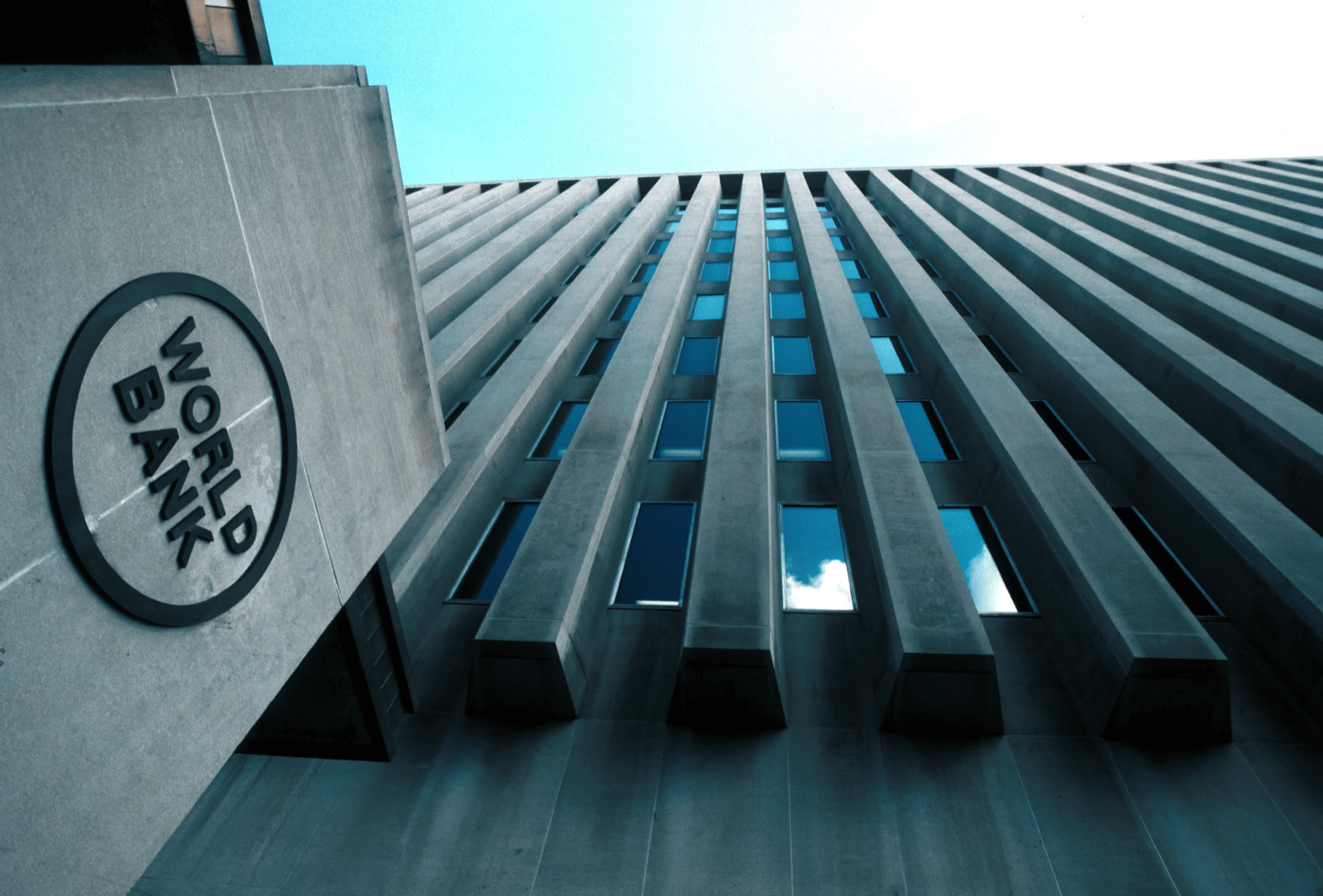
Sub Saharan Africa remains the centre of global extreme poverty, with approximately 43% of its population living on less than $3 a day despite years of economic expansion. The World Bank estimates that 811 million people worldwide will live in extreme poverty in 2026, while nine countries account for more than half of the global total. Six of those economies are African: Nigeria, the Democratic Republic of Congo, Ethiopia, Tanzania, Mozambique and Uganda. The findings expose persistent weaknesses in agricultural productivity, employment earnings and the distribution of economic growth, raising questions about whether Africa's expanding economies are improving household living standards quickly enough to offset population growth.
More than four in ten people in Sub-Saharan Africa continue to live in extreme poverty, while six African countries are among the nine economies accounting for more than half of the world's poorest population, according to the World Bank's latest assessment of global poverty and employment. The findings suggest that economic expansion across much of Africa has failed to produce sufficient increases in the earnings of poorer households, with poverty reduction slowing markedly since the middle of the previous decade despite continued growth in national output.
The World Bank's Poverty, Prosperity, and Planet Report 2026: Jobs at the Center of Poverty Eradication, published on October 26, estimates that 811 million people worldwide will be living on less than $3 per day in 2026, representing approximately one in ten people. The global extreme poverty rate has remained broadly unchanged since 2019, following a period of much stronger reductions during the first decade of the century. According to the Bank, maintaining the pace of poverty reduction achieved between 2000 and 2013 would have resulted in 243 million fewer people living in extreme poverty today.
The regional concentration is particularly severe in Africa. A United Nations assessment published in 2026 estimates that 43.3% of Sub-Saharan Africa's population lives below the international extreme poverty threshold, while the World Bank warns that poverty reduction has become increasingly concentrated in a small number of populous and economically vulnerable countries. By 2030, it projects that 87% of the world's extremely poor will live in Sub-Saharan Africa, in countries affected by fragility and conflict, or in economies belonging to both categories. These categories overlap, and the 87% estimate should not be interpreted as Africa's share alone.
Nigeria, the Democratic Republic of Congo, Ethiopia, Tanzania, Mozambique and Uganda are among the six African economies identified in the nine country concentration of global extreme poverty. The other three are India, Pakistan and Sudan, although Sudan is geographically African, meaning the frequently circulated claim of six African countries appears to depend on an inconsistent country list. The nine-country composition, therefore, requires careful treatment: Sudan should also be counted as African, bringing the African total to seven under that list.
This concentration of poverty in economies with large populations is economically important. A country may have a lower poverty rate than a smaller neighbour but still account for many more poor people because its population is considerably larger. Poverty reduction must therefore be assessed through both the percentage of people below the poverty line and the absolute number affected, particularly in countries where population growth is adding millions of people to the labour force.
The new findings also raise questions about the relationship between GDP growth and household prosperity. Several of the countries with large populations living in extreme poverty have recorded sustained economic expansion, invested in major infrastructure and pursued policies intended to increase production. Yet significant numbers of households continue to depend on subsistence agriculture, informal businesses and other activities that generate low and often unstable earnings.
The World Bank's analysis identifies the productivity and earnings of work as central constraints. Adults in poor households are employed at rates only six percentage points below those in households above the poverty line, but the work available to them generally produces substantially less income. This suggests that expanding employment alone will deliver limited poverty reduction unless the additional jobs and businesses generate higher earnings.
Tanzania's 6% Growth Has Left Nearly Half the Population in Extreme Poverty
Tanzania provides one of the clearest examples of the limits of GDP growth as a measure of household prosperity. Its economy expanded by 5.9% in 2025, according to the World Bank's Tanzania Economic Update 2026, with growth forecast to reach 6.1% in 2026 and approximately 6.5% over the medium term. Yet the Bank's country assessment estimates that 48% of Tanzanians lived below the international $3 poverty line in 2025.
This creates a substantial gap between economic performance and household living standards. Tanzania has expanded electricity generation, transport infrastructure, mining activity, tourism and financial services, but a large share of the population continues to derive its income from agriculture and informal economic activities. The contribution of new infrastructure and investment to poverty reduction depends on whether these activities raise productivity, create additional earnings opportunities and reduce the costs faced by households.
The World Bank's October 2026 assessment finds that nearly 69% of Tanzania's working age population is employed, but many workers do not earn sufficient income to secure an adequate standard of living. Agriculture remains the dominant source of employment, while businesses operating in the formal economy generate relatively few additional positions. The Bank reports that only 12% of registered businesses in Tanzania are young firms, compared with 38% in Rwanda, suggesting that the emergence of new formal enterprises remains limited.
This matters because employment in low productivity activities can absorb a growing labour force without producing substantial increases in income. A family farming a small plot may work throughout the year while producing limited marketable output after meeting its own food requirements. An informal retailer may earn enough to sustain daily consumption but lack the capital, premises or customer demand needed to expand into a business that can employ additional workers.
Tanzania's economic growth can therefore remain positive even when household incomes improve slowly. Investments in mining, large construction projects and capital-intensive infrastructure can increase national output without creating employment at the same rate. Their benefits may still reach the wider economy through public revenue, suppliers and lower transport or electricity costs, but those effects depend on the structure of investment and the responsiveness of businesses and households.
The World Bank's analysis also identifies barriers affecting women's participation in better-paid employment, including care responsibilities, limited access to training and concentration in lower-earning occupations. These constraints affect overall household incomes because the ability of additional working age household members to obtain productive employment influences the resources available per person.
Tanzania's development objective of becoming a $1 trillion economy by 2050 consequently raises a distributional and employment question alongside its growth targets. Sustained increases in GDP will be necessary, but the effect on poverty will depend heavily on the amount of growth reaching agricultural households, informal workers and lower income communities.
The distinction is also important when interpreting national poverty statistics. Tanzania's official basic needs poverty rate was 26.4% in the 2017/18 Household Budget Survey, while the World Bank's estimated 48% extreme poverty rate for 2025 uses the international $3 threshold in 2021 purchasing power parity terms. The two figures use different poverty lines, methodologies and reporting periods, so they cannot be compared as evidence that poverty increased from 26.4% to 48%.
Why Millions of Working Africans Remain Poor
The World Bank's latest report challenges the assumption that poverty is primarily the result of unemployment. Its research finds that adults in poor households are employed at rates only six percentage points below adults in households that are not poor. The principal difference is the economic value generated through their work and the earnings available to support each household member.
The report models two possible improvements. Increasing employment among working-age adults in poor households to a benchmark of 75% could reduce global extreme poverty by approximately one fifth. Raising the earnings of poor workers to those of otherwise comparable workers above the poverty line could reduce extreme poverty by nearly half. These are modelled effects under specified assumptions, rather than forecasts of what existing government programmes will achieve.
The findings are particularly relevant to economies where agriculture and informal self employment dominate. A substantial number of people work without formal contracts, stable wages or adequate access to productive equipment. Many small enterprises are established because their owners have limited alternative employment opportunities rather than because they have identified a sufficiently large commercial market.
Productivity differences help explain why two people working similar hours can earn very different incomes. Farmers using irrigation, improved inputs, storage facilities and commercial market arrangements may produce substantially more than those relying on rainfall and traditional cultivation methods. Manufacturers with suitable machinery and consistent electricity can often create more value per worker than businesses using manual production methods and serving a narrow local market.
These differences also influence the fiscal capacity of governments. Economies dominated by small, low income enterprises generally face difficulty raising domestic tax revenue without increasing pressure on households and businesses with limited financial resources. Low revenue subsequently restricts the resources available for education, healthcare, infrastructure maintenance and programmes supporting vulnerable populations.
The World Bank's findings suggest that poverty reduction will depend increasingly on improving the productive capacity and earnings of existing workers, alongside creating additional formal employment opportunities. The policy requirements differ by country, but the economic connection between productivity and household consumption is central to understanding why headline growth rates have delivered limited progress.
Population Growth Is Complicating Poverty Reduction
Africa's demographic expansion makes the relationship between economic growth and poverty reduction particularly consequential. Where population growth is rapid, national output must increase sufficiently to raise income per person rather than merely expand the size of the economy.
An economy growing by 6% annually while its population grows by 3% experiences approximately 2.9% growth in real GDP per person, before accounting for how income is distributed. Even that improvement does not guarantee a comparable increase in household consumption, particularly where growth is concentrated in activities employing relatively few people or where gains accrue disproportionately to higher income households.
This helps explain why countries can report sustained positive GDP growth while the number of people living below a poverty line remains high. A declining poverty rate can coexist with a rising absolute number of poor people when population growth outpaces the reduction in poverty incidence.
Nigeria, Ethiopia, Tanzania, Uganda and the DRC all face substantial demographic pressures, although their population structures and economic conditions differ. The speed at which young people enter working age creates demand for new employment, housing, education, healthcare and public infrastructure. Economic development must therefore increase both the quantity and quality of productive opportunities.
For governments, the distinction between aggregate GDP and GDP per person is fundamental. Larger national economies may support greater investment and market expansion, but household prosperity depends on how much additional output is generated relative to the population and how that output translates into consumption and incomes.
The World Bank estimates that reducing global extreme poverty to 3% by 2050 would require average annual per capita economic growth of approximately 4%, twice the rate achieved over the previous 25 years. This is a global scenario rather than a prescribed growth target for individual African countries.
Africa's Poverty Problem Is Increasingly Concentrated in Fragile and Low Productivity Economies
The countries accounting for a large proportion of global extreme poverty do not share identical economic circumstances. Nigeria has a large domestic economy but faces persistent inflation, weak purchasing power and employment constraints. The DRC possesses substantial mineral resources while large parts of its population remain disconnected from reliable infrastructure and higher productivity economic activities. Ethiopia has pursued significant infrastructure and industrial investment, but conflict and macroeconomic pressures have affected households and businesses.
Mozambique faces poverty pressures associated with rural productivity, climate exposure and insecurity in parts of the country. Uganda combines expanding economic activity with a large agricultural workforce and substantial demand for better paid employment. Tanzania has maintained comparatively strong economic growth but has struggled to translate that expansion into sufficiently rapid improvements in the incomes of poorer households.
These differences matter because the same policy response will not produce identical outcomes across countries. Agricultural productivity improvements may be particularly influential where most poor households depend on farming. In conflict affected regions, restoring security and commercial activity may be a prerequisite for investment. In more stable urban markets, access to finance, skills, affordable electricity and larger customers may determine whether small enterprises can increase employment and wages.
Climate shocks create another constraint. The World Bank estimates that approximately 1.5 billion people globally live in locations exposed to major climate hazards while lacking adequate protection or access to basic infrastructure. Droughts, floods and other disruptions can reduce household income, increase food prices and force families to sell productive assets or withdraw children from school. Poor households are generally less able to absorb these shocks because they have limited savings and insurance.
Debt pressures can also complicate the fiscal response. Governments with large interest obligations have fewer resources available for public investment unless they increase revenue, borrow further or reduce other expenditure. However, the effects depend on individual countries' debt structures, revenue performance and fiscal choices, and debt alone cannot explain the region's poverty trajectory.
The consequences are visible in the limits of Africa's economic expansion. New infrastructure and large commercial investments can strengthen national productive capacity, but their contribution to reducing extreme poverty is mediated by employment, household earnings, prices and the availability of essential services.
The World Bank Warns That Poverty Could Rise Again by 2030
The latest global outlook provides little assurance that extreme poverty will continue declining under existing economic conditions. The World Bank projects that both the global poverty rate and the number of people living in extreme poverty could be higher in 2030 than in 2026 if economies follow the per capita growth patterns recorded during the preceding decade.
This would reverse the direction of global poverty reduction at a time when development commitments under the United Nations Sustainable Development Goals call for ending extreme poverty by 2030. The assessment also suggests that future poverty reduction will depend increasingly on economic developments in Sub Saharan Africa, because progress in many Asian economies has already reduced the concentration of extremely poor households elsewhere.
The Bank's November 2026 analysis of consumption trends provides further evidence of this divergence. Average global consumption increased by approximately 70% between 1990 and 2026, while average consumption among people remaining in extreme poverty increased by only 10%. Between 2019 and 2025, consumption growth among the poorest people in Sub Saharan Africa was close to zero, despite growth in the wider economies of several countries.
The contrast suggests that conventional measures of economic growth are insufficient to establish whether the living standards of poorer households are improving. National output may increase through higher exports, infrastructure construction, investment or growth in services, while poorer households experience little improvement in consumption.
For African governments, the challenge is therefore measurable through earnings and productivity at household level. Improving farm yields, expanding commercially viable enterprises, increasing women's access to productive employment and creating better paid jobs would directly address the mechanisms identified in the World Bank's report. The extent of progress would need to be assessed through household surveys, labour earnings and consumption data, alongside national accounts.
Tanzania's Development Vision 2050, Uganda's industrialisation programmes, Ethiopia's economic reforms and the DRC's efforts to expand infrastructure and mineral processing will ultimately be judged partly by their ability to improve these outcomes. Higher GDP can provide the resources and economic opportunities needed for poverty reduction, but the scale of the benefits will depend on how effectively investment translates into earnings for people currently concentrated in low productivity activities.
The World Bank's findings leave a substantial economic challenge for Sub Saharan Africa. A region projected to record some of the world's faster growing economies still contains a large proportion of people unable to achieve the minimum consumption standard used to define extreme poverty. Sustained development will require that growth reach the agricultural workers, informal businesses and lower income households whose earnings have improved too slowly over the past decade.
 Uchumi360
Business Intelligence
Uchumi360 covers business, investment, and economic policy across East, Central, and Southern Africa.
For the serious reader
You read to the end. That places you in a small group.
Uchumi360 is built for readers who demand precision over speed, structure over sentiment, and analysis that holds uncomfortable conclusions rather than softening them. If this work sharpens how you think about Africa's economy, help us keep building the infrastructure behind it.
Institutional Partners
Commission intelligence. Shape the conversation.
Uchumi360 works with development finance institutions, investment firms, sovereign bodies, and strategic organisations across the coverage region. Institutional partnership unlocks:
- Commissioned sector and country intelligence reports
- Branded research series under your institution's authority
- Exclusive data briefings for internal strategy teams
- Speaking and editorial presence at Uchumi360 events
- Co-published investment outlooks for your markets
Support Our Work
Independent analysis has a cost. Help us bear it.
Uchumi360 does not carry advertising. It does not take editorial direction from sponsors. Every article is produced without commercial compromise. Your contribution funds the reporting, research, and editorial infrastructure that keeps this analysis free from influence.
Secure checkout: One-time and monthly support are processed securely. Add payment credentials to enable checkout here.
Stay Connected
Keep up with every new insight.
Follow our latest analysis, policy coverage, and market intelligence as soon as it is published. If you need something specific, reach out directly and we will point you to the right research.
