
Zambia Gains 15.5 Points in Political Participation as Uganda Loses 11.1
Ready
Zambia recorded Africa's strongest recent improvement in political participation after its 2021 transfer of power, while Uganda experienced a decade of declining civil society space, political pluralism and personal liberties, according to the 2026 Ibrahim Index of African Governance. Both countries nevertheless improved economic opportunity and infrastructure performance. Zambia's disputed August 2026 election and Uganda's January electoral restrictions now raise a more difficult question: can economic progress be sustained when the institutions governing political competition and public accountability are under pressure?
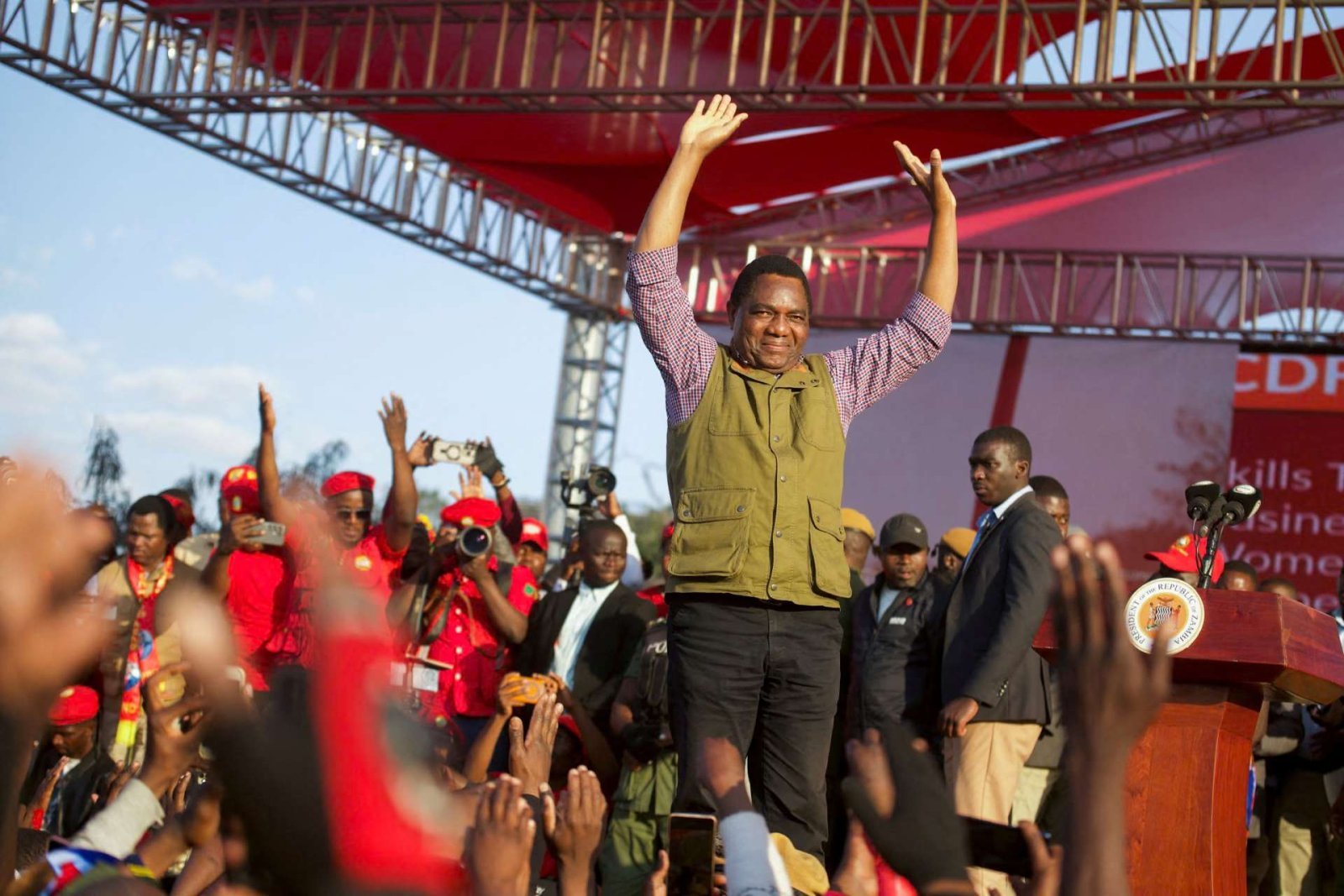
Zambia's political participation score improved by 15.5 points between 2016 and 2025, while Uganda's deteriorated by 11.1 points over the same period, according to the 2026 Ibrahim Index of African Governance released by the Mo Ibrahim Foundation on October 31, 2026. The divergent trajectories reveal substantial differences in how political competition, civil society activity, electoral participation and civic freedoms developed in two countries pursuing economic reforms and major investment programmes. Zambia's improvement was particularly pronounced after the peaceful transfer of power in August 2021, when opposition leader Hakainde Hichilema defeated incumbent President Edgar Lungu, while Uganda continued under President Yoweri Museveni, whose administration has faced repeated criticism over the restrictions placed on political opponents, civic organisations and independent media.
Zambia ranked 15th among Africa's 54 countries in overall governance in 2025, scoring 58.4 out of 100 after gaining 5.1 points since 2016. Uganda placed 28th with a score of 49.3, representing a decline of 1.2 points over the decade. However, the differences between their political indicators were considerably larger than the gap between their overall governance scores. Zambia's Participation score reached 62.0, ranking 12th in Africa, while Uganda scored 33.0 and ranked 34th. Zambia's Civil Society Space indicator increased by 36.6 points to 82.2, compared with Uganda's 20.4 point deterioration to 16.8, placing the latter 45th on that measure. The two countries also followed opposite paths in Democratic Elections, Digital Freedom and the broader Participation, Rights & Inclusion category.
The economic findings complicate the comparison. Zambia's Foundations for Economic Opportunity score increased by 7.2 points to 55.5, while Uganda improved by 3.4 points to 57.1, giving Uganda a slightly higher score in that category despite its weaker participation indicators. Zambia achieved substantial progress in rural market access, business regulations and telecommunications, while Uganda recorded improvements in infrastructure, financial administration, rural economic conditions and public perceptions of economic opportunities. These results reflect a wider pattern identified by the Mo Ibrahim Foundation: economic and human development indicators can improve even when political participation and institutional safeguards deteriorate, although the foundation cautions that progress may be more difficult to sustain without improvements in governance.
The contrast has become more complicated following the countries' 2026 general elections. Uganda held its presidential election on January 15, returning Museveni to office amid an internet shutdown and concerns raised by African Union observers about unequal political competition. Zambia voted on August 13, reelecting Hichilema for a second term, but the electoral process was subsequently criticised by international observers over restrictions on campaigning, problems with the transparency of results management and allegations of intimidation and repression against opposition figures. Those developments occurred after the 2025 cutoff of the Ibrahim Index. Consequently, Zambia's favourable participation trajectory should be understood as a historical finding covering the preceding decade, rather than evidence that the country's political environment necessarily remained on the same course throughout 2026.
The significance of the comparison extends beyond electoral politics because the institutional arrangements governing public participation affect how economic policies are debated, scrutinised and implemented. Both Zambia and Uganda face substantial decisions involving public borrowing, energy development, infrastructure investment, agricultural productivity, employment and the management of natural resources. The ability of citizens, businesses, professional associations and independent institutions to examine those decisions can influence public confidence, the quality of available information and the accountability of officials responsible for managing national resources. The index does not establish that political openness caused Zambia's economic improvements or that declining participation undermined Uganda's growth, but its findings provide a basis for investigating how the countries' different institutional trajectories interact with their economic ambitions.
Zambia's 2021 Political Transition Produced Africa's Strongest Recent Participation Gains
The Mo Ibrahim Foundation identifies Zambia as the largest improver in political participation during the second half of the decade, recording a 19.9 point increase between 2021 and 2025. This recent improvement is distinct from the 15.5 point increase measured across the full period beginning in 2016. The foundation associates the acceleration with the August 2021 general election, when Hichilema's victory ended Edgar Lungu's presidency and brought an opposition party into government through an electoral transfer of power. The change was accompanied by improvements in all six indicators making up the Participation subcategory, including civil society space, freedom of association, democratic elections and public perceptions of political participation.
The country's Civil Society Space indicator experienced the largest increase, gaining 36.6 points between 2016 and 2025 and reaching 82.2, the 10th highest score in Africa. Digital Freedom improved by 23.3 points to 71.8, Deliberative & Participatory Governance increased by 20.8 points to 73.7, and Democratic Elections gained 15.7 points to reach 62.7. Freedom of Association & Assembly also improved by 12.5 points, while Public Perception of Political Participation increased by 10.5 points to 73.8, placing Zambia fourth in Africa on that indicator. The combined results suggest that the transition of power in 2021 was followed by measurable improvements in several institutional conditions associated with participation, although the extent to which those gains were sustained across different communities and political organisations requires separate investigation.
| Political participation indicator | Zambia, 2025 | Uganda, 2025 | Zambia change | Uganda change |
| Participation overall | 62.0 | 33.0 | +15.5 | −11.1 |
| Freedom of Association & Assembly | 50.0 | 12.5 | +12.5 | −12.5 |
| Political Pluralism | 29.4 | 20.2 | −3.1 | −17.0 |
| Civil Society Space | 82.2 | 16.8 | +36.6 | −20.4 |
| Democratic Elections | 62.7 | 23.8 | +15.7 | −7.9 |
| Deliberative & Participatory Governance | 73.7 | 57.3 | +20.8 | −0.8 |
| Public Perception of Political Participation | 73.8 | 67.5 | +10.5 | −7.9 |
Source: Mo Ibrahim Foundation, 2026 Ibrahim Index of African Governance, Zambia and Uganda country scorecards, pages 74 and 72. All scores are out of 100. Changes refer to the period from 2016 to 2025 and are expressed in index points.
The improvement in civil society space is particularly relevant because the indicator captures conditions affecting the ability of organisations and citizens to operate independently, participate in public affairs and challenge government decisions. Under the administration of Edgar Lungu, Zambia experienced disputes over opposition gatherings, the operation of nongovernmental organisations and the restrictions affecting civic activity. The Mo Ibrahim Foundation's analysis identifies the 2021 change of government as an important turning point in the country's civic trajectory, noting that the improvement in the absence of civil society repression component coincided with the political transition.
However, Zambia's improved participation score should not be interpreted as evidence that political competition became unrestricted or that all institutional weaknesses were resolved. Political Pluralism declined by 3.1 points over the decade and remained relatively weak at 29.4 out of 100, ranking 36th in Africa. Institutional Checks & Balances also deteriorated by 9.2 points, while Judicial Processes declined by 10.5 points and Impartiality of the Judicial System by 8.8 points. These measures demonstrate that progress in civic participation occurred alongside deterioration in some of the mechanisms responsible for constraining government authority and administering justice, indicating that Zambia's political and institutional development remained uneven even before the events of 2026.
The improvement in participation nevertheless formed part of a period in which Zambia sought to restore international confidence after its sovereign debt default in 2020, the restructuring of external obligations and the introduction of a programme of fiscal and economic reforms supported by the International Monetary Fund. The political transition created a different environment for the government's engagement with creditors, investors, civil society organisations and development partners, although the subsequent debt negotiations and macroeconomic adjustments depended on financial and institutional factors that cannot be attributed solely to the political change.
Uganda's Civil Society and Political Pluralism Indicators Deteriorated Sharply
Uganda followed a contrasting trajectory over the same decade, with the deterioration in political participation extending across every underlying indicator assessed by the Mo Ibrahim Foundation. Its Civil Society Space score fell by 20.4 points to 16.8, ranking 45th in Africa, while Political Pluralism declined by 17.0 points to 20.2 and ranked 44th. Freedom of Association & Assembly dropped by 12.5 points to 12.5, and Democratic Elections declined by 7.9 points to 23.8. Public Perception of Political Participation also deteriorated by 7.9 points, although its 2025 score of 67.5 remained relatively high compared with Uganda's institutional measures.
The difference between Uganda's relatively favourable public perception score and its weaker institutional participation indicators deserves particular attention. Respondents may believe that they can participate in public affairs through voting, community activities or engagement with local leaders even when the conditions governing opposition parties, independent organisations and political gatherings are assessed less favourably. The two sets of measurements capture different aspects of participation and should not automatically be treated as contradictory evidence. However, they raise questions about which forms of participation citizens can exercise in practice, whether those opportunities extend equally to different political groups and how effectively participation can influence decisions involving government resources.
Uganda's wider rights indicators also deteriorated. The Rights subcategory declined by 9.2 points to 38.9, while Personal Liberties fell by 11.7 points to 15.7, placing the country 48th in Africa on that indicator. Media Freedom declined by 8.6 points to 38.1, and Digital Freedom fell by 5.2 points to 21.3, also ranking 48th. The broader Participation, Rights & Inclusion category declined by 6.5 points, compared with Zambia's improvement of 7.1 points. These movements indicate that Uganda's deterioration extended beyond electoral competition into the wider institutional conditions affecting public expression, association and civil liberties.
The country's political environment provides important context for the findings. President Museveni has governed Uganda since 1986, and the country has held successive presidential and parliamentary elections under the multiparty arrangements established in the 1990s and 2000s. Opposition parties, journalists and civil society organisations have continued operating, but the conditions surrounding political competition have repeatedly attracted criticism from domestic and international observers. The Mo Ibrahim Foundation's measurements reflect changes across several electoral cycles and should not be attributed exclusively to the circumstances surrounding a single election or the actions of one institution.
Uganda's January 2026 election provides more recent evidence of these institutional concerns. The joint African Union, COMESA and IGAD Election Observation Mission, led by former Nigerian President Goodluck Jonathan, deployed 84 observers from 27 African countries and assessed the electoral environment before and during the January 15 vote. The mission acknowledged that Uganda continued to conduct elections at regular five year intervals and reported that some aspects of the electoral environment were comparatively more peaceful than in 2021. However, it also identified unequal access to campaign resources, restrictions affecting opposition parties, concerns over the involvement of security institutions in political activities and the suspension of internet access shortly before voting.
The internet shutdown was particularly consequential because the observation mission reported that the restriction affected economic activities, access to information and its own ability to monitor the election. The Uganda Communications Commission ordered the suspension of public internet access on January 13, two days before the vote, despite earlier assurances to observers that connectivity would be maintained. The mission recommended that the government avoid future nationwide internet shutdowns and pursue alternative approaches to addressing security concerns during elections. The commercial consequences of such restrictions extend to mobile banking, digital payments, logistics, retail operations and communication between businesses and customers, illustrating how decisions justified on political or security grounds can affect economic activity.
Museveni was declared the winner with 71.65% of the presidential vote, while opposition candidate Robert Kyagulanyi, widely known as Bobi Wine, received 24.72%, according to Uganda's Electoral Commission. Kyagulanyi rejected the results and alleged irregularities, while the joint African Union observation mission reported that it had not observed evidence of ballot stuffing in the polling stations visited by its teams. The distinction matters because allegations made by political participants, findings documented by observers and the official election results are separate forms of evidence. The January election occurred after the Ibrahim Index's 2025 reference period and therefore provides contemporary context rather than an explanation for the entirety of Uganda's recorded deterioration.
Zambia's 2026 Election Complicates Its Governance Success Story
Zambia's strong improvement in participation is one of the most favourable developments identified in the 2026 Ibrahim Index, but events surrounding its August 2026 general election have placed that progress under renewed scrutiny. President Hakainde Hichilema secured a second term following the August 13 vote and was declared the winner by the Electoral Commission of Zambia on August 18. Official accounts presented the election as a continuation of Zambia's constitutional electoral process, but subsequent assessments by election observers and human rights organisations identified serious concerns about the conditions under which political competition occurred.
The European Union Election Observation Mission's final report, released in November 2026, acknowledged that the elections offered voters a competitive choice and that polling personnel generally administered voting efficiently. It nevertheless found that late changes to electoral laws, unequal campaign conditions, the suspension of counting and restrictions affecting judicial access undermined transparency and confidence in the process. The mission proposed 13 recommendations, including revisions to the electoral legal framework, stronger protections for freedom of assembly, equitable access to campaigning, greater transparency in results tabulation and effective access to legal remedies for electoral disputes.
Human Rights Watch also reported allegations of arbitrary detention, enforced disappearance, intimidation and violence against opposition members, journalists, lawyers and other government critics in the period surrounding the election. In a report published in early November, the organisation documented cases involving detention and alleged abuse while calling for independent investigations and accountability. Zambian police defended certain security operations as responses to threats and criminal activity, including a disputed August operation in which an opposition figure was killed. The reported allegations and official explanations require careful distinction, particularly where investigations and legal proceedings remain contested.
These developments substantially affect how Zambia's index performance should be presented to readers. The 2026 IIAG measures governance conditions through 2025, meaning its favourable participation score captures the improvement following the 2021 political transition but does not incorporate the full effects of the August 2026 election. Consequently, it would be misleading to describe Zambia as having maintained uninterrupted progress in political participation through November 2026. The index establishes that the country improved significantly between 2016 and 2025, while more recent observation reports indicate that some of the conditions supporting that progress may have come under pressure.
The apparent reversal also raises questions about whether improvements in political participation become embedded in institutions or remain dependent on the conduct of individual political administrations. A change of government can create opportunities to relax restrictions, permit greater civic activity and improve public confidence, but those gains are more likely to endure when electoral administration, judicial independence, media access and the protection of political rights are supported by institutions capable of operating consistently regardless of which party controls the executive. Zambia's experience provides an example of both the possibilities created by a peaceful political transition and the difficulties of sustaining those improvements through subsequent elections.
The economic implications extend to the credibility of institutions responsible for public expenditure, contract enforcement and the management of natural resources. Businesses and investors require predictable legal procedures, access to reliable information and confidence that administrative decisions will be subject to appropriate review. Political tensions do not automatically prevent investment or economic growth, but restrictions on civic scrutiny and judicial access can complicate the assessment of regulatory and institutional risks, particularly where projects involve long term financial commitments.
Both Countries Improved Economic Opportunity Despite Different Political Trajectories
The participation gap between Zambia and Uganda is not matched by an equally large difference in their economic opportunity scores. Zambia's Foundations for Economic Opportunity improved by 7.2 points to 55.5 between 2016 and 2025, while Uganda gained 3.4 points to reach 57.1. Uganda therefore remained slightly ahead on that broad economic measure even though Zambia ranked substantially higher in political participation and overall governance. This distinction is relevant because it demonstrates that political and economic indicators can move independently over extended periods, reflecting different investment patterns, institutional strengths, social conditions and economic policies.
Zambia's economic improvements were particularly visible in rural economic conditions and business regulation. Rural Economy increased by 19.6 points to 76.0, including a 45.3 point improvement in Rural Market Access and a 40.3 point gain in Rural Land & Water Access. Mobile Communications improved by 24.9 points, Shipping & Postal Network by 30.5 points and Public Perception of Economic Opportunities by 20.3 points. Business & Competition Regulations increased by 5.3 points to 75.5, placing Zambia seventh among African countries on that indicator. These gains suggest improved conditions for economic participation in several areas, although the index's individual indicators cannot establish how much additional income or employment those changes generated.
Uganda recorded a different combination of improvements. Its Infrastructure score increased by 9.2 points to 46.6, driven partly by gains in Mobile Communications, Internet and Access to Energy. Rural Economy improved by 12.1 points to 76.1, slightly ahead of Zambia, while Rural Market Access gained 29.0 points. Budgetary & Financial Management improved by 12.5 points to 77.8, and Capacity of the Statistical System increased by 12.7 points. Public Perception of Economic Opportunities also improved by 7.5 points to 52.5, ranking ninth in Africa. These results demonstrate measurable progress in aspects of Uganda's economic and administrative conditions despite deterioration in political participation.
| Economic governance measure | Zambia score | Uganda score | Zambia change | Uganda change |
| Foundations for Economic Opportunity | 55.5 | 57.1 | +7.2 | +3.4 |
| Business & Labour Environment | 49.3 | 49.6 | +4.9 | −6.2 |
| Infrastructure | 38.2 | 46.6 | +6.8 | +9.2 |
| Rural Economy | 76.0 | 76.1 | +19.6 | +12.1 |
| Public Perception of Economic Opportunities | 54.2 | 52.5 | +20.3 | +7.5 |
| Secure Employment Opportunities | 24.9 | 29.7 | +0.5 | +3.1 |
Source: Mo Ibrahim Foundation, 2026 IIAG country scorecards, Zambia and Uganda. Scores are out of 100; changes are index points.
However, neither country's economic performance is uniformly favourable. Zambia's Public Administration score declined by 2.8 points, while Budgetary & Financial Management deteriorated by 12.5 points. Public Perception of Infrastructure fell by 30.4 points despite improvements in several underlying infrastructure indicators. Uganda's Business & Labour Environment score declined by 6.2 points, while Regional Integration deteriorated by 23.9 points, Economic Diversification by 16.8 and Business & Competition Regulations by 14.3 points. These weaknesses illustrate why improvements in infrastructure or rural economic conditions cannot be treated as evidence that every aspect of the business environment has become more favourable.
Secure employment remains another concern. Zambia scored only 24.9 in Secure Employment Opportunities, ranking 47th in Africa, while Uganda reached 29.7 and ranked 42nd. Both countries therefore recorded comparatively weak conditions in an indicator relevant to the availability of stable employment, despite improvements in their wider economic opportunity scores. The figures raise questions about whether infrastructure expansion, investment programmes and improvements in business conditions are generating employment of sufficient quality and scale to meet the needs of growing populations.
Zambia's Debt Restructuring and Uganda's Oil Ambitions Raise the Stakes for Governance
The economic consequences of institutional performance become clearer when the countries' principal investment and financing challenges are considered. Zambia has spent several years attempting to restore debt sustainability after its 2020 sovereign default, renegotiating obligations with external creditors while implementing fiscal reforms supported by the International Monetary Fund. Uganda, meanwhile, is preparing for the commencement of commercial oil production, investing in petroleum infrastructure and seeking to expand industrial activity and employment. Both economic programmes require decisions involving substantial public resources, long term contractual obligations and the management of risks that may persist beyond the terms of individual political administrations.
Zambia's debt restructuring has required coordination with bilateral lenders, private creditors and international financial institutions, as well as adjustments to government revenue and expenditure. In May 2026, the IMF reported that restructuring agreements covered approximately 94% of the country's relevant debt perimeter. In October, the Fund reached a staff agreement with the Zambian authorities on a proposed new 36 month Extended Credit Facility arrangement worth approximately $1.47 billion, intended to support fiscal consolidation, debt sustainability and more inclusive economic growth. The proposal remained subject to IMF Executive Board approval and agreed policy conditions at the time of the announcement.
The IMF projected Zambia's economy would grow by 5.6% in 2026, supported by agriculture, mining and exports, while inflation had declined to 6.1% in September. However, the institution also identified weaker than expected revenue and higher expenditure by the Food Reserve Agency as pressures on the fiscal position. Its proposed reform priorities included stronger public financial management, improved transparency in mining licensing and beneficial ownership, oversight of state enterprises and public private partnerships, and measures to reduce domestic payment arrears. These priorities demonstrate that the effective administration of public resources remains essential even after substantial progress in debt restructuring.
Uganda's economic ambitions create a different set of institutional responsibilities. The Bank of Uganda reported that real GDP growth reached 6.4% in the 2025/26 financial year, compared with 6.3% a year earlier, with growth expected to accelerate as petroleum production and related investment expand. Oil developments, including the Tilenga and Kingfisher upstream projects and the East African Crude Oil Pipeline connecting Uganda to Tanzania's Indian Ocean coast, are intended to generate future export earnings and government revenue. However, first oil production, export volumes and fiscal receipts remain dependent on project completion, operating performance and international petroleum market conditions.
The management of future oil revenue will require decisions about taxation, expenditure, public investment, savings and borrowing. Resource producing economies can experience substantial fluctuations in revenue because commodity prices, production levels and operating costs change over time. Public institutions therefore need reliable forecasting, transparent reporting and mechanisms for examining whether resource income is allocated to economically justified projects. Parliament, audit institutions, regulatory authorities and independent researchers can contribute to that process by examining the assumptions used in government budgets and the actual performance of financed investments.
The IIAG's deterioration in Uganda's participation and rights indicators does not establish that its oil revenues will be mismanaged. It does, however, raise questions about whether citizens and independent institutions will have sufficient opportunities to scrutinise decisions concerning a sector that could become increasingly important to the country's public finances. The same question applies to Zambia's management of mining revenues, government borrowing and development expenditure, particularly in light of the institutional concerns emerging from the 2026 election.
For both countries, the economic issue concerns the durability of public financial arrangements. Investors and lenders can respond favourably to credible fiscal policies, administrative capacity and opportunities for commercial growth, but governments must also manage the consequences of decisions that prove more expensive or less productive than expected. Effective oversight can help identify problems earlier, improve access to information and provide mechanisms for correcting policies before financial losses become entrenched.
Political Participation Does Not Automatically Produce Better Economic Outcomes
One of the most consequential findings in the comparison is that Zambia's stronger performance in political participation has not produced consistently higher economic governance scores than Uganda. Zambia performs considerably better in Civic Society Space, Democratic Elections and several rights indicators, but Uganda records slightly stronger results in overall Foundations for Economic Opportunity, Infrastructure and Rural Economy. This does not demonstrate that political participation is economically irrelevant, just as Zambia's improvement cannot establish that political openness was responsible for its subsequent economic gains. The findings instead indicate that institutional and economic conditions are influenced by several factors whose relationships require separate investigation.
Governments can expand infrastructure, improve administrative procedures and support economic activity under different political arrangements. Public investment depends on financing, technical capacity, project selection, administrative coordination and market conditions, while economic growth is influenced by domestic demand, exports, commodity prices, weather and international financial developments. Political participation may affect how policies are scrutinised, contested and revised, but its contribution to specific economic outcomes cannot be inferred directly from the correlation between index scores.
There are nevertheless economic reasons to examine the quality of participation and accountability institutions. Public debate can reveal concerns about proposed taxes, infrastructure projects, land acquisition, environmental consequences and service delivery before governments commit substantial resources. Independent organisations can provide evidence about the effects of policies on businesses and households, while parliamentary institutions and courts can examine whether public decisions comply with applicable laws and financial procedures. These mechanisms may improve policy information and create opportunities to correct mistakes, although their effectiveness depends on institutional competence, access to evidence and the willingness of responsible authorities to respond.
Political restrictions can also produce identifiable commercial costs. Uganda's January 2026 internet shutdown affected digital communication and economic activities, according to the joint African Union observation mission, while concerns surrounding Zambia's August election raised questions about the predictability of judicial access and political rights. Neither event provides a complete measure of the countries' investment environments, but both demonstrate how political decisions can affect services and institutions that economic participants depend upon.
The Mo Ibrahim Foundation's wider findings reinforce the need for a careful interpretation. Across Africa, Foundations for Economic Opportunity improved by 3.7 points between 2016 and 2025, while Security & Rule of Law deteriorated by 1.7 points and Participation, Rights & Inclusion declined by 1.0 point. The foundation reported that 25 African countries, representing nearly 47% of the continent's population, improved economically despite deteriorating security conditions. However, it also found that average economic opportunity improvements were stronger in countries where security and rule of law improved, indicating that the institutional environment remains relevant to development performance without establishing a simple causal relationship.
Mo Ibrahim, the foundation's founder, warned when releasing the 2026 results that economic and social progress would be difficult to sustain without corresponding improvements in security, the rule of law and participation. His assessment provides the report's institutional interpretation, while the country comparisons demonstrate why individual economic and political outcomes require closer examination.
The Next Test for Zambia and Uganda Is Institutional Durability
The 2026 Ibrahim Index establishes that Zambia and Uganda followed substantially different political participation trajectories between 2016 and 2025. Zambia recorded a 15.5 point improvement, including particularly large gains in civil society space and digital freedom, while Uganda experienced an 11.1 point deterioration accompanied by declines in political pluralism, freedom of association and personal liberties. Zambia's improvement was closely associated with the 2021 political transition, while Uganda's declining indicators reflected a longer period of restrictions affecting political competition and civic activity.
However, developments during 2026 demonstrate why those trajectories should not be treated as permanent characteristics of either country. Zambia's August election generated serious concerns among international observers and human rights organisations about restrictions, electoral transparency and the treatment of opposition figures, placing some of the institutional gains recorded through 2025 under renewed scrutiny. Uganda's January election similarly highlighted continuing concerns about political competition and restrictions on digital access, even as the country maintained regular electoral processes and continued recording economic growth.
The economic comparison adds another dimension. Zambia improved its economic opportunity score by 7.2 points, compared with Uganda's 3.4 point gain, but Uganda retained a slightly higher overall score in that category. Both countries improved infrastructure and rural economic conditions while recording weak scores in secure employment, demonstrating that economic development challenges remain substantial regardless of their differing political trajectories.
For Zambia, sustaining the gains recorded in civic participation will depend partly on whether electoral institutions, courts and public accountability mechanisms can operate consistently when political competition becomes contentious. The recent electoral concerns suggest that the improvements associated with the 2021 transition require continued examination rather than automatic recognition as permanent institutional achievements.
For Uganda, the expansion of infrastructure, preparation for oil production and pursuit of higher economic growth will increase the responsibilities placed on public financial institutions and oversight mechanisms. The deterioration in participation indicators raises questions about whether independent scrutiny and the channels through which citizens can examine government decisions are developing sufficiently to support those responsibilities.
The comparison therefore offers East Africa a case study in the relationship between economic progress and institutional development. Zambia demonstrates how political participation can improve substantially after a change of government, while its 2026 experience illustrates the difficulties of preserving those gains. Uganda demonstrates that economic opportunity can improve while political participation deteriorates, although the long term implications for the management of national resources and public accountability remain subjects for continued examination.
The durability of both countries' economic gains will depend on the quality of public investment, the management of fiscal risks, the creation of productive employment and the capacity of institutions to scrutinise decisions and correct failures. The 2026 Ibrahim Index establishes the contrasting governance trajectories, while the developments that followed its assessment period make clear why the performance of institutions must be examined continuously rather than inferred from a single ranking.
 Uchumi360
Business Intelligence
Uchumi360 covers business, investment, and economic policy across East, Central, and Southern Africa.
For the serious reader
You read to the end. That places you in a small group.
Uchumi360 is built for readers who demand precision over speed, structure over sentiment, and analysis that holds uncomfortable conclusions rather than softening them. If this work sharpens how you think about Africa's economy, help us keep building the infrastructure behind it.
Institutional Partners
Commission intelligence. Shape the conversation.
Uchumi360 works with development finance institutions, investment firms, sovereign bodies, and strategic organisations across the coverage region. Institutional partnership unlocks:
- Commissioned sector and country intelligence reports
- Branded research series under your institution's authority
- Exclusive data briefings for internal strategy teams
- Speaking and editorial presence at Uchumi360 events
- Co-published investment outlooks for your markets
Support Our Work
Independent analysis has a cost. Help us bear it.
Uchumi360 does not carry advertising. It does not take editorial direction from sponsors. Every article is produced without commercial compromise. Your contribution funds the reporting, research, and editorial infrastructure that keeps this analysis free from influence.
Secure checkout: One-time and monthly support are processed securely. Add payment credentials to enable checkout here.
Stay Connected
Keep up with every new insight.
Follow our latest analysis, policy coverage, and market intelligence as soon as it is published. If you need something specific, reach out directly and we will point you to the right research.
