
Burundi Launches a $100.5 Million Farm Credit Facility Administered by CRDB Bank. Private Lending Is Shrinking at the Same Time.
Ready
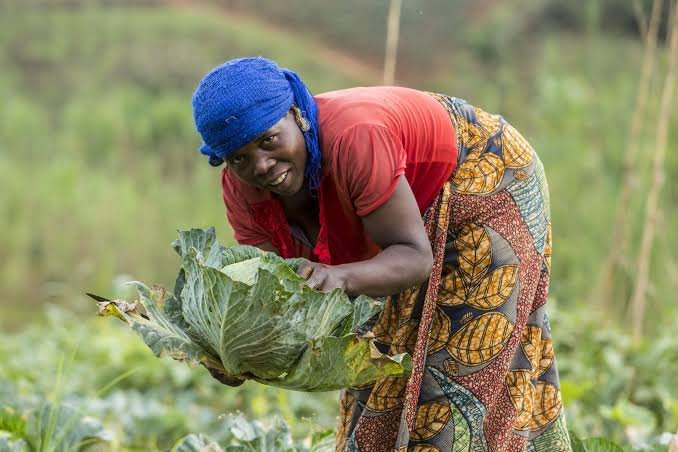
Burundi's government has launched a BIF 300 billion ($100.5 million) credit facility through CRDB Bank Burundi, offering agricultural, livestock and agro-processing investors loans at a 5% annual interest rate, well below prevailing commercial rates in an economy where agriculture generates nearly 40% of GDP and employs 84% of the workforce. The facility targets a real and measurable problem: Burundi's domestic credit-to-GDP ratio trails the African average, and long-term financing for machinery, irrigation and processing equipment has been especially scarce. It arrives, however, at an awkward moment. The IMF's own 2026 Article IV assessment found Burundi's private-sector credit contracting, from 41% of GDP in 2023-24 to 35% in 2025, as government borrowing increasingly competes with private businesses for the same bank balance sheets the new facility depends on.
BUJUMBURA — Burundi's government announced a BIF 300 billion, roughly $100.5 million, credit facility on 22 August 2026, aimed squarely at the sector that dominates its economy but has struggled to attract the financing it needs to grow: agriculture.
The facility, administered through CRDB Bank Burundi, offers loans at a 5% annual interest rate to investors in agriculture, livestock farming, agro-processing and other productive activities, well below the rates typically available for long-term agricultural investment in the country. Financing can cover machinery, livestock equipment and other productive assets needed to expand production and processing capacity, rather than the shorter-term seasonal inputs that have historically dominated agricultural lending in Burundi.
A Sector That Dominates the Economy but Struggles for Capital
The scale of what this facility is meant to serve is hard to overstate. Government figures put agriculture's contribution at 39.6% of Burundi's GDP, 84% of employment and approximately 95% of the country's food supply, making it simultaneously the backbone of the economy and the sector most exposed to weather, disease and market volatility. Despite that centrality, private-sector lending to agriculture has remained constrained by high interest rates, perceived weather risk, and limited appetite among commercial banks for long-term capital allocation.
The numbers explain why. The African Development Bank's 2026 country report shows Burundi's domestic credit averaging just 30.4% of GDP between 2020 and 2024, below the African average of 34.6%, a gap that has left farmers and agribusinesses without the kind of patient capital needed to invest in irrigation, storage or processing equipment rather than simply financing next season's seeds and fertiliser.
How the Facility Is Structured
| Element | Detail |
| Facility size | BIF 300 billion (~$100.5 million) |
| Administering bank | CRDB Bank Burundi |
| Interest rate | 5% annually |
| Eligible uses | Agricultural machinery, livestock equipment, agro-processing assets |
| Land access | Handled separately by the Ministry of Environment, Agriculture and Livestock |
| Credit applications | Handled independently by CRDB Bank Burundi |
| Announcement date | 22 August 2026 (Finance Ministry statement) |
Sources: Burundi Ministry of Finance; Ecofin Agency; Burundi Times.
The government has been explicit that land access and credit access are two separate procedures. The Ministry of Environment, Agriculture and Livestock oversees requests for state-owned land earmarked for productive projects, while CRDB Bank Burundi retains full control over loan vetting and risk assessment. That separation means a prospective borrower has to satisfy two distinct sets of requirements, one for land, one for financing, a structural detail likely to shape how far the facility reaches beyond established companies toward smaller cooperatives and individual farmers, who may find navigating both processes simultaneously considerably harder than a well-capitalised agribusiness would.
CRDB Bank Burundi is not a new entrant to this space. A subsidiary of Tanzania's CRDB Bank Group, which also operates in the Democratic Republic of Congo, the bank has run an established agribusiness lending operation, reporting an MSME loan portfolio of 19.4 billion BIF and 35% growth in its corporate loan book in its 2024 annual report, giving it existing infrastructure and risk-assessment experience to build this larger facility on top of.
This Sits Alongside, Not Instead Of, Existing Spending
The credit facility is not Burundi's only current agricultural investment. The country's 2026-27 national budget separately allocates roughly BIF 616.2 billion to the sector, covering fertiliser subsidies, improved seeds, livestock disease control and production incentives. The government has framed the new facility as complementary to that spending rather than a replacement for it, aimed specifically at the capital-intensive investments, machinery, processing equipment, irrigation infrastructure, that annual subsidy programmes aren't designed to finance.
The initiative also sits inside a longer-term policy framework. Burundi's Vision 2040-2060 identifies agriculture as a central driver of wealth creation and economic development, and the government has committed to raising agriculture's share of public spending to 10%, up from 9.4% in 2022, alongside broader food security targets for 2040 and 2060. The African Development Bank forecasts Burundi's economy growing 4.3% in 2026 and 4.6% in 2027, with agriculture, alongside mining, electricity generation, construction, investment and consumption, expected to support that expansion.
The Complication the Announcement Doesn't Mention
Here is what sits underneath the headline number and deserves equal attention: Burundi's private-sector credit has actually been shrinking. The IMF's 2026 Article IV assessment found private-sector credit falling from approximately 41% of GDP in 2023-24 to 35% in 2025, as government securities grew to account for roughly a quarter of total bank assets. The IMF was explicit about the mechanism, warning that continued government borrowing risks crowding out private lending by competing directly with businesses for the same pool of bank resources.
That tension matters directly for this facility's prospects. A BIF 300 billion credit line administered through a commercial bank depends on that bank having the balance sheet capacity and appetite to originate and hold the resulting loans. If government securities keep absorbing a growing share of Burundian banks' balance sheets, the same crowding-out dynamic the IMF flagged could limit how quickly CRDB Bank Burundi, or other lenders extending similar facilities, can actually scale agricultural lending, regardless of how attractive the 5% rate looks on paper. The facility's success will depend partly on whether Burundi's fiscal and credit policy move in the same direction as its agricultural investment ambitions, rather than working against each other.
What Actually Determines Whether This Works
Analysts caution, reasonably, that the size of a credit facility alone doesn't guarantee agricultural transformation. Its real impact depends on eligibility requirements, repayment terms, collateral demands, project quality, supporting infrastructure and, ultimately, whether financed borrowers can generate enough cash flow to repay, in a sector still exposed to weather shocks, disease outbreaks, volatile input costs and infrastructure gaps that no credit facility on its own can resolve.
If the investments this facility finances succeed, in machinery, irrigation, livestock facilities, storage and processing capacity, they could meaningfully connect Burundian farmers to processors and markets in ways seasonal input financing never could, increasing the value captured domestically rather than exported as raw commodities. Strong repayment performance could also encourage CRDB and other banks, along with development finance institutions, to expand agricultural lending further on their own initiative, rather than requiring government-backed facilities each time. That would be the more durable outcome: a credit facility that demonstrates agricultural lending in Burundi can be commercially viable, not one that succeeds only as long as it carries a government-subsidised interest rate.
The ultimate test is straightforward to state and harder to achieve: whether BIF 300 billion actually converts into productive assets that raise output, strengthen agro-processing, generate employment and reduce Burundi's dependence on imported food, rather than becoming, as government-directed credit facilities sometimes do, a well-intentioned announcement that struggles to disburse against the very credit constraints it was designed to solve.
FAQ
What is Burundi's new agricultural credit facility? A BIF 300 billion ($100.5 million) financing facility launched by Burundi's government and administered through CRDB Bank Burundi, offering loans at a 5% annual interest rate to investors in agriculture, livestock and agro-processing.
What can the financing be used for? Agricultural machinery, livestock equipment and other productive assets needed to expand production and processing capacity, rather than short-term seasonal inputs like seeds and fertiliser, which are covered by separate existing budget lines.
How do I access land and credit under this programme? They are two separate processes. The Ministry of Environment, Agriculture and Livestock handles applications for state-owned land earmarked for productive projects, while CRDB Bank Burundi independently manages financing applications and loan vetting.
Why does Burundi need this facility? Agriculture generates 39.6% of GDP and employs 84% of the workforce, but Burundi's domestic credit-to-GDP ratio (30.4% between 2020 and 2024) trails the African average (34.6%), leaving farmers and agribusinesses without access to the long-term capital needed for machinery, irrigation and processing investment.
Is there a risk this facility won't reach its full potential? Yes. The IMF's 2026 Article IV assessment found Burundi's private-sector credit has been contracting, from 41% of GDP in 2023-24 to 35% in 2025, as government securities absorb a growing share of bank balance sheets, a dynamic the IMF warned could crowd out the private lending this facility depends on.
How does this fit into Burundi's broader economic plans? It aligns with Burundi's Vision 2040-2060 framework, which identifies agriculture as a central driver of wealth creation, and complements a separate BIF 616.2 billion agricultural allocation in the 2026-27 national budget covering subsidies, seeds and livestock disease control.
 Uchumi360
Business Intelligence
Uchumi360
Business Intelligence
Uchumi360 covers business, investment, and economic policy across East, Central, and Southern Africa.
For the serious reader
You read to the end. That places you in a small group.
Uchumi360 is built for readers who demand precision over speed, structure over sentiment, and analysis that holds uncomfortable conclusions rather than softening them. If this work sharpens how you think about Africa's economy, help us keep building the infrastructure behind it.
Institutional Partners
Commission intelligence. Shape the conversation.
Uchumi360 works with development finance institutions, investment firms, sovereign bodies, and strategic organisations across the coverage region. Institutional partnership unlocks:
- Commissioned sector and country intelligence reports
- Branded research series under your institution's authority
- Exclusive data briefings for internal strategy teams
- Speaking and editorial presence at Uchumi360 events
- Co-published investment outlooks for your markets
Support Our Work
Independent analysis has a cost. Help us bear it.
Uchumi360 does not carry advertising. It does not take editorial direction from sponsors. Every article is produced without commercial compromise. Your contribution funds the reporting, research, and editorial infrastructure that keeps this analysis free from influence.
Secure checkout: One-time and monthly support are processed securely. Add payment credentials to enable checkout here.
Stay Connected
Keep up with every new insight.
Follow our latest analysis, policy coverage, and market intelligence as soon as it is published. If you need something specific, reach out directly and we will point you to the right research.
