
Ethiopia Banned All Fossil Fuel Vehicle Imports in 2024 and EV Adoption Has Already Jumped to 6 Percent. Here Is How Africa's Second Most Populous Country Is Pulling It Off.
Ready
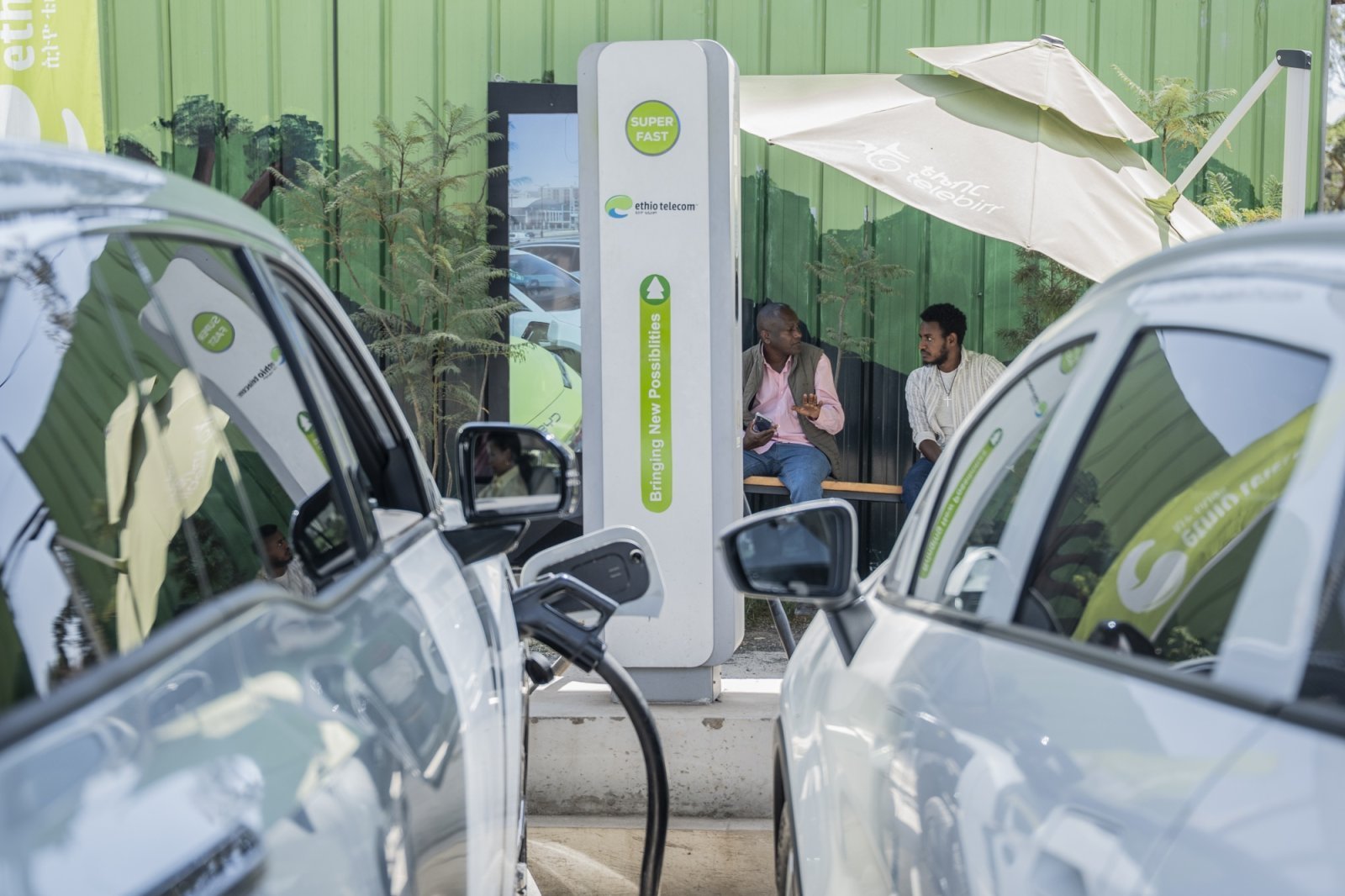
Ethiopia banned imports of fossil fuel-powered internal combustion engine vehicles in 2024, becoming the first country in the world to do so, and simultaneously slashed tariffs on electric vehicles to make new EVs cost-competitive with used petrol cars. EV adoption has grown from under 1 percent to nearly 6 percent of all vehicles on the road. Chinese manufacturers led by BYD are filling Addis Ababa showrooms. The Grand Ethiopian Renaissance Dam, completed September 2025 at USD 5 billion, doubled Ethiopia's electricity supply and is reducing consumer energy costs, creating the energy foundation the EV transition requires. The government targets 500,000 EVs on the road by 2030. Infrastructure gaps are real: approximately half the population lacks electricity access, power outages are frequent outside Addis Ababa, and the country has just over 100 charging stations, almost all in the capital. The primary driver of the ban was fiscal: Ethiopia was spending heavily subsidising petrol for consumers and the ICE import ban removed the subsidy obligation while the tariff removal on EVs created the price conditions that redirected buyer behaviour faster than the infrastructure could prepare for. Martin Krause, director of the Climate Change Division at the UN Environment Programme, confirmed Ethiopia as the first country globally to implement the ICE import ban. The policy's success at 6 percent adoption despite the infrastructure constraints challenges the conventional development economics assumption that the infrastructure must precede the policy. Ethiopia built the policy first and is now catching up the infrastructure to match it. Ethiopia did not wait until it had perfect charging infrastructure before banning petrol car imports. It set the policy, used GERD's electricity surplus to build the energy foundation, made EVs cheaper than used petrol cars through tariff removal, and let the market respond. The market responded. That sequence is the lesson for every African government watching.
ADDIS ABABA — In 2024, Ethiopia became the first country in the world to ban imports of fossil fuel-powered internal combustion engine vehicles. The policy simultaneously slashed tariffs on electric vehicles to a level that made brand new EVs cost-competitive with second and third-hand petrol cars imported under the previous regime.
Most development economists would have predicted a slow and difficult adoption curve. A country where approximately half the population has no electricity access, where power outages are frequent outside major urban centres, where just over 100 charging stations exist nationally and nearly all of them are in Addis Ababa, and where the per-capita income level has historically directed vehicle buyers toward the cheapest available used imports, is not the obvious candidate for the world's first national ICE import ban.
The market responded anyway. EV adoption has grown from under 1 percent to nearly 6 percent of all vehicles on the road since the ban took effect, according to reporting by Bloomberg's Fasika Tadesse and Akshat Rathi confirmed by Martin Krause, director of the Climate Change Division at the UN Environment Programme. Chinese manufacturers led by BYD have moved quickly to capture the demand, packing Addis Ababa showrooms with models that the tariff framework has made accessible to the buyer segment previously limited to the used import market. The policy is working ahead of the infrastructure, and that sequence is the analytically interesting part of the Ethiopia EV story.
Why Ethiopia banned petrol car imports
The primary driver of the ICE import ban was fiscal rather than environmental, though the environmental co-benefits have become central to how the policy is now framed internationally.
For years, a major line item in Ethiopia's national budget was the fuel subsidy: government spending on keeping petrol prices at a level that Ethiopian consumers could afford in a country where foreign exchange is chronically scarce and where petrol is an imported commodity whose market price in a country of 125 million people represents a substantial and volatile budget commitment. The ICE import ban removed the structural demand that drove the subsidy obligation. No new petrol cars entering the fleet means no growth in the petrol-consuming vehicle stock beyond what already exists. The tariff removal on EVs redirected the vehicle import market toward products that run on domestically produced electricity rather than imported fossil fuels, converting a foreign exchange drain into a domestic energy consumption question.
The fiscal logic is direct and was understood by the Ethiopian government as the primary economic rationale: every petrol vehicle replaced by an electric vehicle removes one unit of foreign exchange demand for imported fuel and replaces it with demand for electricity from the Ethiopian grid, whose expansion through the Grand Ethiopian Renaissance Dam and the Koysha Hydropower Project is being paid for in domestic currency through development finance whose terms are more favourable than the ongoing foreign exchange expenditure that petrol subsidies represent.
Martin Krause of the UN Environment Programme confirmed Ethiopia as the world's first country to implement the ICE import ban, situating the policy within the broader global clean transport transition whose acceleration the combination of falling EV costs, Chinese manufacturing scale, and climate finance availability has made more accessible to developing economies than the technology's earlier cost profile would have suggested.
GERD as the energy foundation
The Grand Ethiopian Renaissance Dam, completed in September 2025 at a cost of USD 5 billion, is the infrastructure event whose timing makes the EV policy's ambition credible in a way that it would not have been at the point the ban was announced.
At 5,150 megawatts, GERD doubled Ethiopia's electricity generation capacity. As Uchumi360 documented in its analysis of Ethiopia's energy superpower strategy alongside the Koysha Dam's 2,200 megawatt contribution, Ethiopia has been building a generation portfolio whose cumulative scale places it among Africa's largest electricity producers. GERD's completion is the flagship event in that portfolio: the single largest addition of generation capacity in East African history, whose output is now flowing to the Ethiopian grid and whose consumer price effect, driving electricity costs down as supply increases relative to demand, creates the economic conditions that make EV charging affordable at the household and commercial level.
The connection between GERD and the EV transition is not merely symbolic. An electric vehicle fleet of 500,000 units by 2030, the government's target, represents a substantial new electricity demand on the Ethiopian grid. Without a generation base capable of supplying that demand at affordable prices, the EV transition would be constrained by energy cost rather than vehicle cost. GERD's completion addresses that constraint at exactly the moment the EV policy is generating the demand growth that the energy supply needs to serve.
Ethiopia is not asking its citizens to charge EVs from a grid that cannot reliably supply the power. It is charging them from a grid that just doubled in capacity and is becoming cheaper to use. That combination of policy and infrastructure, arriving in the same period rather than in the sequential order that conventional development planning would have prescribed, is the specific dynamic that is producing the 6 percent adoption figure that surprised observers expecting a slower curve.
BYD and the Chinese EV market entry
China's role in the Ethiopia EV story is the commercial mechanism that connects the policy framework to the consumer market outcome.
BYD, SAIC, Chery, and other Chinese EV manufacturers have moved into the Ethiopian market with a speed that reflects both the scale of the opportunity the ICE ban created and the competitive advantage that Chinese EV production economics provide at the price points that Ethiopian buyers can access. The tariff removal on EVs made new Chinese electric vehicles cost-competitive with the used Japanese and European petrol cars that have historically dominated Ethiopian vehicle imports. That price parity is the specific commercial condition that explains why showrooms filled faster than the infrastructure expanded.
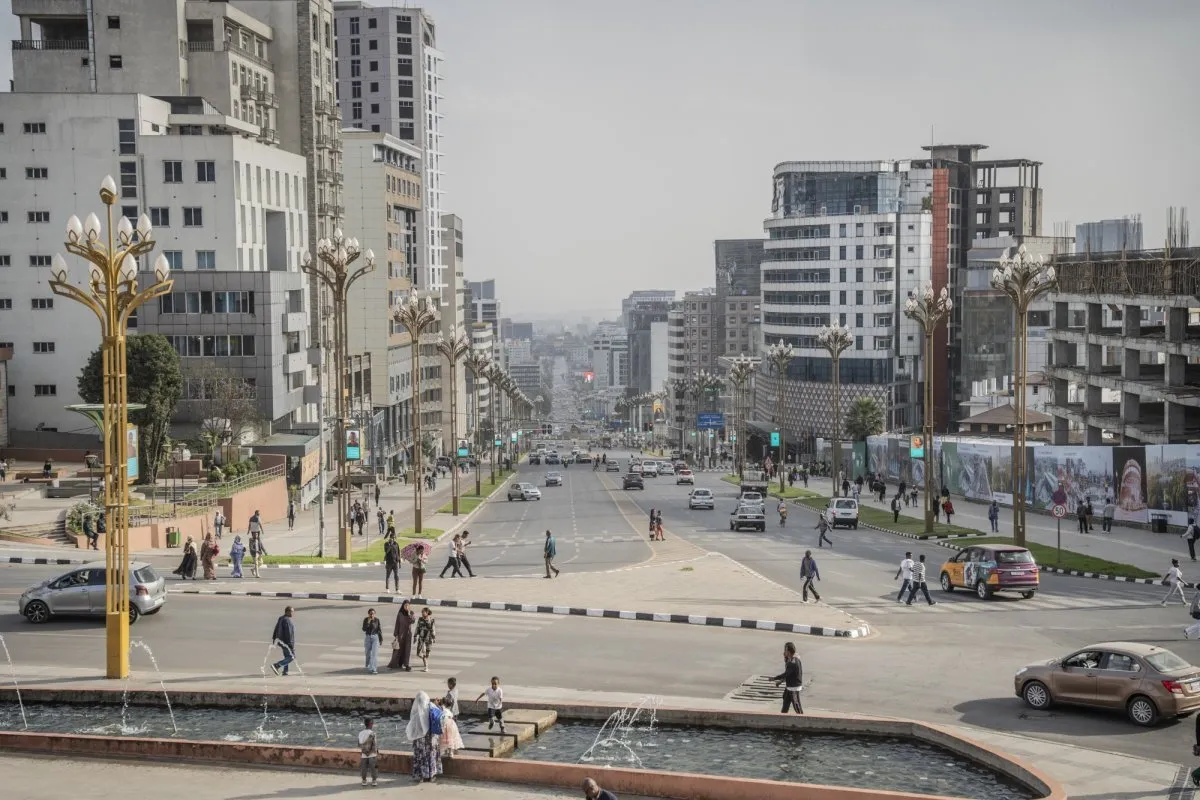 Addis Ababa, Ethiopia. Photographer: Amanuel Sileshi/Bloomberg
Chinese EV manufacturers have been seeking African market positions with urgency as their domestic market competition intensifies and as the US and European tariff barriers on Chinese EV exports have created pressure to diversify geographic sales. Ethiopia's ICE import ban and tariff removal created an open and growing market whose policy certainty, anchored in a national ban rather than an incentive programme that could be reversed, gave manufacturers the confidence to invest in dealer networks, spare parts supply chains, and service infrastructure whose development is the medium-term condition for EV ownership to be sustainable rather than simply affordable at point of purchase.
The 1 percent to 6 percent adoption growth in the period since the ban represents tens of thousands of vehicles. At 500,000 units by 2030, the market is large enough to justify the supply chain investment that durable EV adoption requires, and the combination of GERD's cheap electricity and the government's tax exemption framework creates the total cost of ownership economics that make EVs genuinely competitive over a vehicle's lifetime rather than simply at the purchase price.
The infrastructure gaps that remain real
Honest analysis of the Ethiopia EV story requires stating the infrastructure gaps clearly rather than allowing the adoption headline to obscure them.
Approximately half of Ethiopia's population of 125 million has no electricity access. Power outages are frequent outside Addis Ababa and the major secondary cities. The country has just over 100 charging stations, nearly all concentrated in the capital. The charging infrastructure whose density determines whether EV ownership is practical outside the urban core has not expanded at the pace that the vehicle adoption rate suggests the demand for it is growing.
These gaps mean that the 6 percent adoption figure reflects urban adoption, primarily in Addis Ababa, rather than national adoption across Ethiopia's diverse geography. The transport economics of EV ownership in Addis Ababa, where GERD's electricity is available, where charging stations are concentrated, and where the daily driving distances and traffic patterns favour EV battery management, are materially more favourable than the transport economics of EV ownership in Amhara, Oromia, or the Southern Nations regions where grid access is limited and charging infrastructure is absent.
The government's plans to address these constraints are documented. Rural electrification through both grid extension and off-grid solar, leveraging the Rural Electrification Fund and international climate finance whose availability for clean energy infrastructure in least-developed countries has improved significantly in recent years. Charging infrastructure expansion programmes whose prioritisation in the government's EV roadmap reflects the understanding that the vehicle adoption rate will plateau without the charging network whose development is the supply-side condition for rural and peri-urban EV ownership to become practical.
Whether those plans deliver at the pace the 500,000 by 2030 target requires is the open question. The charging infrastructure challenge in particular, requiring distributed investment across a large and geographically diverse country whose logistics costs are high, is a harder scaling problem than the vehicle tariff policy whose implementation required a single regulatory change. The policy worked. The infrastructure work is harder and will take longer.
What Ethiopia's EV policy means for East Africa
Ethiopia's experience has implications that extend beyond its own borders into the regional policy environment where Tanzania, Kenya, Uganda, and Rwanda are all managing their own clean transport transitions with varying degrees of policy ambition and infrastructure readiness.
The specific lesson is not that every East African country should immediately ban ICE imports. Ethiopia's particular combination of GERD's electricity surplus, a severe foreign exchange constraint that made petrol subsidies fiscally unsustainable, a domestic EV market whose price sensitivity was extreme enough that tariff removal alone created the cost parity that redirected buyer behaviour, and a government with the political will to implement a first-in-world policy creates a context that does not replicate identically across different national circumstances.
The transferable lesson is about sequencing and policy ambition. Ethiopia did not wait until it had 10,000 charging stations before banning petrol car imports. It used the policy instrument available to it, the import ban and tariff removal, to create the market signal that attracted the investment in vehicles and, progressively, in charging infrastructure that the market signal generated. The infrastructure is following the policy rather than preceding it.
Tanzania has Spiro and Ampersand deploying electric motorcycles and battery-swap infrastructure at scale. BasiGo is operating electric buses in Kigali. Uganda's Kiira Motors landed a UGX 1 trillion export contract for 820 electric buses from its Jinja plant. The regional electric mobility ecosystem is building, sector by sector and country by country, through commercial investment attracted by the specific economics of electric transport in African urban markets. Ethiopia's national policy framework accelerated that process through a single decisive intervention whose fiscal rationale, saving the foreign exchange budget from petrol subsidies, is equally applicable to every oil-importing economy in the region.
The Maersk surcharge analysis Uchumi360 published this month is the same structural argument in a different product category: East African economies that depend on imports for the energy their transport systems consume are exposed to external cost shocks they cannot control. Ethiopia's ICE ban is a national-scale version of the same import substitution logic that Tanzania's Tanzol Solar Manufacturing Complex represents in the solar panel category: produce or power domestically what you currently import, and reduce the foreign exchange drain and supply chain vulnerability that import dependency creates.
The country that found a way to make that logic work for the entire vehicle market deserves the attention its policy outcome is now attracting.
FAQ
Did Ethiopia really ban petrol car imports? Yes. In 2024, Ethiopia became the first country in the world to ban imports of fossil fuel-powered internal combustion engine vehicles, confirmed by Martin Krause, director of the Climate Change Division at the UN Environment Programme. The ban was accompanied by the removal of tariffs on electric vehicles, making new EVs cost-competitive with used petrol cars.
How many electric vehicles are in Ethiopia now? EV adoption has grown from under 1 percent to nearly 6 percent of all vehicles on the road in Ethiopia since the 2024 ICE import ban, according to Bloomberg reporting by Fasika Tadesse and Akshat Rathi. Chinese manufacturers led by BYD are the primary suppliers filling Addis Ababa showrooms.
Why did Ethiopia ban fossil fuel car imports? The primary driver was fiscal. Ethiopia was spending heavily subsidising petrol for consumers, a significant foreign exchange drain for a country where hard currency is scarce. The ICE import ban removed the structural demand for petrol subsidies while the tariff removal on EVs redirected the vehicle import market toward products powered by domestically generated electricity rather than imported fossil fuels.
Does Ethiopia have enough electricity to charge electric vehicles? The Grand Ethiopian Renaissance Dam, completed in September 2025 at USD 5 billion, doubled Ethiopia's electricity generation capacity to over 5,150 megawatts. The electricity surplus is driving consumer energy costs down. However, approximately half of Ethiopia's population still lacks electricity access, and the country has just over 100 charging stations, almost all in Addis Ababa, meaning EV adoption is currently concentrated in the capital where infrastructure is available.
What is Ethiopia's EV target for 2030? The Ethiopian government has set a target of 500,000 electric vehicles on the road by 2030. Achieving this requires significant expansion of charging infrastructure beyond Addis Ababa, continued rural electrification, and the sustained availability of affordable Chinese EVs whose tariff-exempt pricing has driven the adoption growth already recorded since the 2024 ban.
 Uchumi360
Business Intelligence
Uchumi360
Business Intelligence
- Bloomberg CityLab, Fasika Tadesse and Akshat Rathi, "Electric Vehicle Sales Boom as Ethiopia Bans Fossil-Fuel Car Imports," February 18 2026
- EV adoption from under 1 percent to nearly 6 percent, BYD showroom expansion, tariff removal details
- Available at bloomberg.com
- Martin Krause, Director of the Climate Change Division, UN Environment Programme
- Confirmation of Ethiopia as first country globally to implement ICE import ban
- Cited in Bloomberg and Guardian reporting
- The Guardian, "Ethiopia becomes first country to ban fossil fuel vehicles," September 12 2025
- Infrastructure challenges, 500,000 EV target by 2030, charging station count, electricity access statistics
- Available at theguardian.com
- CNN, "Ethiopia bans petrol car imports and slashes EV tariffs," August 17 2024
- Tax exemption framework and tariff removal details
- Available at edition.cnn.com
- AP News, "Ethiopia's Grand Ethiopian Renaissance Dam inauguration," September 2025
- GERD completion at USD 5 billion, electricity generation doubling
- Available at apnews.com
- Ethiopian Electric Power, GERD operational data, 5,150 megawatts capacity
- Available at eep.gov.et
- Uchumi360, "Ethiopia's USD 2.8 Billion Koysha Dam Will Add 2,200MW to the Grid
- With GERD and Gibe III, Ethiopia Is Becoming Africa's Largest Electricity Exporter," June 2026
- Available at uchumi360.com
- Uchumi360, "Maersk Is Adding USD 1,000 Per Container on China to East Africa Shipments From June 15," June 2026
- Import dependence structural argument
- Available at uchumi360.com
- BYD, African market expansion documentation
- Available at byd.com
- African Development Bank, Ethiopia clean transport and electric mobility research
- Available at afdb.org
- World Bank, Ethiopia energy sector and rural electrification data
- Available at worldbank.org
- International Energy Agency, Africa EV outlook and clean transport data
- Available at iea.org
- IRENA, Africa renewable energy and electric mobility research
- Available at irena.org
Uchumi360 covers business, investment, and economic policy across East, Central, and Southern Africa.
For the serious reader
You read to the end. That places you in a small group.
Uchumi360 is built for readers who demand precision over speed, structure over sentiment, and analysis that holds uncomfortable conclusions rather than softening them. If this work sharpens how you think about Africa's economy, help us keep building the infrastructure behind it.
Institutional Partners
Commission intelligence. Shape the conversation.
Uchumi360 works with development finance institutions, investment firms, sovereign bodies, and strategic organisations across the coverage region. Institutional partnership unlocks:
- Commissioned sector and country intelligence reports
- Branded research series under your institution's authority
- Exclusive data briefings for internal strategy teams
- Speaking and editorial presence at Uchumi360 events
- Co-published investment outlooks for your markets
Support Our Work
Independent analysis has a cost. Help us bear it.
Uchumi360 does not carry advertising. It does not take editorial direction from sponsors. Every article is produced without commercial compromise. Your contribution funds the reporting, research, and editorial infrastructure that keeps this analysis free from influence.
Secure checkout: One-time and monthly support are processed securely. Add payment credentials to enable checkout here.
Stay Connected
Keep up with every new insight.
Follow our latest analysis, policy coverage, and market intelligence as soon as it is published. If you need something specific, reach out directly and we will point you to the right research.
