
Kenya Just Retired 250 State Board Members. Tanzania Hasn't Asked the Same Question
Ready
Kenya's Government-Owned Enterprises Act, which came into force in December 2025, has already reset governance at 83 commercial state enterprises. President Ruto announced on 16 July 2026 that 250 board members across 66 corporations have been retired, with former political office holders barred from serving on these boards for five years after leaving office. The law replaces political appointment with competitive, merit-based recruitment. Tanzania holds significant stakes in enterprises across energy, aviation, ports, banking, insurance, transport and agriculture, managing assets worth trillions of shillings, without a comparable public debate on how directors are chosen. This piece argues that board composition is an economic issue, not an administrative one, since boards approve investment, oversee risk and set the commercial discipline of the institutions they run. Kenya's reform is untested and its outcomes are not yet known. But it reopens a question every state in the region eventually has to answer: are public boards there to reward political loyalty, or to manage public capital well.
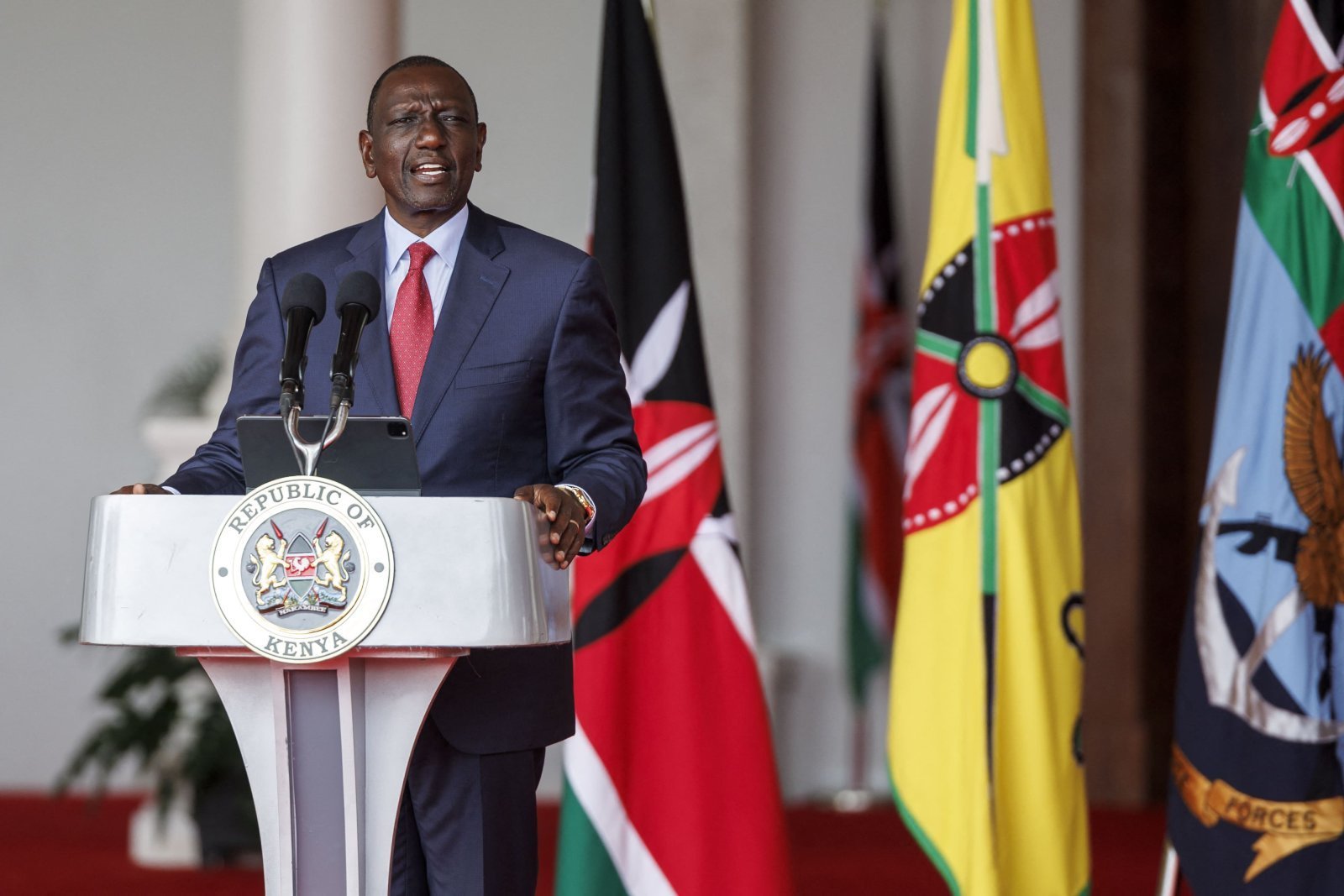
President William Ruto told a Nairobi audience on 16 July 2026 that Kenya had retired 250 board members from 66 commercial state corporations. The trigger was the Government-Owned Enterprises Act, which he signed into law in November 2025 and which took effect that December. Ruto called the restructuring a deliberate break from a system where board seats functioned as political rewards.
The law reaches further than the headline figure suggests. It covers 65 existing government-owned companies and an additional 18 statutory entities that carry out commercial activities, bringing the total to 83 enterprises now operating under a new governance framework. Among them are the Kenya Airports Authority, the Agricultural Finance Corporation and the Postal Corporation of Kenya. Anyone who has held political office in the previous five years is barred from serving as an independent director on any of these boards.
Boards Decide More Than They Are Given Credit For
Public debate tends to treat state enterprise boards as ceremonial, bodies that meet occasionally to sign off on reports already written elsewhere. That understates their role. Boards approve strategic investment, oversee financial performance, monitor risk and evaluate the executives who run these institutions day to day. For enterprises that manage ports, airports, electricity generation or public financial institutions, those decisions ripple through the wider economy, not just the balance sheet of a single company.
The quality of a board is therefore a determinant of how well public capital performs, not a footnote to it.
Kenya Is Betting On Institutions, Not Personalities
The scale of the personnel change in Kenya has drawn most of the attention, but the more consequential shift is structural. The Act reconstitutes government-owned enterprises as public limited liability companies under the Companies Act, with a centralised ownership function sitting inside the National Treasury and boards recruited through competitive, skills-based selection rather than appointment by political favour.
KenGen chairperson Alfred Agoi became an early test case of the new rule, ejected from chairing a board meeting once his history as a former member of parliament for Sabatia disqualified him under the five-year bar. Whether the law changes institutional behaviour over the longer term is still an open question. Legislation is easier to pass than culture is to change. But the direction of the reform is unambiguous: Kenya is trying to separate the governance of commercial state assets from the political cycle that has historically shaped them.
Tanzania Manages Comparable Assets Without the Same Debate
Tanzania holds significant interests in enterprises spanning energy, aviation, ports, banking, insurance, transport and agriculture, institutions that collectively manage assets worth trillions of shillings and deliver services that much of the economy depends on. How directors are selected for these boards, whether primarily for political alignment or for financial, engineering, legal or sector-specific expertise, is a question that has not received comparable public scrutiny in Tanzania.
This is not an argument that Tanzania's current arrangements are failing, or that Kenya's model should be adopted wholesale. Institutional context differs between the two countries, and Kenya's reform has not yet produced results that can be evaluated. What Kenya's experience does is put a specific, testable question in front of every government in the region that owns commercial enterprises: does the board exist to reward political service, or to manage public capital competently.
Governance Is Increasingly a Competitive Variable
Across state-owned enterprises globally, the strongest performers are not consistently found in the largest economies. They are found where boards are independent, recruitment is transparent, and performance expectations are clear. Weak governance tends to produce the opposite pattern: inefficient procurement, delayed projects, financial losses, and eventual bailouts funded by taxpayers rather than by the enterprise itself.
Governments across East Africa continue to invest heavily in ports, railways, power generation and digital infrastructure. That capital spending only converts into economic return if the institutions managing it are competently governed. A modern port needs disciplined oversight. A national utility needs strategic, not political, leadership. Infrastructure spending without governance reform is a partial strategy.
Kenya's restructuring of 83 enterprises will not settle the debate on its own, and its results will take years to assess. But it has reopened a conversation that Tanzania, with a comparable footprint of state-owned commercial assets, has not yet had in public. The question is not who sits on these boards. It is what they are there to achieve.
FAQ
What is Kenya's Government-Owned Enterprises Act? A 2025 law that restructures Kenya's commercial state corporations into public limited liability companies, centralises ownership under the National Treasury, and requires competitive, merit-based board recruitment.
How many board members has Kenya retired? President Ruto stated on 16 July 2026 that 250 board members across 66 commercial state corporations have been retired since the law took effect.
What is the five-year rule? Anyone who has held political office is barred from serving as an independent director on a government-owned enterprise board for five years after leaving that office.
Does this law apply to all Kenyan state institutions? No. It applies specifically to 65 existing government-owned companies and 18 statutory entities engaged in commercial activity, a combined 83 enterprises.
Has Tanzania introduced a similar reform? Not currently. Tanzania has not enacted comparable legislation governing how boards are appointed across its state-owned commercial enterprises.
Why does board composition matter economically? Boards approve investment decisions, oversee risk and financial performance, and evaluate executive management, functions that directly affect how efficiently public capital is used.
 Uchumi360
Business Intelligence
Uchumi360
Business Intelligence
- The Star, 16 July 2026: Ruto's statement on 250 board members retired across 66 commercial state corporations, five-year bar on former political office holders
- Daily Nation: KenGen chairperson Alfred Agoi's removal as an early application of the law
- Kenya Law / Government-Owned Enterprises Act, 2025 (Act No
- 25 of 2025): assented 21 November 2025, commenced 5 December 2025
- covers 65 existing companies and 18 statutory entities (83 total)
- Kenya National Assembly / Parliament records: legislative history and scope of covered entities
- Note: sources vary between "65" and "66" corporations depending on whether the figure refers to the Act's original schedule or the current count following amendments (e.g
- removal of Kenya Pipeline Company)
- This piece uses Ruto's own July 2026 figure (66) for the personnel numbers and the Act's schedule (65 + 18 = 83) for total institutional scope
Uchumi360 covers business, investment, and economic policy across East, Central, and Southern Africa.
For the serious reader
You read to the end. That places you in a small group.
Uchumi360 is built for readers who demand precision over speed, structure over sentiment, and analysis that holds uncomfortable conclusions rather than softening them. If this work sharpens how you think about Africa's economy, help us keep building the infrastructure behind it.
Institutional Partners
Commission intelligence. Shape the conversation.
Uchumi360 works with development finance institutions, investment firms, sovereign bodies, and strategic organisations across the coverage region. Institutional partnership unlocks:
- Commissioned sector and country intelligence reports
- Branded research series under your institution's authority
- Exclusive data briefings for internal strategy teams
- Speaking and editorial presence at Uchumi360 events
- Co-published investment outlooks for your markets
Support Our Work
Independent analysis has a cost. Help us bear it.
Uchumi360 does not carry advertising. It does not take editorial direction from sponsors. Every article is produced without commercial compromise. Your contribution funds the reporting, research, and editorial infrastructure that keeps this analysis free from influence.
Secure checkout: One-time and monthly support are processed securely. Add payment credentials to enable checkout here.
Stay Connected
Keep up with every new insight.
Follow our latest analysis, policy coverage, and market intelligence as soon as it is published. If you need something specific, reach out directly and we will point you to the right research.
