
Kenya Is Spending KSh 65 Billion to Electrify Nairobi's Commuter Rail. The Project Is Not About Trains. It Is About Preventing the City From Congesting Itself Into Economic Irrelevance.
Ready
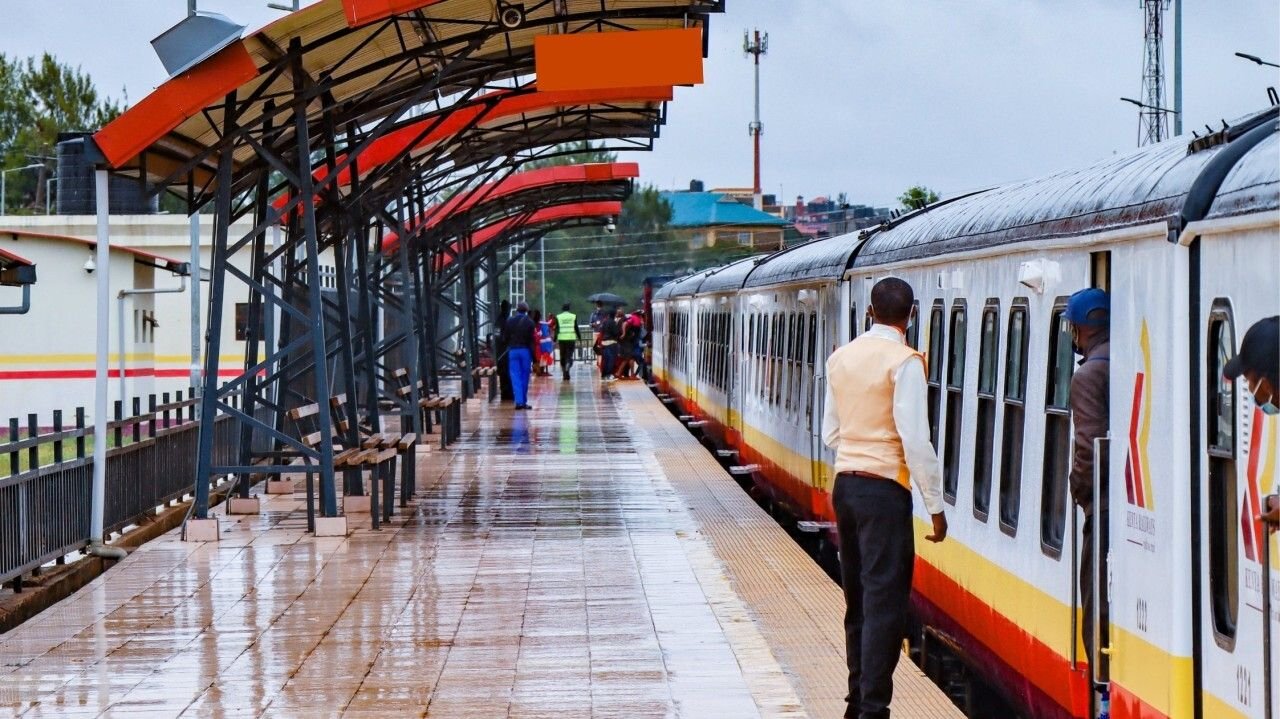
The Kenya Urban Mobility Improvement Project is a KSh 65 billion initiative financed through a Kenyan government and World Bank partnership that will electrify Nairobi's commuter rail network, acquire new electric trains, establish maintenance facilities, develop local manufacturing capacity for railway spare parts and components, build a concrete sleeper production facility, and implement a transit-oriented development strategy around railway stations. The network will connect Nairobi to satellite towns including Ruiru, Thika, Kikuyu, Ngong, Karen, Embakasi, Kitengela, and Syokimau. The project's economic case rests not on passenger capacity alone but on three compounding arguments: the time cost of congestion whose accumulation across hundreds of thousands of daily commuters represents a productivity loss whose aggregate is economically significant but rarely appears in GDP calculations, the industrial ecosystem whose development alongside the railway infrastructure creates domestic manufacturing capability in maintenance, components, and construction, and the transit-oriented development whose implementation around stations could reverse the road-following urban sprawl pattern that is increasing Nairobi's infrastructure costs and commuting distances simultaneously. Kenya already generates a significant proportion of its electricity from renewable sources, making rail electrification a fuel cost reduction as well as an emissions reduction. The project is closely watched across East Africa where Dar es Salaam, Kampala, and Kigali face the same structural challenge: population growth outpacing transport capacity in cities whose economic competitiveness depends on moving large numbers of people efficiently. Africa's most successful cities in the next generation will not be those that build the most roads. They will be those that move the most people. Kenya's KSh 65 billion electric rail project is the most direct available evidence that Nairobi understands the difference.
Every rapidly growing city eventually reaches the point where road expansion alone can no longer solve congestion. Nairobi is approaching that point faster than most African capitals, and Kenya Railways' KSh 65 billion Kenya Urban Mobility Improvement Project is the investment whose announcement confirms that the Kenyan government and its World Bank financing partner have assessed the trajectory accurately enough to commit the capital whose deployment attempts to change it before the congestion whose momentum is building becomes the economic constraint whose reversal costs multiples of the prevention.
The project will modernise Nairobi's commuter rail network through electrification, new electric train acquisition, maintenance facilities, and supporting infrastructure, connecting the Kenyan capital to the rapidly expanding satellite towns of Ruiru, Thika, Kikuyu, Ngong, Karen, Embakasi, Kitengela, Syokimau, and other growing urban centres across the metropolitan region whose integration into a single functioning economic geography the transport infrastructure has not kept pace with.
The headline announcement is about trains. The economic story is about productivity, time, and whether Nairobi can remain a competitive metropolitan economy as it becomes one of Africa's largest.
The congestion threshold that Nairobi is approaching
Transport policy across much of Africa focused for decades on moving vehicles. The next phase is increasingly focused on moving people. That distinction matters because the two objectives produce different infrastructure decisions at exactly the moment when the difference between them becomes most consequential: when a rapidly growing city approaches the threshold whose crossing makes road expansion counterproductive rather than additive.
The mechanism is documented across the urban transport literature and visible in the experience of every city that has attempted to road-build its way out of congestion at metropolitan scale. Additional highways initially reduce traffic pressure. Within years, they attract more vehicles, more residential development along the newly accessible corridors, and more commuters until the congestion returns at the expanded network's higher baseline capacity. Cities then find themselves spending billions on successive rounds of road expansion while journey times continue to deteriorate and the economic cost of congestion continues to rise.
Nairobi has expanded far beyond its traditional boundaries. What were once distant commuter towns are becoming components of a single integrated metropolitan economy. Workers live in Kiambu and work in Nairobi. Businesses operate across multiple counties. Economic activity is regional while transport infrastructure remains heavily dependent on roads whose capacity the metropolitan population's growth is testing against the threshold whose proximity the daily commute experience documents more honestly than the official traffic count data.
Every day, hundreds of thousands of commuters travel into Nairobi's commercial and industrial centres. As the metropolitan population grows, the economic cost of the congestion they experience grows alongside it in ways that compound across the entire economy rather than affecting only the transport sector whose infrastructure budget the congestion is straining.
The time cost whose aggregate is larger than it appears
Transport infrastructure is conventionally evaluated by its construction cost. The more important metric, and the one whose honest calculation produces the most compelling economic case for rail investment over road expansion at Nairobi's development stage, is time.
A worker who spends four hours commuting each day loses the equivalent of nearly two months of productive working time every year. Multiplied across the hundreds of thousands of workers whose daily Nairobi commutes exceed two hours each way, the aggregate productive time loss whose annual accumulation compounds into the GDP drag that rarely appears explicitly in national accounts but whose presence is visible in the labour market inefficiency, the logistics cost elevation, and the talent access difficulty that employers in Nairobi's commercial and industrial zones increasingly report as operational constraints.
Businesses face higher logistics costs when the road network whose performance their supply chains depend on is unpredictable and deteriorating. Labour markets become less efficient when the geographic labour pool whose accessibility determines which workers a Nairobi employer can practically recruit is constrained by the commute time whose length makes the distant satellite town worker effectively unavailable despite being within the metropolitan region's nominal boundary. Households spend a rising share of disposable income on transport whose cost the fuel, the vehicle maintenance, and the time together constitute while the productivity whose generation funds that expenditure is being reduced by the same commute whose cost they are absorbing.
Electric commuter rail offers the alternative whose economic logic addresses the time cost directly. Rail moves significantly larger numbers of people through dedicated transport corridors whose separation from road traffic produces the journey time reliability that road transport at metropolitan scale cannot provide regardless of road network investment. A commuter whose journey time from Ruiru to Nairobi's CBD by electric train is predictably 45 minutes rather than variably 90 to 150 minutes by road recovers the time difference as productive working hours, reduced stress, and the flexibility to live further from the city centre without the commute penalty whose severity the road network imposes at peak hours.
The industrial ecosystem being built alongside the railway
One of the KUMIP project's most economically significant components is not the rolling stock whose acquisition the headlines will focus on but the industrial capability being deliberately built around the railway infrastructure whose development the project is financing.
Kenya Railways plans to establish maintenance workshops, develop local manufacturing capacity for railway spare parts and components, construct a concrete sleeper production facility, and acquire specialised maintenance equipment whose operation creates the technical workforce and industrial supply chain that railway infrastructure at scale requires and that imported expertise alone cannot build as efficiently as domestically embedded capability.
This component reflects a lesson whose visibility across the most successful infrastructure economies is consistent enough to constitute an economic principle. The highest returns from infrastructure investment often do not come from the infrastructure's direct use. They come from the industries whose development the infrastructure's presence and maintenance requirements justify, enabling and whose domestic embedding creates the productive complexity that distinguishes economies whose industrial transformation is proceeding from those whose infrastructure construction leaves the manufacturing value addition in the exporting country.
China's railway expansion did not only move passengers and freight. It built engineering companies, rolling stock manufacturers, steel producers, signalling firms, maintenance specialists, and construction companies whose global competitiveness today reflects the industrial learning that decades of domestic railway development accumulated. Kenya's ambitions are considerably smaller in scale. The underlying principle whose application to KUMIP's local manufacturing component reflects the same recognition: the long-term economic value lies not only in transporting passengers but in developing the domestic industrial capabilities whose presence makes the railway system economically self-sustaining rather than permanently dependent on external expertise and imported components.
Transit-oriented development and how it could reshape Nairobi's growth
KUMIP's emphasis on transit-oriented development is the component whose long-term urban planning significance is most likely to be underestimated in the immediate project announcement and most consequential for Nairobi's economic geography over the two decades whose urban development the project's station-centred investment framework is designed to influence.
Nairobi has expanded historically following roads, producing the low-density urban sprawl pattern whose consequences, longer commuting distances, rising infrastructure costs per household served, increasing pressure on road networks, and the progressive economic marginalisation of areas without good road access, are the structural urban planning problems that road-centric growth consistently generates at metropolitan scale.
Transit-oriented development reverses the relationship between transport infrastructure and urban growth. Instead of building transport around where urban development has already occurred, cities encourage urban development around where transport infrastructure is being built. Railway stations become the anchors for housing development, commercial activity, retail investment, public service facilities, and the mixed-use density whose presence around a transit node makes the transit investment commercially self-sustaining through the land value uplift whose capture can fund ongoing system improvement.
If successfully implemented across the KUMIP network's station locations from Ruiru to Syokimau, the transit-oriented development strategy has the potential to reshape Nairobi's spatial growth pattern from the road-following sprawl that has been extending the metropolitan area's geographic footprint and commute distances simultaneously into the corridor-concentrated density whose transit-serving urban form reduces per-trip costs, improves service delivery efficiency, and creates the vibrant commercial nodes around railway stations that the most successful transit-oriented development implementations globally have demonstrated is achievable when the planning framework and the land value capture mechanisms work together.
What KUMIP means for East Africa's urban mobility trajectory
Kenya's investment in electrified commuter rail is being watched across the East African region whose cities face the same structural challenge with different starting positions and different available infrastructure assets.
Dar es Salaam has invested heavily in Bus Rapid Transit infrastructure while simultaneously advancing the Standard Gauge Railway whose Central Corridor expansion Uchumi360's 2026 coverage has documented as East Africa's most consequential logistics infrastructure programme. The BRT and SGR combination creates the multi-modal transport architecture whose integration into a coherent urban and regional mobility system is the next planning challenge for Tanzania's largest city, whose population growth and manufacturing investment acceleration are creating the transport demand that the BRT's existing corridors were not designed to absorb at the scale that TISEZA's one-factory-per-day investment approval pace is generating.
Kampala's urban mobility reform discussion is being accelerated by the Kampala-Jinja Expressway whose USD 1.4 billion PPP construction Uchumi360 reported, and whose economic case rests on the same productivity argument that KUMIP articulates: reducing the transit time between Uganda's commercial capital and its second industrial city from two hours of road congestion to under 45 minutes of expressway movement changes the economic geography of the Ugandan economy's most productive corridor. The expressway addresses the inter-city logistics problem whose solution the commuter rail addresses within the urban core, and the two infrastructure investments together describe the layered mobility system that a growing metropolitan economy requires at both scales simultaneously.
Kigali's public transport investment is proceeding within the governance framework whose quality Rwanda's development model has consistently demonstrated, with the compact urban geography whose density makes public transport investment commercially rational at lower population thresholds than the sprawling metropolitan areas of Nairobi, Kampala, and Dar es Salaam.
All four cities face the structural challenge whose common statement is simple and whose solution is complex: urban population growth is outpacing transport capacity in cities whose economic competitiveness depends on moving large numbers of people efficiently and predictably within metropolitan areas whose geographic expansion the road-following development pattern is extending faster than the road infrastructure can follow.
The generational shift in African infrastructure thinking
KUMIP is the clearest recent expression of a generational shift in how African urban infrastructure investment is being conceived and justified. The first generation of infrastructure investment focused on connecting countries through highways, ports, and regional corridors whose primary purpose was enabling inter-city trade and resource extraction logistics. The second focused on connecting cities through railways and logistics networks whose regional integration purpose the SGR, EACOP, and the various African highway programmes represent. The third is increasingly focused on ensuring that cities themselves remain economically functional as they become larger, denser, and more complex in ways that the infrastructure whose construction the first two generations concentrated on was not designed to address.
According to UN urban population projections, Africa will account for a substantial share of global urban population growth through 2050. The cities whose economic management of that growth will determine whether it produces the productive transformation or the congested dysfunction that rapid urbanisation's two possible outcomes represent are being built and shaped by the infrastructure investment decisions whose consequences compound across decades rather than budget cycles.
Electric commuter rail, transit-oriented development, local manufacturing capability, and the productivity-centred transport economics whose application to KUMIP's justification reflects the World Bank's evolved understanding of what makes urban infrastructure investment create rather than merely accommodate economic growth are the components of the approach whose adoption by Kenya's railway planners and their financing partners reflects the generational shift whose acceleration the climate transition, the renewable energy cost reduction, and the urban population projections are simultaneously producing.
The trains are not the destination. They are the mechanism through which one of Africa's most economically significant cities is attempting to ensure that its growth produces the productive metropolitan economy that its strategic position, its talent base, and its commercial relationships position it to become, rather than the congested, inefficient urban environment whose emergence the road-centric growth pattern's continuation at Nairobi's current trajectory would produce.
Africa's most successful cities in the next generation will not be those that build the most roads. They will be those that move the most people. Kenya's KSh 65 billion electric rail project is the most direct available evidence that Nairobi has assessed that distinction accurately and is investing at the scale whose commitment makes the outcome achievable rather than aspirational.
FAQ
What is the Kenya Urban Mobility Improvement Project? KUMIP is a KSh 65 billion urban rail investment financed through a partnership between the Kenyan government and the World Bank. It will electrify Nairobi's commuter rail network, acquire new electric trains, establish maintenance facilities, develop local manufacturing capacity for railway spare parts and components, build a concrete sleeper production facility, and connect Nairobi to satellite towns including Ruiru, Thika, Kikuyu, Ngong, Karen, Embakasi, Kitengela, and Syokimau. A transit-oriented development strategy will encourage commercial and residential investment around railway stations.
Why is the project framed as an economic competitiveness strategy rather than a transport project? Because the economic case for KUMIP rests on productivity rather than passenger capacity alone. A worker spending four hours commuting daily loses the equivalent of nearly two months of productive working time annually. Multiplied across hundreds of thousands of Nairobi commuters, the aggregate productivity loss compounds into a GDP drag whose reversal through reliable electric rail produces economic returns whose magnitude the construction cost comparison with road expansion does not capture. The project also builds domestic industrial capability in railway maintenance and components, and implements a transit-oriented development strategy whose spatial planning implications extend over two decades.
Why electrification rather than diesel trains? Electric trains provide lower operating costs, faster acceleration, reduced maintenance requirements, higher passenger throughput, and lower emissions than diesel alternatives. Kenya already generates a significant proportion of its electricity from renewable sources, meaning electrified rail also reduces exposure to imported fuel costs while delivering the emissions reduction whose importance is increasing as climate commitments become operational requirements for World Bank-financed infrastructure projects.
What is transit-oriented development and why does it matter for Nairobi? Transit-oriented development encourages urban growth around transport infrastructure rather than building transport around where urban development has already occurred. Railway stations become anchors for housing, commercial activity, retail investment, and public services whose concentration around transit nodes makes the investment commercially self-sustaining through land value uplift. For Nairobi, which has expanded through road-following low-density sprawl that increases commuting distances and infrastructure costs simultaneously, TOD implementation around KUMIP stations could reshape the city's spatial growth pattern over the next two decades.
What does KUMIP mean for the rest of East Africa? Kenya's investment in electric commuter rail is being watched across East Africa where Dar es Salaam, Kampala, and Kigali face the same structural challenge of population growth outpacing transport capacity. KUMIP represents the third generation of African infrastructure thinking, moving beyond connecting countries and cities toward ensuring that cities themselves remain economically functional as they grow. All four East African capitals are making simultaneous urban mobility investments whose parallel advancement describes a regional recognition that the most successful African cities will be those that move the most people efficiently, not those that build the most roads.
 Uchumi360
Business Intelligence
Uchumi360
Business Intelligence
- Kenya Railways Corporation, Kenya Urban Mobility Improvement Project documentation
- KSh 65 billion, electrification, electric train acquisition, maintenance facilities, local manufacturing capacity, concrete sleeper production, satellite town connections.Available at krc.co.ke
- World Bank, Kenya Urban Mobility Improvement Project financing partnership documentation.Available at worldbank.org
- Kenya National Bureau of Statistics, Nairobi metropolitan population and commuter data
- Available at knbs.or.ke
- Kenya National Bureau of Statistics, Kenya renewable electricity generation share.Available at knbs.or.ke
- UN Department of Economic and Social Affairs, Africa urban population growth projections through 2050.Available at un.org/development/desa
- Tanzania Railways Corporation, SGR and BRT context.Available at trc.go.tz
- Gilead Teri, Director General TISEZA, Divya Briefing podcast, May 2026
- One factory per day 2024 manufacturing investment context
- Uganda National Roads Authority, Kampala-Jinja Expressway project documentation.Available at unra.go.ug
- Rwanda Development Board, Kigali public transport investment data.Available at rdb.rw
- African Development Bank, Africa urban mobility and infrastructure research.Available at afdb.org
- World Bank, urban transport economics and transit-oriented development research
- Available at worldbank.org
- African Union, Africa Integrated Railway Network project documentation.Available at au.int
- Kenya Electricity Generating Company, renewable energy generation data.Available at kengen.co.ke
- National Bureau of Statistics Tanzania, Dar es Salaam urban transport data
- Available at nbs.go.tz
- Uganda Bureau of Statistics, Kampala urban mobility data.Available at ubos.org
- National Institute of Statistics Rwanda, Kigali urban transport data
- Available at nisr.gov.rw
Uchumi360 covers business, investment, and economic policy across East, Central, and Southern Africa.
For the serious reader
You read to the end. That places you in a small group.
Uchumi360 is built for readers who demand precision over speed, structure over sentiment, and analysis that holds uncomfortable conclusions rather than softening them. If this work sharpens how you think about Africa's economy, help us keep building the infrastructure behind it.
Institutional Partners
Commission intelligence. Shape the conversation.
Uchumi360 works with development finance institutions, investment firms, sovereign bodies, and strategic organisations across the coverage region. Institutional partnership unlocks:
- Commissioned sector and country intelligence reports
- Branded research series under your institution's authority
- Exclusive data briefings for internal strategy teams
- Speaking and editorial presence at Uchumi360 events
- Co-published investment outlooks for your markets
Support Our Work
Independent analysis has a cost. Help us bear it.
Uchumi360 does not carry advertising. It does not take editorial direction from sponsors. Every article is produced without commercial compromise. Your contribution funds the reporting, research, and editorial infrastructure that keeps this analysis free from influence.
Secure checkout: One-time and monthly support are processed securely. Add payment credentials to enable checkout here.
Stay Connected
Keep up with every new insight.
Follow our latest analysis, policy coverage, and market intelligence as soon as it is published. If you need something specific, reach out directly and we will point you to the right research.
